
Colmar: A Fairytale Escape in the Heart of Alsace
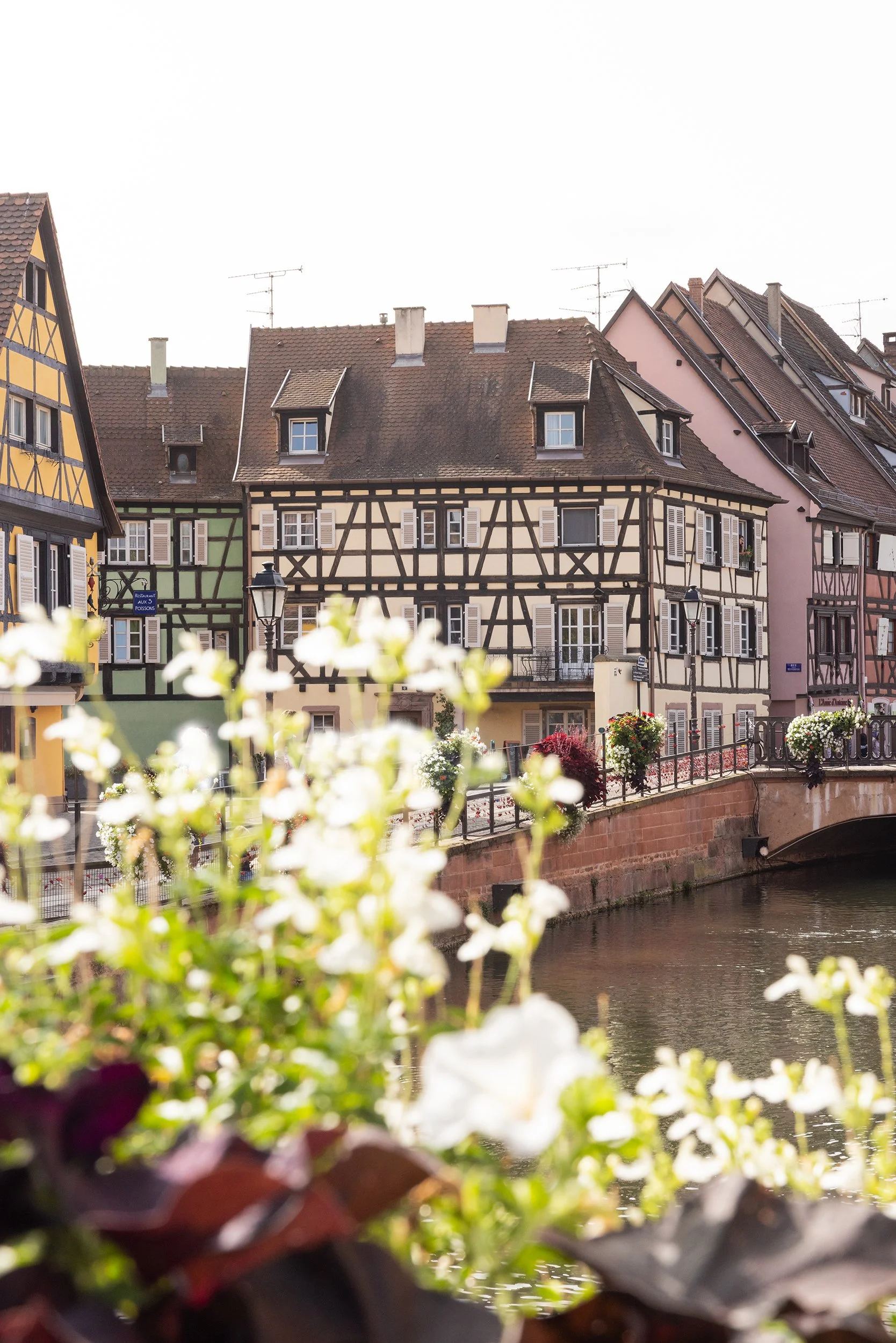
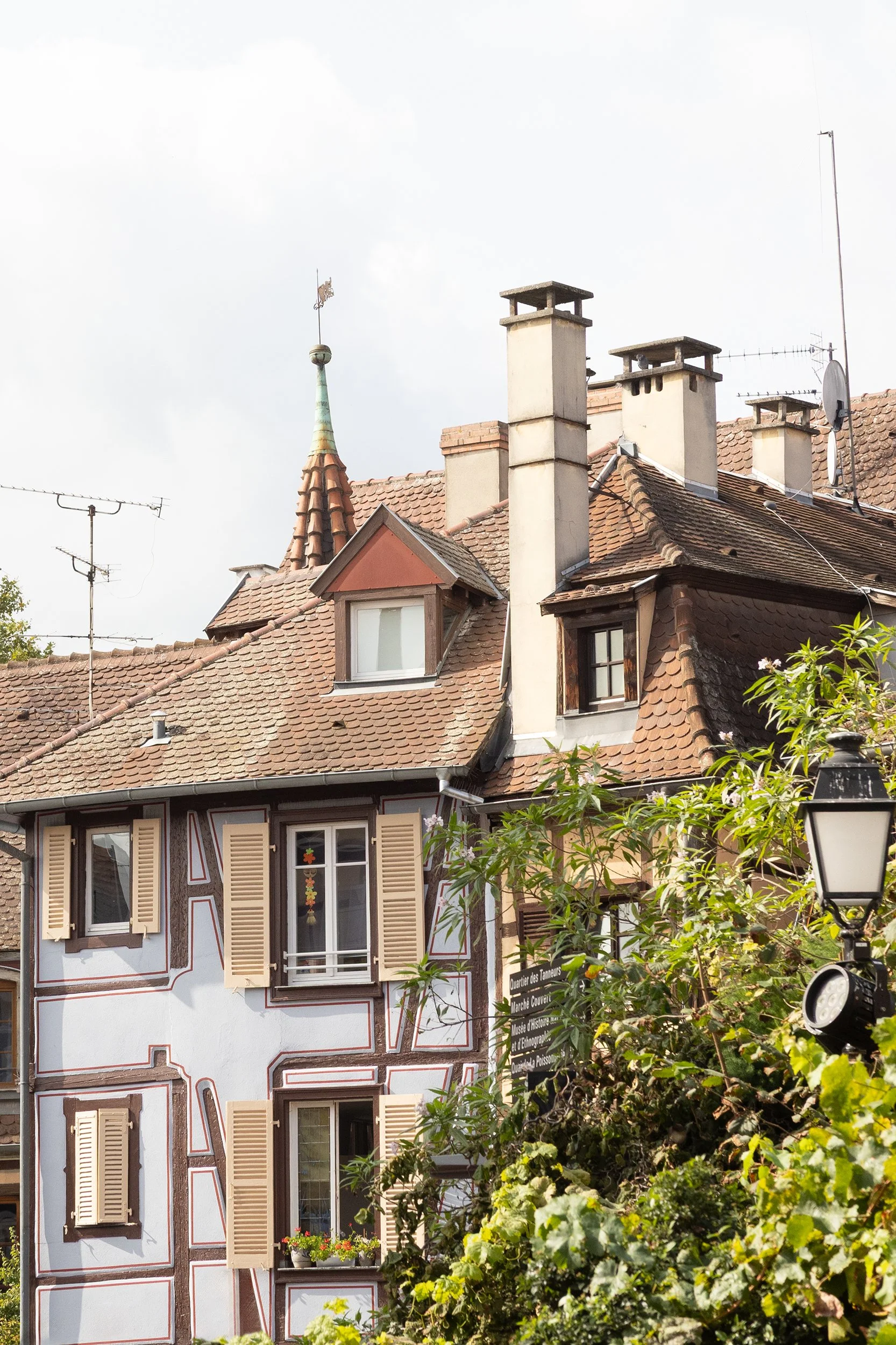
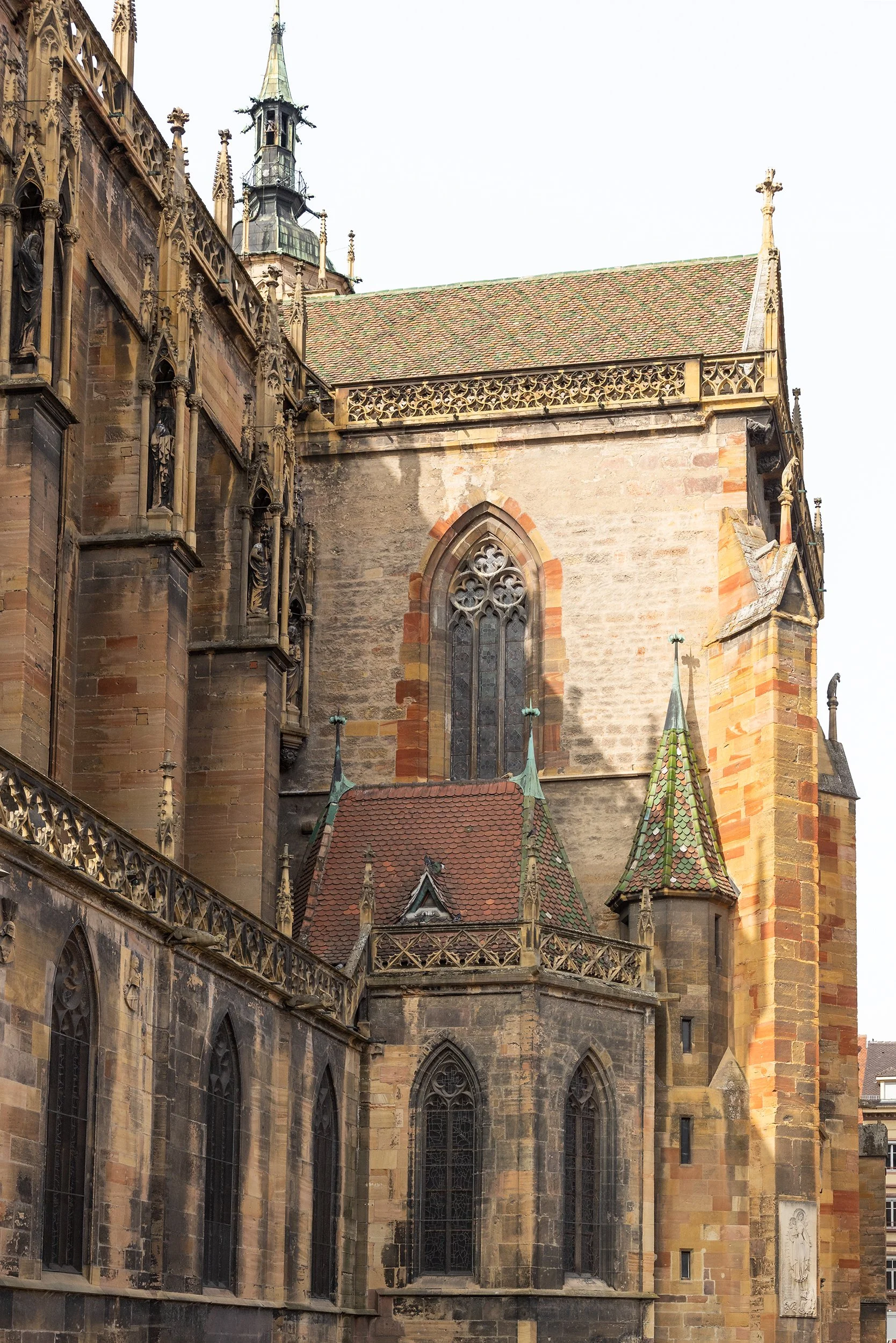
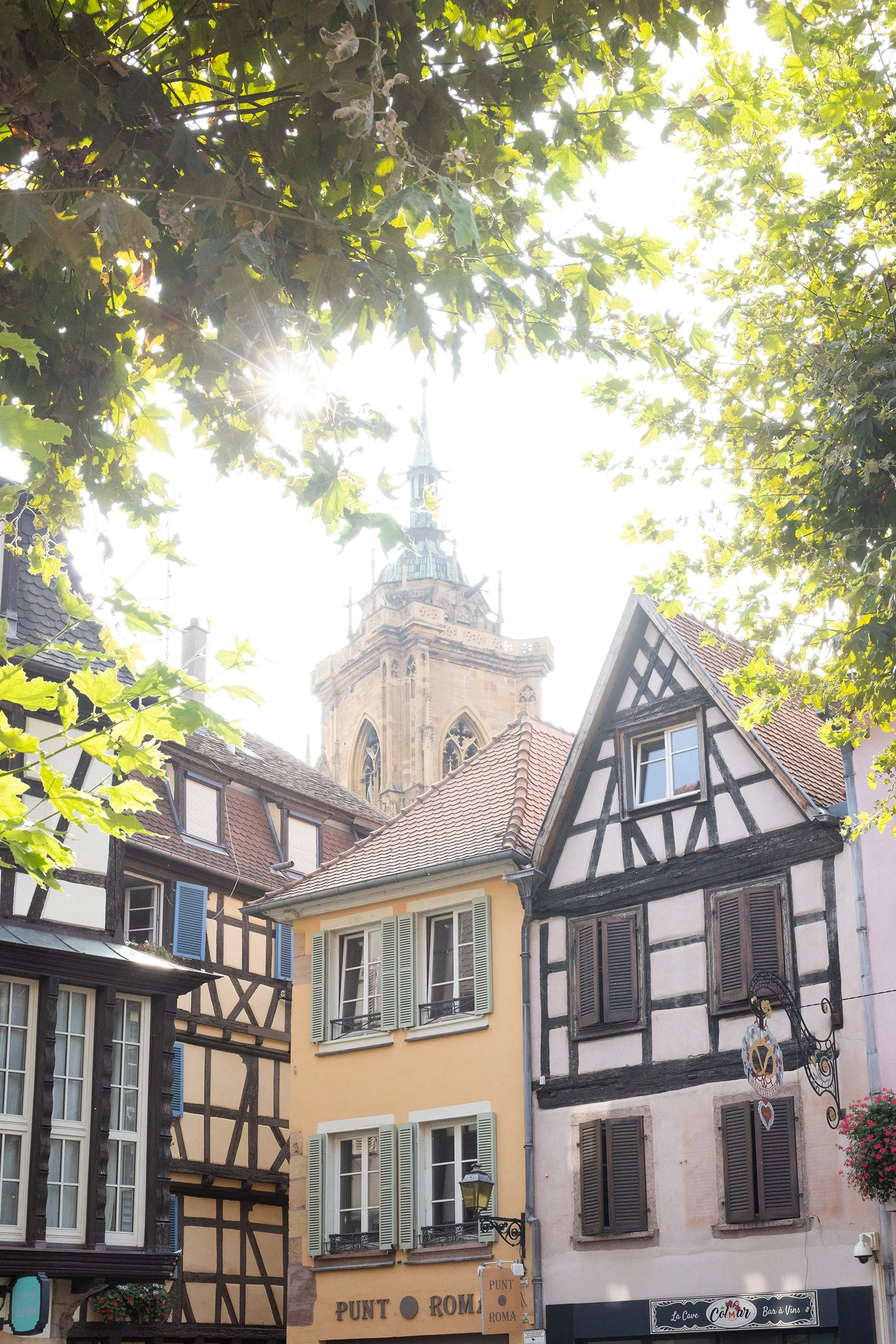
1. Little Venice view from Rue de Turenne Bridge on La Lauch | 2. Rue Turenne | 3. Collegiate Saint-Martin | 4. Rue des Serruriers
Disclosure: This post may contain affiliate links. That means if you buy something following a link from this page, we’ll receive a small commission at no cost to you. We only promote products and services that we truly believe in.
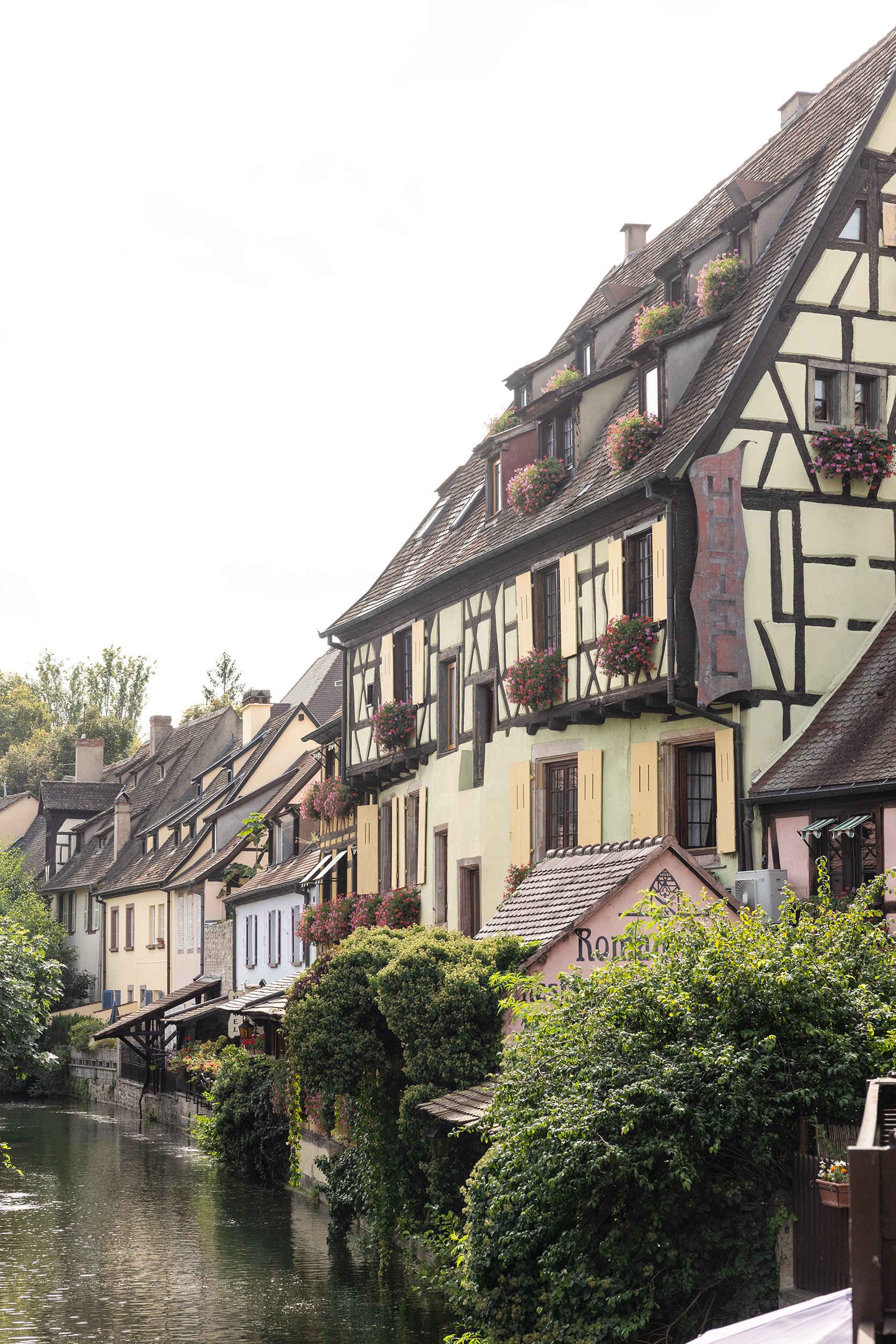
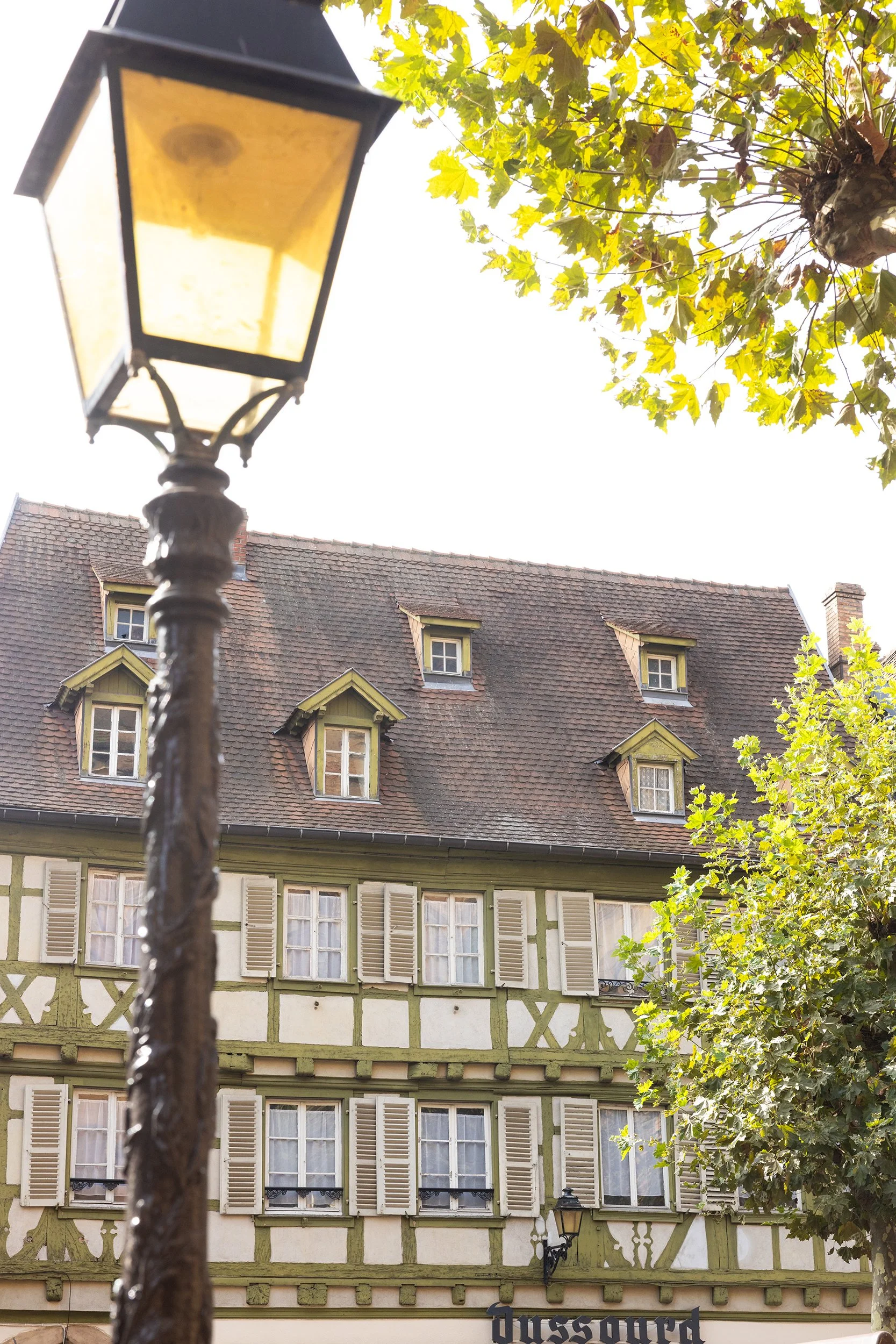
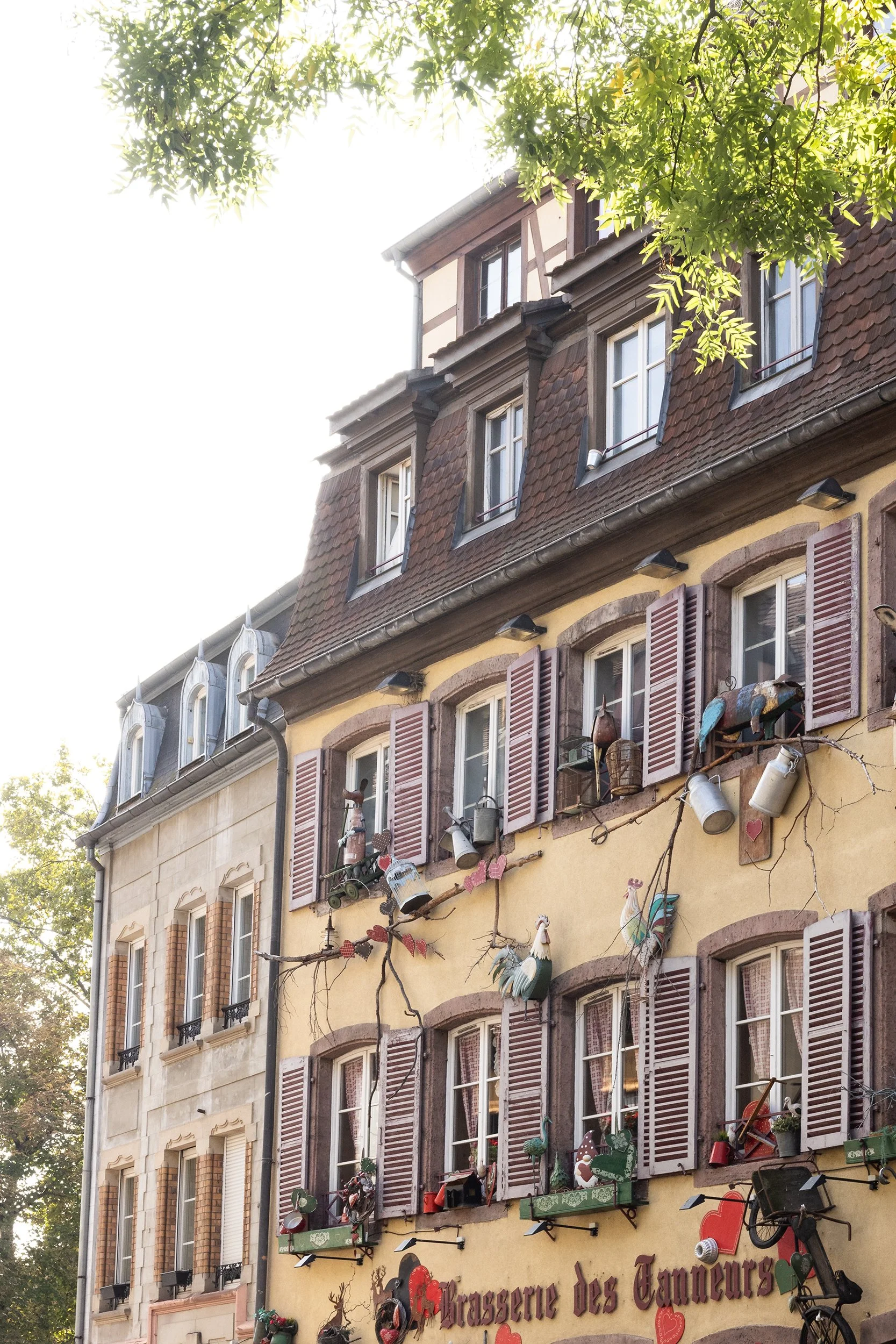
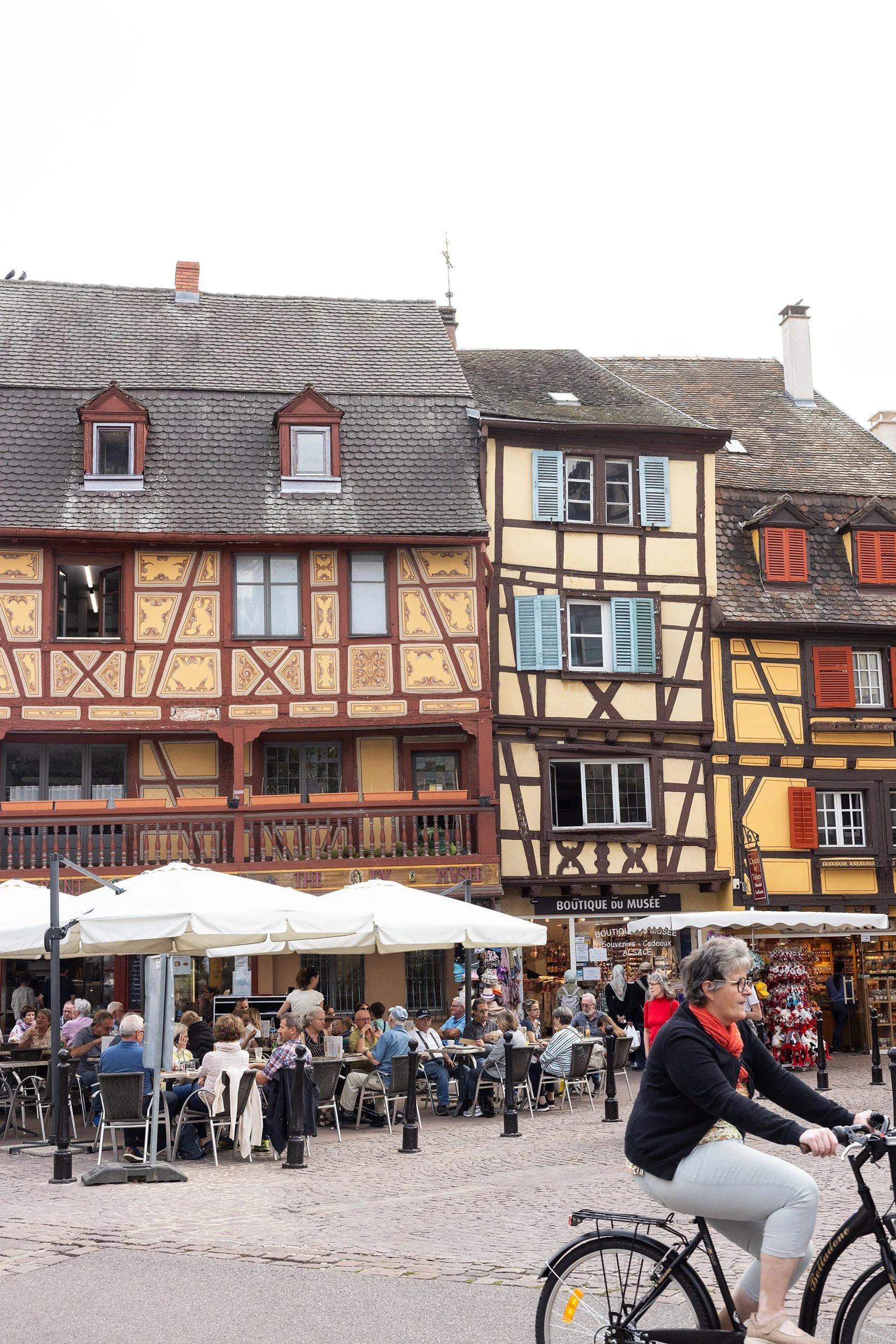
1. Hostellerie Le Maréchal | 2. Salon De Thé Dussourd on Rue des Serruriers | 3. Brasserie des Tanneurs’ whimsical decor on Rue des Tanneurs | 4. Rue des Têtes
While Paris anchored my trip, I knew I wanted to venture into Alsace to experience a different side of France. Sometimes the side trips become the main event - and my detour from Paris to Alsace proved exactly that. Using Strasbourg as my base, I took the train to Colmar for my second day. The station was surprisingly quiet when I arrived, and I had to rely on Google Maps to navigate through parks and residential areas - about a 20-minute walk total. But stepping into Colmar's old town made the journey worthwhile. The half-timbered buildings in pastel colors create an almost impossibly charming, storybook setting.
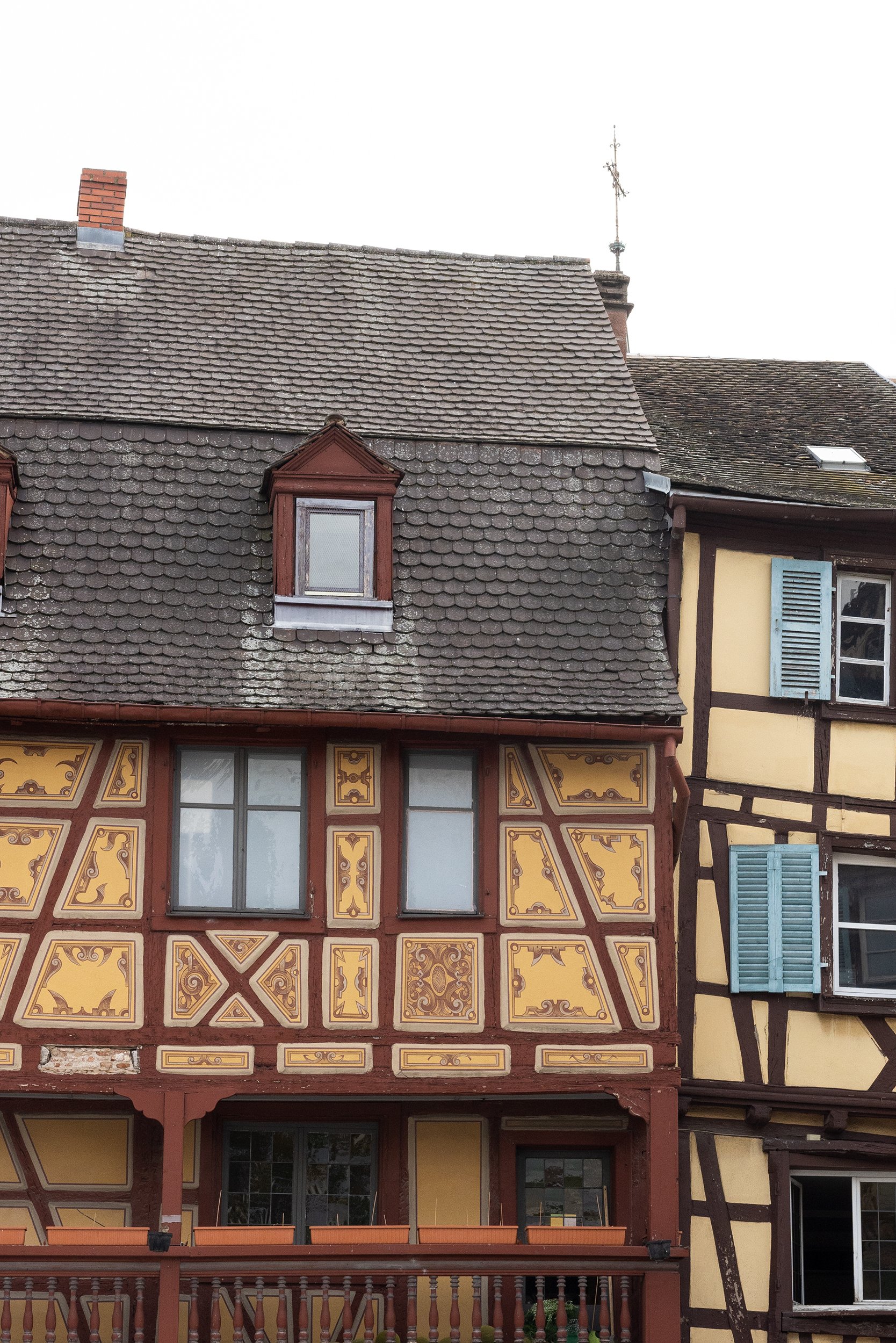
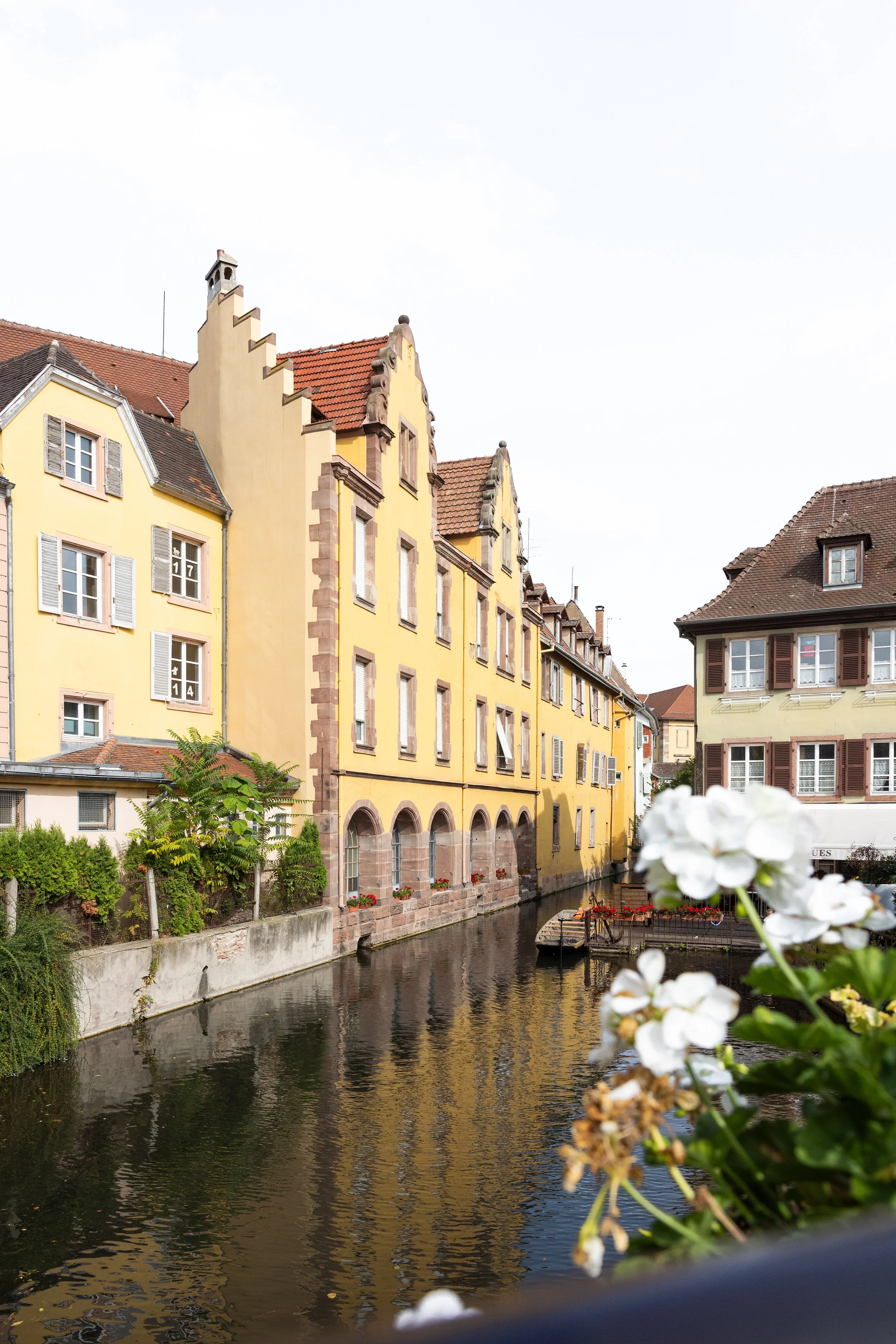
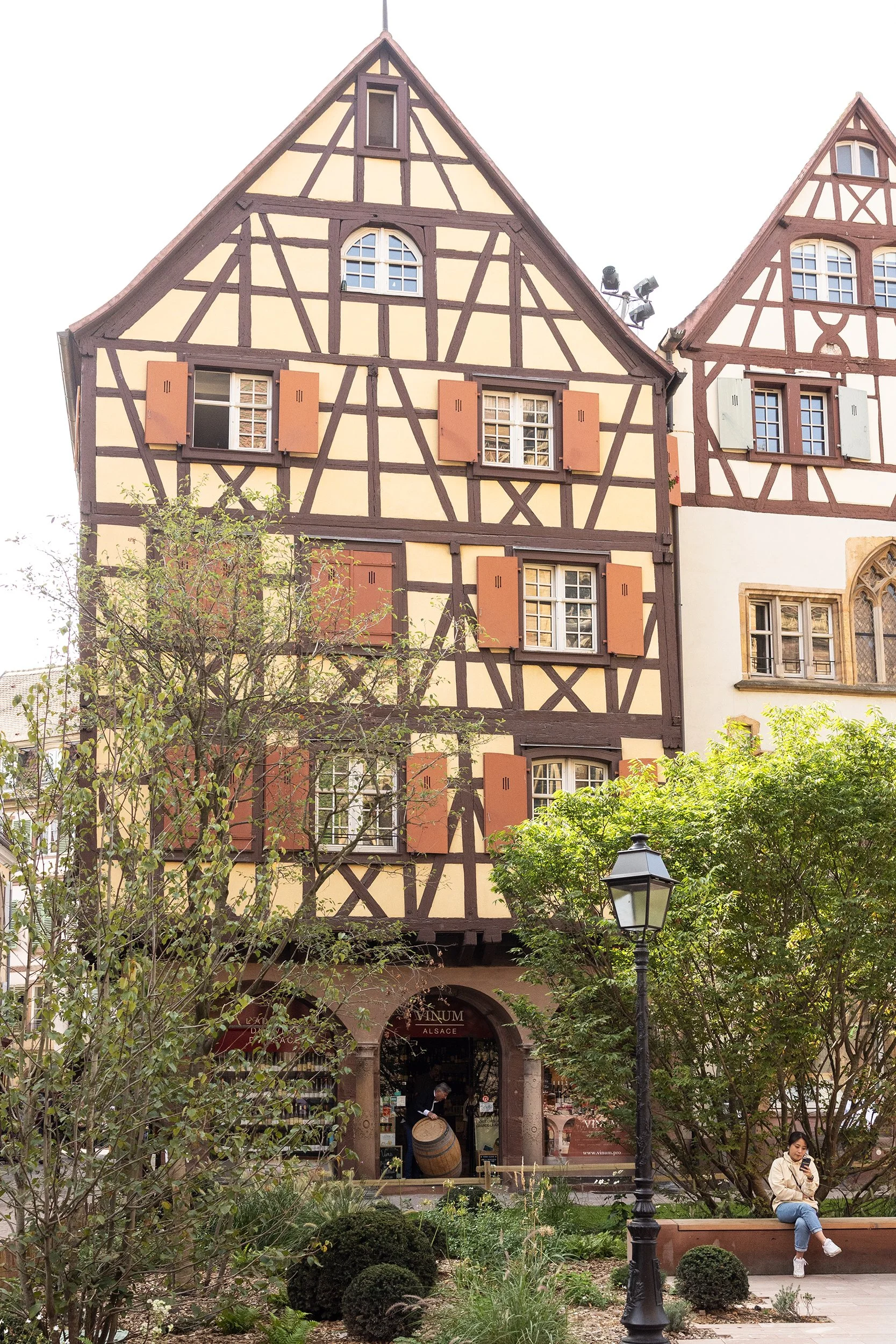
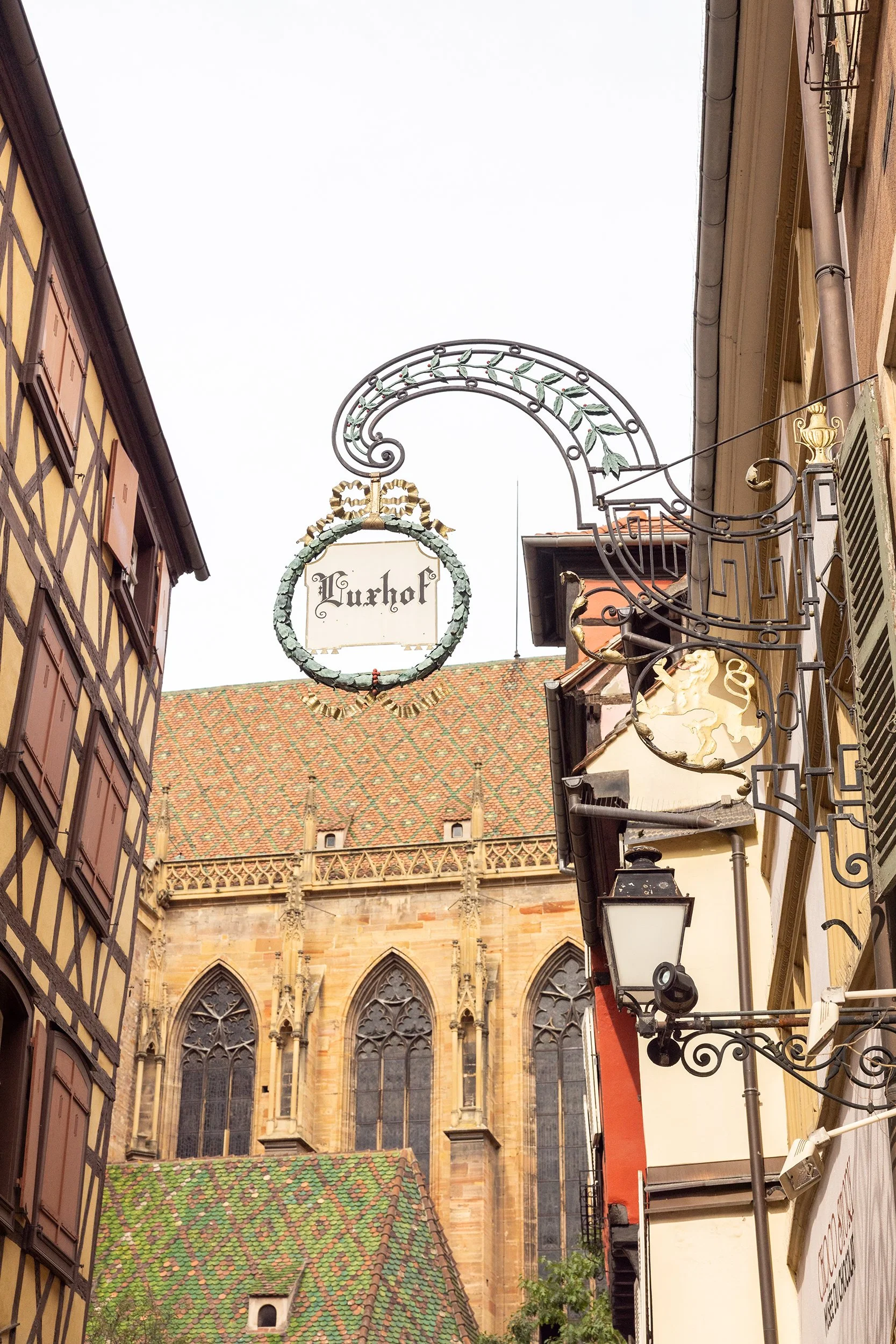
1. Rue des Têtes, Place d’Unterlinden | 2. Rue de Turenne Bridge view | 3. Maison Gintzburger and Maison Adolph (the oldest house in Colmar), Place de la Cathédrale | 4. Rue Mercière and Saint Martin's Collegiate Church
Colmar lies in the Alsace region, a border area that has alternated between French and German rule for centuries. The city dates back to around 823 and reflects this mixed heritage in its architecture, cuisine, and culture. Colmar also played a significant role in World War II as the last French city to be freed from German occupation.
The compact old town is easily walkable, with highlights including the Petite Venise canal district and countless Instagram-worthy corners. Alsatian restaurants line the streets offering tarte flambée and local wines.
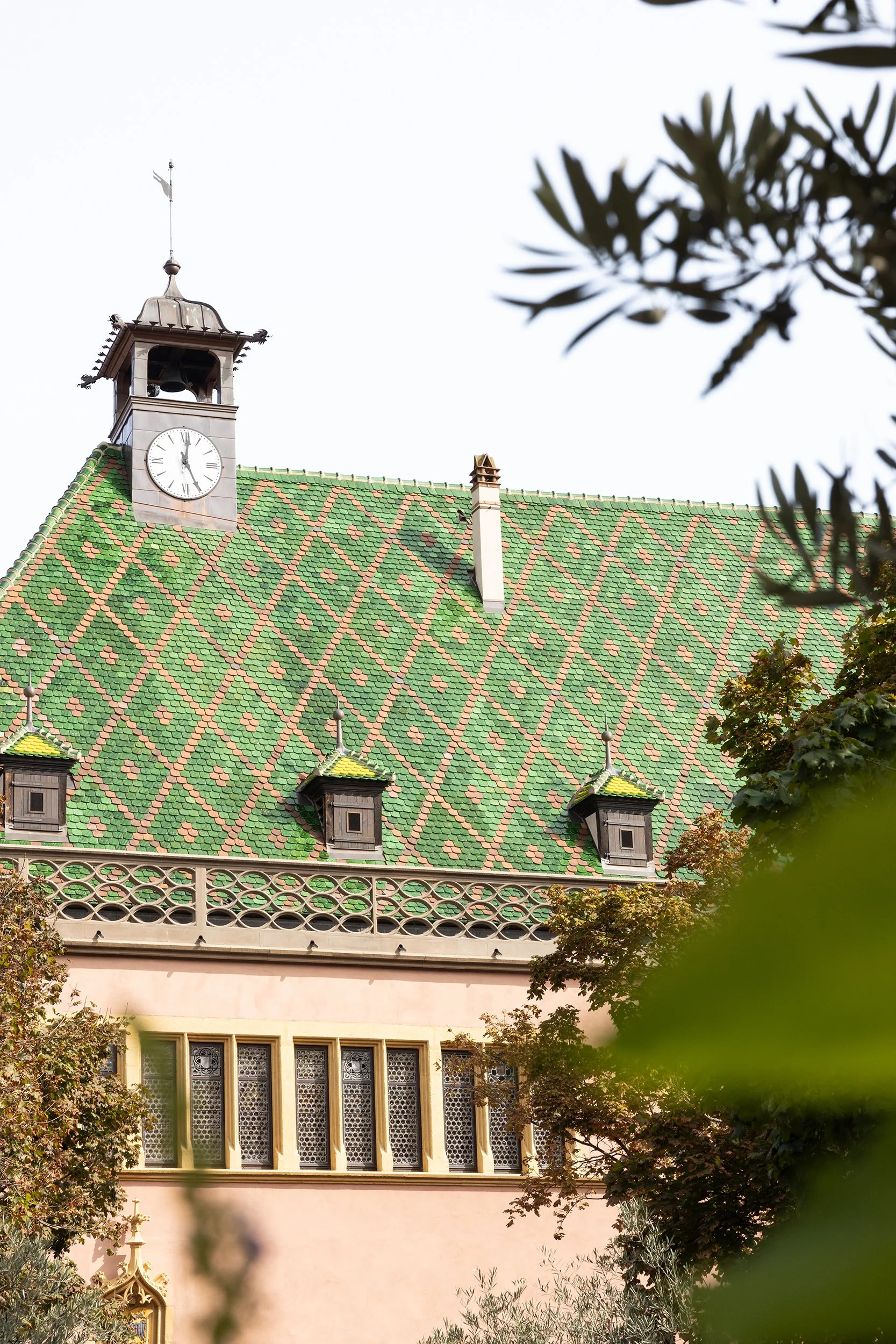
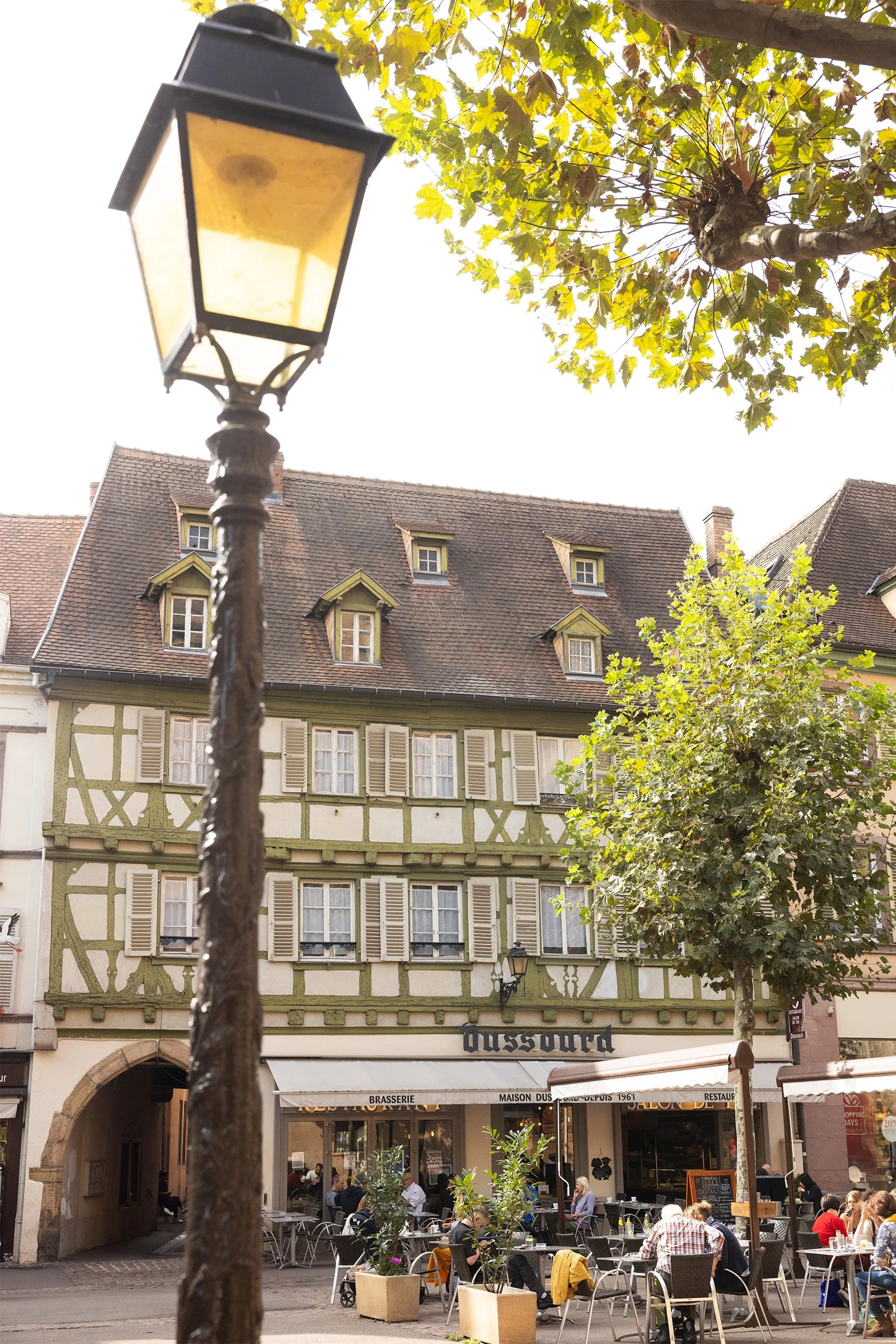
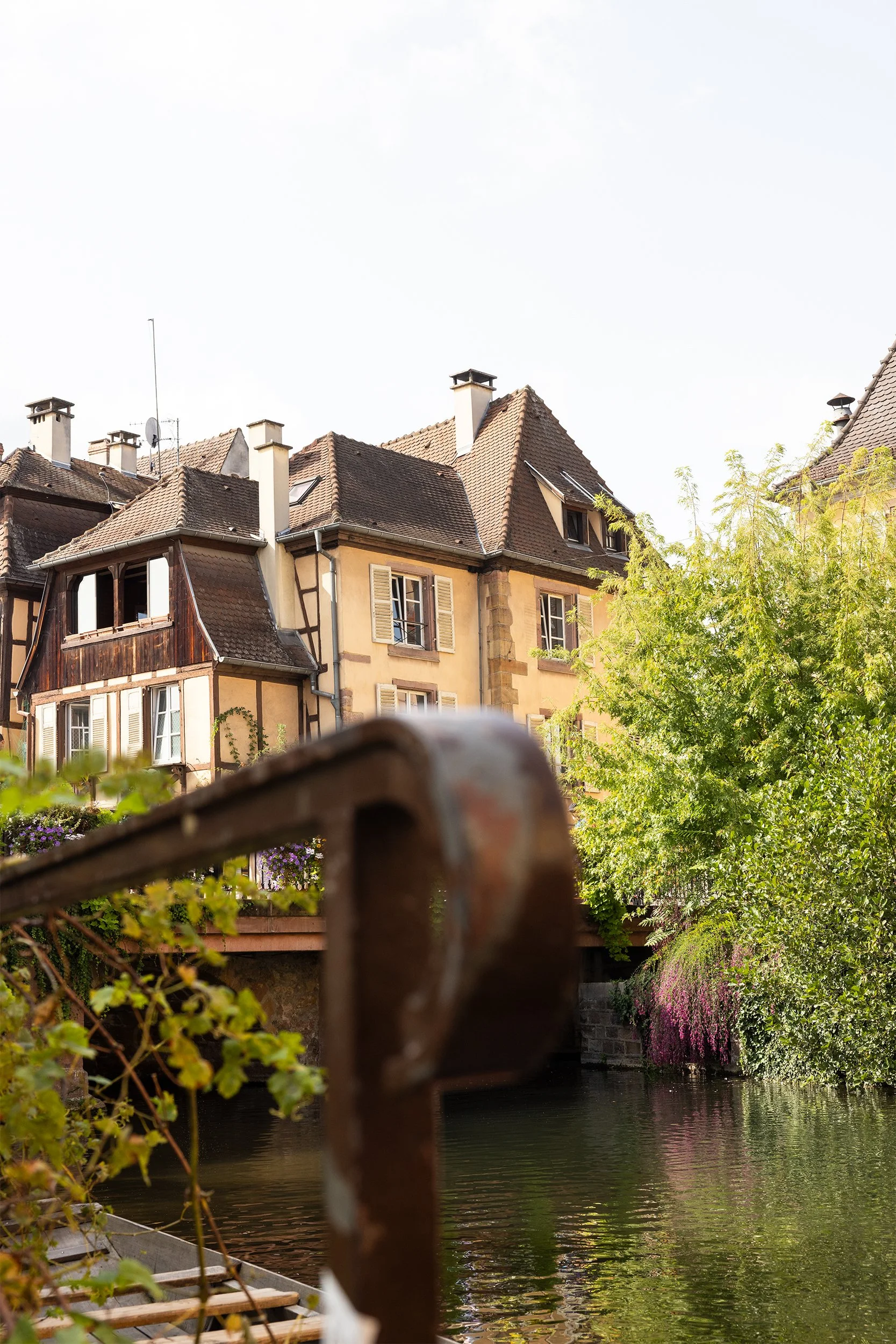
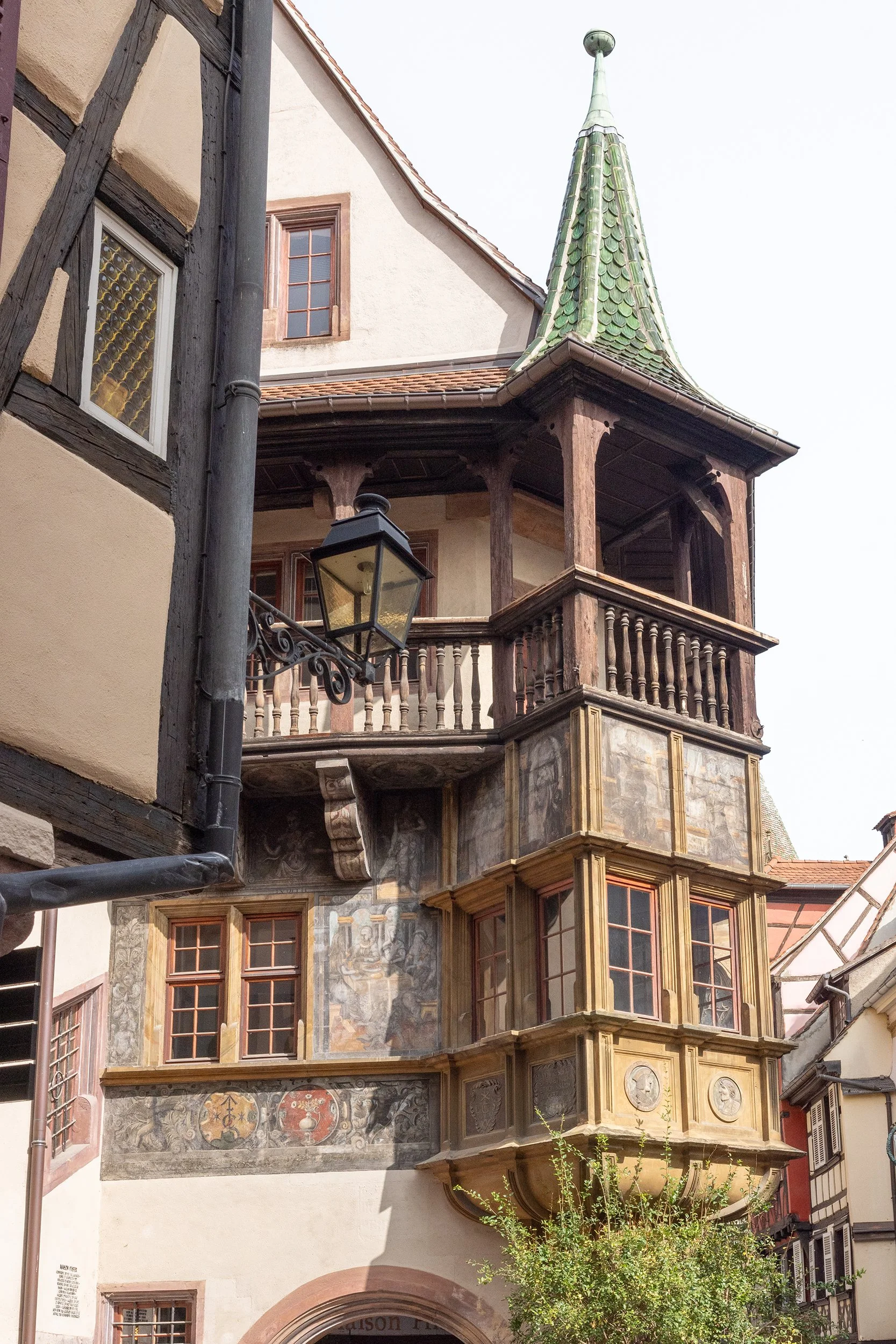
1. Koïfhus, also known as the Ancienne Douane (Old Custom House) | 2. Salon De Thé Dussourd on Rue des Serruriers | 3. Boat launch next to La Krutenau restaurant on Rue de la Poissonnerie in Petite Venice | 4. Maison Pfister on Rue des Marchands
You have to look up to catch the finer details. Wrought-iron guild signs hang above doorways throughout Old Colmar - medieval advertisements that identified trades through symbols rather than words. Pretzels for bakers, grapes for winemakers, hammers for blacksmiths. These colorful, intricate markers show which craftsmen worked on each street. Keep your eyes up and you'll also spot the whimsical Oncle Hansi signs, featuring the beloved early 20th-century Alsatian illustrator's signature style of rosy-cheeked characters in traditional folk dress that captured the region's identity during a time when Alsace shifted between French and German rule.
The architecture offers more treasures: elaborately carved shutters, painted murals on plaster walls, and distinctive timber framing on every building. The shops maintain their traditional Alsatian character, making even contemporary bakeries and wine merchants feel like they belong in another era.
One detail I kept noticing: hearts carved into wooden shutters throughout the old town. This Alsatian custom once served as a discreet signal - a heart meant someone inside was single and seeking love, while diamonds indicated a married couple hoping for children.
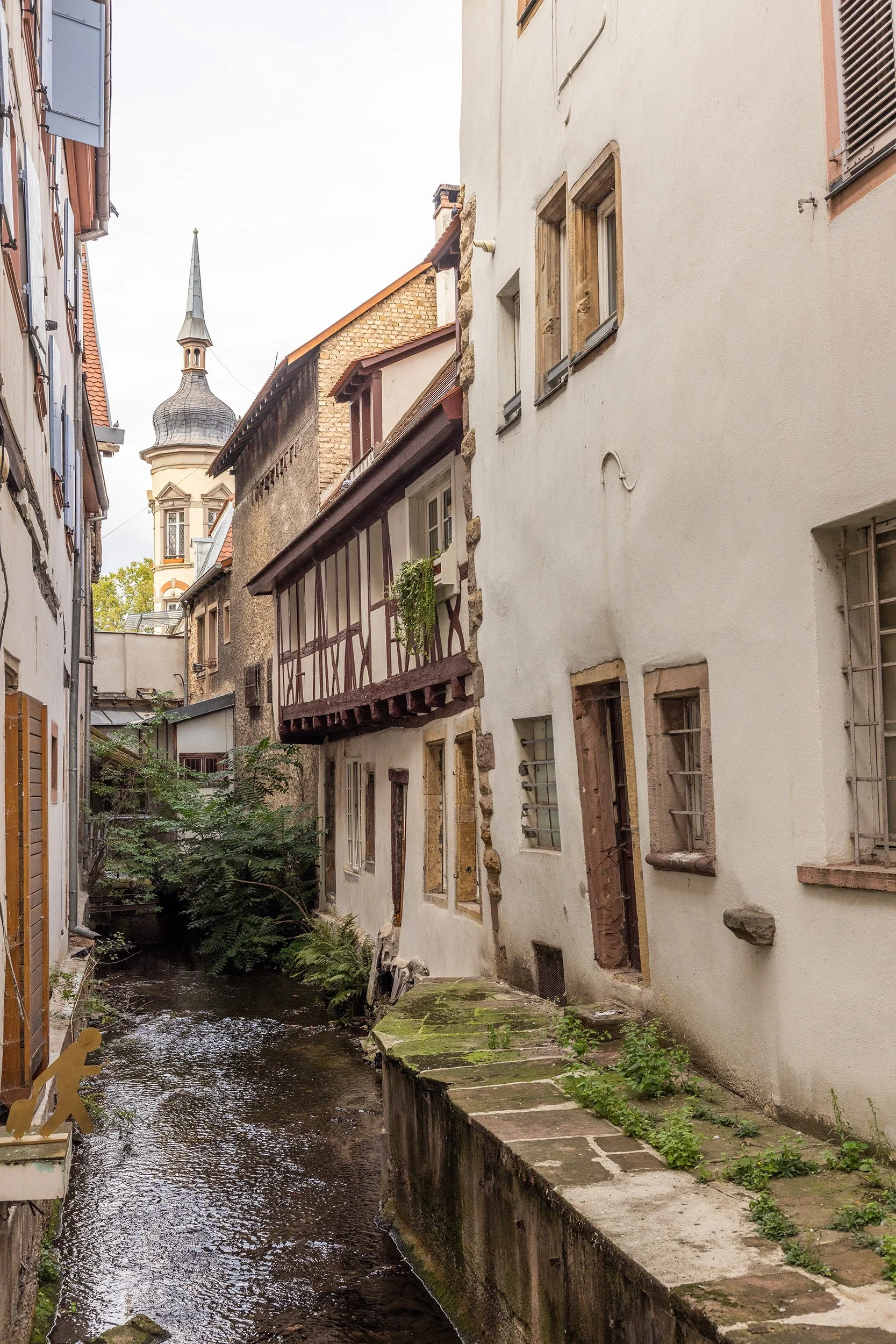
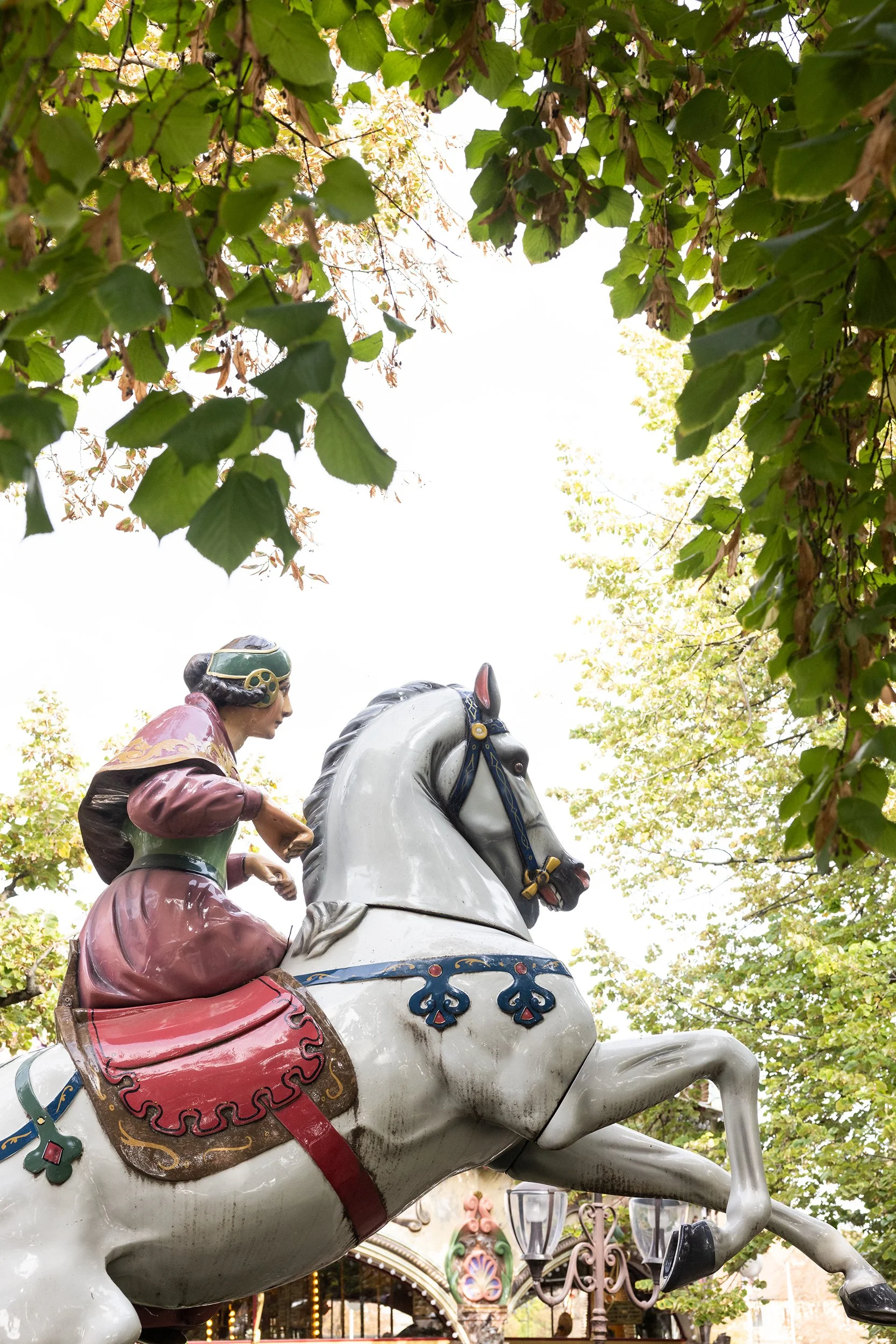
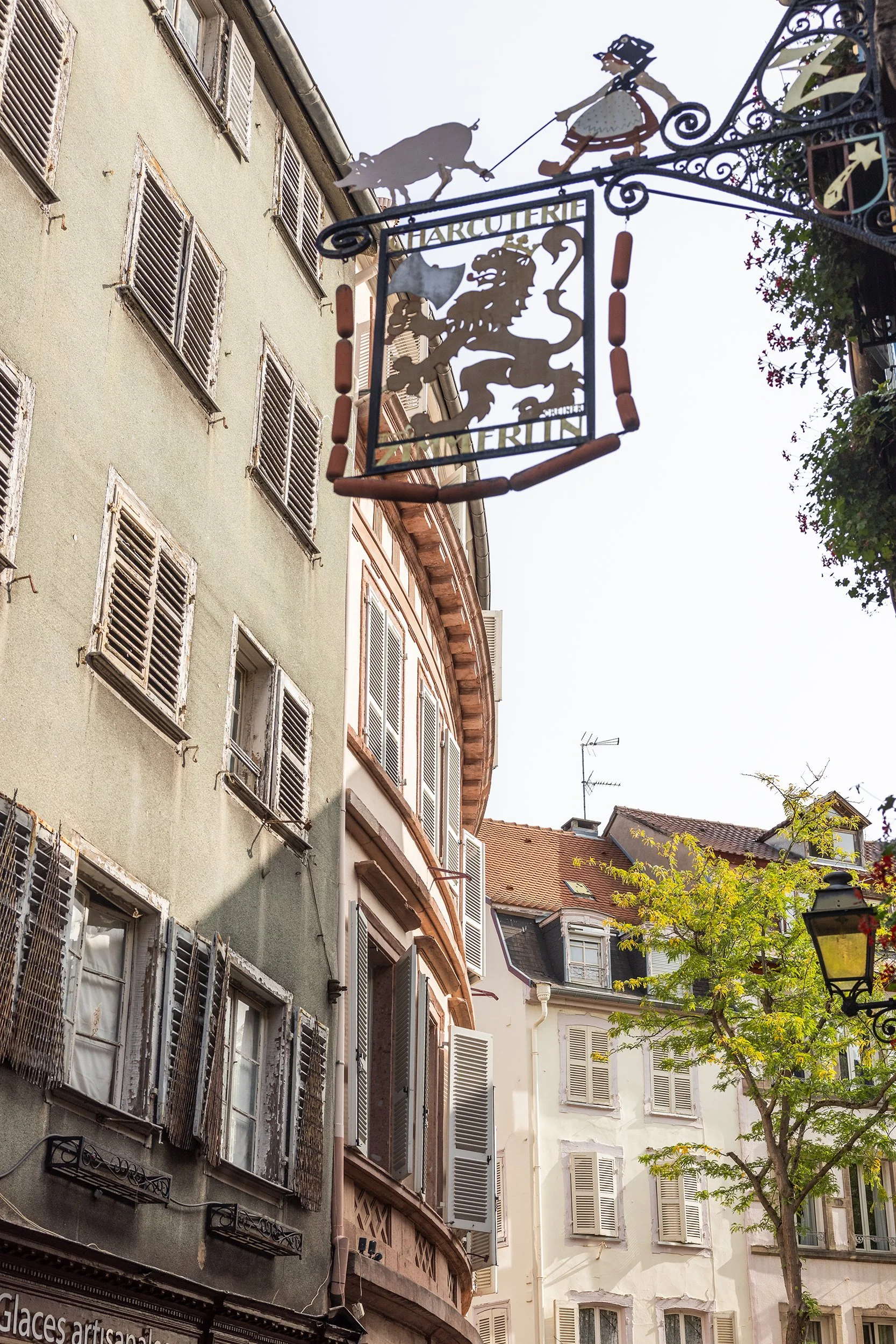
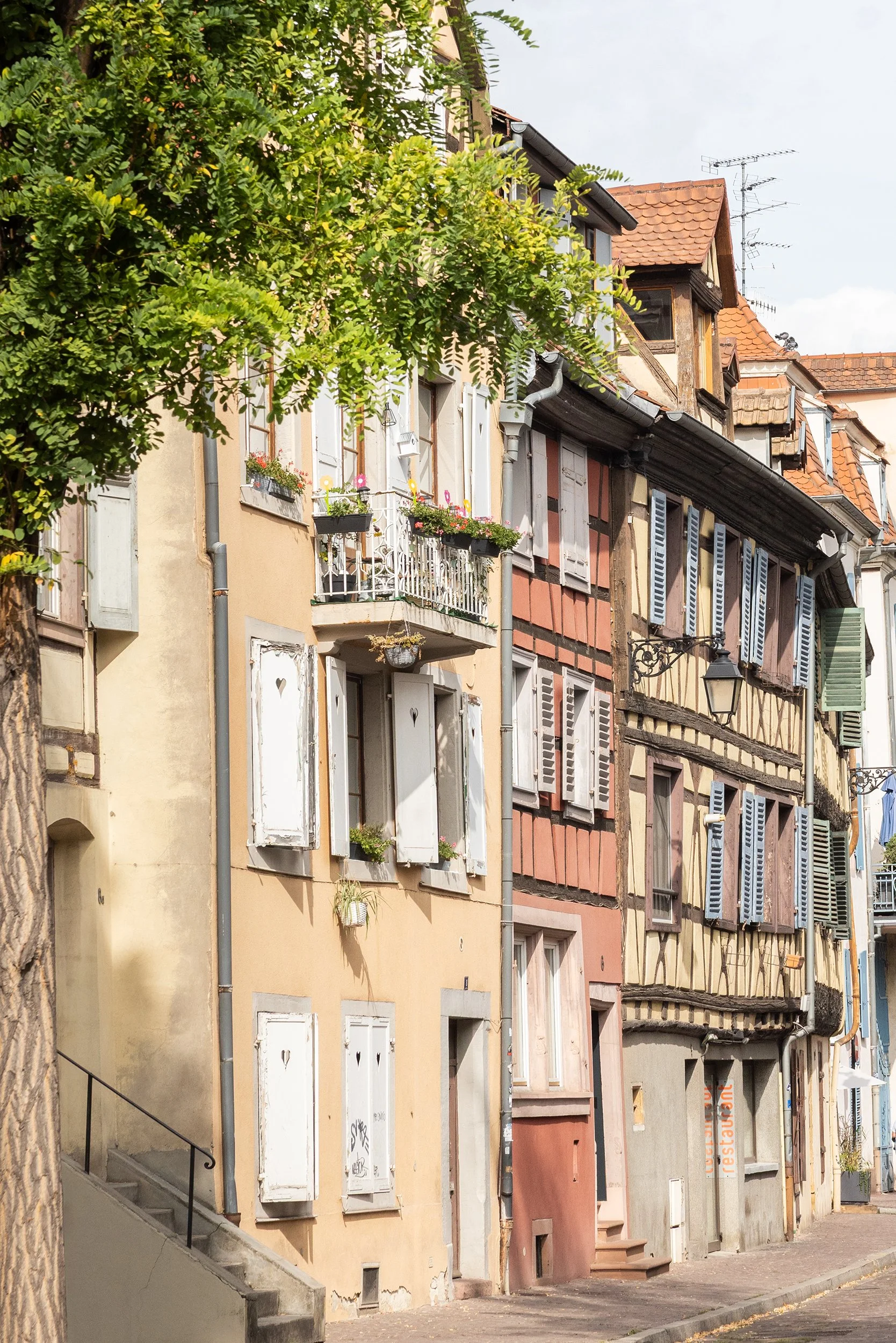
1. Small canal off of Pont de la rue Saint-Nicolas | 2. Entrance to the Carousel Salon 1900 at Place Rapp | 3. An Oncle Hansi guild sign on Rue des Serruriers (Locksmiths’ Street) | 4. Rue Saint-Jean
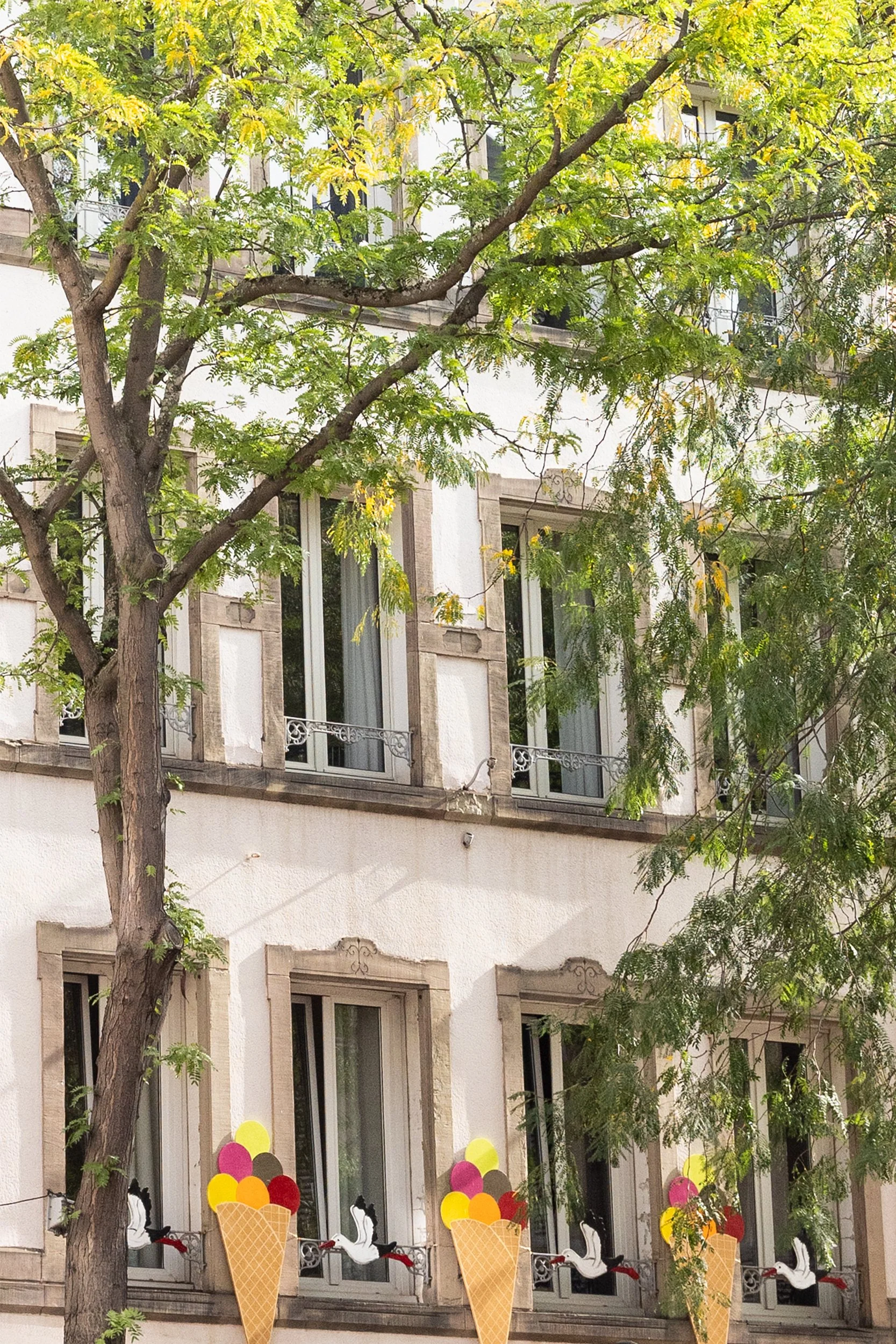
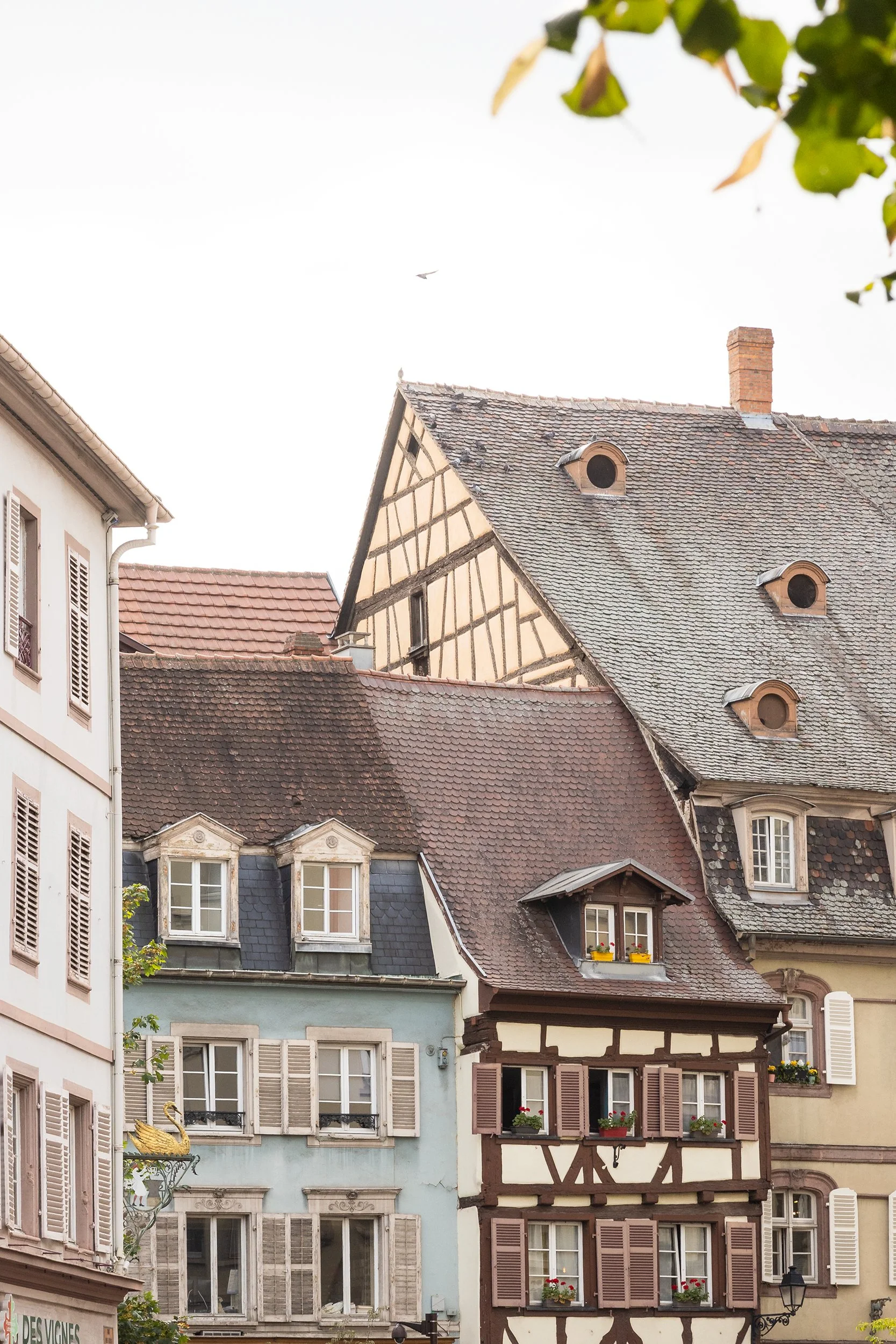
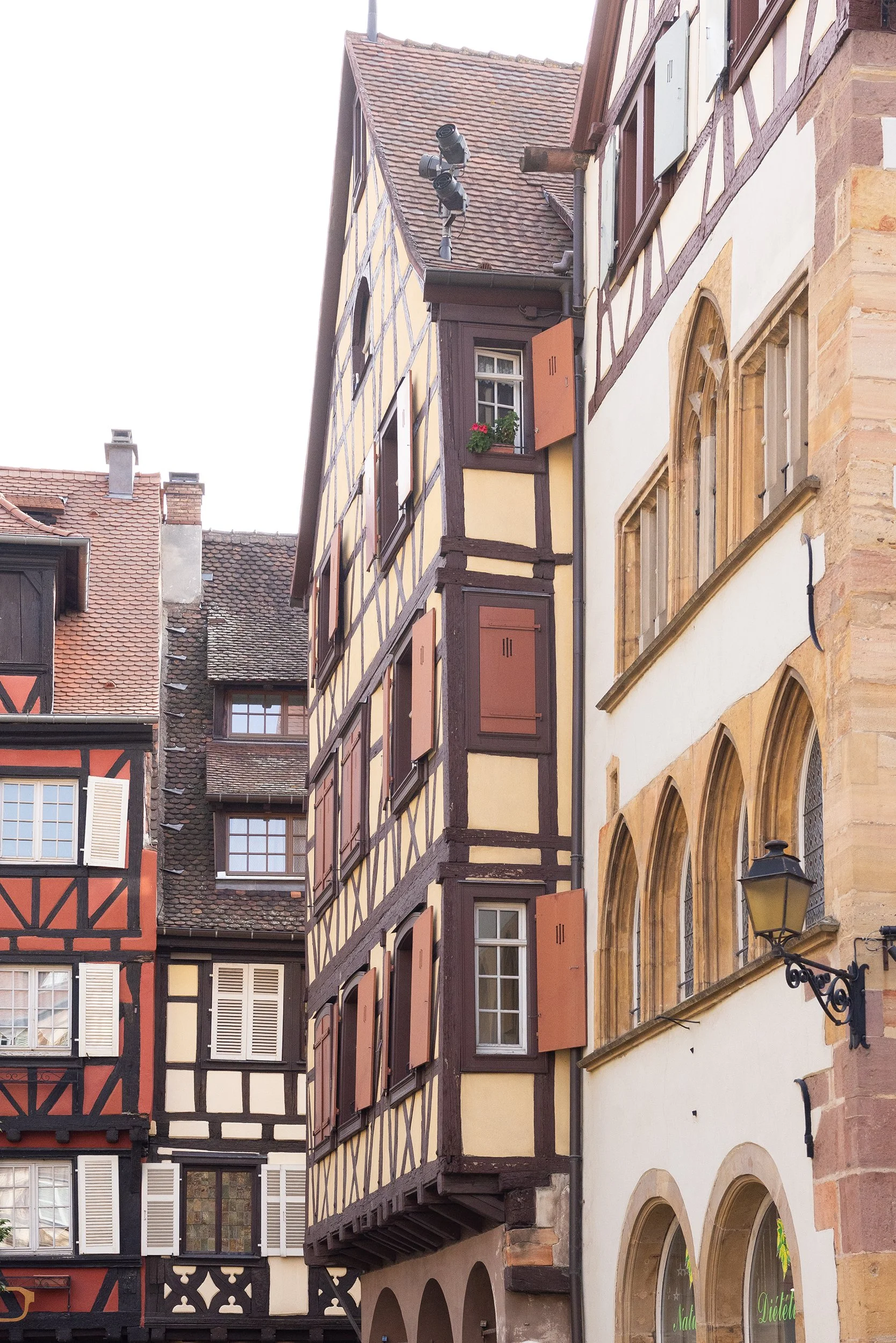
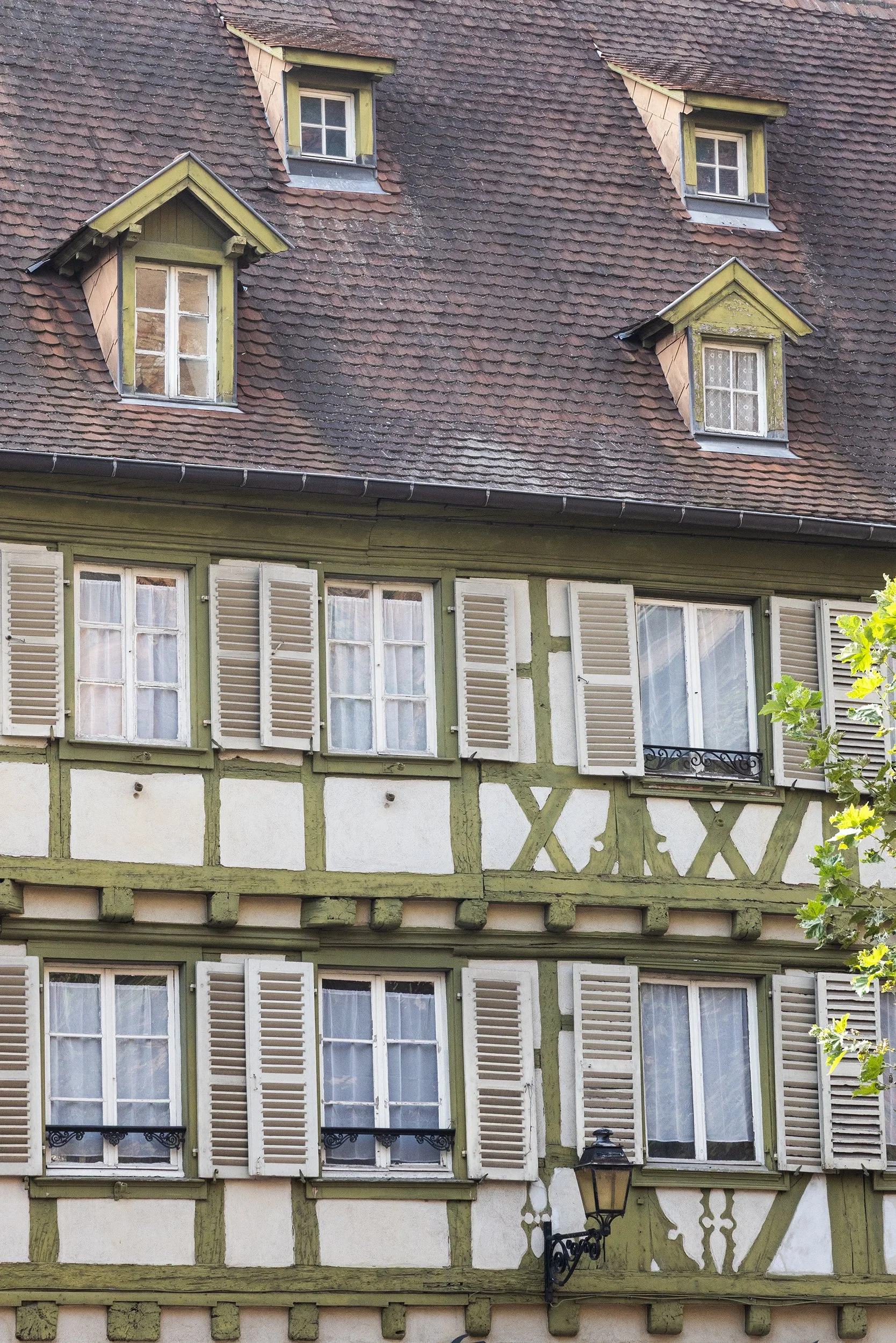
1. Stork and ice cream details on a building on Rue Saint-Nicolas | 2. Rue des Tétes | 3. Place de la Cathédrale | 4. Salon De Thé Dussourd on Rue des Serruriers
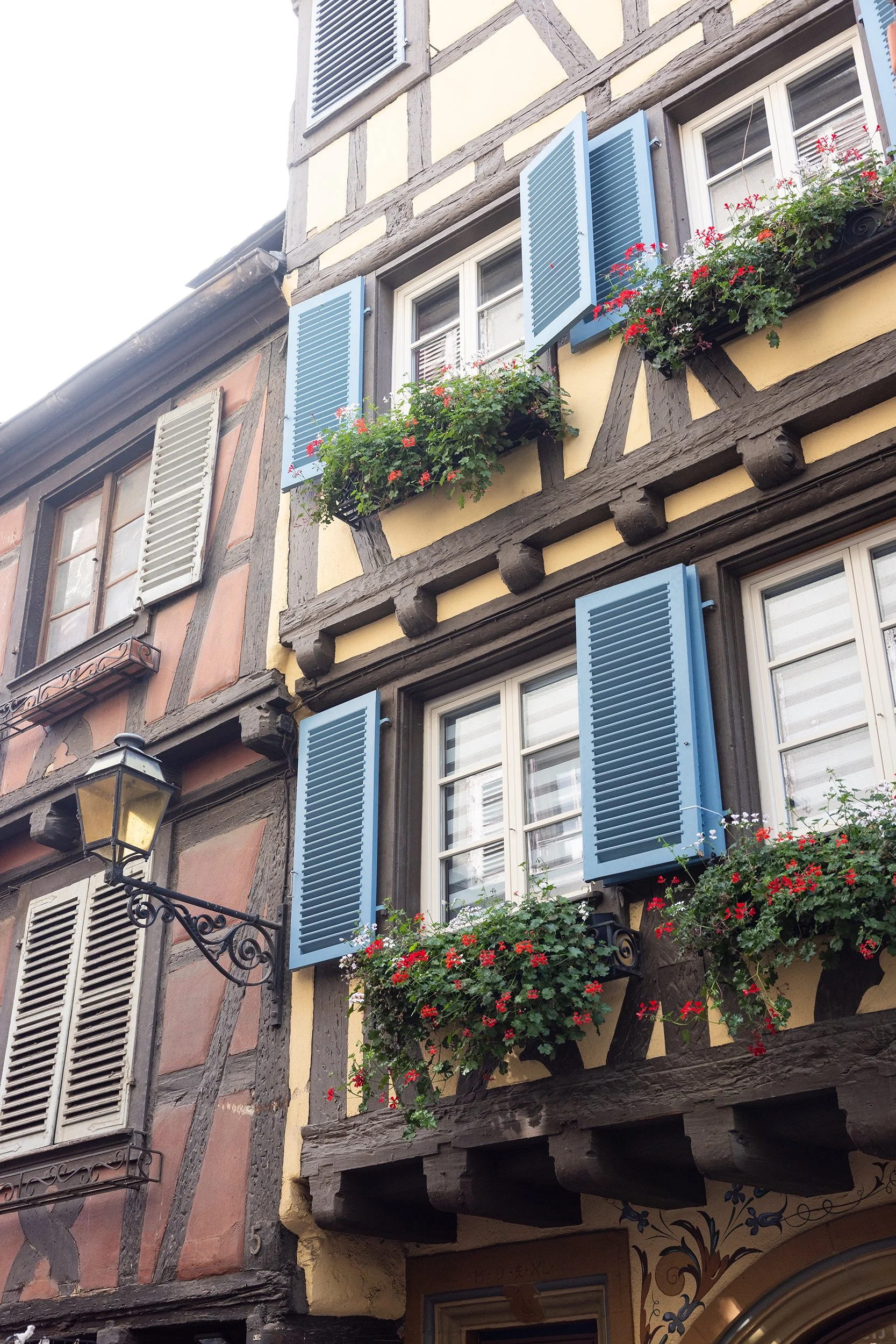
Colmar's streets are lined with a rainbow of house colors. This wasn't just for beauty - it was a practical system in an era when most people couldn't read. Each color signaled a different trade: blue for fishmongers, white for bakers, green for market gardeners, red for butchers, and yellow for cheese vendors.
One of Colmar's most charming details is how buildings are decorated with vintage objects. Old watering cans, weathered chairs, lanterns, baskets, and various antiques hang from facades and balconies. These collected objects - some functional, some purely decorative - add whimsy to the medieval architecture. It's as if each building tells not just the story of its original craftsmen, but of all the generations who've added their personal touches since. The effect is so perfectly curated that it almost feels like Disney Imagineers designed the entire town - except Colmar got there centuries earlier. Which makes sense - Colmar is supposedly the inspiration for the animated Beauty and the Beast's provincial French village.
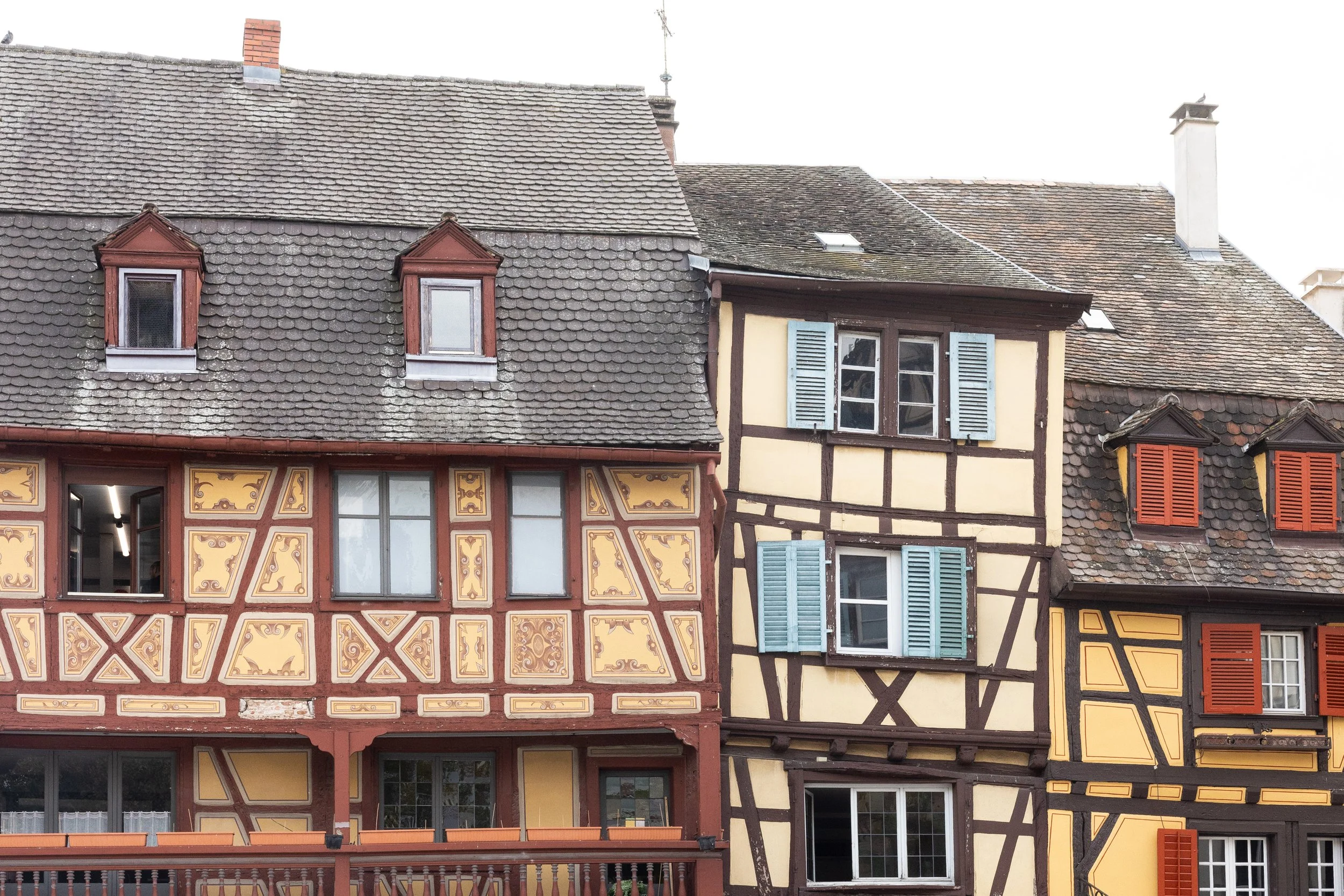
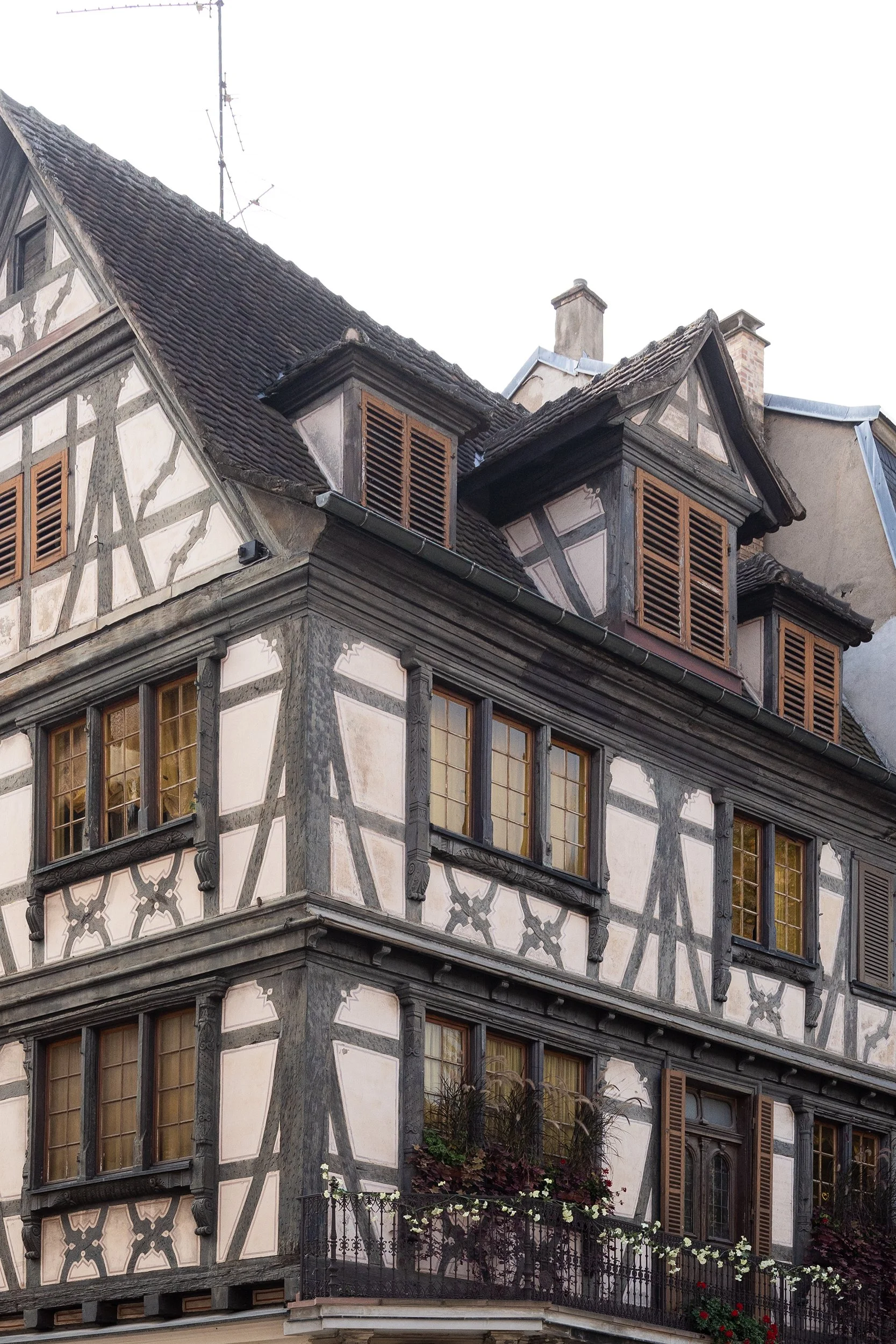
Colorful half-timber buildings on Rue des Têtes in Colmar’s Old Town
As I explored, another detail that I started noticing was storks. Stork carvings on houses, trinkets in tourist shops, even chocolate storks. In Alsace, no animal is more iconic than the white stork. Colmar's association with these migratory birds goes back at least to the 13th century, based on monastery documentation. Viewed as omens of good luck and fertility, they faced near-extinction when their numbers plummeted to single digits by 1974. Successful reintroduction initiatives revived the species, and their distinctive nests now dot rooftops across the historic center - justifying why every shop seems to sell stork keychains and plushies.
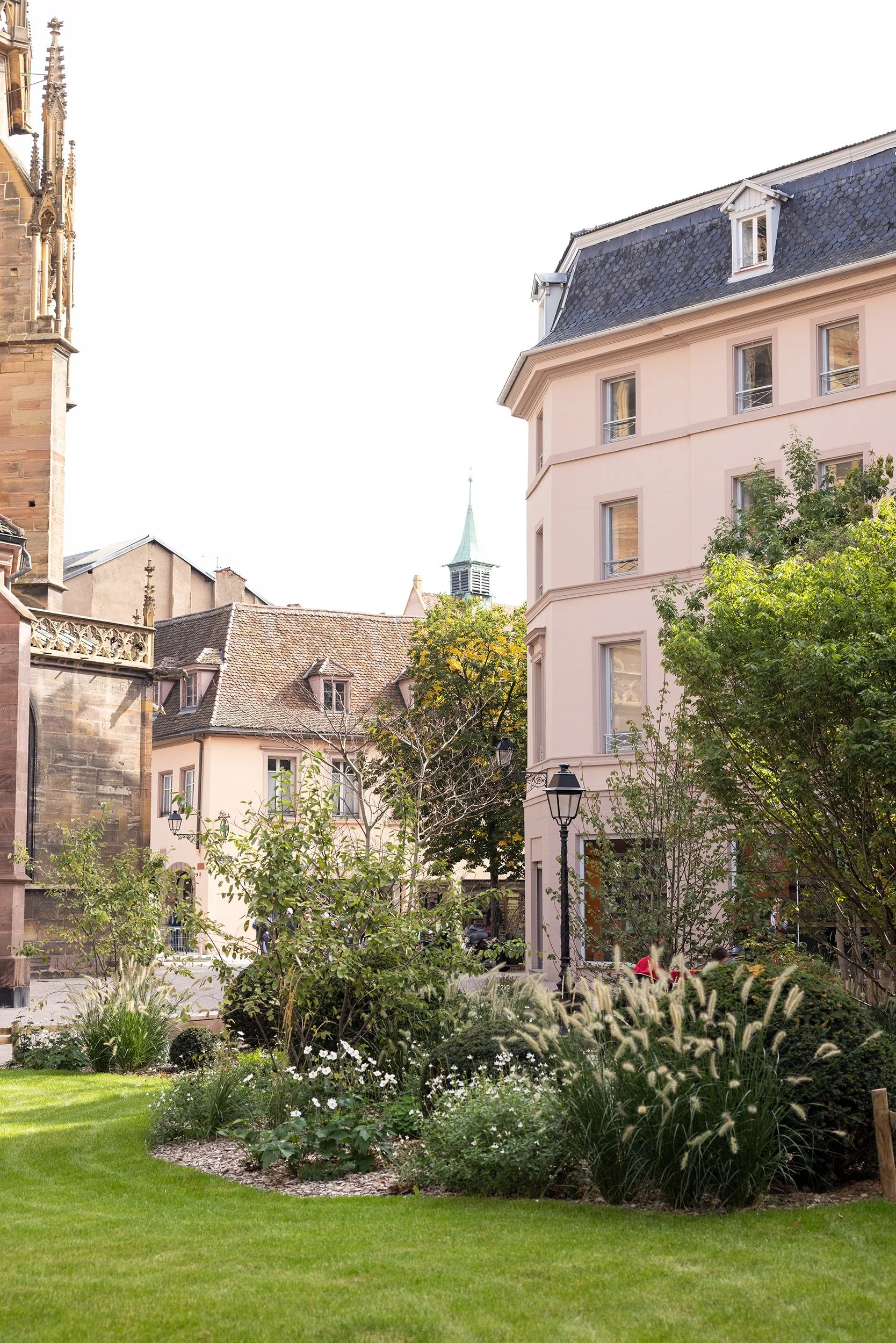
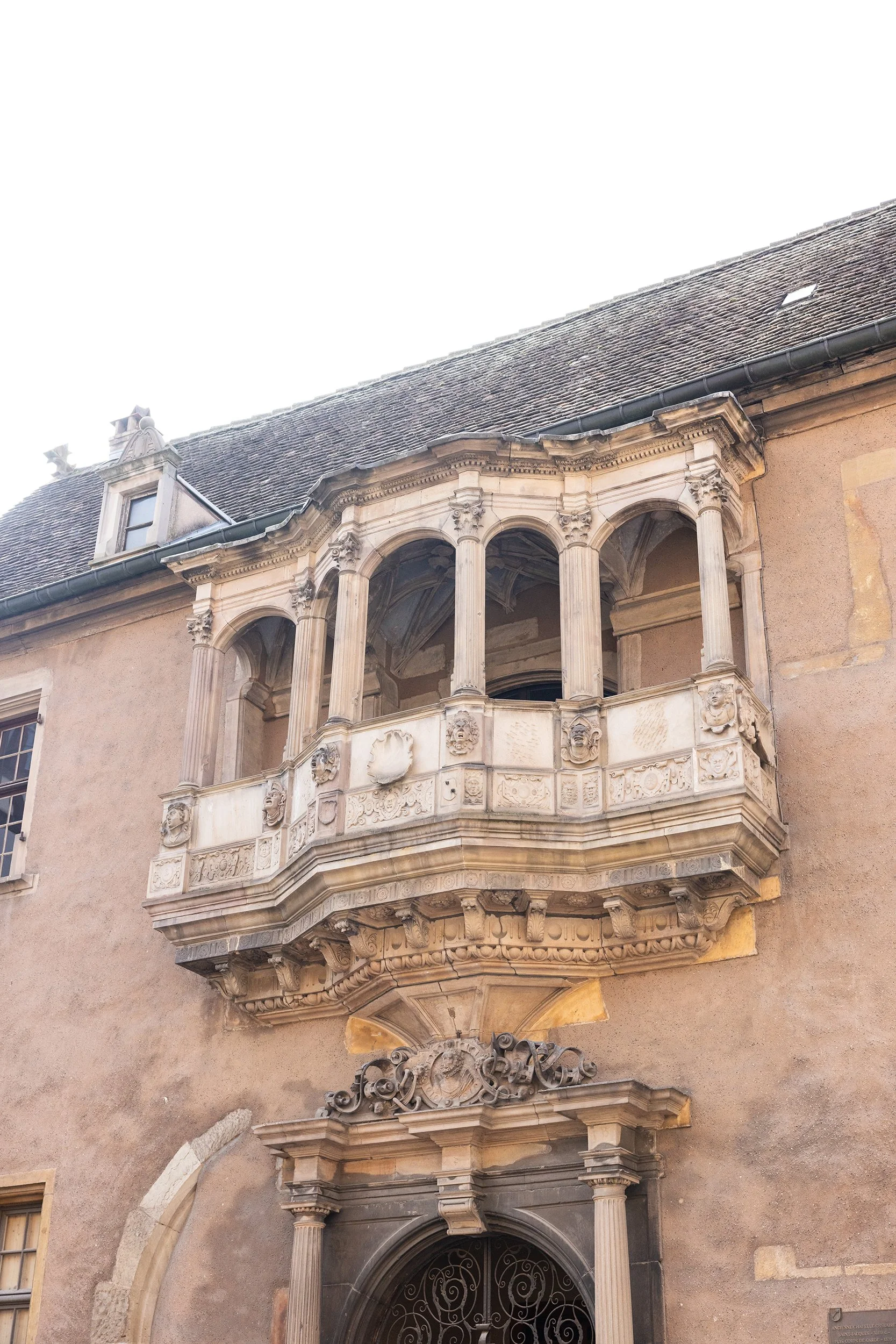
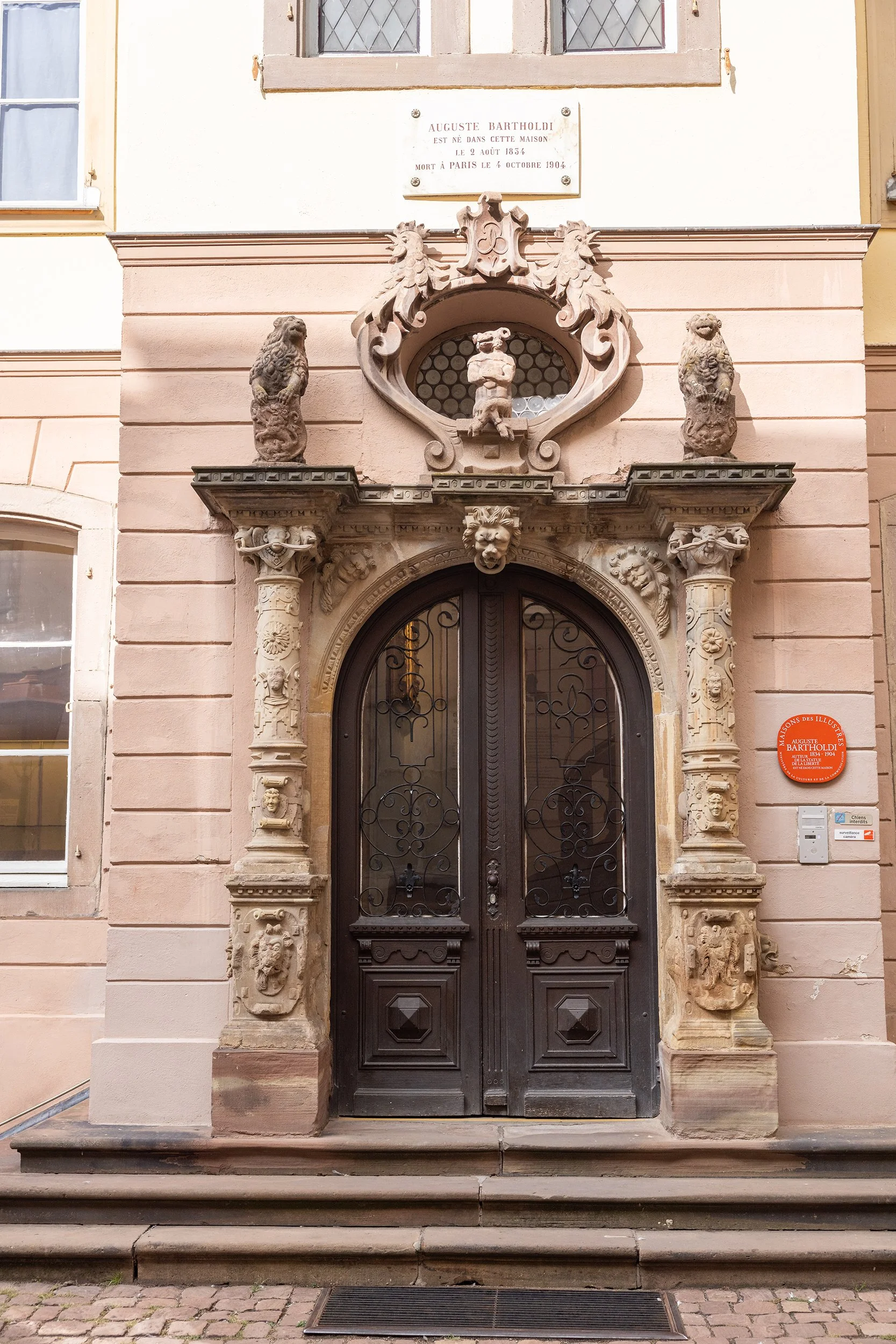
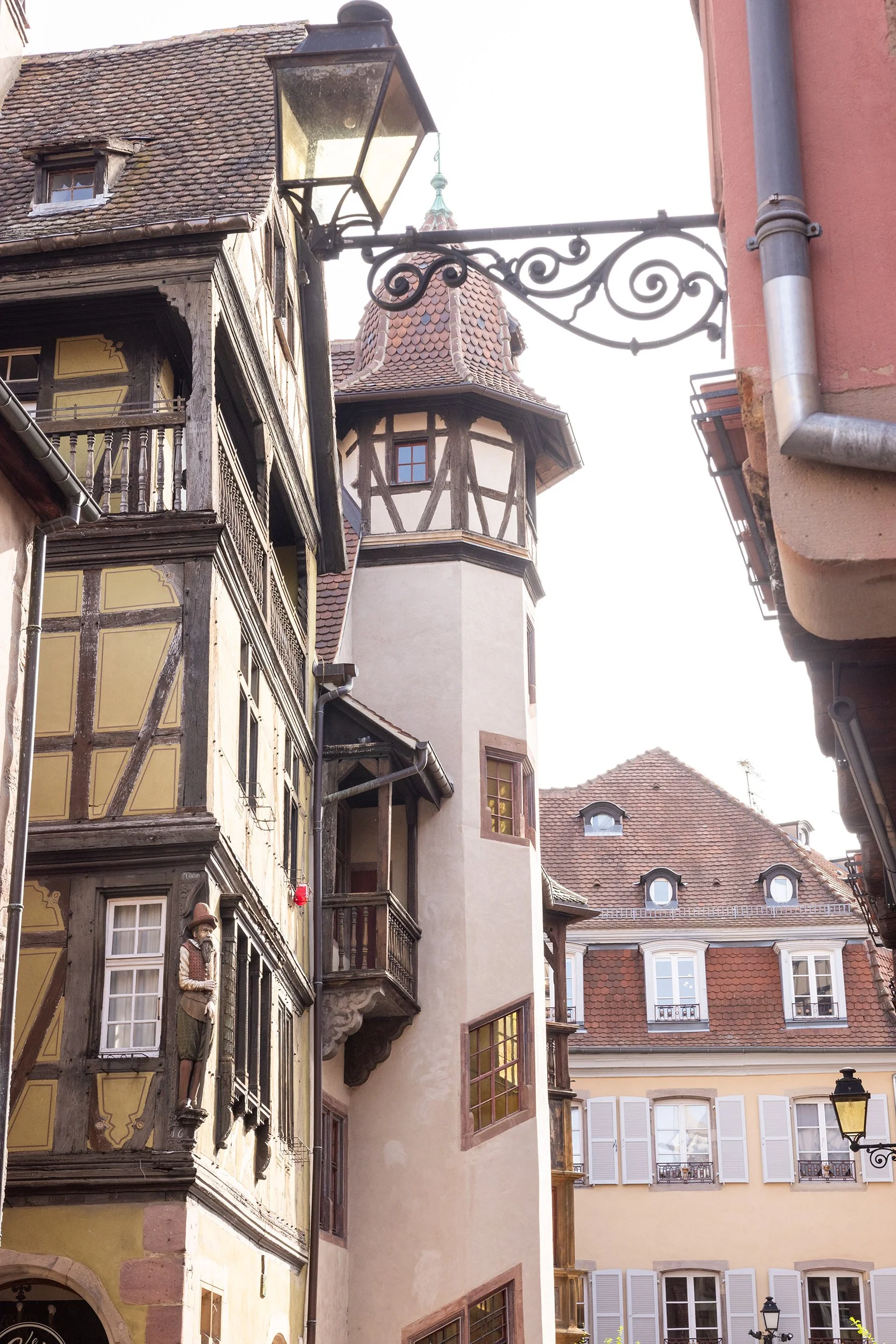
1. Place de la Cathédrale | 2. Ancien Corps de Garde | 3. Bartholdi Museum entry door | 4. zum Kragen House and Maison Pfister
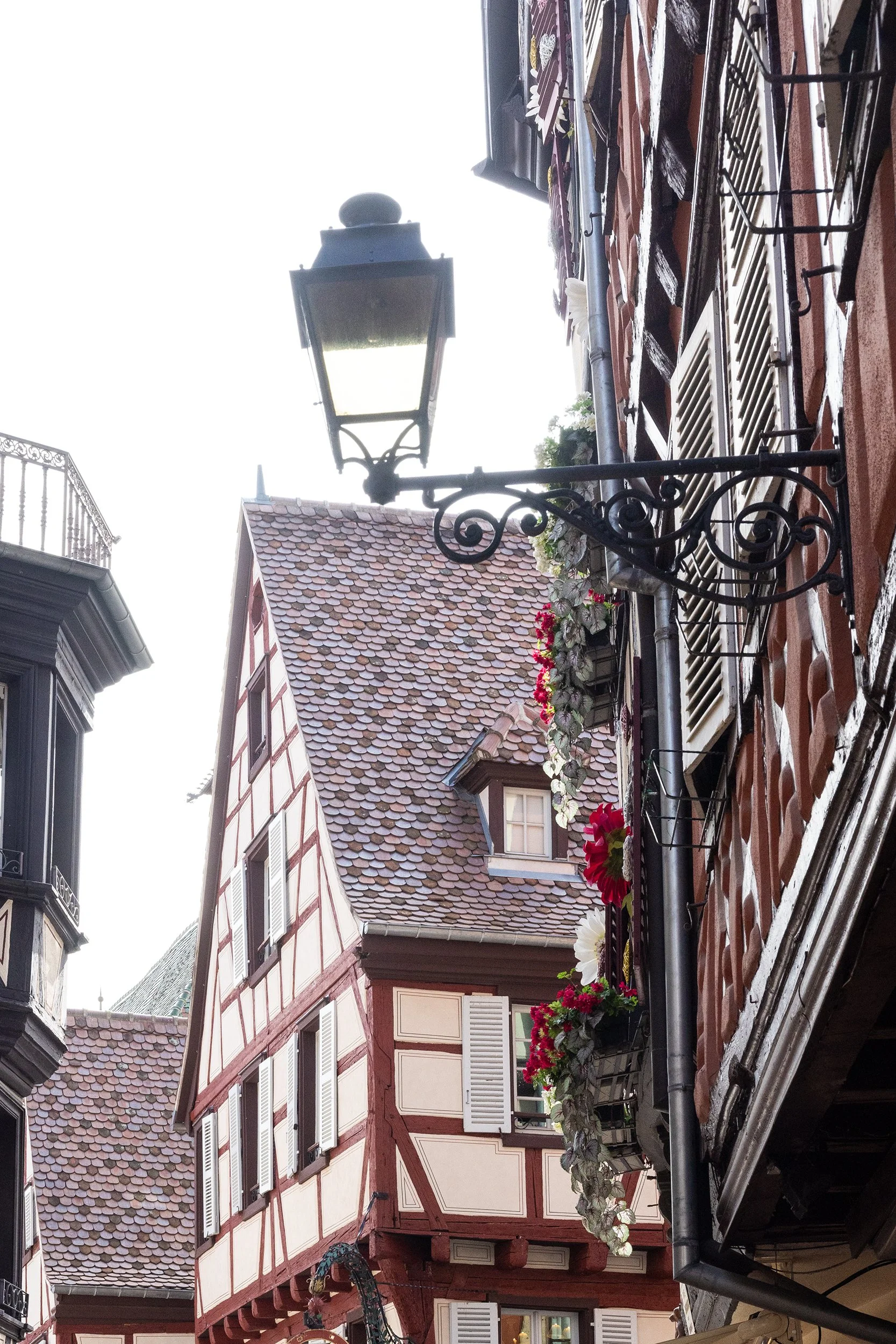
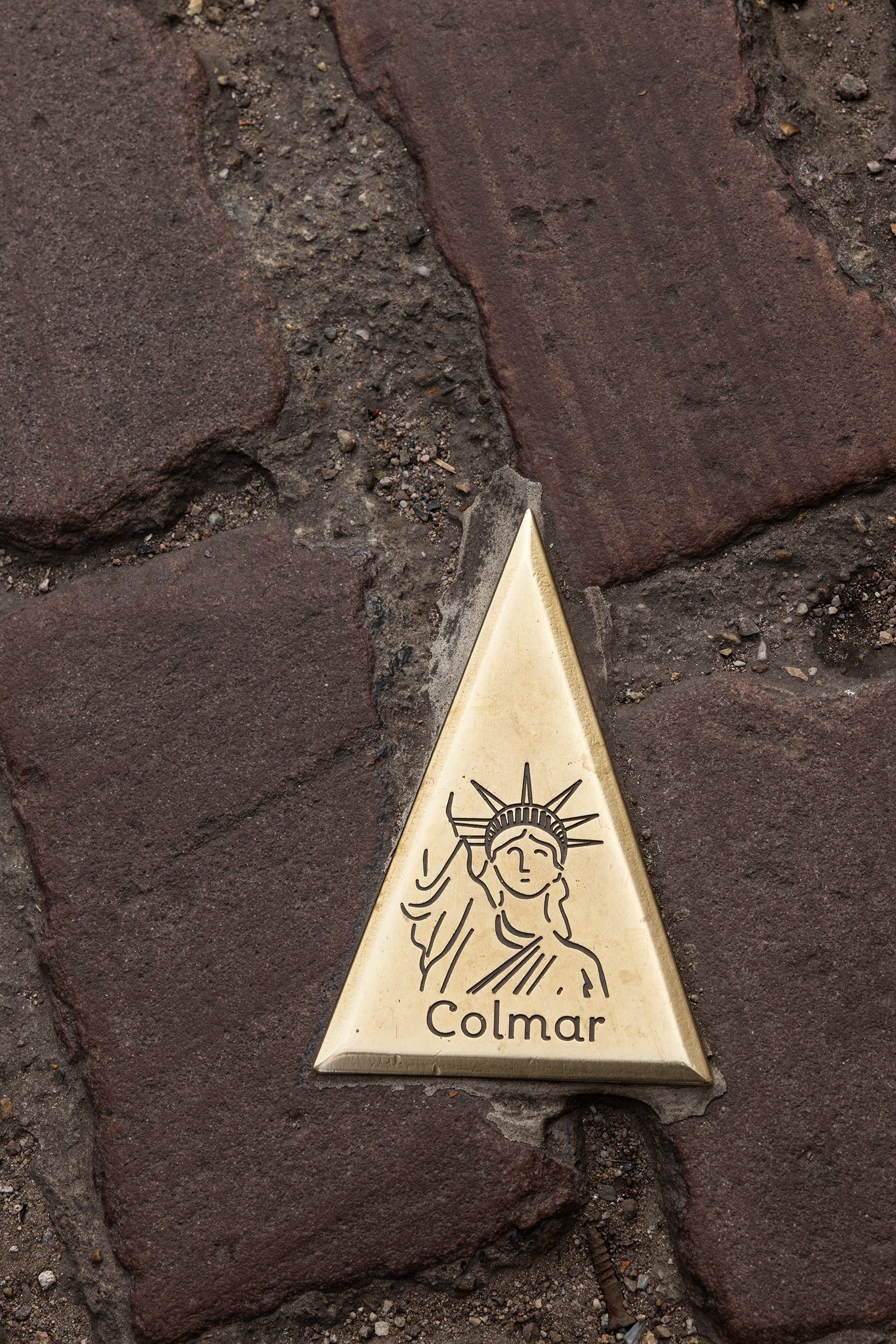
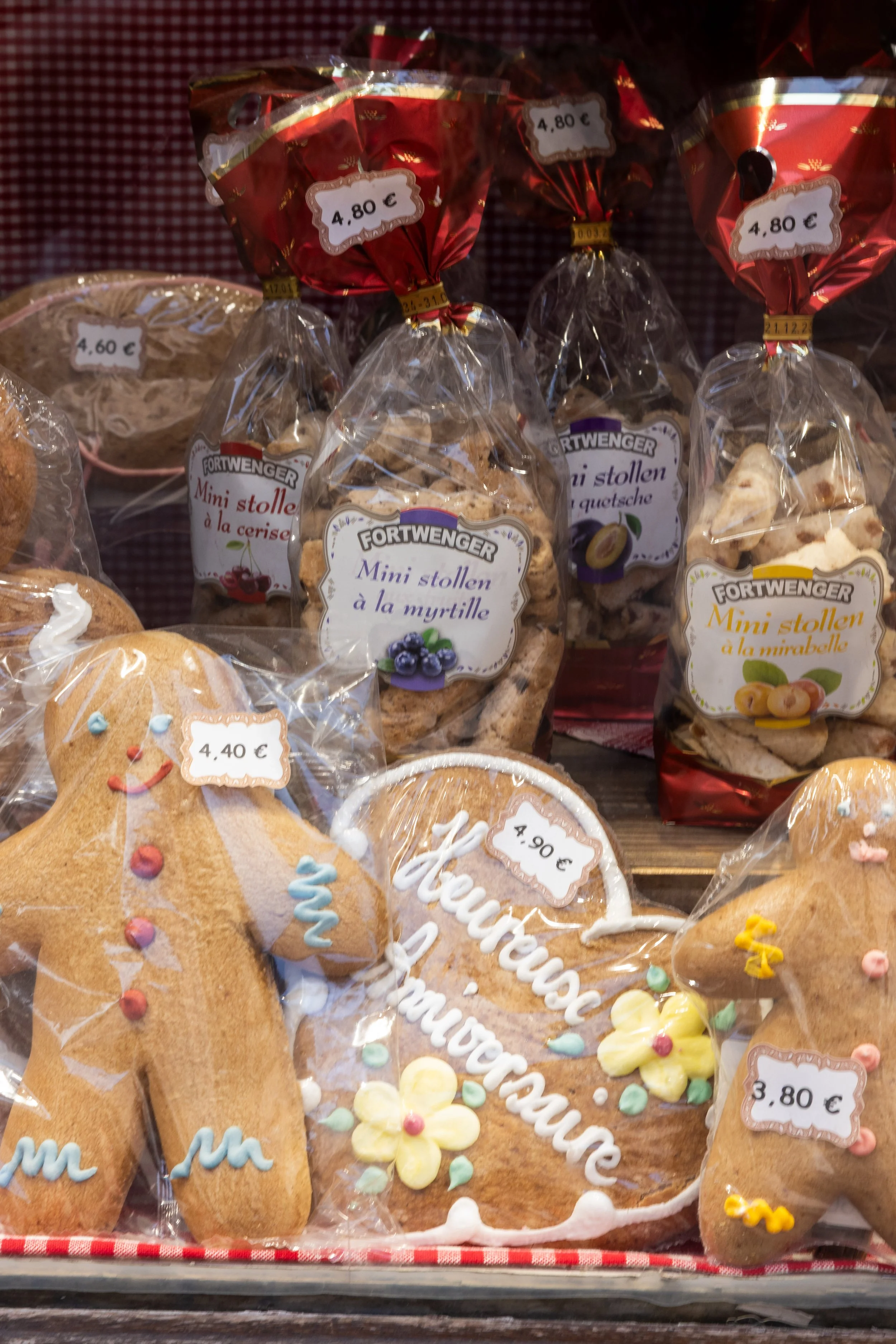
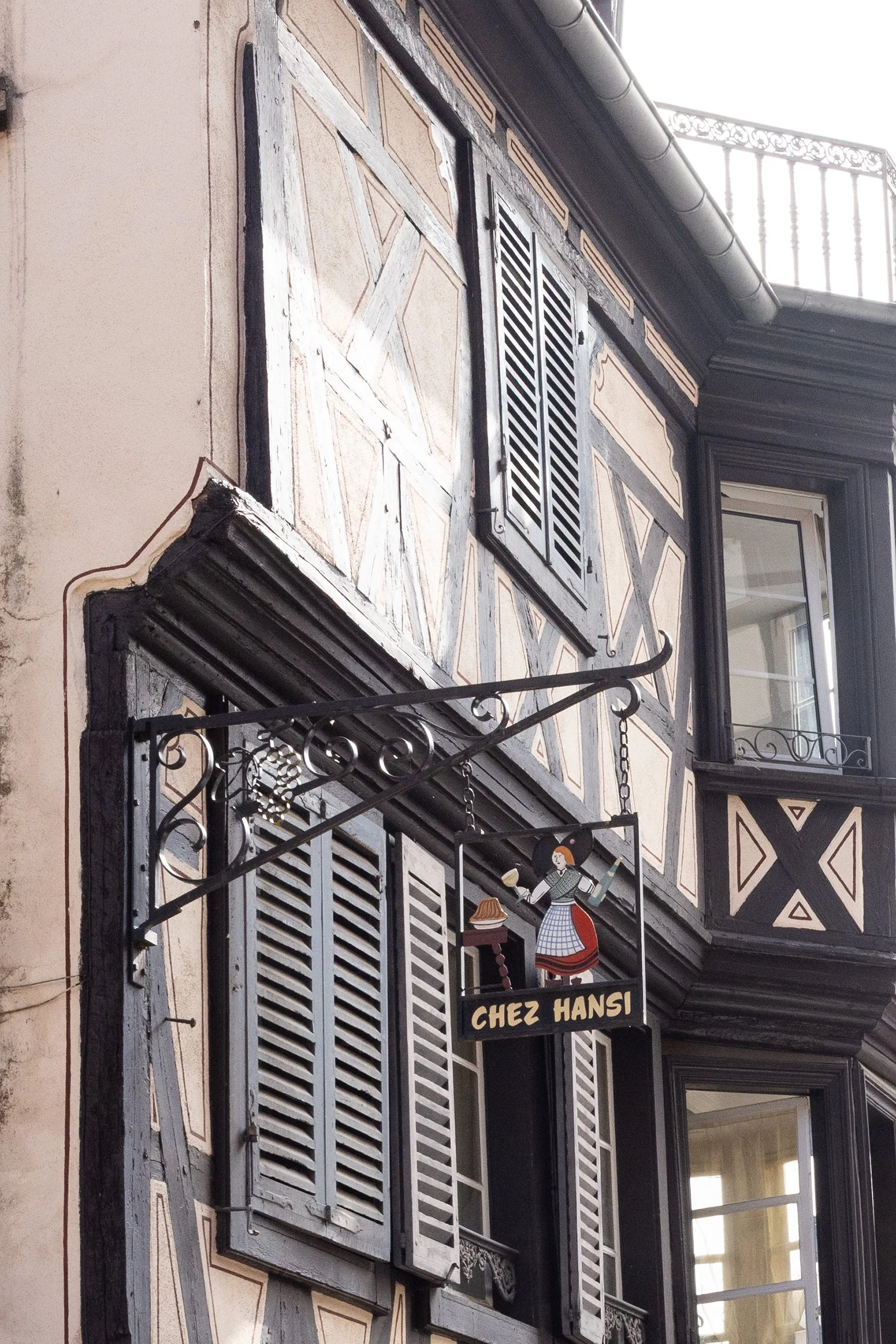
1. Rue des Marchands | 2. Statue of Liberty Golden Plates in the cobblestones, marking a walking tour through Colmar | 3. Treats for sale in a shop window | 4. Oncle Hansi merchant guild sign on Rue des Marchands
COLMAR’S DISTINCT QUARTERS
KRUTENAU QUARTER (PETITE VENISE)
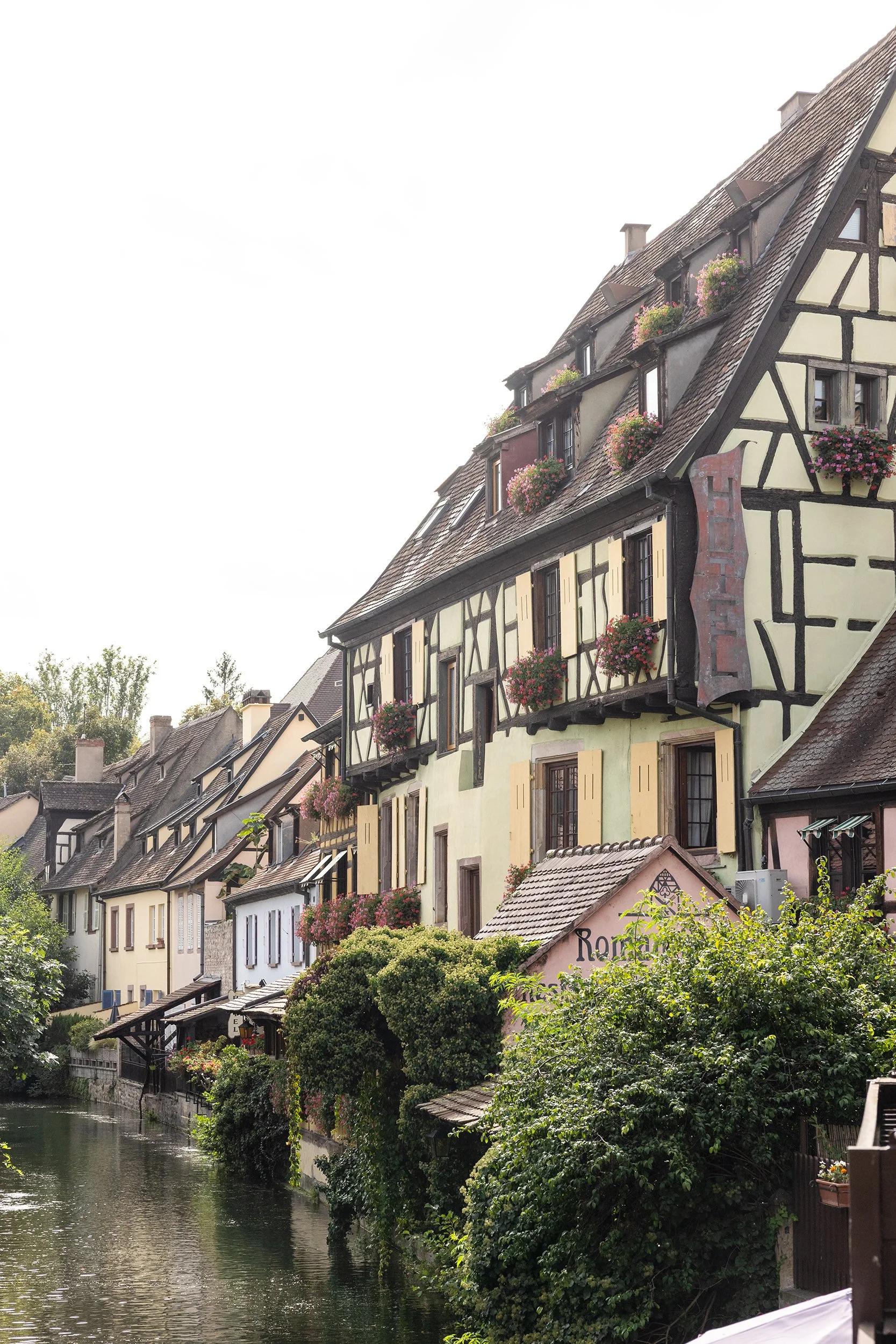
Petite Venise is easily Colmar's most beautiful area. The narrow Lauch River winds through a neighborhood of classic Alsatian half-timbered houses painted in soft pastels, their wooden beams creating geometric patterns against colored plaster. The waterside setting earned it the "Little Venice" nickname. This scenic quarter begins behind the Koïfhus, continues through the old fishmonger's district where fishermen once worked along the canal, and reaches the Saint-Pierre and Turenne bridges. You can walk along the water's edge or view the entire scene from the bridges - both perspectives are stunning.
QUAI DE LA POISSONNERIE (FISHMONGER’S DISTRICT)
Within Petite Venise sits the Quai de la Poissonnerie, the old fishmonger's district. In the 17th and 18th centuries, this waterfront street was home to Colmar's professional fishermen and boatmen who caught and sold fish directly from the canal. The narrow houses lining the quay were designed with direct water access, allowing fishermen to moor their boats right at their doorsteps.
QUARTIER DES TANNEURS (TANNERS QUARTER)
The Tanner's Quarter features some of Colmar's tallest and most distinctive half-timbered houses, their upper floors stacked high with exposed wooden galleries. These 17th and 18th-century buildings were purpose-built for the leather trade—tanners needed the extra height and open galleries to dry animal hides in the air and sunlight. The architectural quirk that once served a practical, smelly industry now creates one of the old town's most striking streetscapes.
VIEILLE VILLE (OLD TOWN)
Colmar's Old Town covers the entire historic center, including areas like the Tanners' and Fishermen's quarters. For shopping, head to Rue des Marchands, the old town's main retail street featuring boutiques and cafes in medieval buildings.
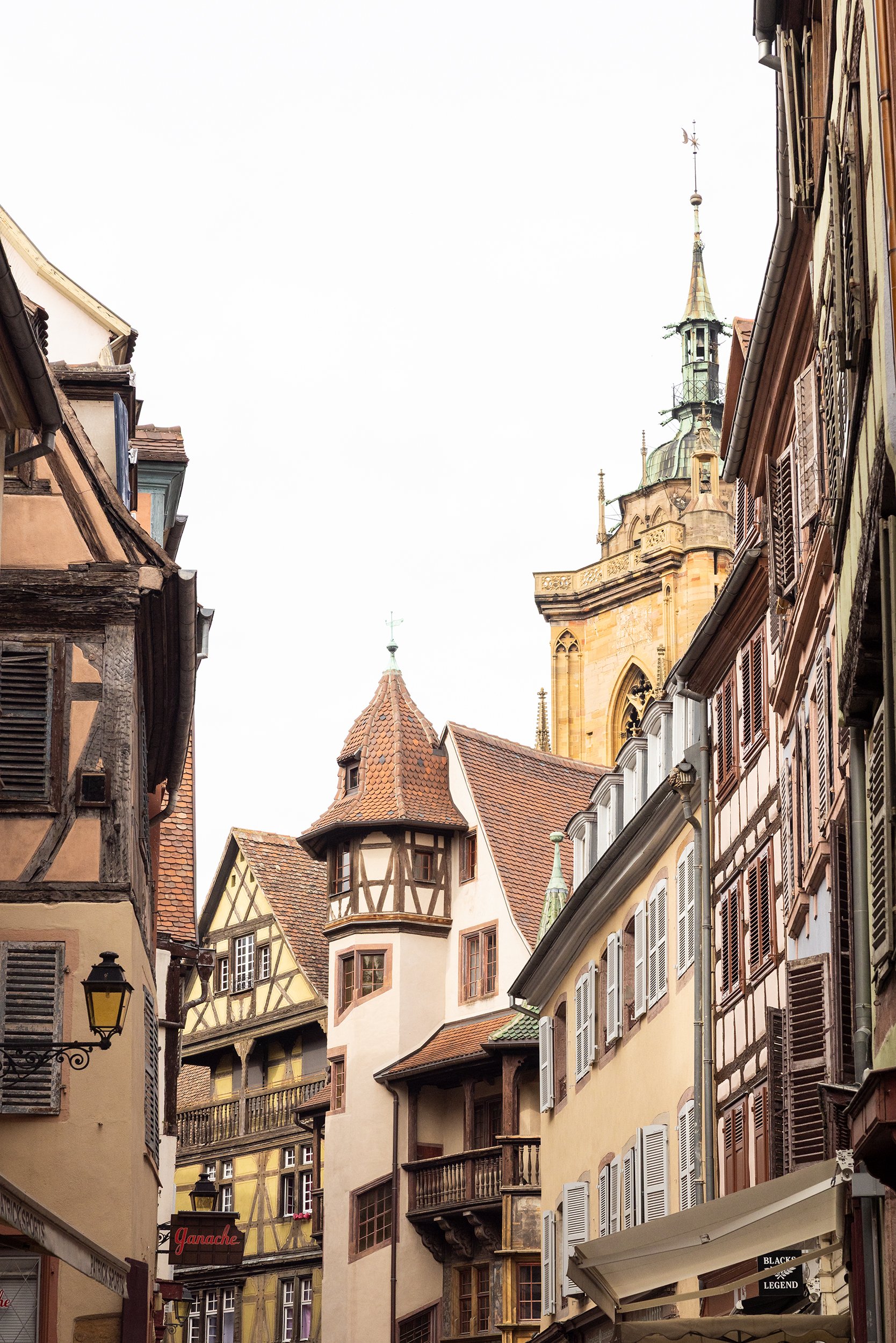
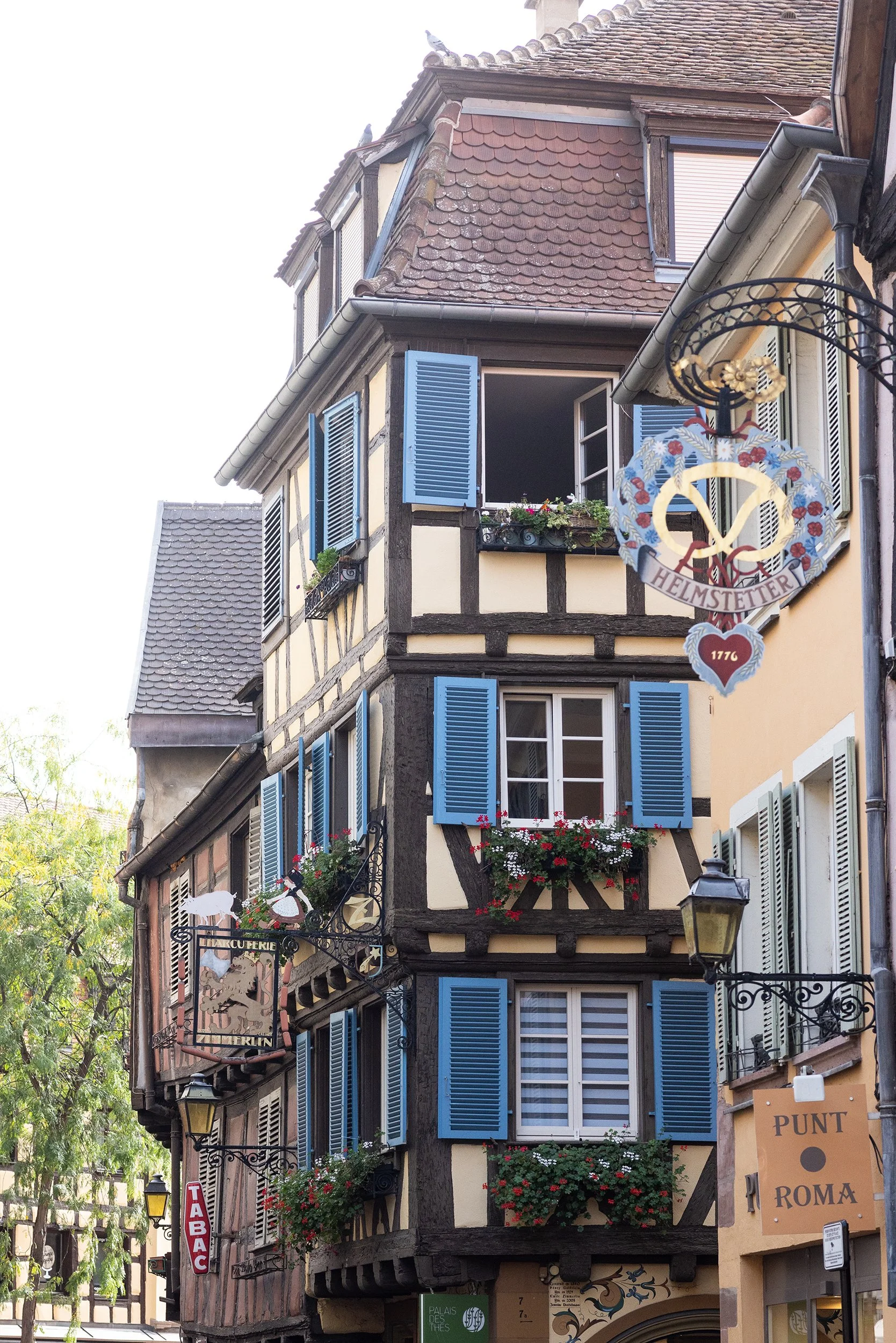
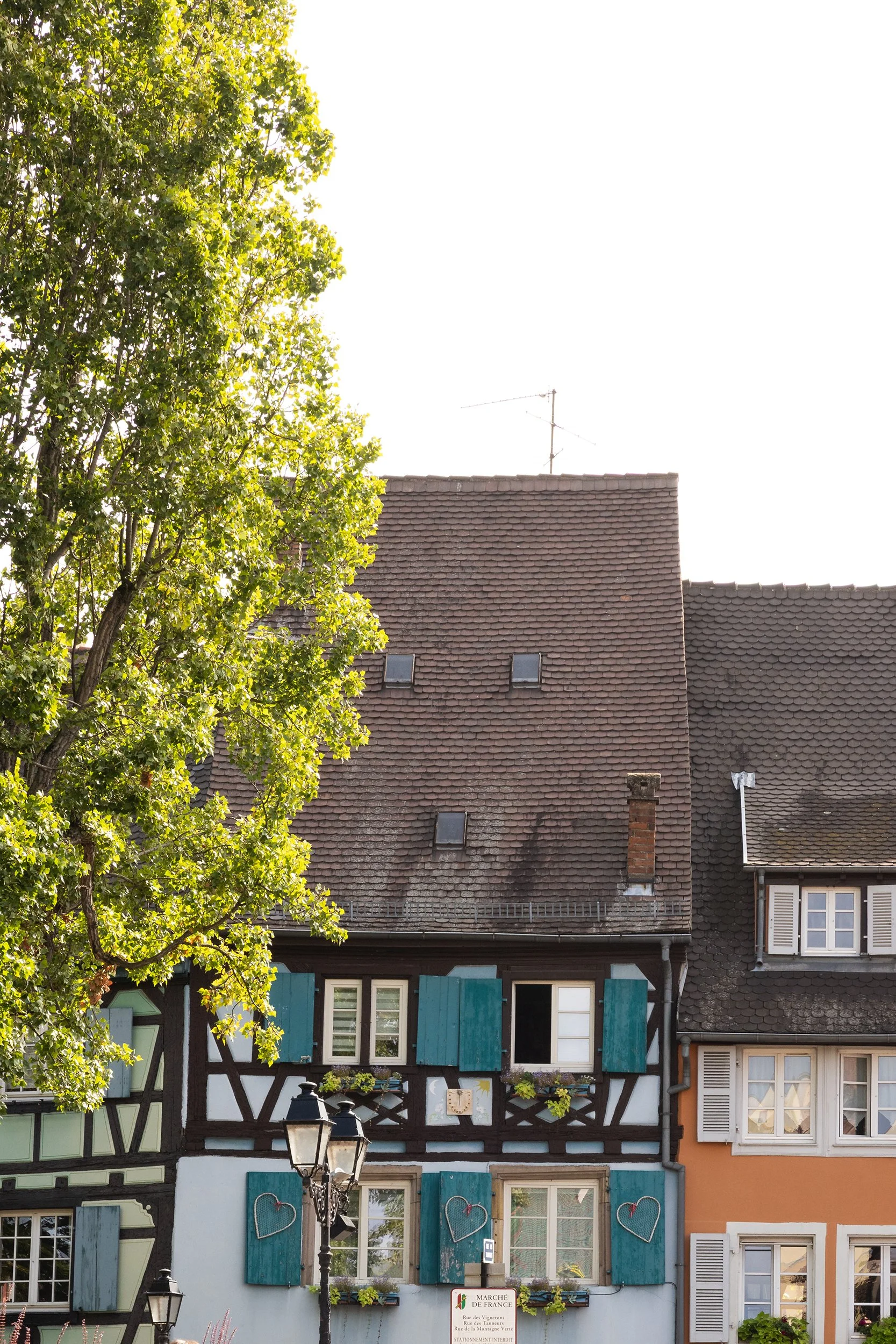
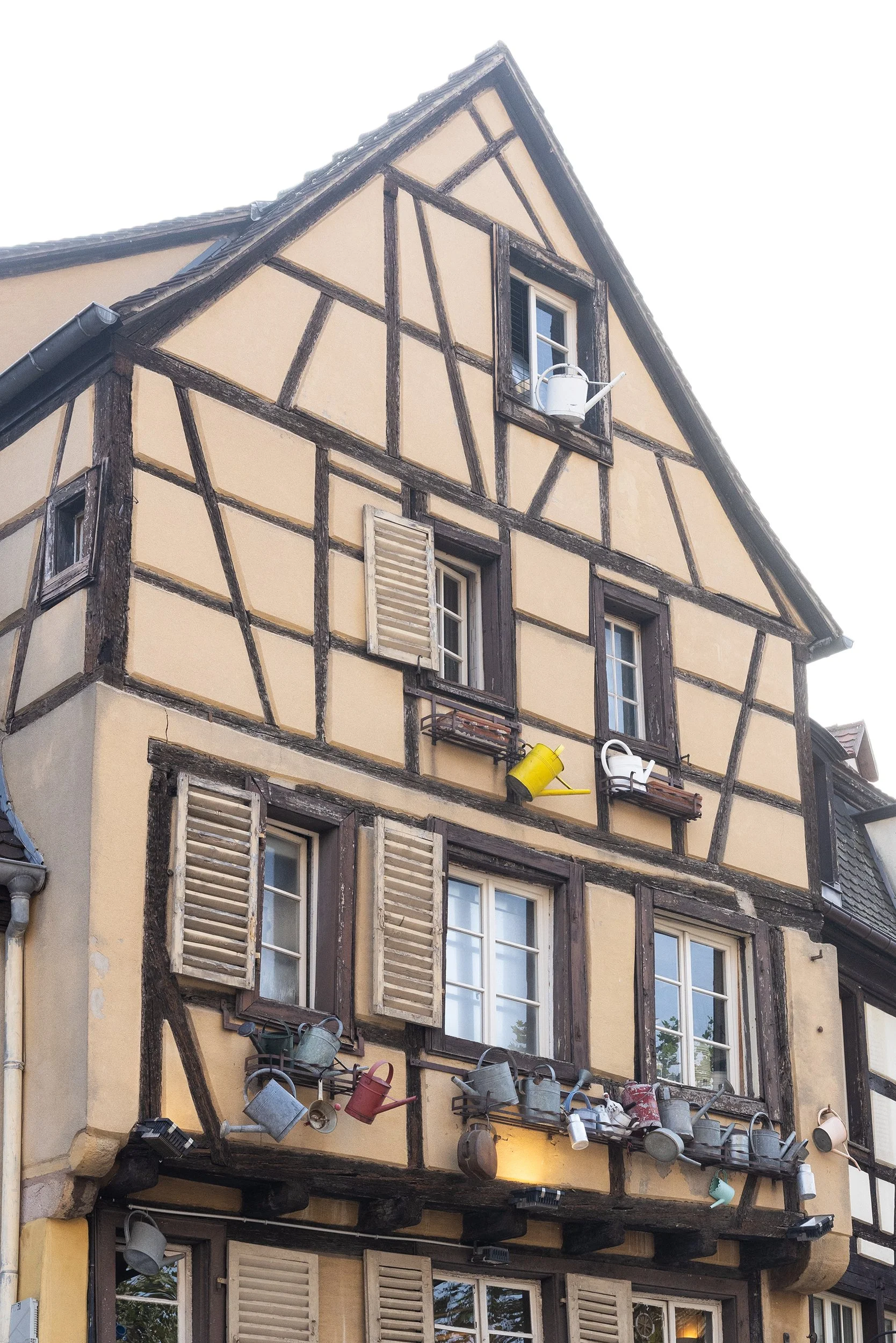
1. Rue des Marchands | 2. Rue des Serruriers | 3. Quai de la Poissonnerie in the Fishmonger’s District of Petite Venice | 4. Watering can details on the facade of Le Stam restaurant, Place des Dominicains
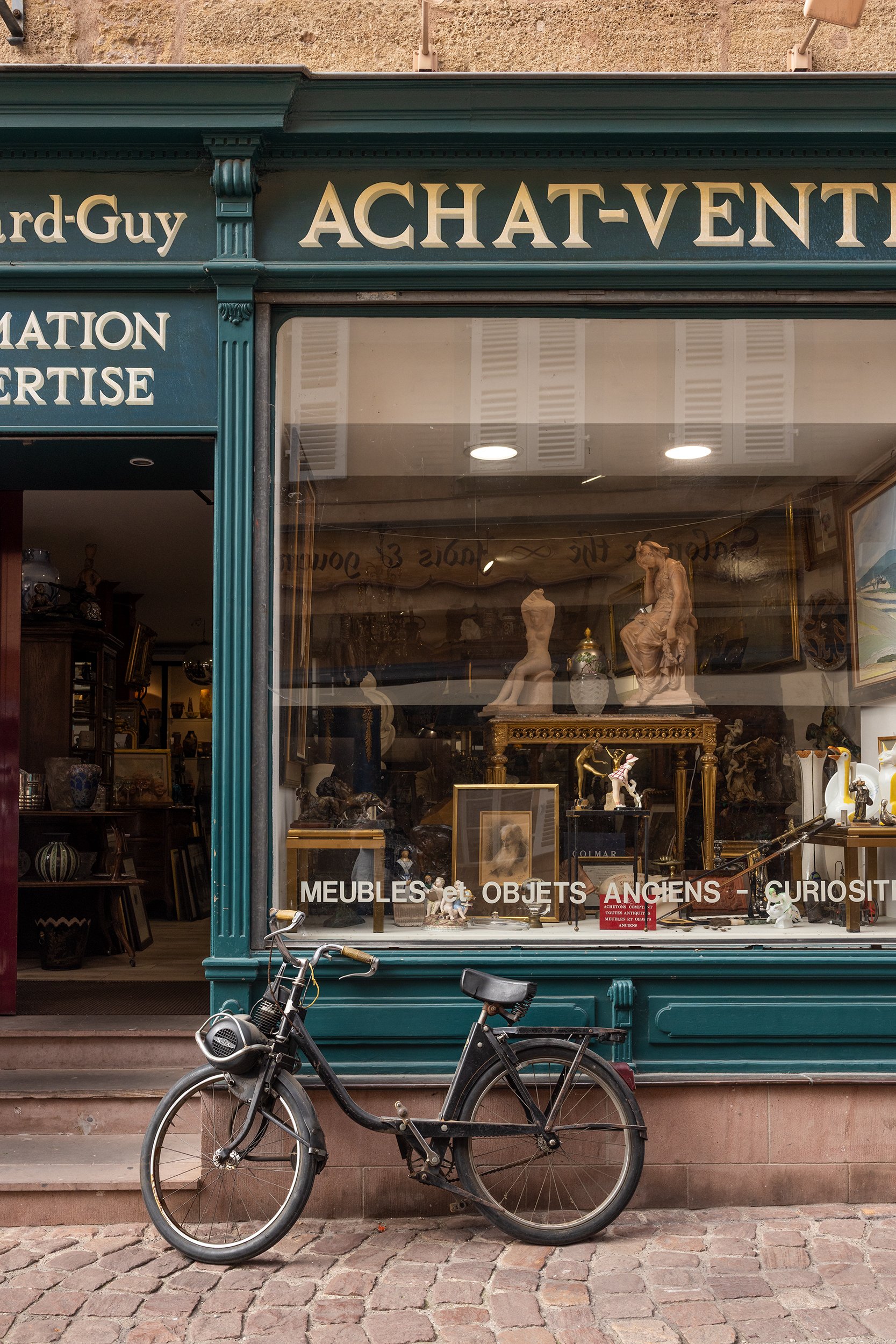
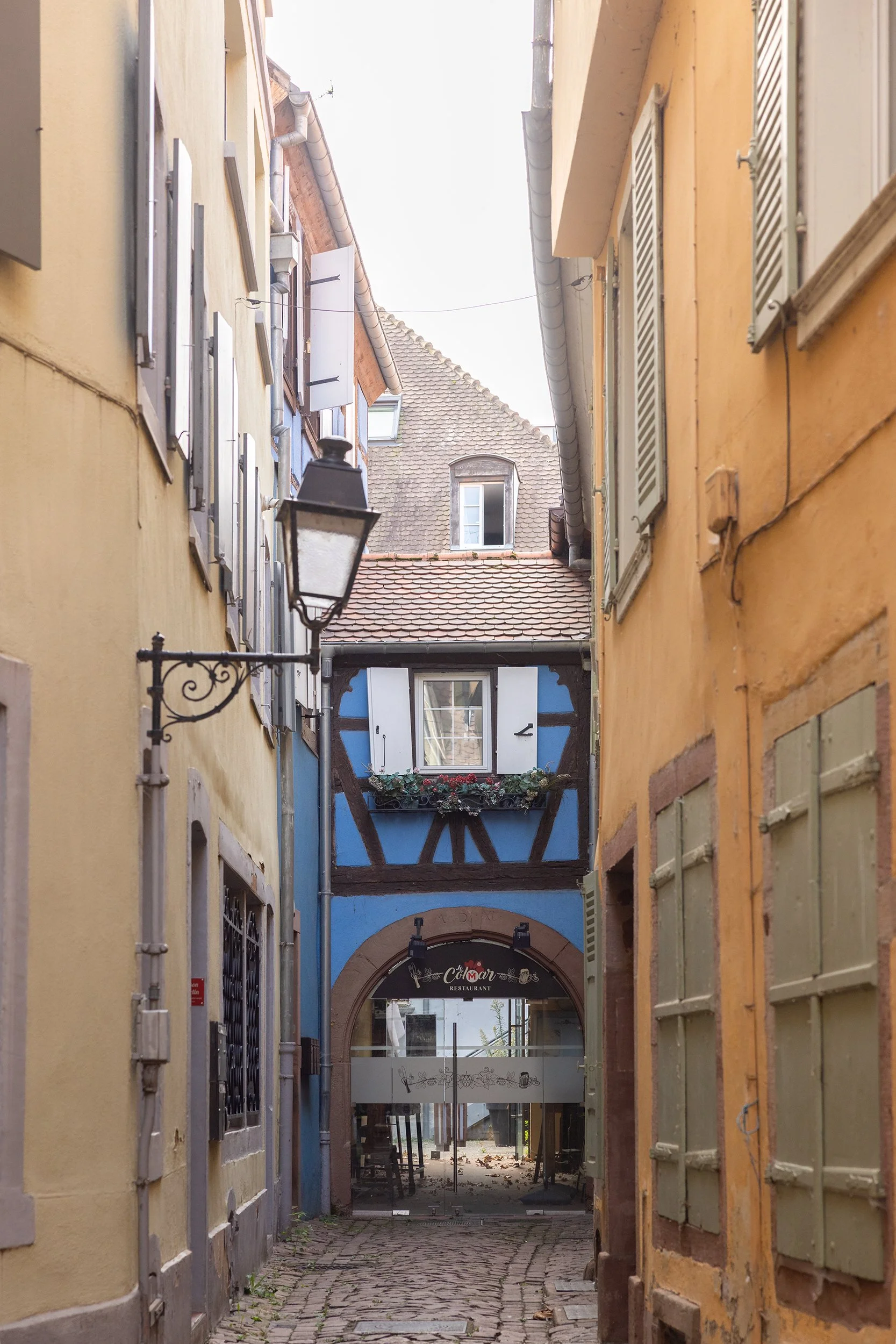
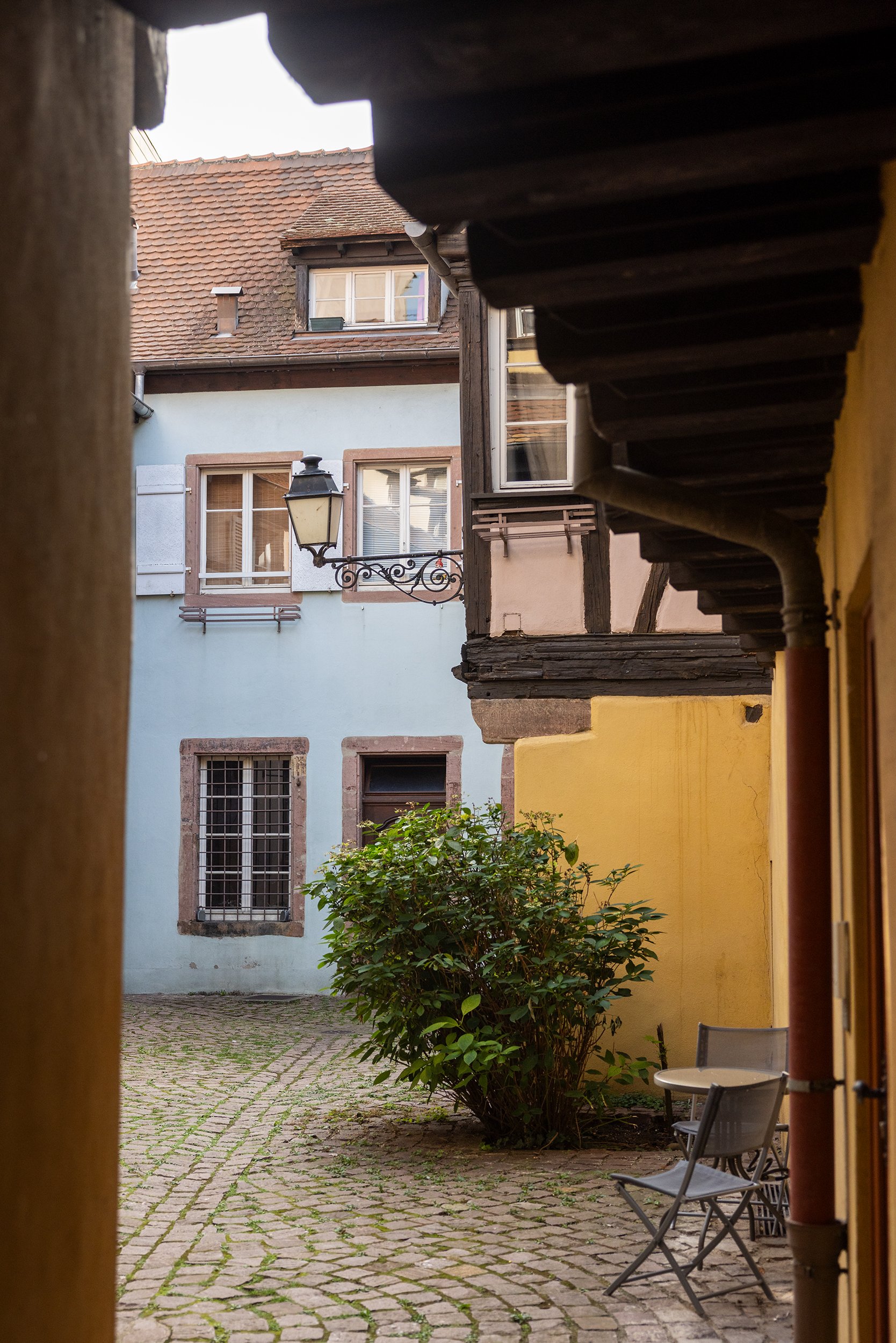
1. Antiquités Guy Caffard on Rue des Marchands | 2. Shop off Rue des Serruriers | 3. Courtyard off Place de l'École | 4. Rue des Serruriers
SITES & ACTIVITIES IN COLMAR
COLLÉGIALE SAINT-MARTIN DE COLMAR (SAINT MARTIN CHURCH)
Saint Martin Church rises above Colmar's rooftops, its Gothic spire and colorful tiled roof marking the center of the old town. Built over 130 years, starting in 1235, the church combines soaring Gothic architecture with regional Alsatian details. Even if you don't go inside, the exterior stone carvings and commanding presence make it a landmark worth noting.
Location: 18 Place de la Cathédrale
ÉGLISE DES DOMINICANS (DOMINICAN CHURCH)
The Dominican Church from the 1300s showcases mendicant order architecture, which reimagined what sacred spaces could be. Rather than soaring cathedrals, these orders built churches that reflected their vows of poverty and service.
Location: 3 Place des Dominicains
Entry Fee: Adults & Seniors: €2 | Ages over 18 & Students: €1.50 | Ages 12-18: : €1 | Children under 12: free | Groups (15+ people): €1.50
FONTAINE SCHWENDI (SCHWENDI FOUNTAIN)
At the Schwendi Fountain, you'll find a statue by Auguste Bartholdi, the sculptor behind the Statue of Liberty. It depicts Lazarus von Schwendi, a military commander and diplomat, clutching what legend claims is a vine stock from Hungary - a nod to the grapes he supposedly introduced to the region.
Location: Place de l'Ancienne Douane
GOLDEN TRIANGLE DISCOVERY TRAIL
Colmar has a low-key wayfinding feature: small metal plaques with Statue of Liberty arrows set into the pavement, a historical trail that guides tourists through the city's streets and monuments. These serve as a way to follow the footsteps of the city's famous sculptor, Frédéric-Auguste Bartholdi, who created the Statue of Liberty and was born in Colmar. The triangles are easy to miss, but once you start following them, they add a little treasure-hunt element to exploring the town.
Location: The first triangle is located near the Unterlinden Museum, Place Unterlinden (also the location of the tourism office), although you could start anywhere along the trail. A PDF map of the Discovery Trail can be found here.
KOIFHUS (OLD CUSTOMS HOUSE)
The Old Customs House, also known as the Ancienne Douane, dating back to 1480, has lived many lives. Its ground floor stored goods, while upstairs, Alsatian officials collected taxes and convened meetings. Over the centuries, it transformed into a theater, then a bank, then schools—each era adding architectural layers. The result is a patchwork of styles crowned by a striking roof of colorful glazed tiles, with a two-headed imperial eagle presiding over the main entrances. France named it a historic monument in 1974.
Location: 29 Grand Rue
LA BELLE EPOQUE 1900 CAROUSEL
Located at the biggest park in the city center, Parc du Champ de Mars, the 1900 Carousel is said to be the largest of its kind in France. If arriving by train, make your way into the Old Town by passing through this park - it's part of the pedestrian route from the station.
Location: Parc du Champ de Mars, Avenue de la République
MAISON ADOLPH (ADOLPH HOUSE)
Dating to around 1350, the Adolph House ranks among Colmar's oldest. It takes its name from the Adolph family, who removed the original Gothic picture windows in the late 19th century—those windows, with their pointed arches from the late 1400s, showed how religious architecture influenced residential design. The third floor and half-timbered gable are later additions from the 16th century. Adjacent to the house stands a 1592 well topped with two lion heads, originally located on nearby Rue des Marchands before being moved here.
Location: 16 Place de la Cathédrale
MAISON DES CHEVALIERS DE SAINT-JEAN (HOUSE OF THE ST. JOHN’S KNIGHTS)
Despite its name, this house never belonged to the Knights of St. John. Built in 1608 by architect Albert Schmidt (who also designed the House of Heads), it features Venetian palace-inspired architecture with a two-story gallery of arched arcades and stone balustrades connecting two buildings—one facing the street, the other an inner courtyard. The current structure is actually a 19th-century reconstruction, with the original elements likely dismantled and reassembled in Germany.
Location: Rue St Jean
MAISON DES TÊTES (HOUSE OF HEADS)
The House of Heads is one of Colmar's most remarkable buildings. Built in 1609 during the German Renaissance, the facade is covered with 106 grotesque carved heads - grimacing faces, fantastical creatures, and elaborate masks decorating the exterior walls and window frames. Originally a wealthy merchant's private residence, the ornate building showcases the kind of extravagant detail wealthy Renaissance families used to display their status. The House of Heads now houses five-star hotel, L'Esquisse Hotel & Spa Colmar, and Michelin-starred restaurant, La Table d'Olivier Nasti.
Location: 19 Rue des Têtes
MAISON PFISTER (PFISTER HOUSE)
Pfister House stands out even among Colmar's architectural treasures. Built in 1537 for hatter Ludwig Scherer, it introduced Renaissance style to the city for the first time, blending it with medieval elements. Its façade tells stories through painted murals - biblical figures, everyday scenes, and allegorical imagery covering the walls.
Location: 11 Rue des Marchands
MAISON SCHONGAUER (SCHONGAUER HOUSE)
Also known as Zum Schwan (the swan), this striking 15th-century half-timbered house was home to Martin Schongauer, one of the most influential engravers and painters of the Northern Renaissance. Located in Colmar's old town, it stands as a beautiful reminder of the city's rich artistic heritage and medieval charm.
Location: 36 Rue des Marchands
SALLE DU CORPS DE GARDE (FORMER GUARD HOUSE)
The Former Guard House began as a place of worship before its 1575 conversion to military purposes. Don't miss the Renaissance loggia added seven years later - the decorative flourishes and carved portal make it one of the town's most photogenic facades.
Location: 17 Place de la Cathédrale
STATUE DE LA LIBERTÉ
You'll find a scaled-down Statue of Liberty at a roundabout near the old town, a tribute to Colmar's most famous son, Auguste Bartholdi, who created the iconic New York monument. It is a 12-meter (39-foot) tall replica that stands at the northern entrance to the city.
Location: Route de Strasbourg
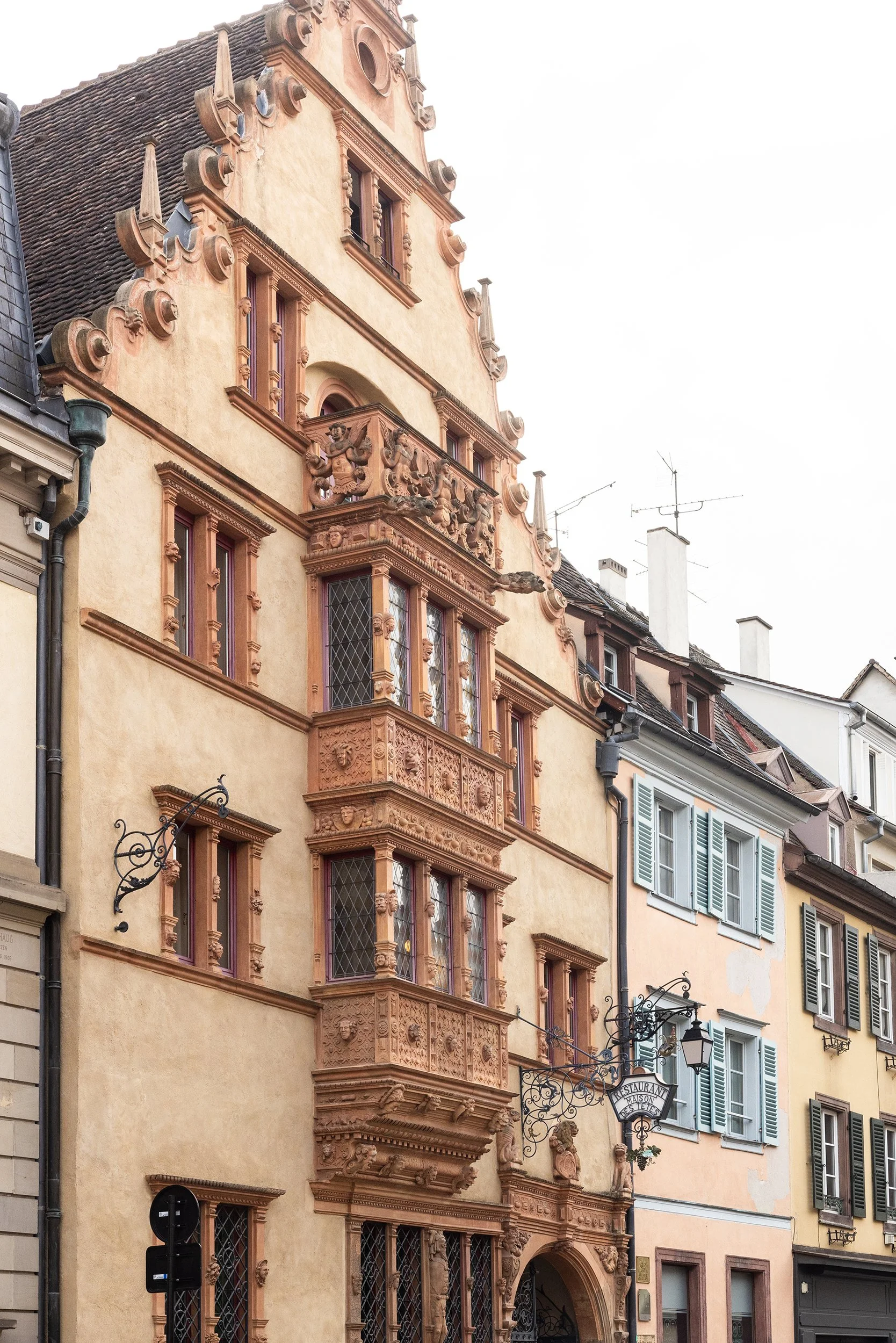
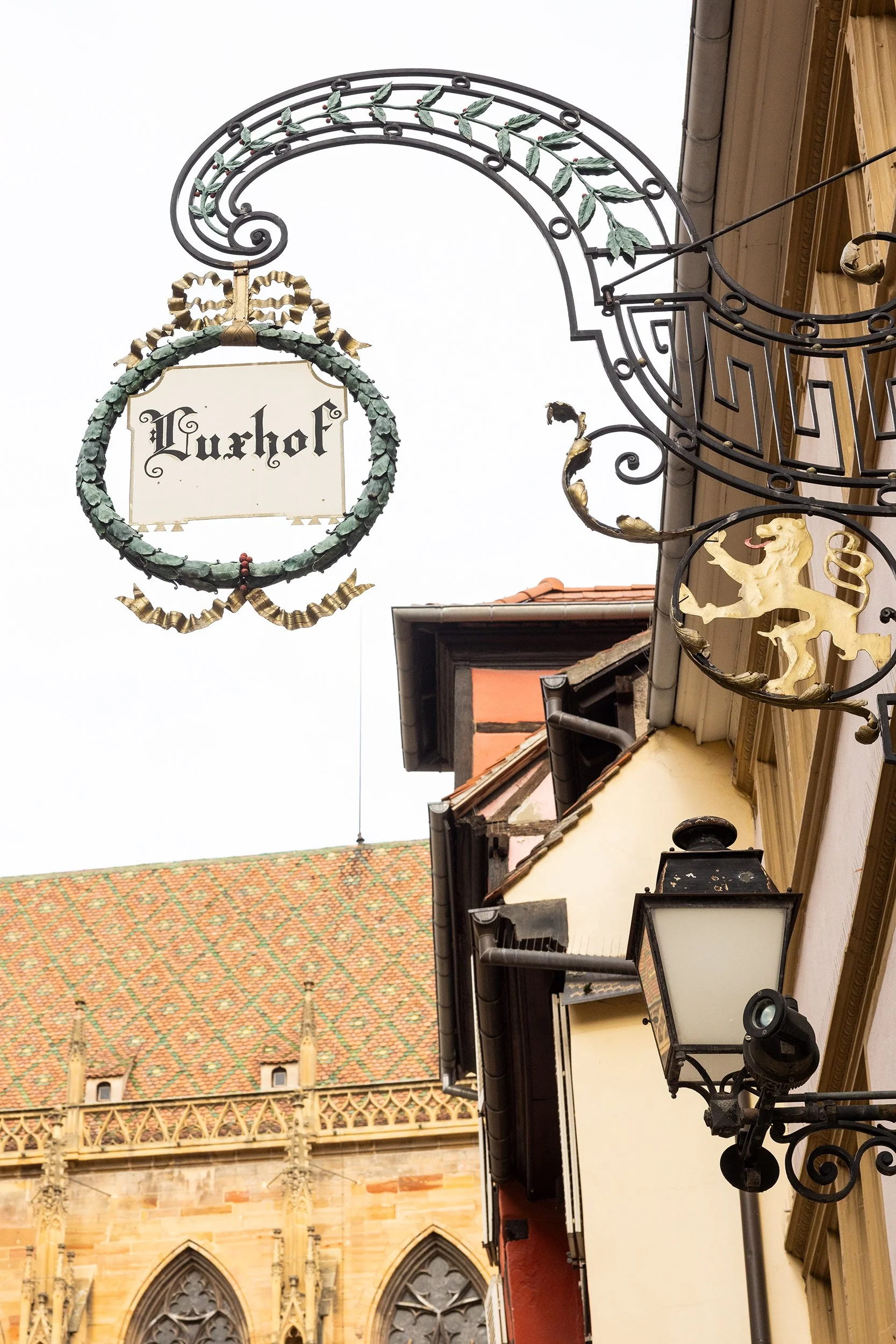
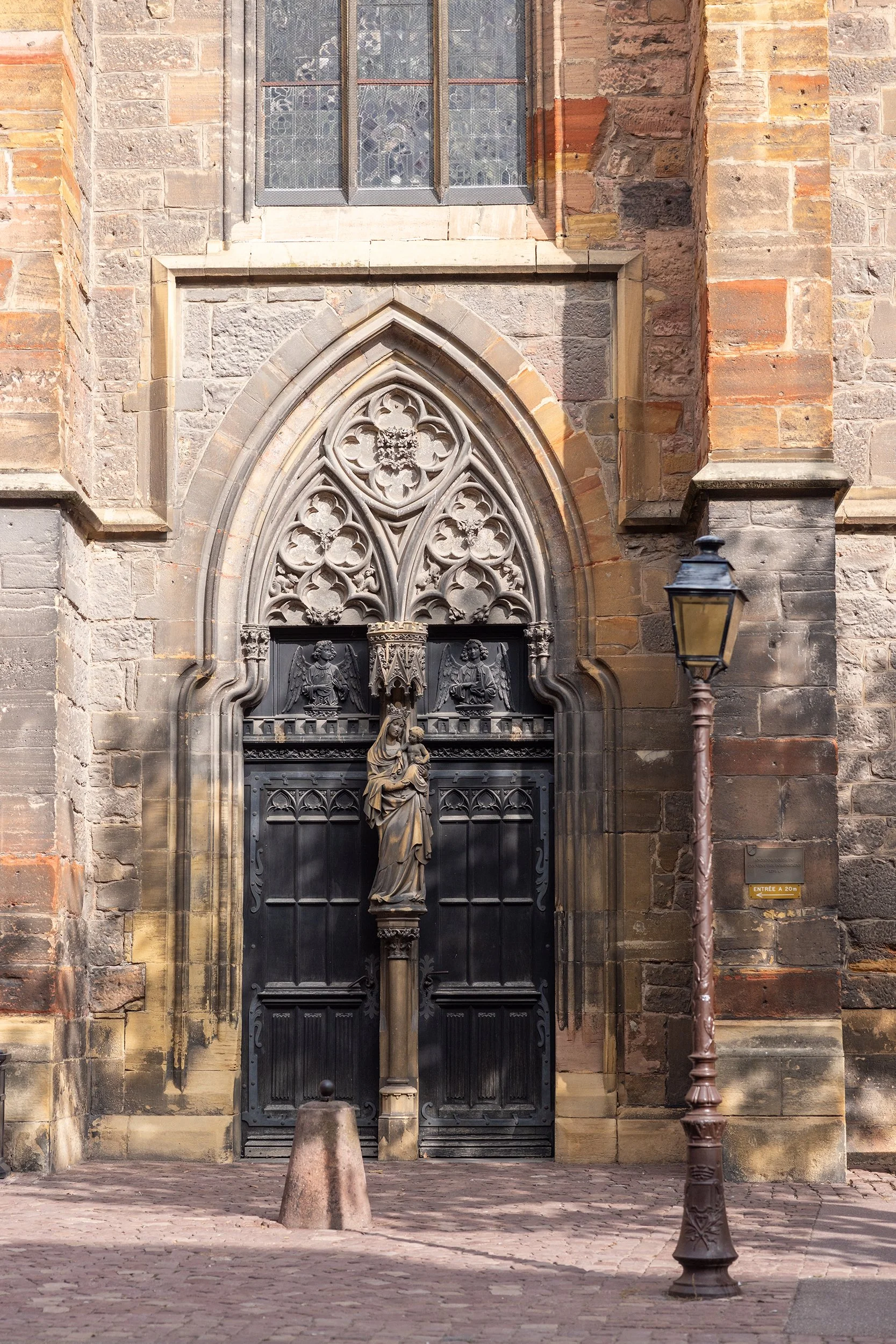
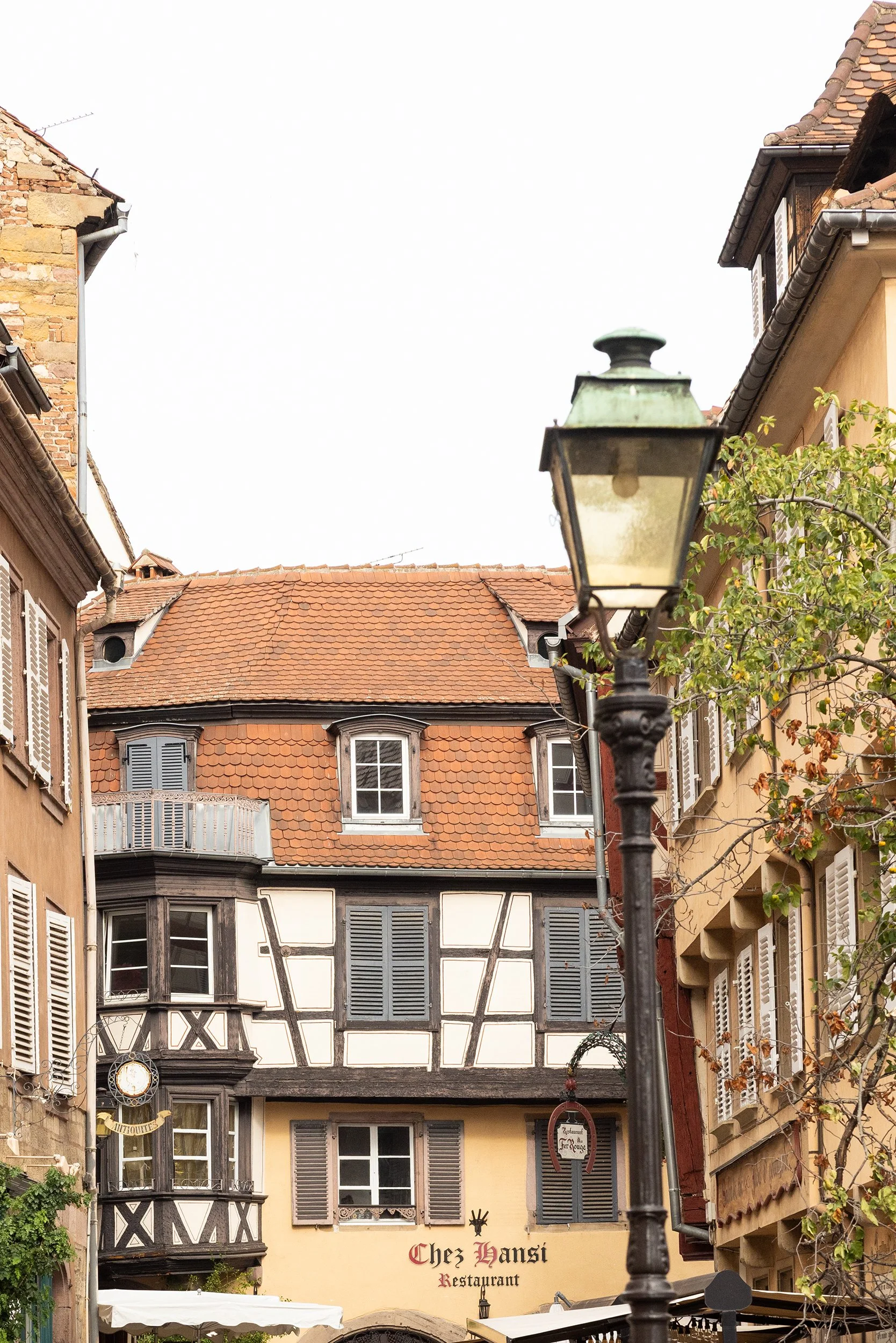
1. Maison des Têtes on Rue des Têtes | 2. Merchant guild sign on Rue Mercière with view of Collégiale Saint-Martin | 3. Entrance to the Église des Dominicains (Dominican Church) | 4. Chez Hansi on Rue des Marchands
PLANNING YOUR VISIT
SHOPPING
One downside to Colmar's popularity: souvenir shops line the streets, each selling virtually identical merchandise - gingerbread dolls, Alsatian keychains, and touristy trinkets. After a while, the shops start blending together.
DINING
I’m not going to suggest specific restaurants as I was unable to secure a table without a reservation at the restaurants I had hoped to dine at, so I grabbed a table near my location that turned out to be touristy and not great. But a dish that is very popular in Colmar is: Tarte Flambée (Flammkuchen). Picture an ultra-thin, crackling crust slathered with tangy crème fraîche, crowned with caramelized onions and savory bacon or smoked salmon. This is tarte flambée - or Flammkuchen as Germans call it - a beloved Alsatian specialty that embodies the region's unique blend of French and German culinary traditions.
GENERAL INFORMATION
Languages Spoken: French, although almost everyone speaks English. Be sure to ask, parlez-vous anglais? (do you speak Engligh?). A friendly bonjour (hello) goes a long way when entering shops.
Currency: Euro (€)
Restaurant Tipping: Tipping at restaurants is not expected but appreciated. Simply round up to the nearest euro and be prepared to tip in cash.
Taxi Tipping: For a typical ride, round up to the next euro on the fare.
TOURISM INFORMATION
Tourist Office of Colmar and its Region
Downloadable brochures and maps available here.
Location: Place Unterlinden
ACCOMMODATIONS
La Maison des Têtes
I am a huge fan of Relaix & Chateaux properties for their boutique, but sophisticated atmosphere. The House of Heads lives up to its dramatic name - 106 small stone faces peer from the façade of this 1609 bourgeois mansion. Beyond the striking exterior, you'll find a traditional brasserie, a Michelin-starred dining room, and elegant hotel accommodations, all operating within one of Alsace's most beautiful historic buildings.
Location: 19 Rue des Têtes
Cour du Corbeau Hotel Strasbourg, MGallery Collection
This property is located in Strasbourg, but worth mentioning here in case you choose to make Colmar a day trip, as I did. Cour du Corbeau is one of my favorite hotel stays ever; this property was just charming. The renovated 16th-century building is located in central Strasbourg with 63 unique rooms and is located near the Place du Château and the Strasbourg Cathedral.
Location: 6-8 Rue des Couples
HOW TO GET HERE
By Train:
From Paris: TGV trains to Alcase leave from Paris Gare de l’Est. The high-speed train rates are similar to booking a flight: the closer the travel date, the more expensive the ticket will be. Book early; a last-minute booking can easily reach over $100, whereas planning in advance can be in the $35 range. The trip from Paris to Colmar is about two and a half hours with arrival into Colmar Place de la Gare. Bookable online.
From Strasbourg: Regional and TGV trains frequently run between Strasbourg and Colmar. The trip is short, taking about 25-35 minutes. Bookable online.
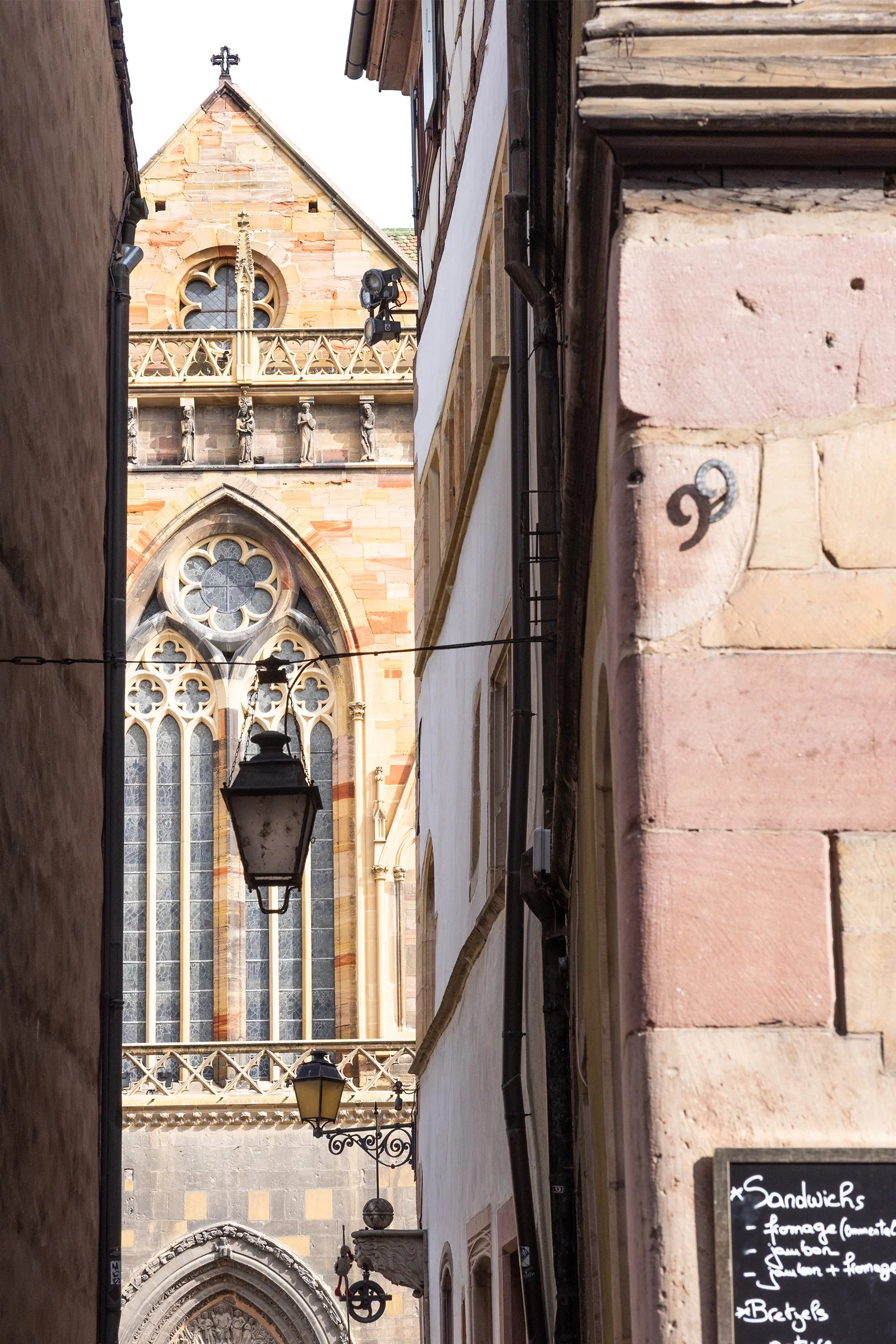
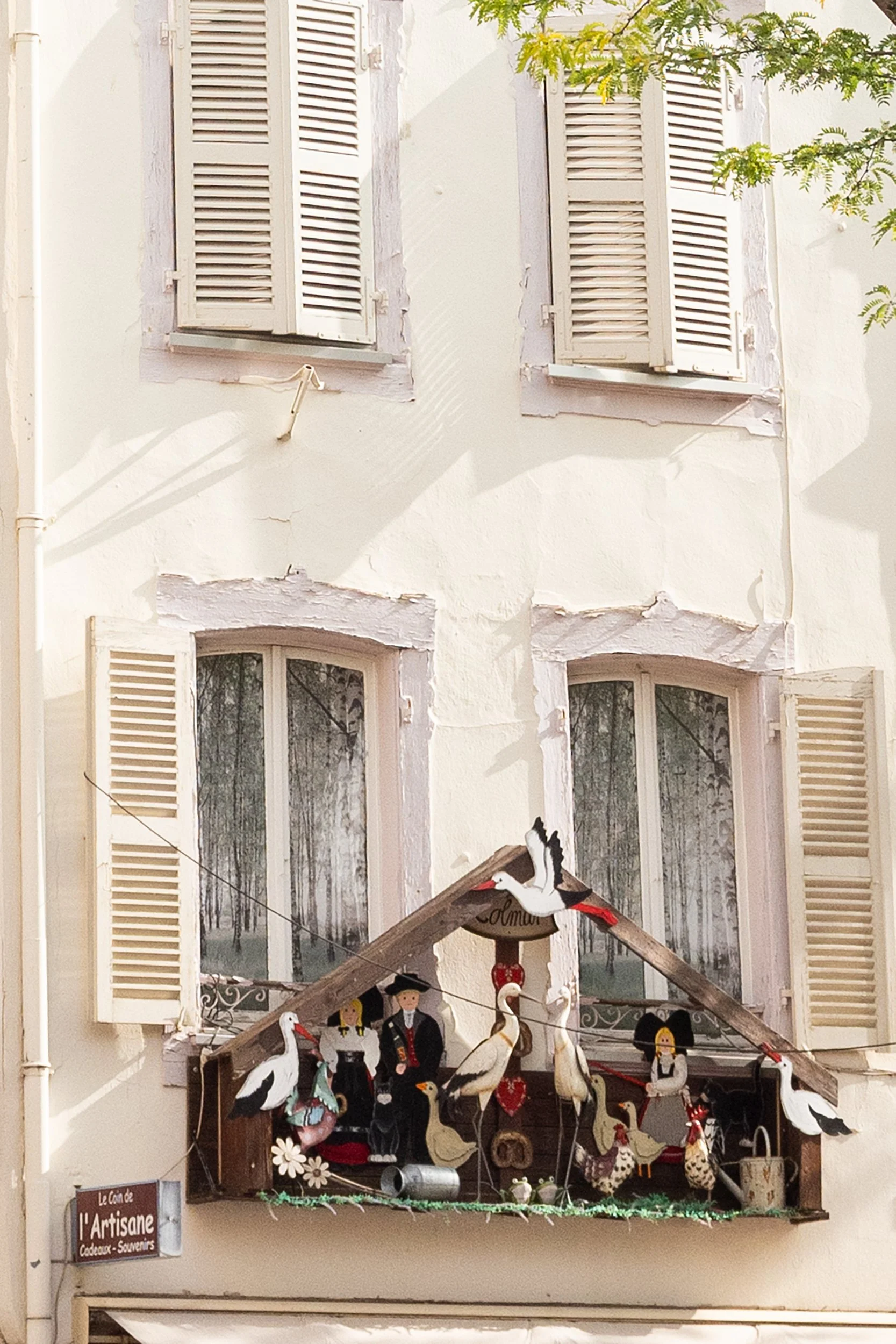
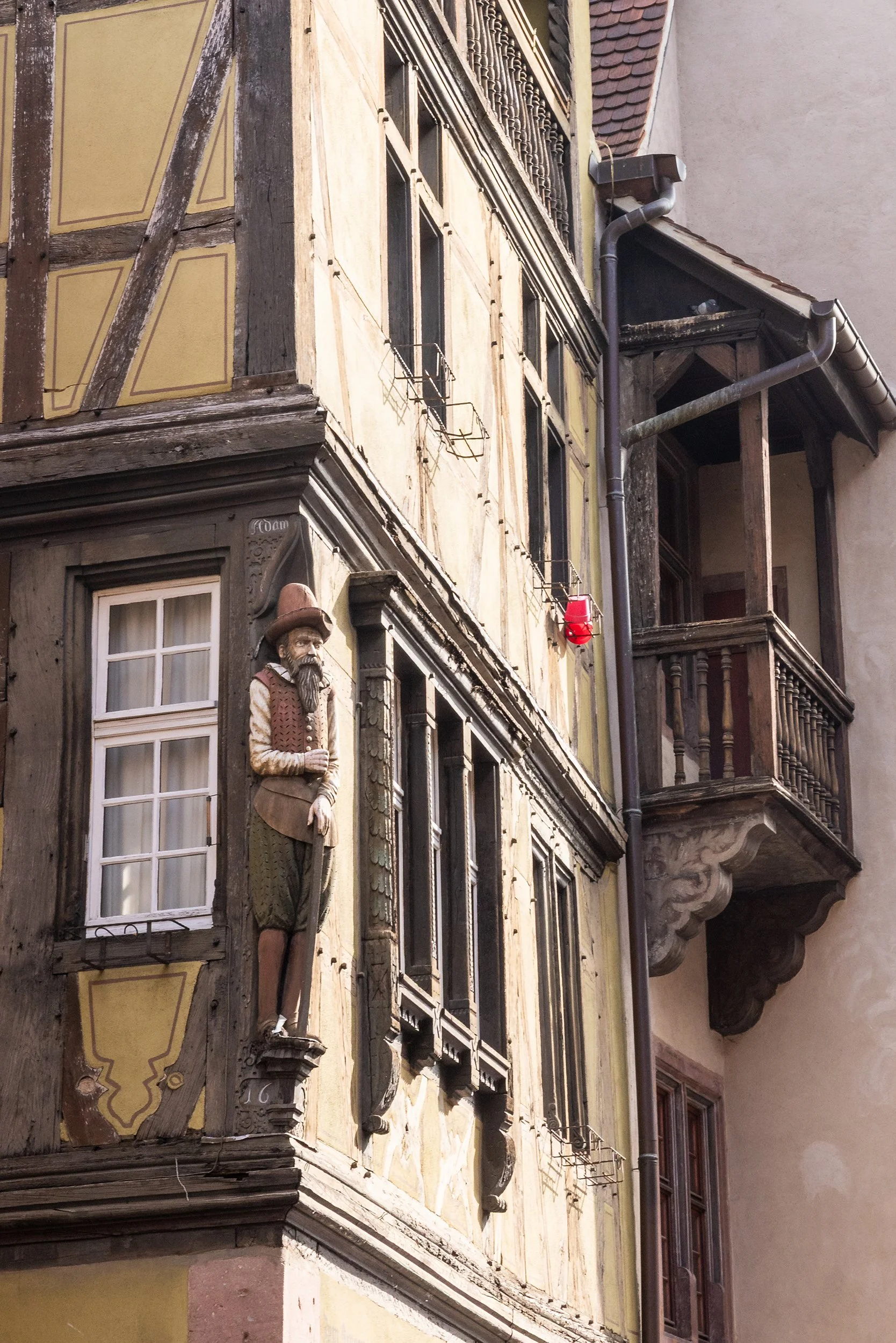
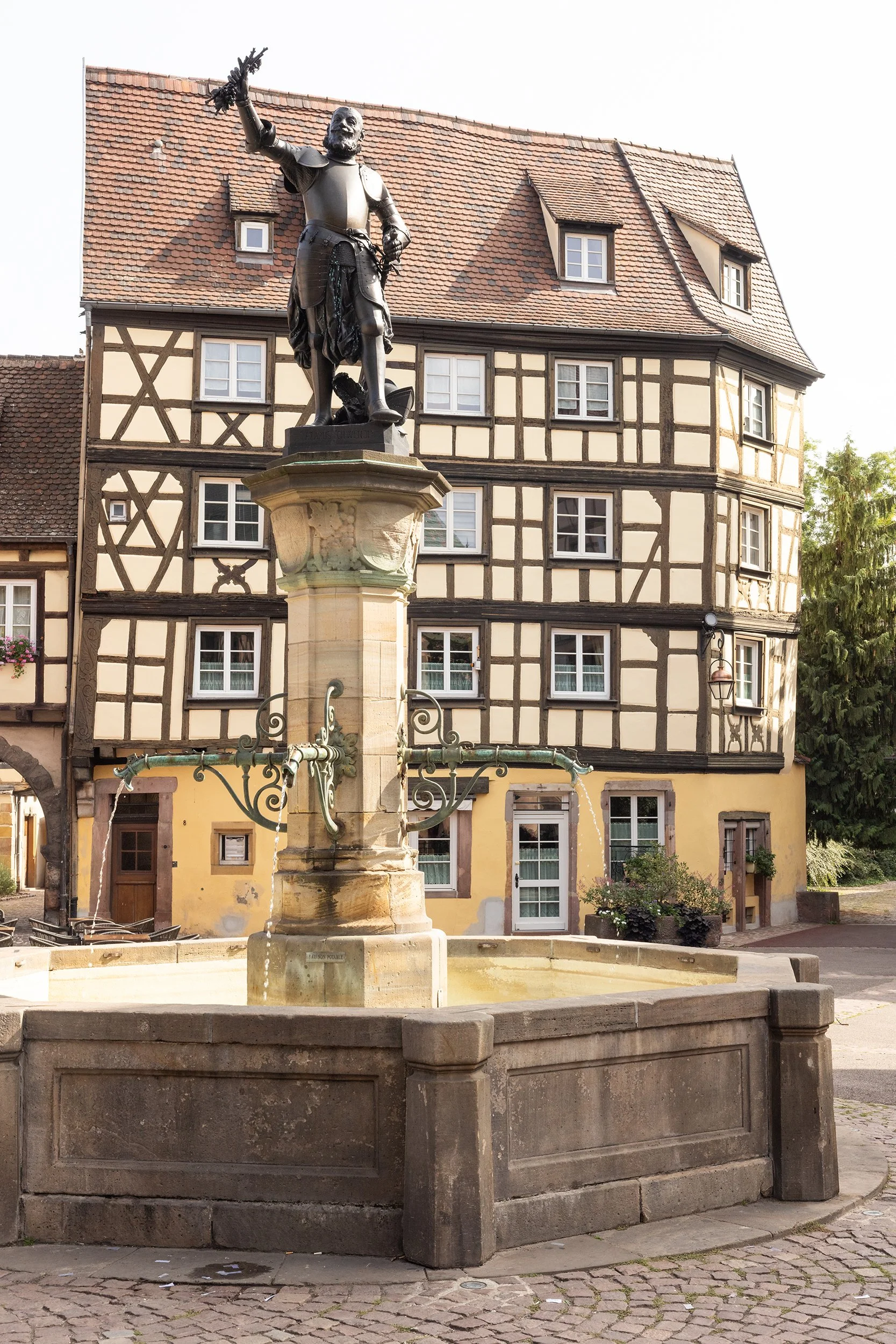
1. View of Église des Dominicains from Rue des Marchands | 2. A menagerie with storks at Le coin de l'artisane on Rue Saint Nicolas | 3. Carved merchant on the corner of Maison zum Kragen on Rue des Marchands | 4. Schwendi Fountain, Grand Est
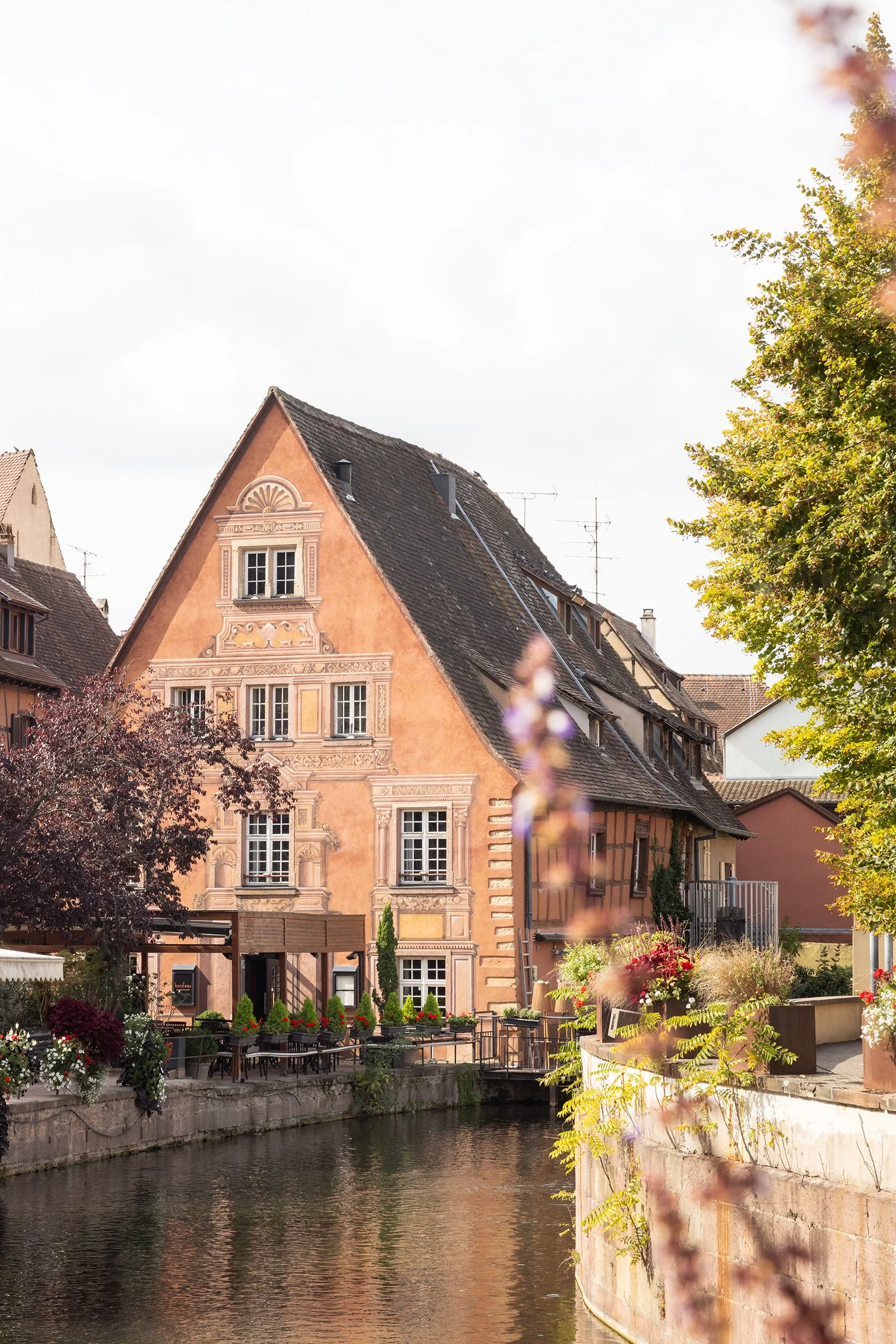
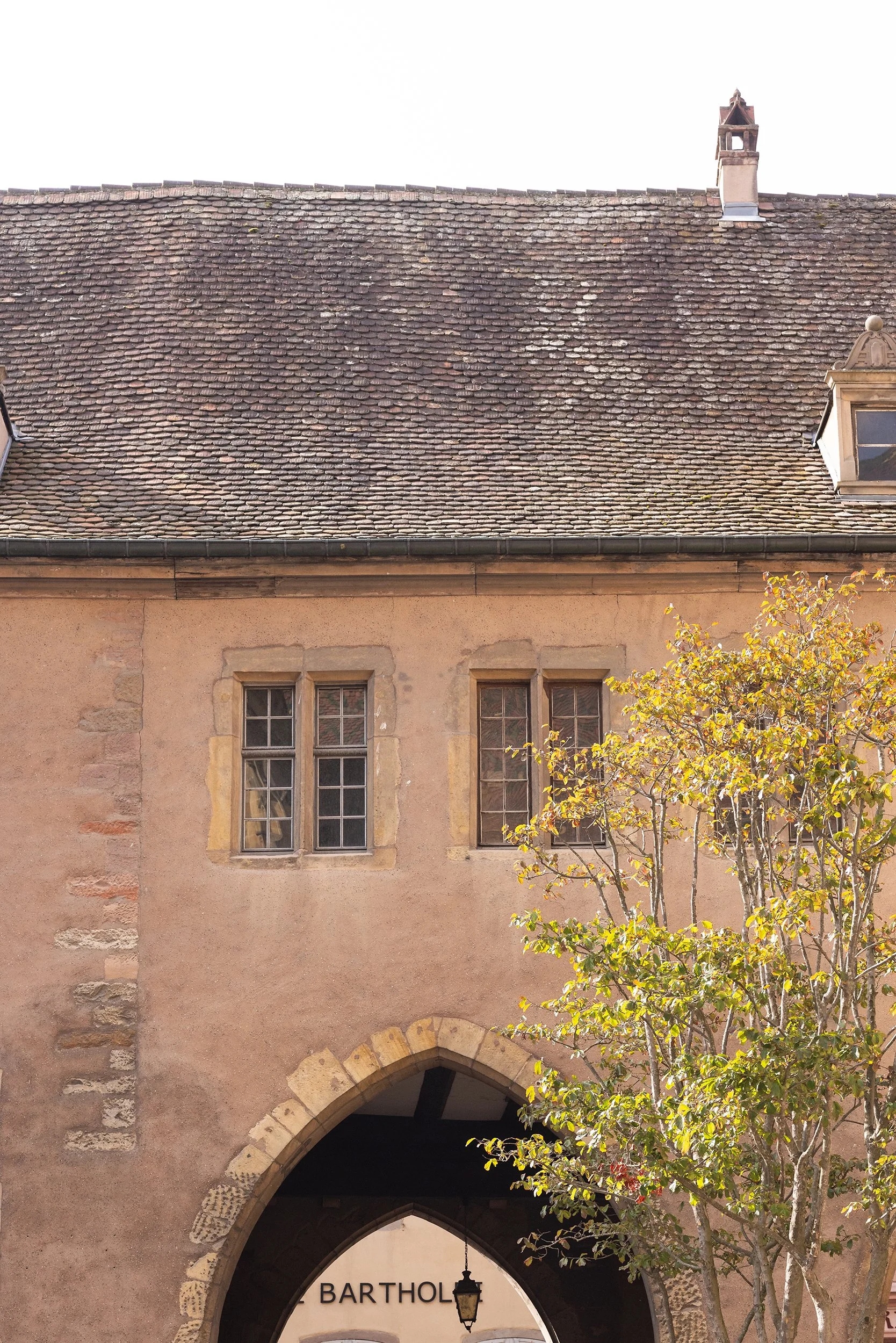
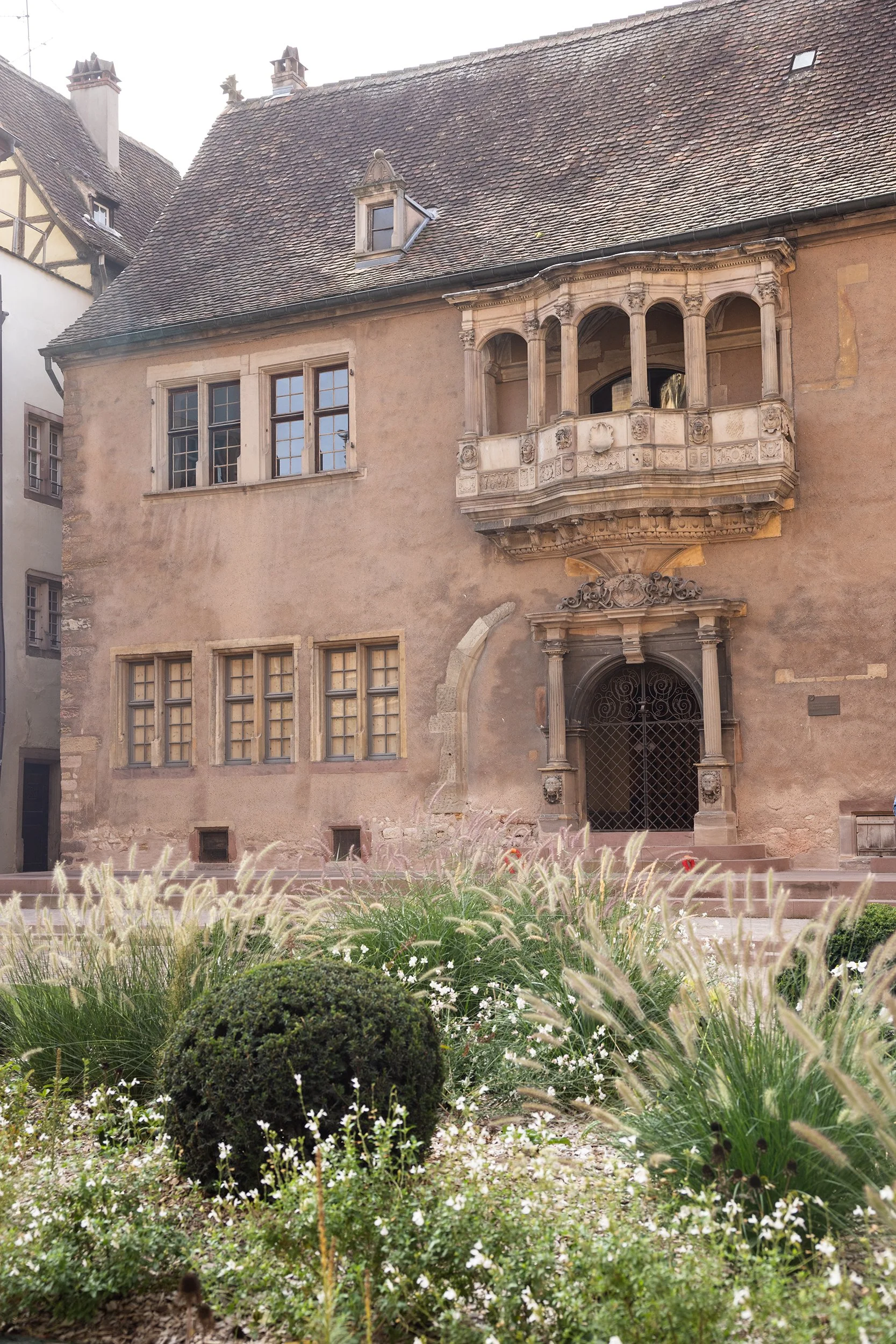
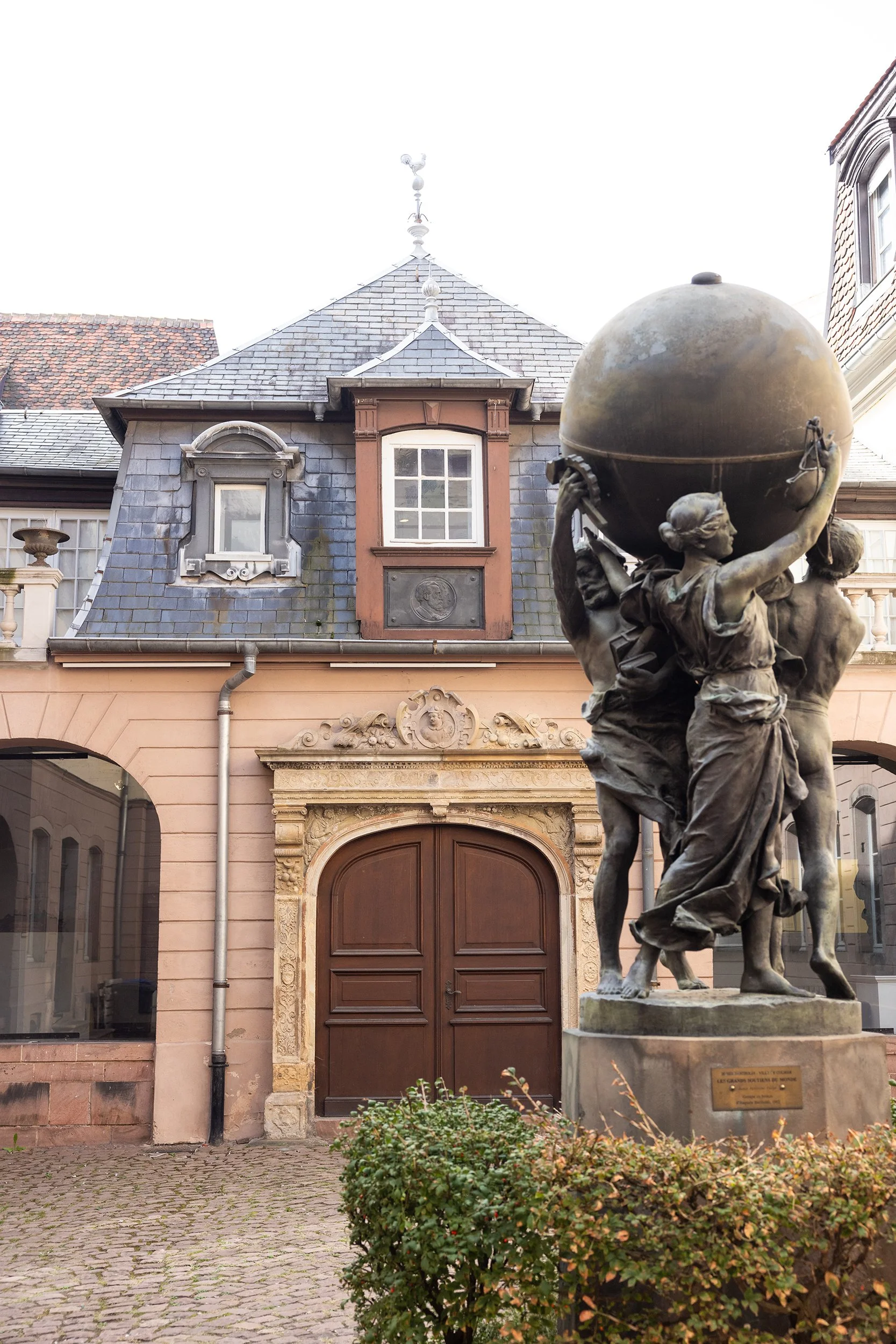
1. Rue de la Poissonnerie in the Petite Venise district | 2. Ancien Corps de Garde (Old Guardhouse) | 3. Ancien Corps de Garde | 4. The Bartholdi Museum
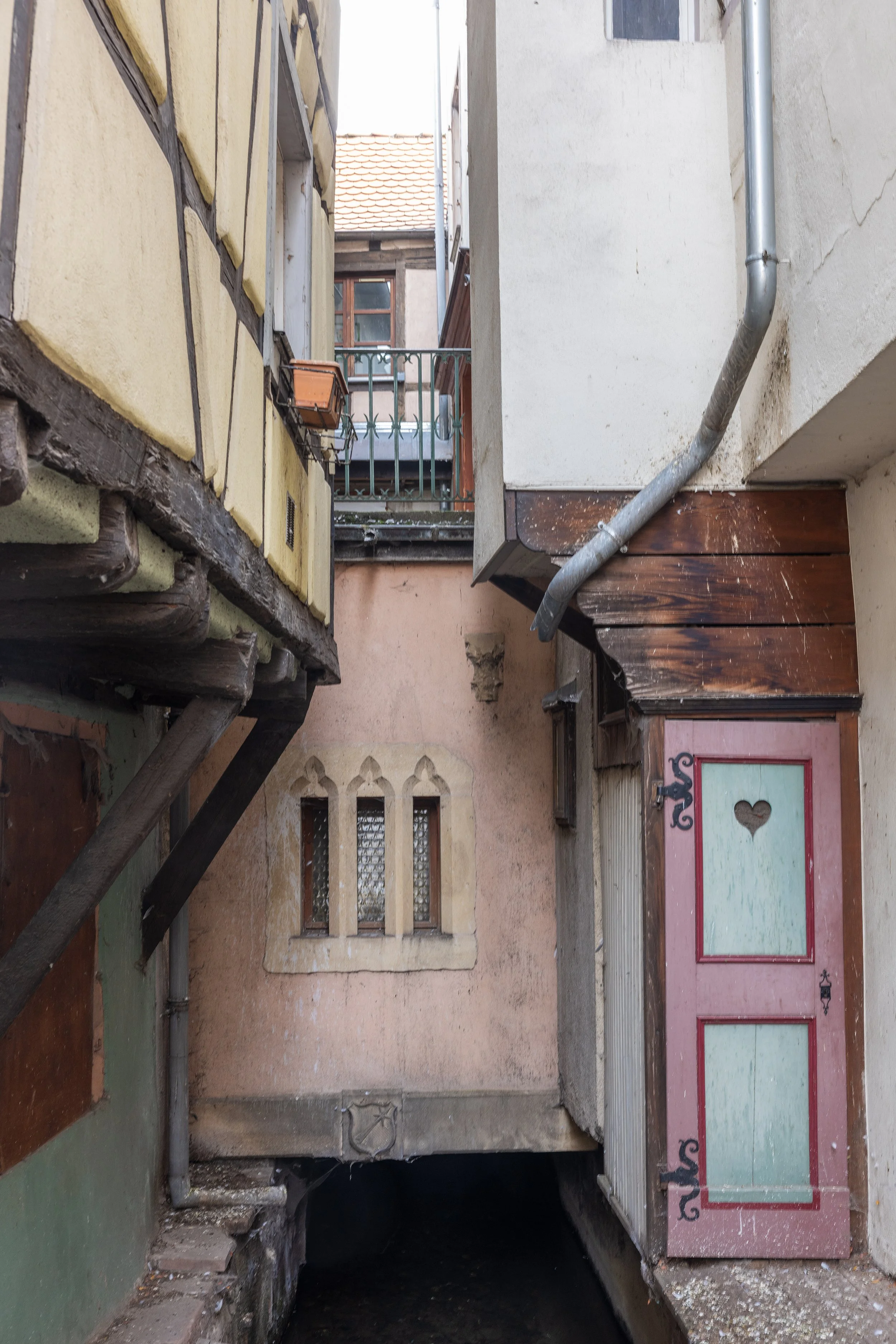
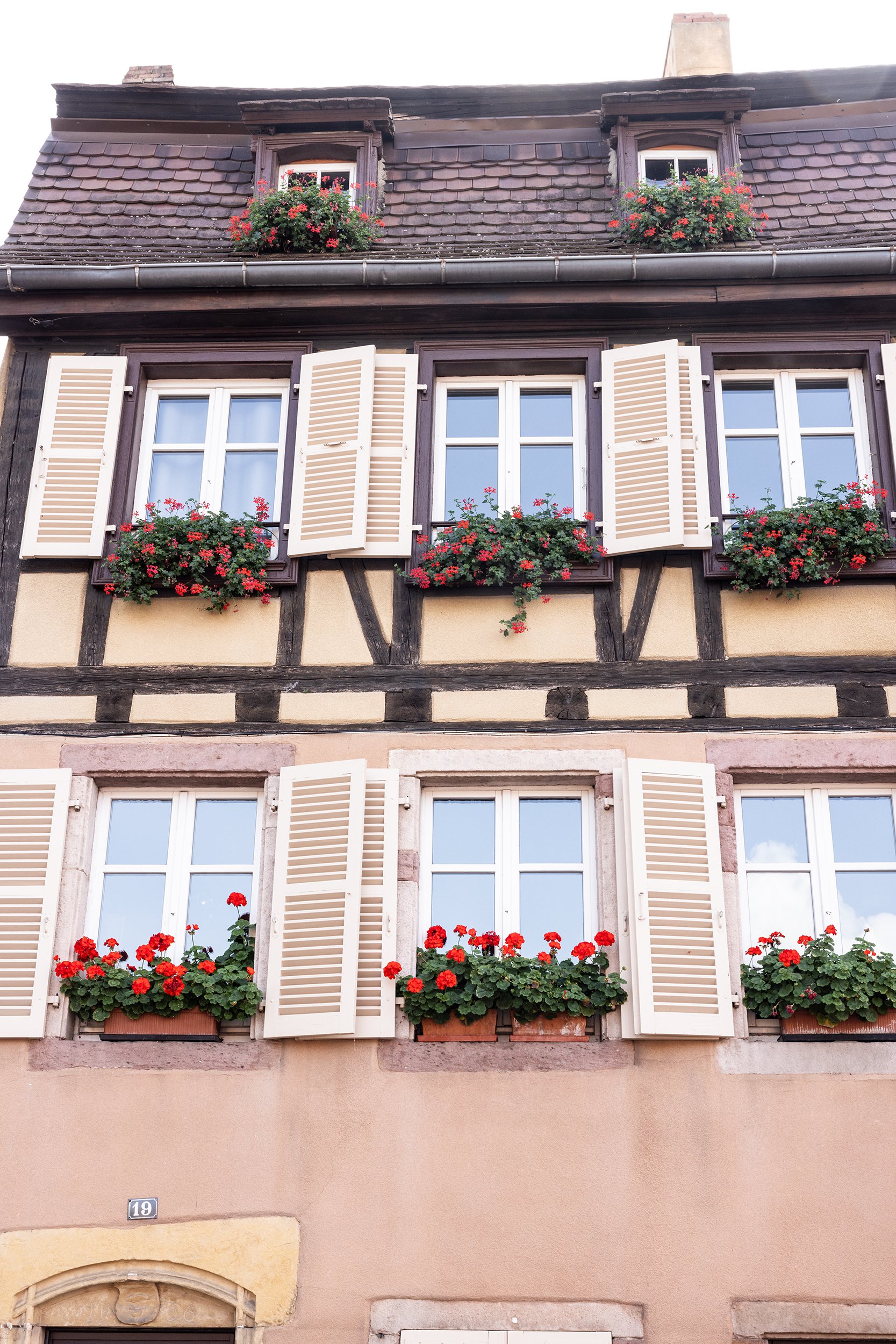
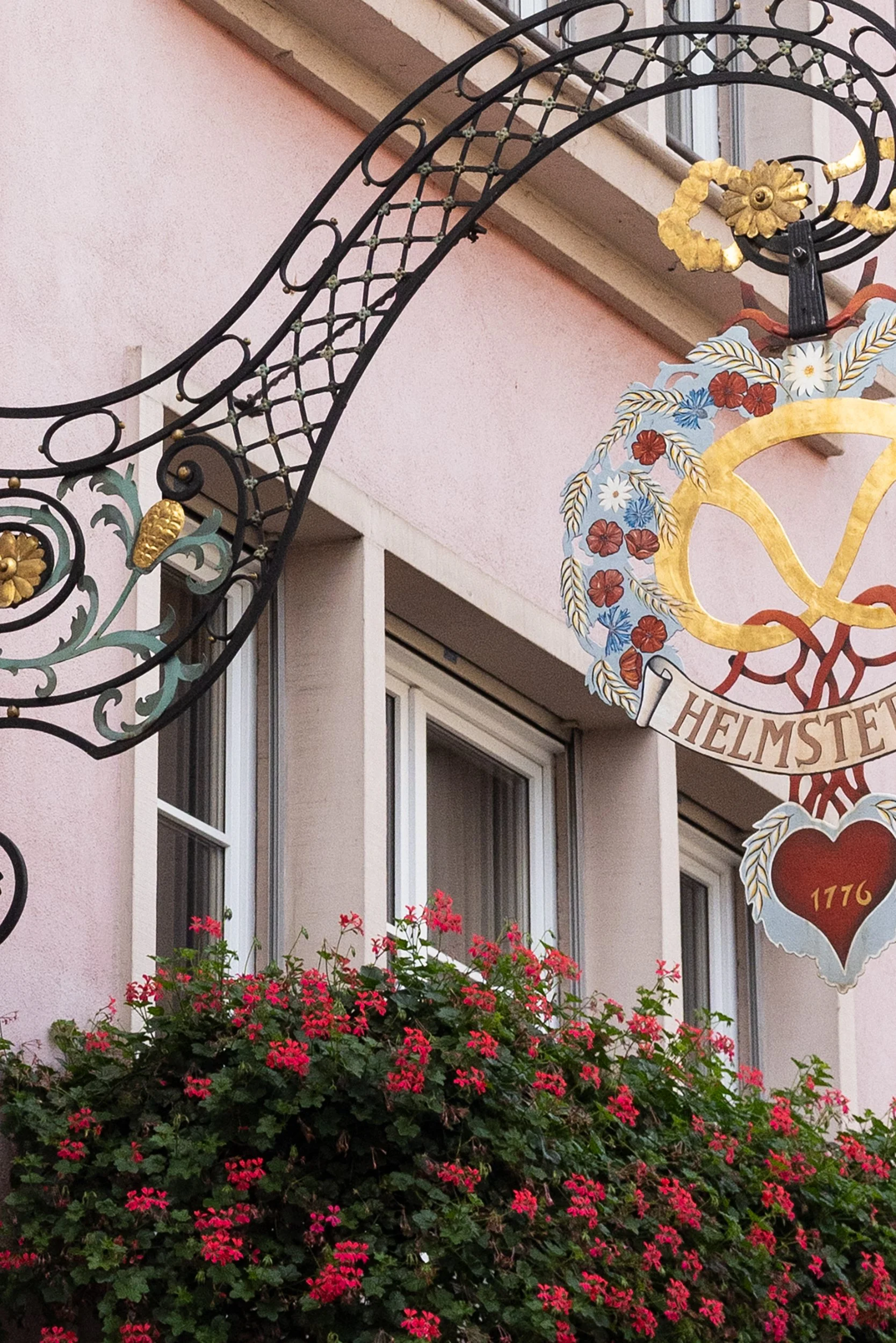
1. Small canal running under a house on Rue Saint Nicolas | 2. Quai de la Poissonnerie in the Fishmonger's Quarter of Petite Venice | 3. Wrought iron guild sign for the former Helmstetter bakery/patisserie on Rue des Serruriers | 4. Half-timber building on Rue Morel
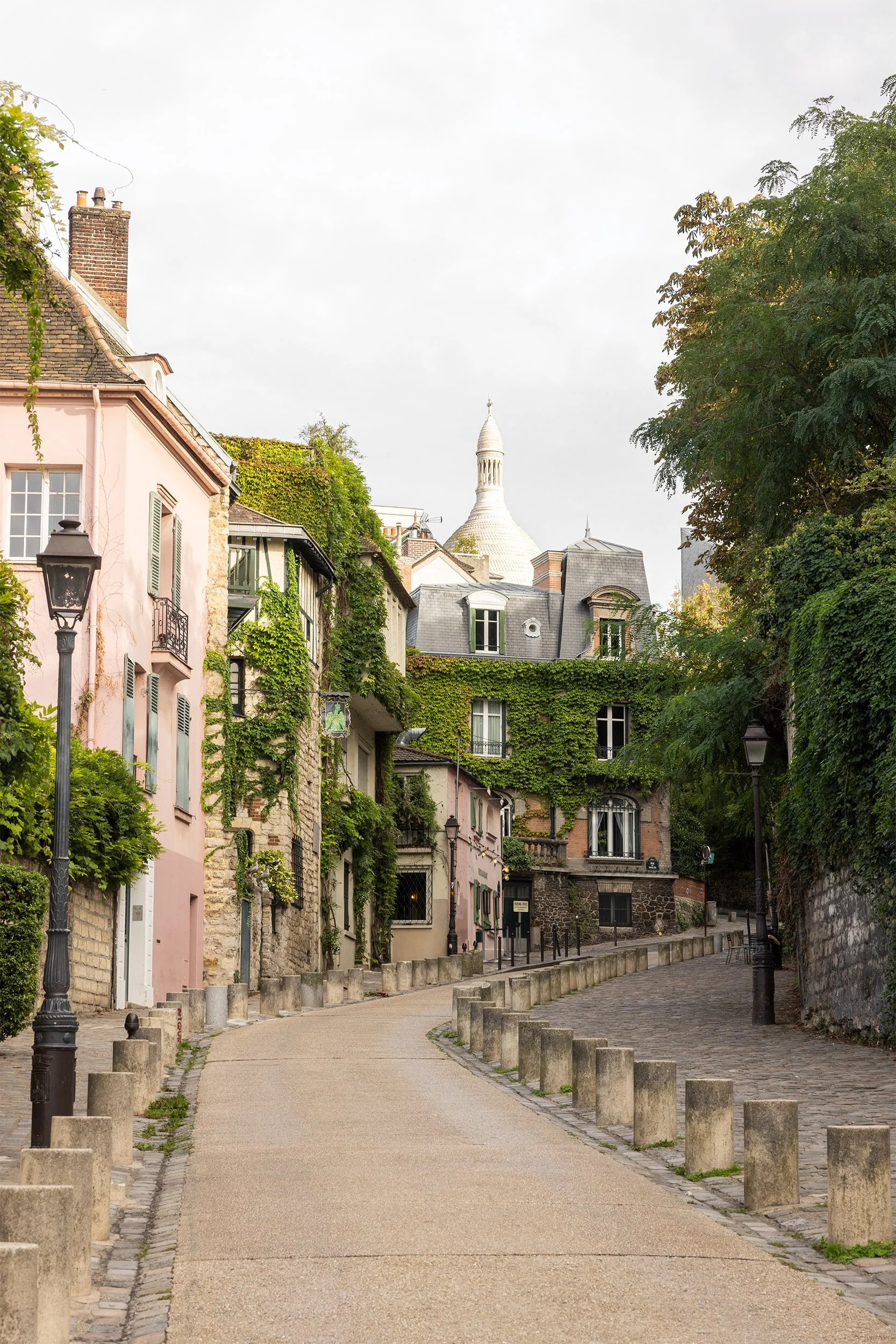




Avenue de Camoëns viewpoint, Paris, France