
Avignon: The Strategic Basecamp for Provence Explorers
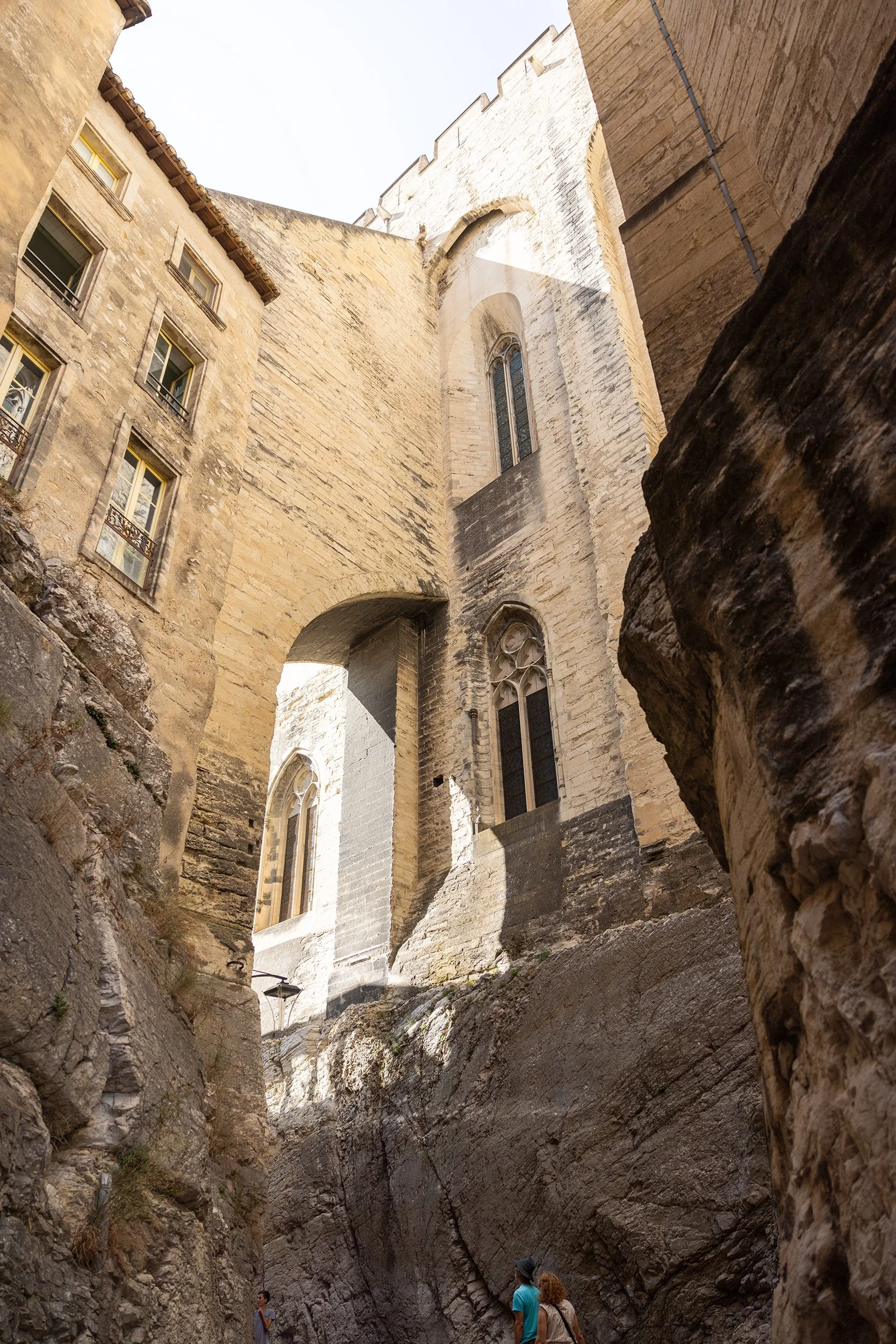
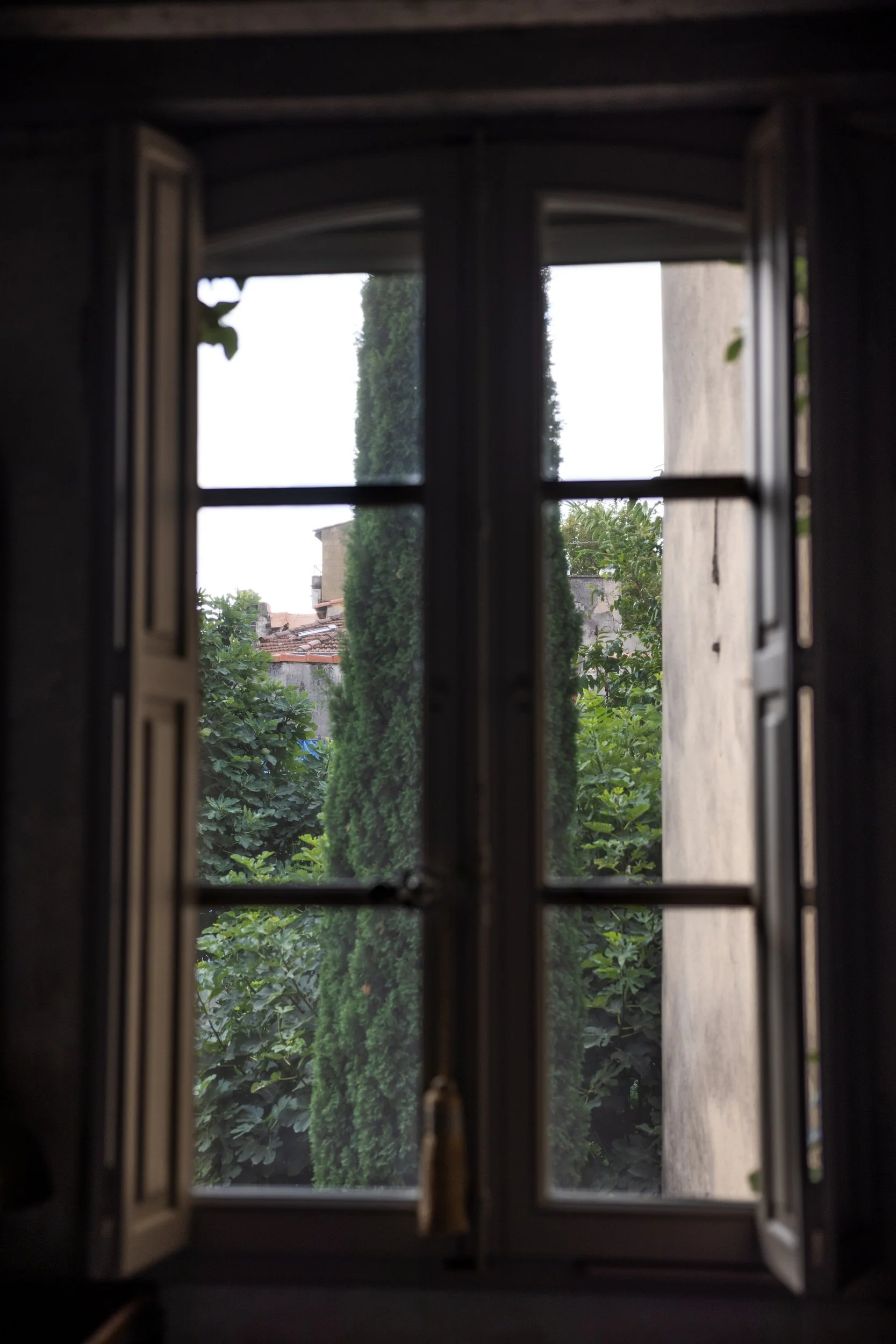
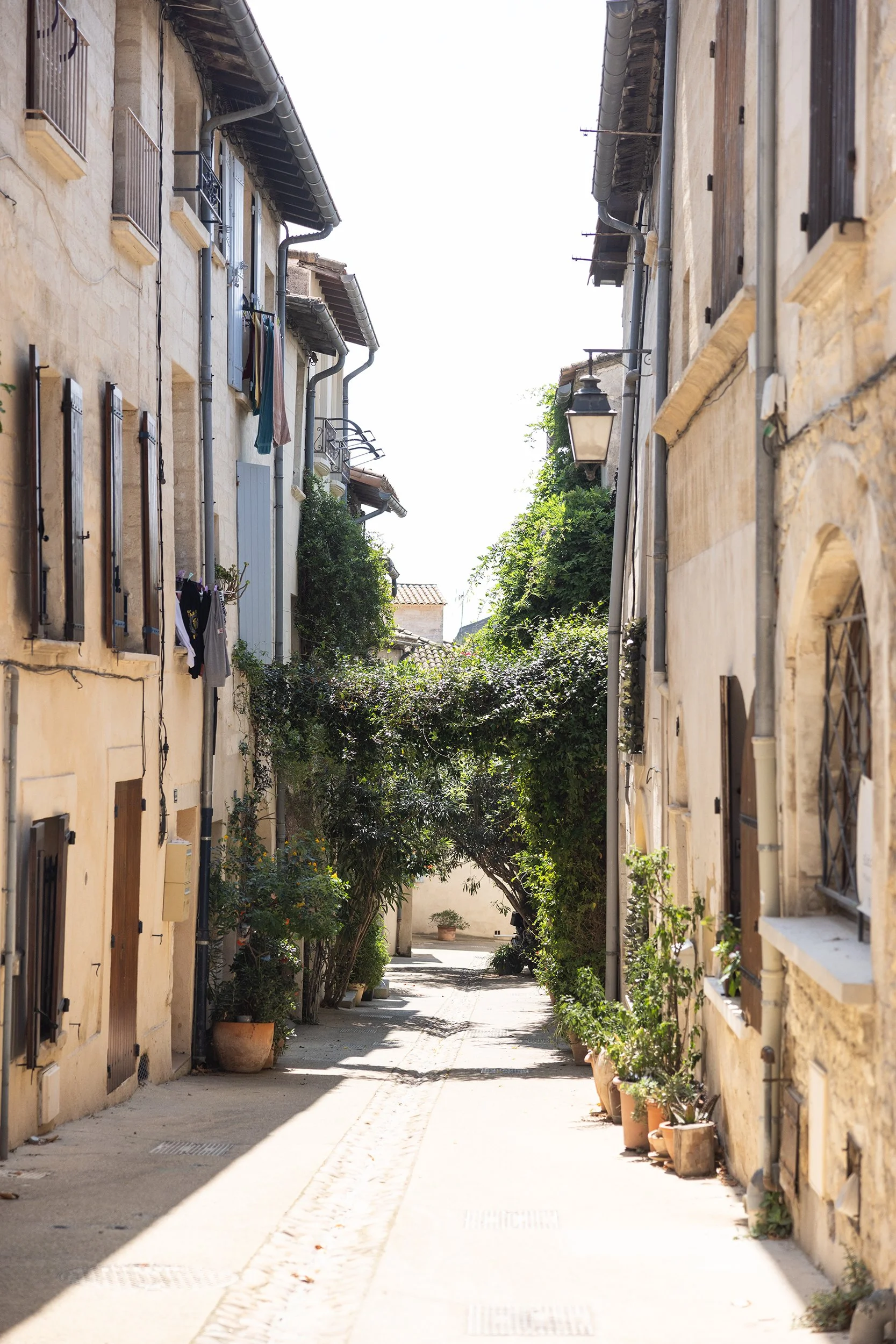
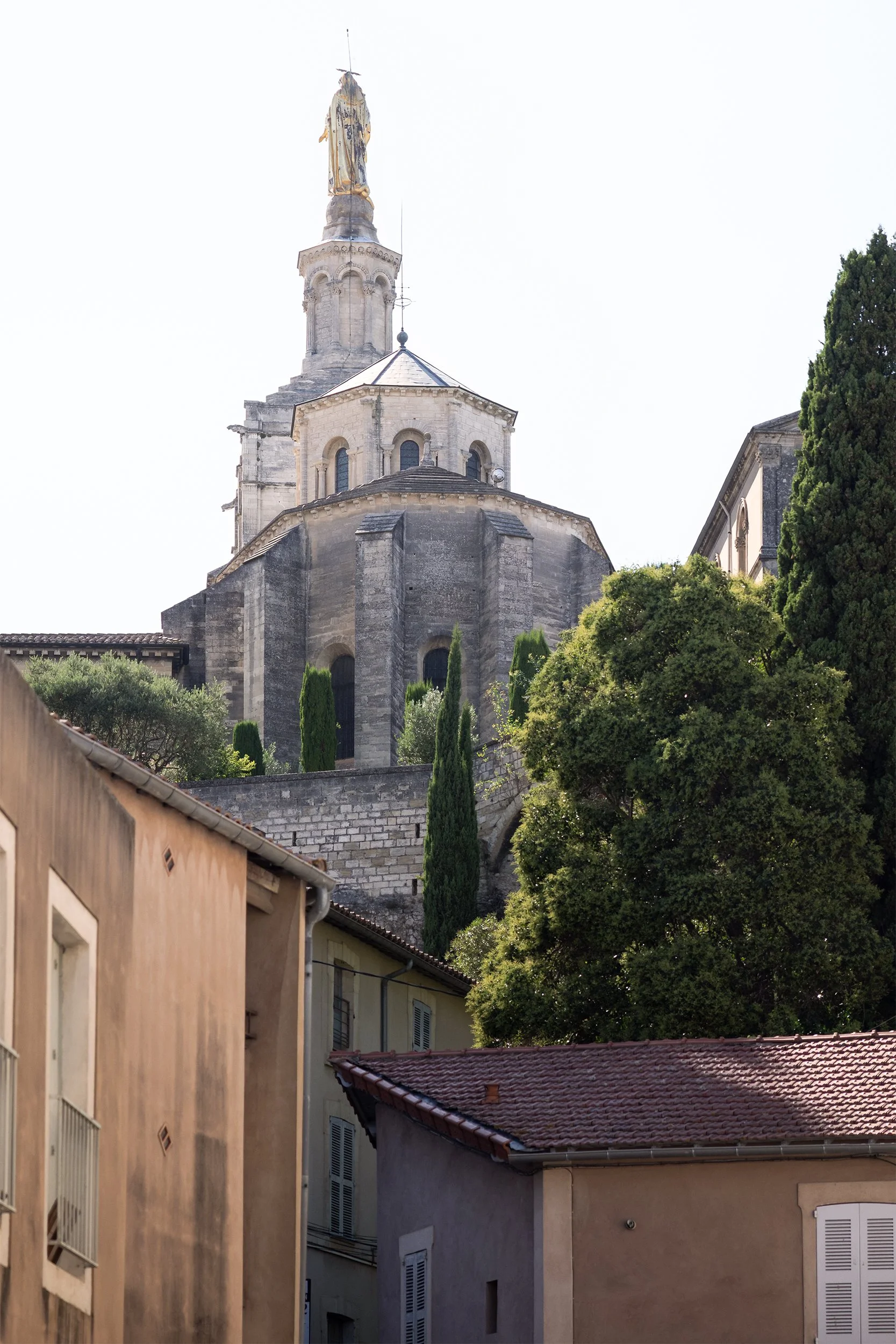
1. The Palais des Papes towers over Avignon - a Gothic fortress built when this was the center of the Christian world | 2. Window view at guesthouse Les Jardins de Baracane | 3. Rue du Grand Bourquet in Villeneuve-lès-Avignon | 4. Cathédrale Notre-Dame-des-Doms, with its golden Madonna, rises above Avignon's rooftops
Disclosure: This post may contain affiliate links. That means if you buy something following a link from this page, we’ll receive a small commission at no cost to you. We only promote products and services that we truly believe in.
A few years ago, I produced a lifestyle photoshoot for a cruise line that took my crew and me on an inaugural river voyage from Lyon through Provence. On shoots like these, we sometimes take our talent off the ship for location photography, which gives us a chance to see some of the local sights. Provence completely captivated me, and for years afterward I kept thinking about going back - this time for pleasure, not work. When I discovered some excellent frequent flier options through American Airlines, I finally started planning my return to Provence.
The plan was straightforward: use Avignon as a base camp and rely mostly on public transport to explore the region. We'd rent a car to visit the Luberon villages, but otherwise stick to trains and buses. Avignon's location and transit connections made it the obvious choice - close enough to surrounding towns without the commitment of staying somewhere smaller and more remote. The goal wasn't to experience Avignon itself, but to use it as a practical anchor point for seeing the rest of Provence at a slower, more deliberate pace.
My sister, Laura, joined me on this trip, and we eased into Provence gradually. After landing at Charles de Gaulle, we spent a day in Paris - not sightseeing aggressively, just walking enough to reset our internal clocks and get our legs under us. The following morning, we caught a train from Gare de Lyon heading south. Two and a half hours later, we were dragging our luggage over Avignon's uneven cobblestones, looking for the B&B we'd booked as our base for the first part of the week.
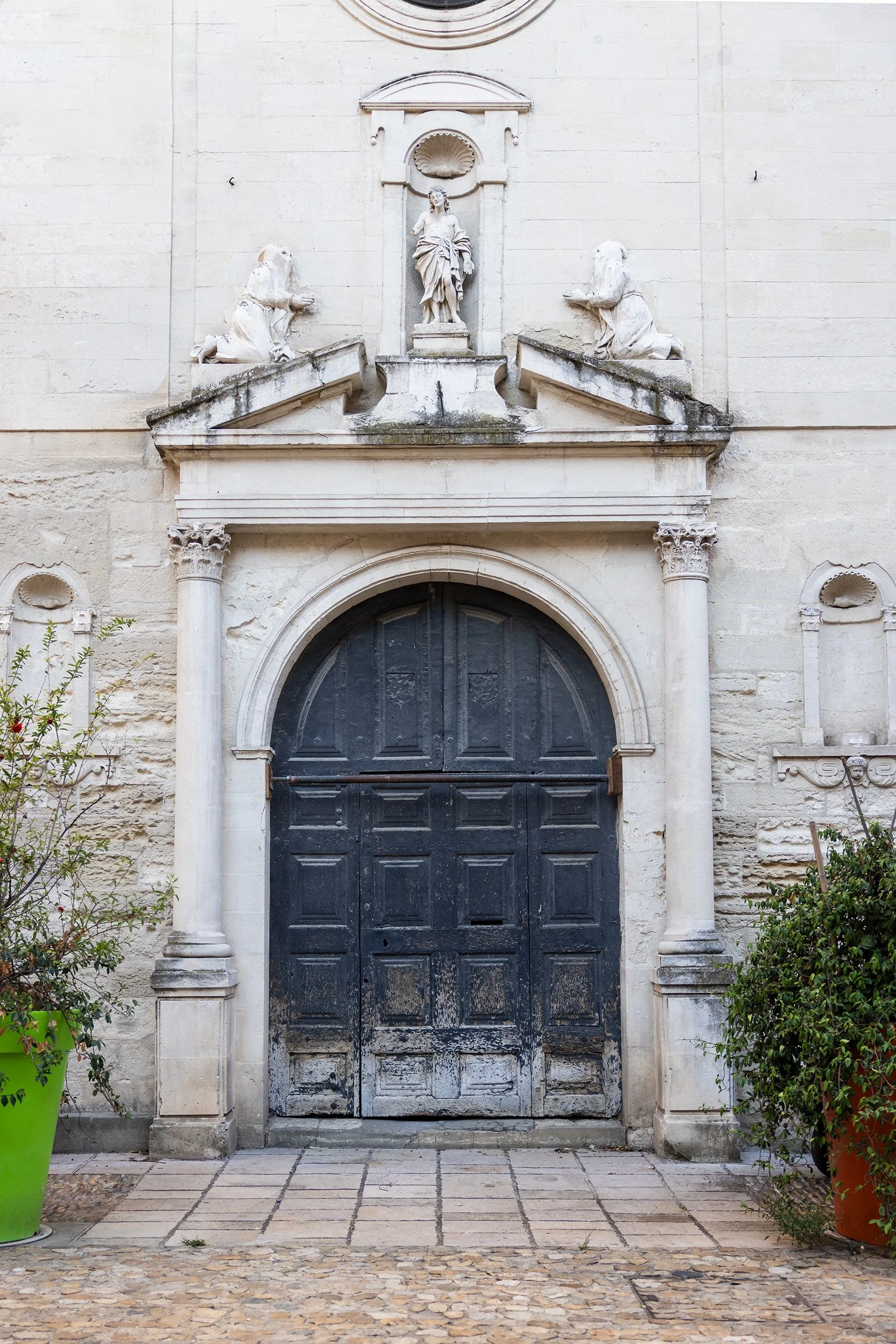
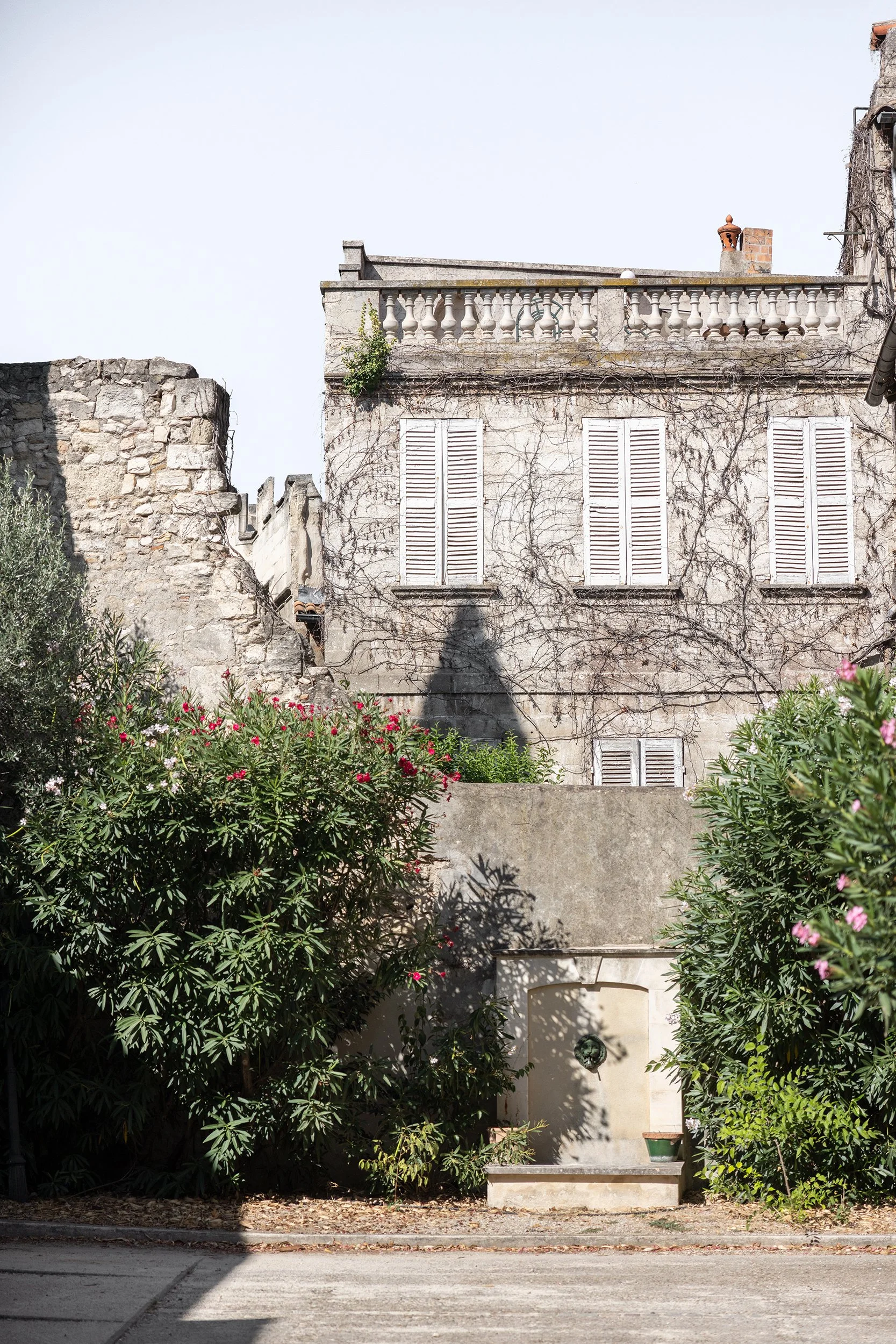
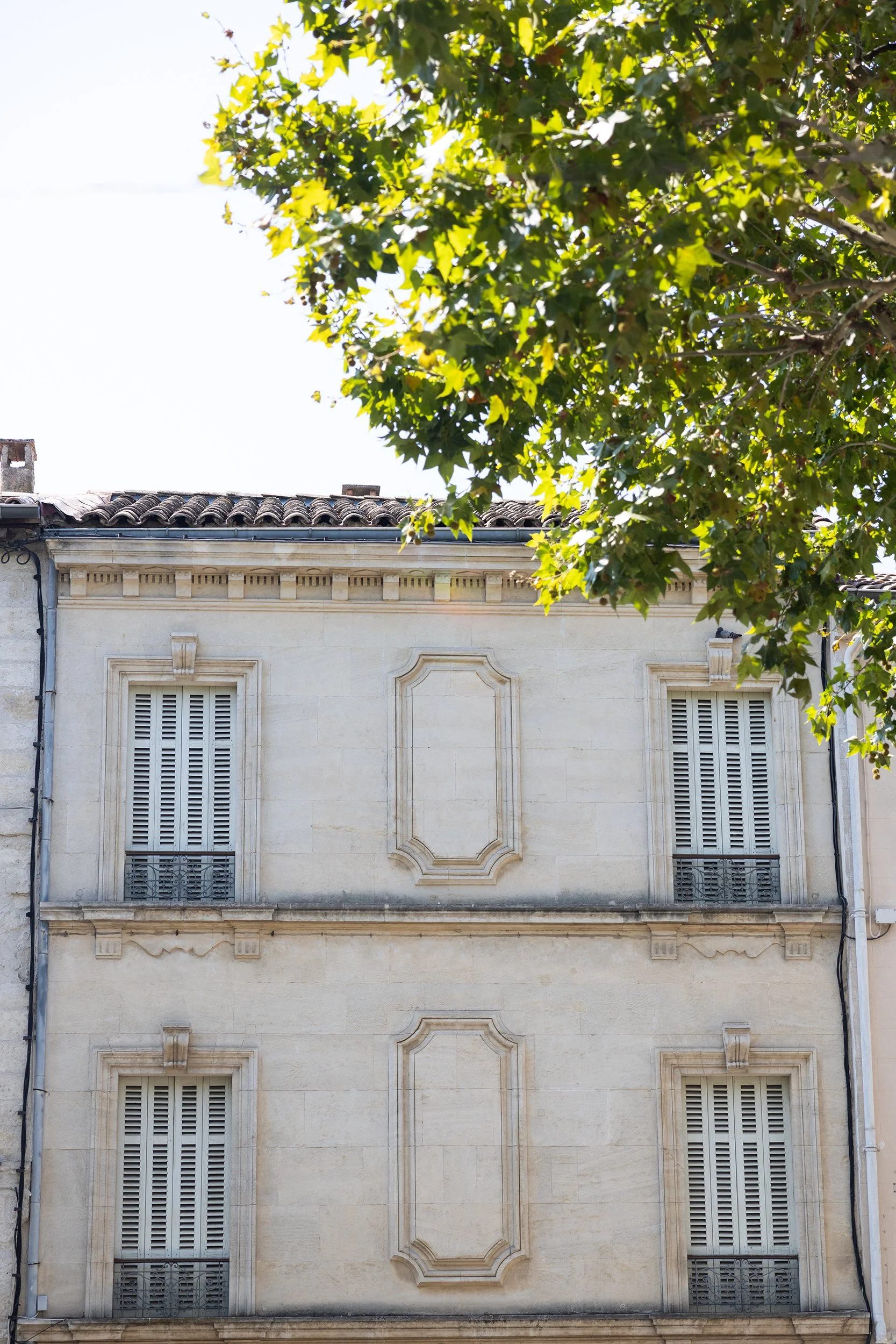
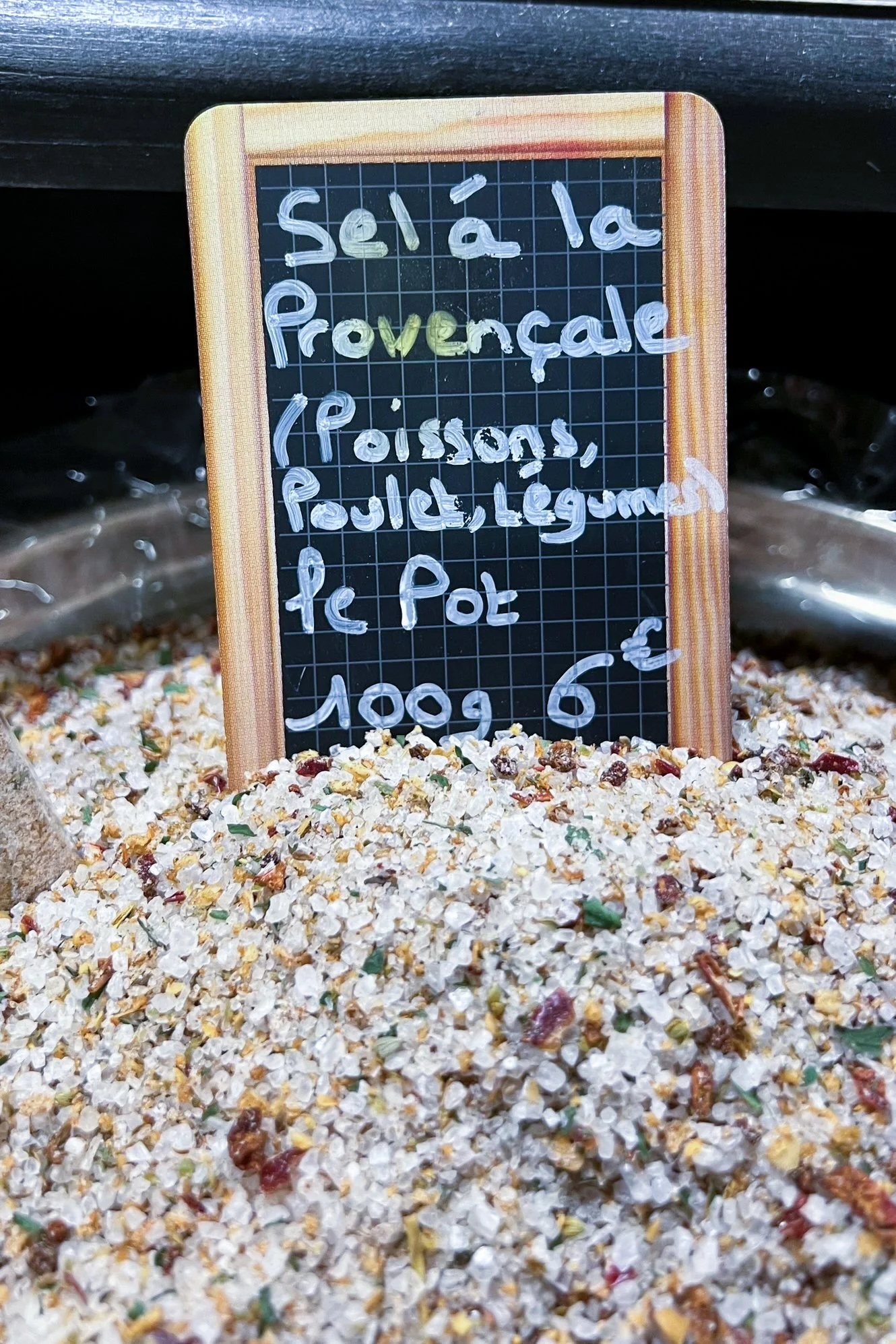
1. Église Notre Dame la Principale d'Avignon at Place du Palais | 2. Little garden wall hidden behind a gate on Rue du Vice Légat next to the Jardin Verger Urbain V | 3. Building in the main square of Villeneuve-lès-Avignon | 4. Herbs de Provence, sold by the scoopful or prepackaged in test tubes, make fantastic souvenirs - photo by Laura Woodard
Avignon doesn't announce itself the way some French cities do. There's no coastal glamour, no lavender-field fantasy on arrival - just solid medieval walls, a train station with excellent connections, and a city that's been watching travelers pass through for centuries.
Which is precisely why it works as a base camp.
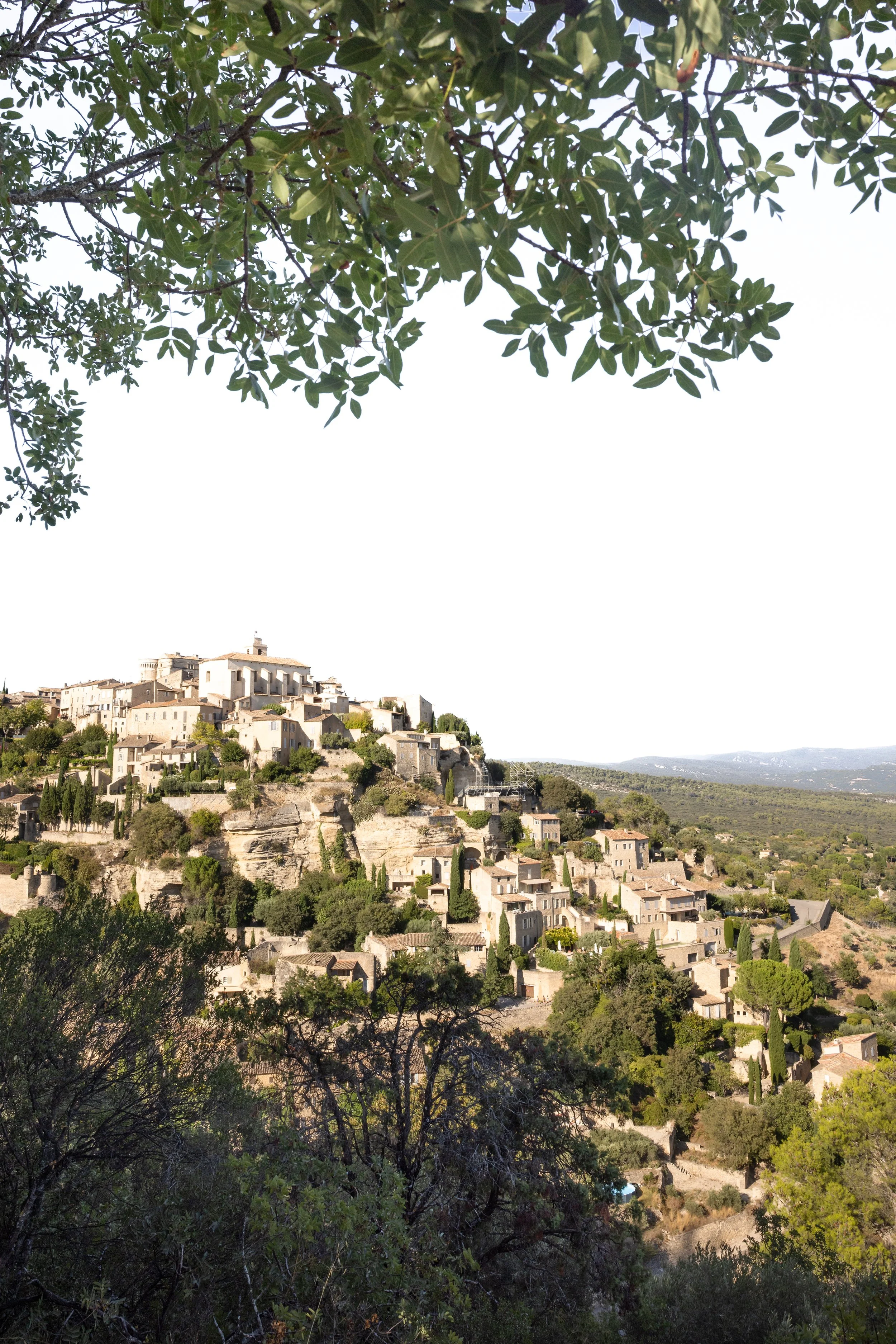
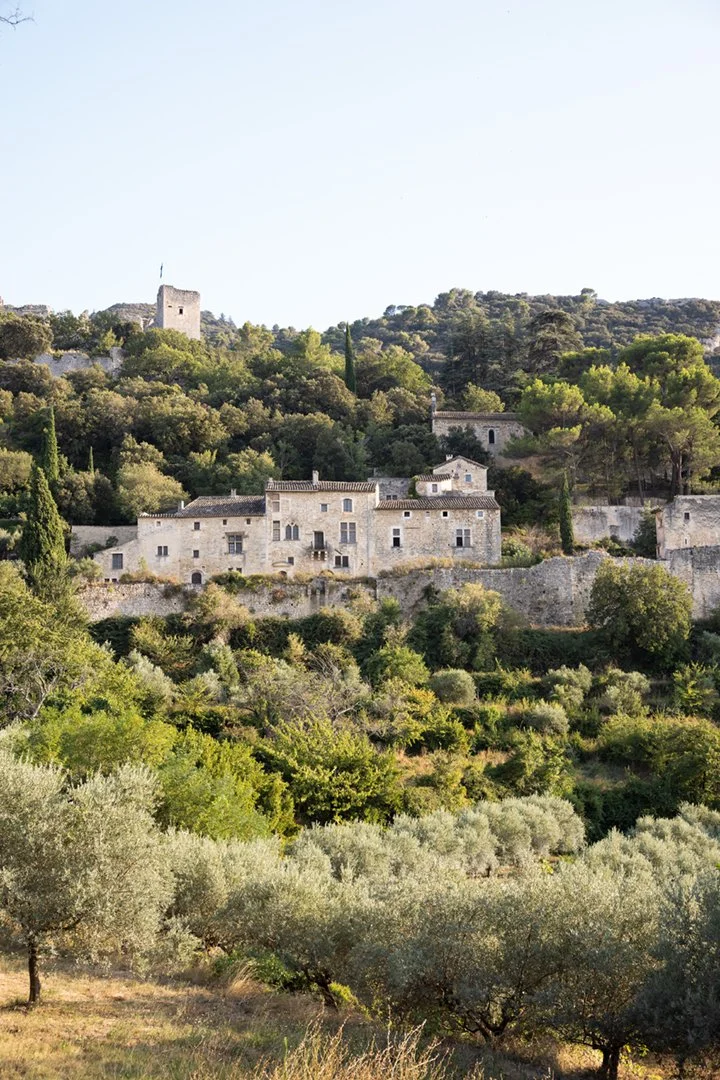
The practical case is simple: Avignon sits at the heart of Provence with train and bus lines radiating outward like spokes. Arles is 20 minutes south. Nîmes is 30 minutes west. Orange, with its staggering Roman theater, is 20 minutes north. On our plan, we hoped to visit Les Baux de Provence, Saint Rémy de Provence, L’Isle-sur-la-Sorgue, Uzès, and some of the hilltop Luberon villages of Gordes, Lacoste, Ménerbes, Bonnieux, and Oppède Le Vieux. You can also day-trip to the Pont du Gard, or even Aix-en-Provence, without the exhausting logistics that come with staying somewhere remote.
But Avignon offers something beyond convenience - it gives you a functional place to return to. After a day spent navigating rental cars through narrow village streets or wandering sun-baked Roman ruins, you want more than a hotel room. You want a city with actual infrastructure: grocery stores, pharmacies, train connections, and enough restaurants that you have options beyond whatever's directly across from your accommodation. Avignon delivers that without requiring you to stay somewhere tiny or tourist-saturated.
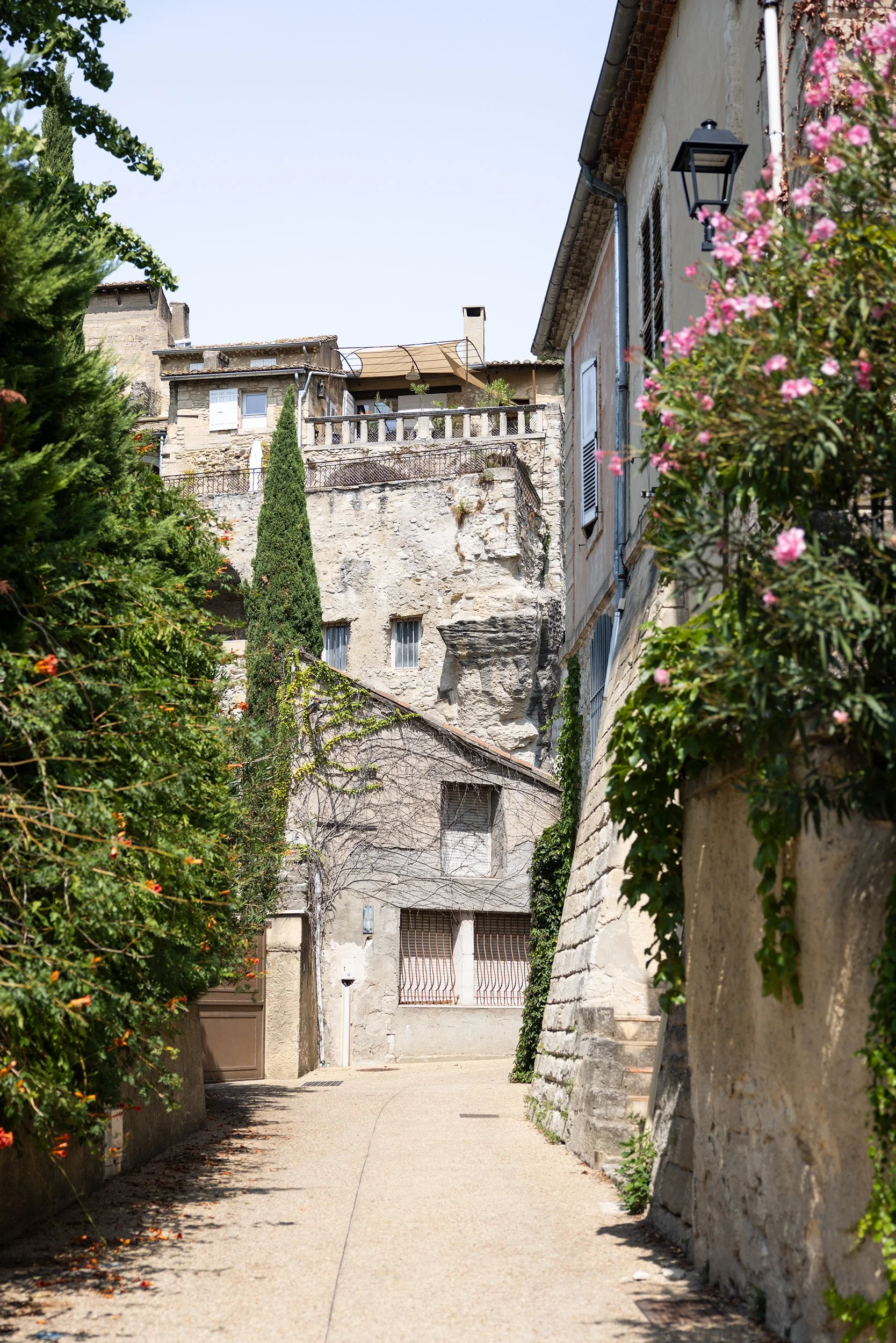
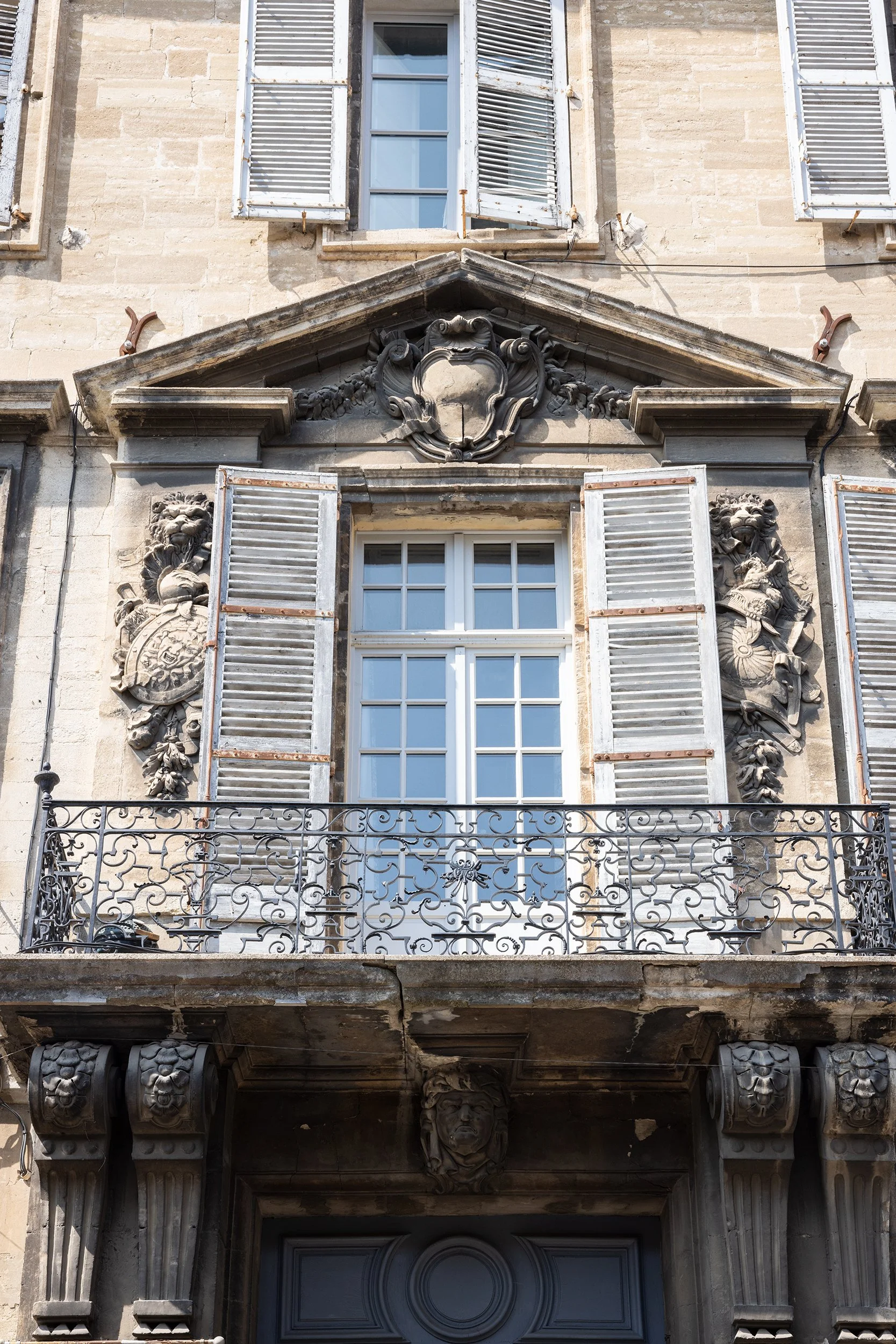
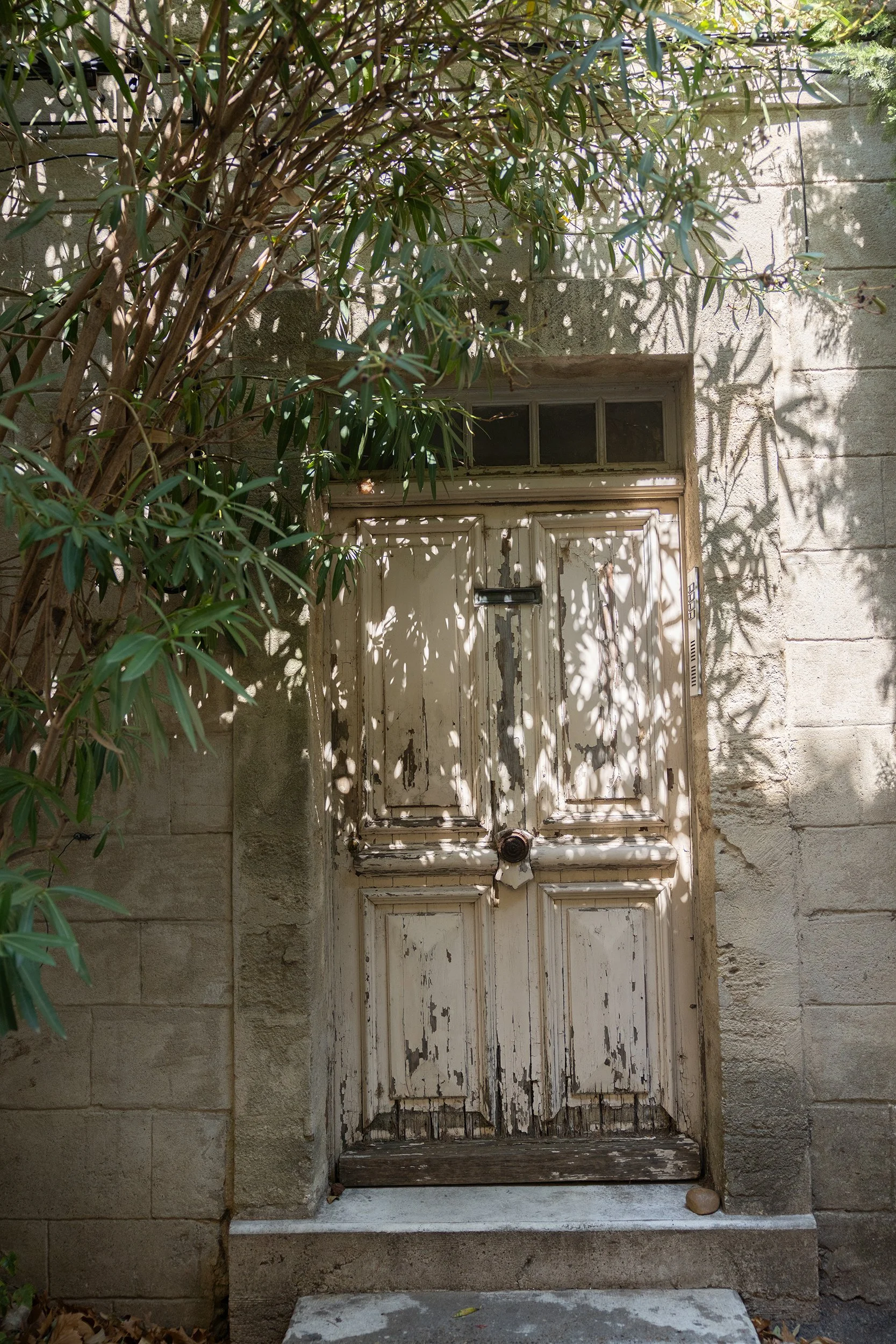
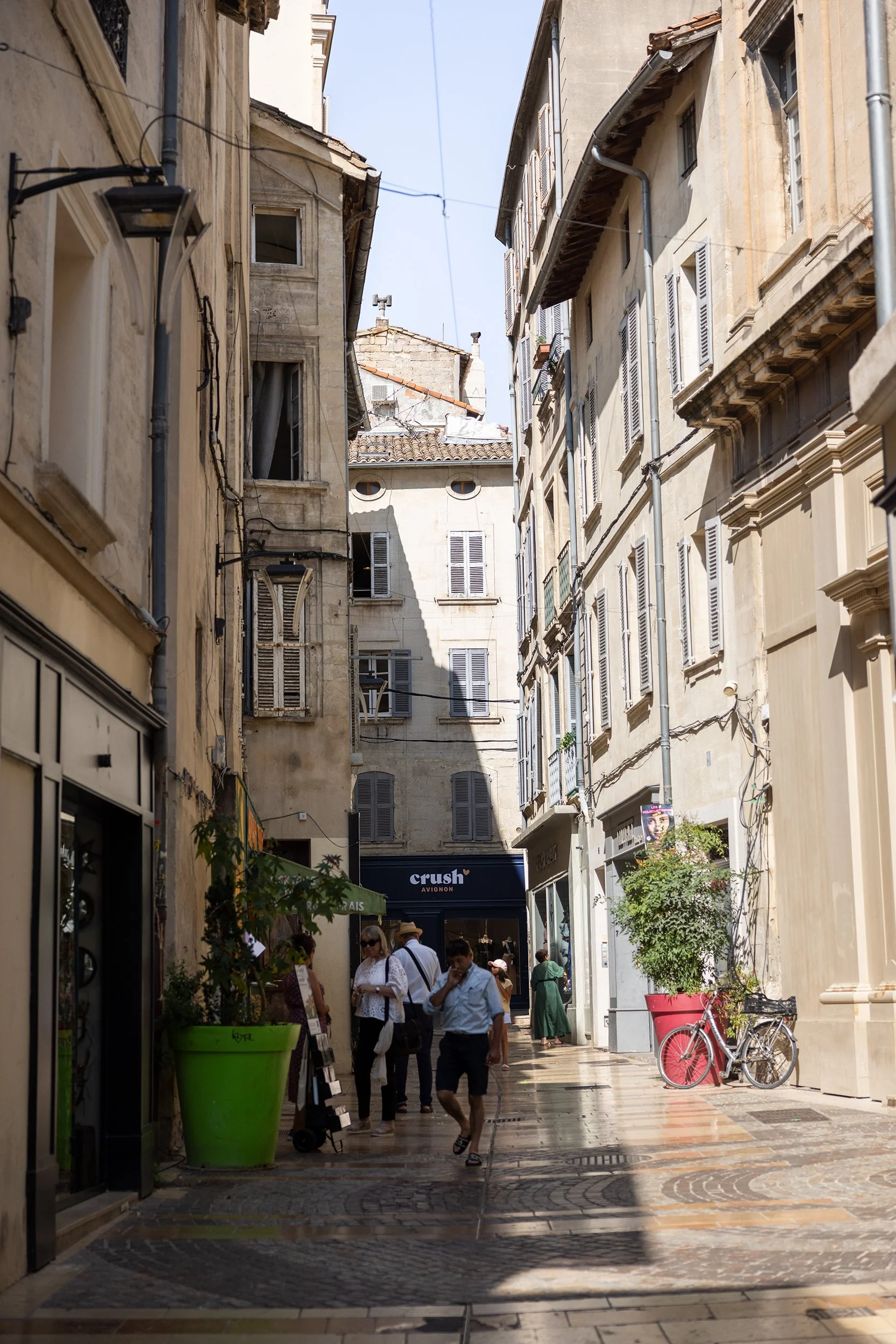
1. Rue des Récollets in Villeneuve-lès-Avignon | 2. The facade of Hotel des Taillades, on Rue Joseph Vernet, is decorated with trophies of arms and an eagle with a veiled head | 3. Door on Rue Mont du Fort in Villeneuve-lès-Avignon | 4. Rue de la Bonneterie
Returning to Avignon, I had fond memories of shops and restaurants from my earlier work trip. Throughout our stay, I kept my eyes peeled for those places I'd visited years before - but never managed to track down a single one of them. The town has definitely changed. It felt bigger and busier. More hustle and bustle.
There are numerous squares nestled into the town, surrounded by winding alleys. The anchor of Avignon is the Palais des Papes (Papal Palace). It’s an imposing reminder of the city's remarkable - and unusual - place in history. For much of the 14th century, this wasn't just a religious building; it was the center of the Catholic world. When political turmoil made Rome too dangerous, seven successive popes ruled from Avignon, transforming the city into a seat of papal power and intrigue. The palace they built is a fortress as much as a residence - massive stone walls, soaring halls, and austere interiors that feel more medieval stronghold than ornate Vatican, with a grandeur that seems to emphasize power and authority over overt religious symbolism.
Another of Avignon's main attractions is the Pont d'Avignon - the famous half-bridge that stretches partway across the Rhône before abruptly ending mid-river. Originally built in the 12th century, the bridge once spanned the entire width of the river, but centuries of floods and damage left only four of its original 22 arches standing. Today, it's as much a symbol of Avignon as the Papal Palace.
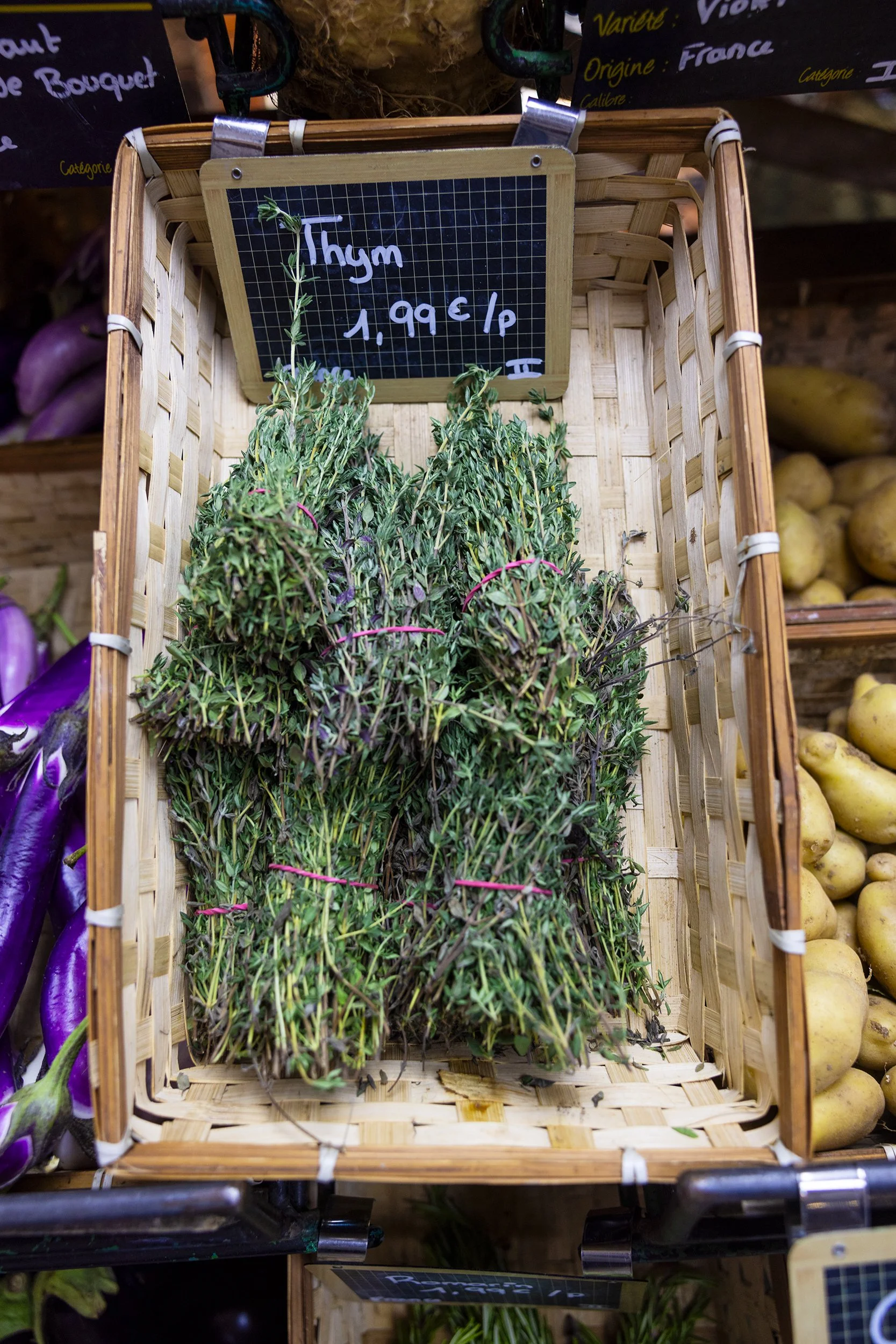
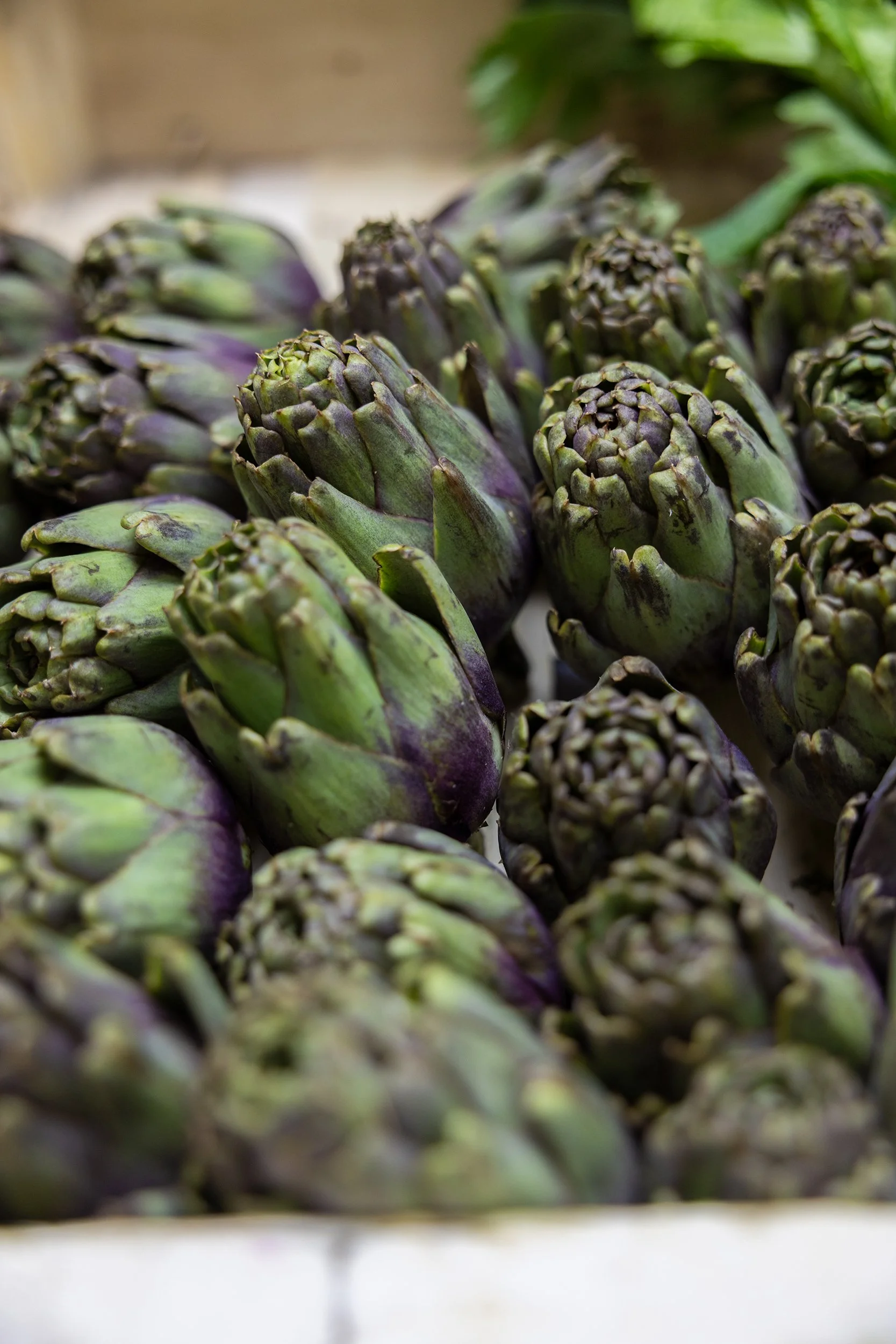
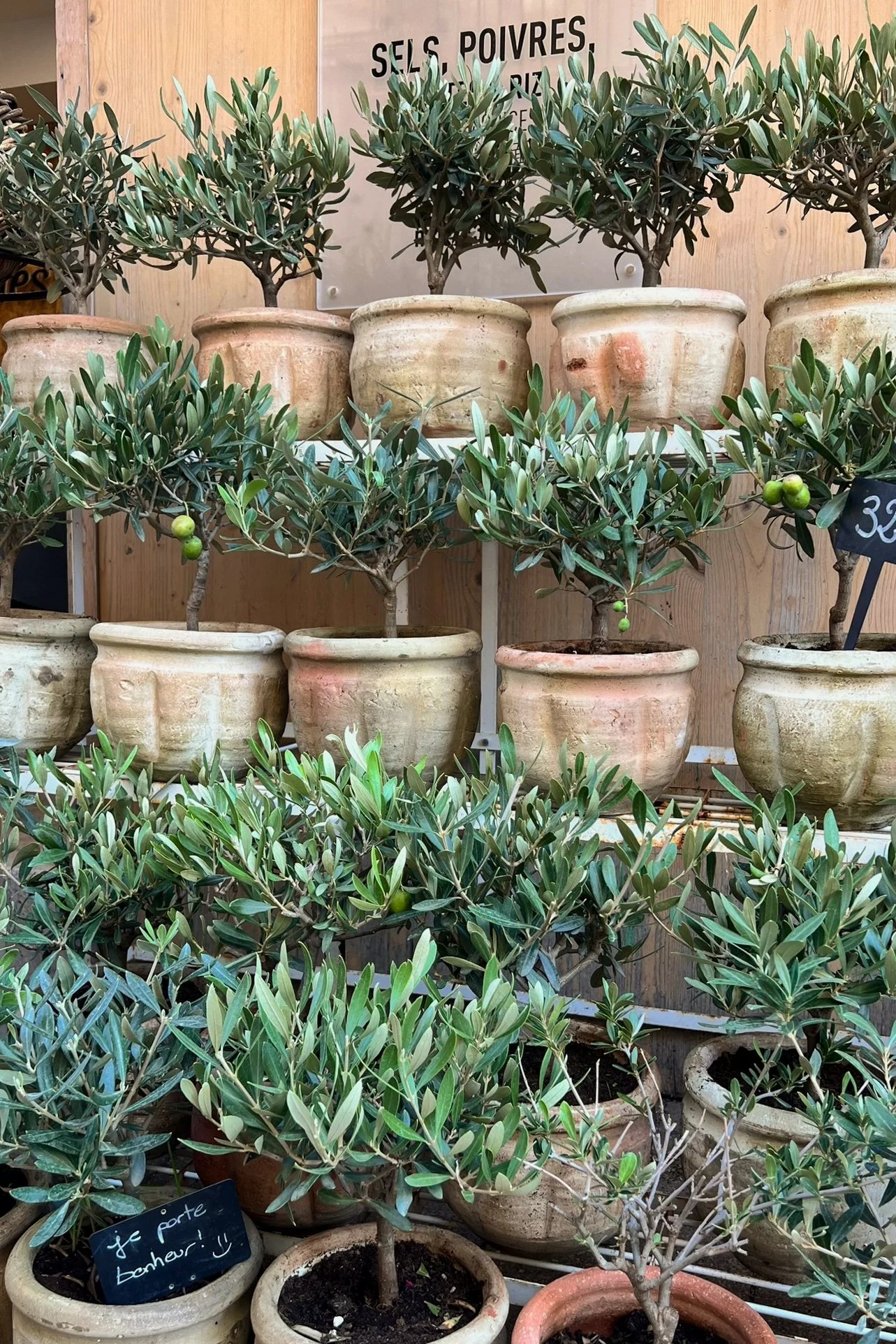
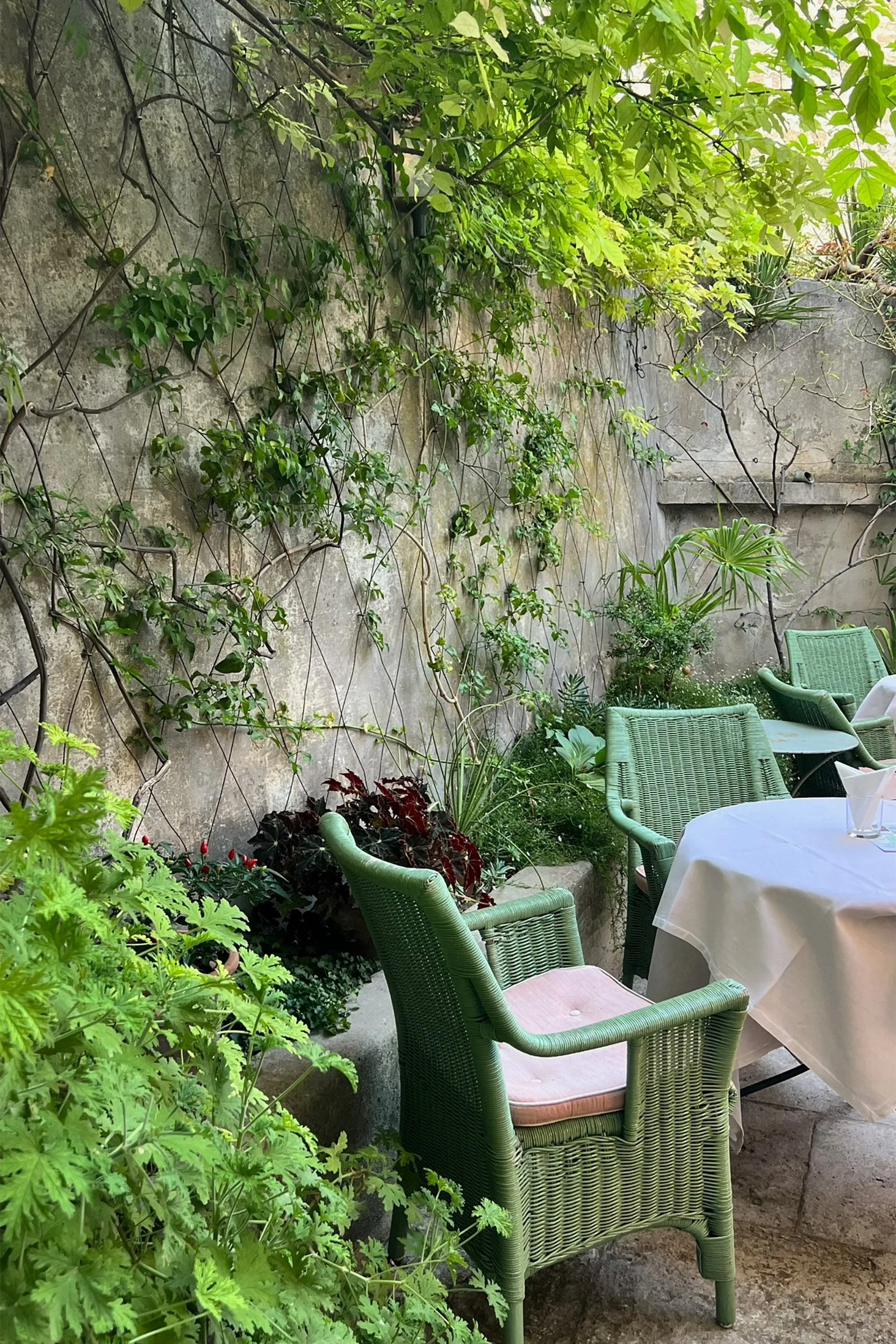
Details around Avignon: 1. Fresh thyme at Les Halles d'Avignon indoor market | 2. Artichokes at Les Halles d'Avignon | 3. Tiny potted olive trees for sale in town - photo by Laura Woodard | 4. Graden courtyard at Hotel La Mirande - photo by Laura Woodard
Beyond the historic landmarks, Avignon also offers a more sensory kind of attraction. While I generally prefer the charm of outdoor markets, Les Halles d'Avignon was an interesting experience in its own right. The covered market buzzes with energy - stalls overflowing with local produce, charcuterie, and Provençal specialties. There's something about the enclosed space that intensifies it all, concentrating the colors, aromas, and atmosphere into one vibrant hub. It may lack the open-air romance of a traditional French market, but Les Halles has a lively, authentic quality that's hard not to appreciate.
Across the Rhône, Villeneuve-lès-Avignon offers an even quieter retreat - technically a separate town, but close enough to walk to. The views back toward Avignon from Fort Saint-André are worth the climb, and the handful of restaurants here feel genuinely local, the kind of places where you're the only non-French voice in the room.
The risk with treating any place as a base camp is missing what's actually there. We did give Avignon a full day before venturing out - wandering without a map, getting lost in the tangle of streets behind the palace, letting it be more than just a convenient bed. It's easy to skip that step and jump straight into day trips, but those in-between hours matter. Avignon isn't going to overwhelm you with charm, but it has enough texture to reward a slower look if you give it the chance.
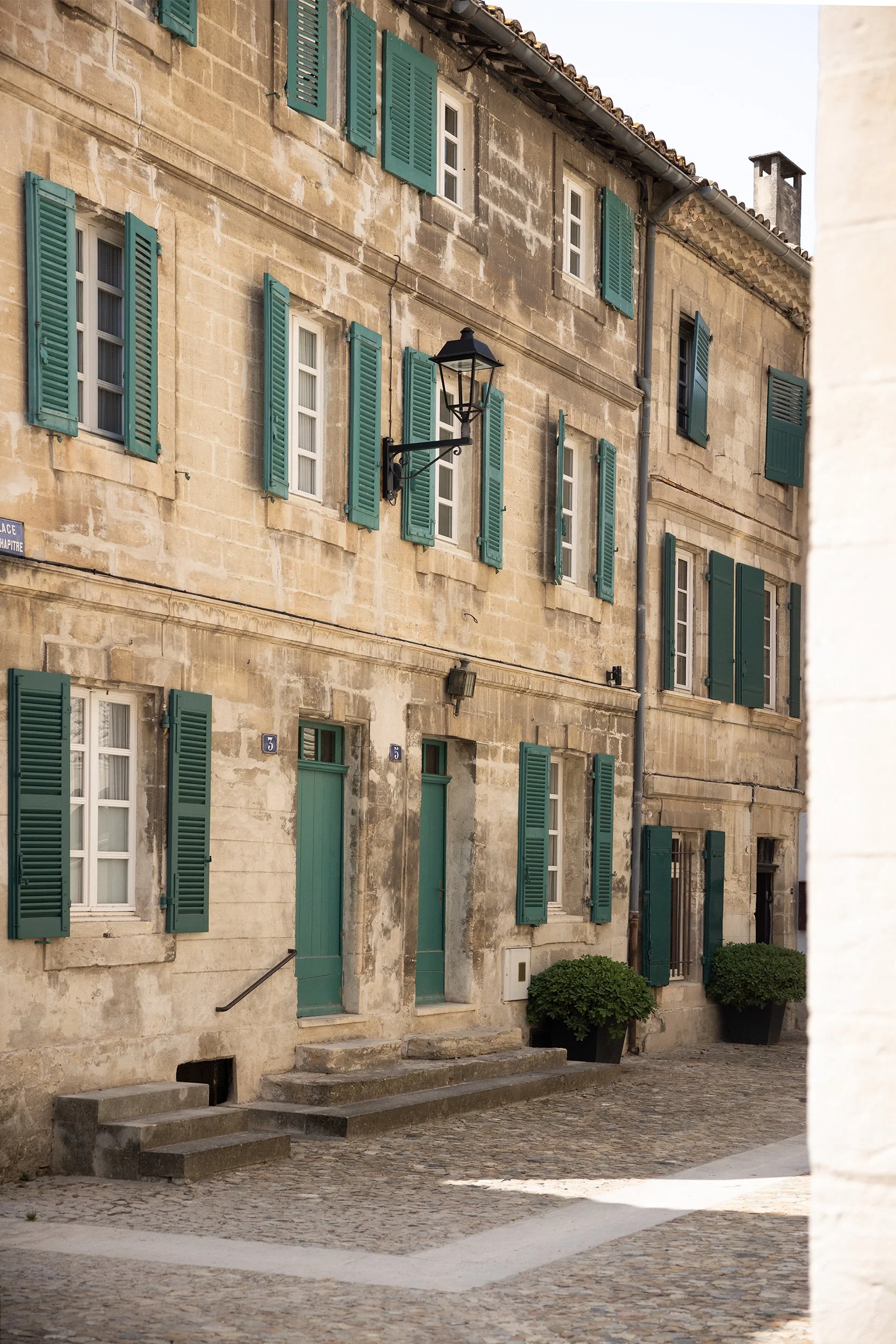
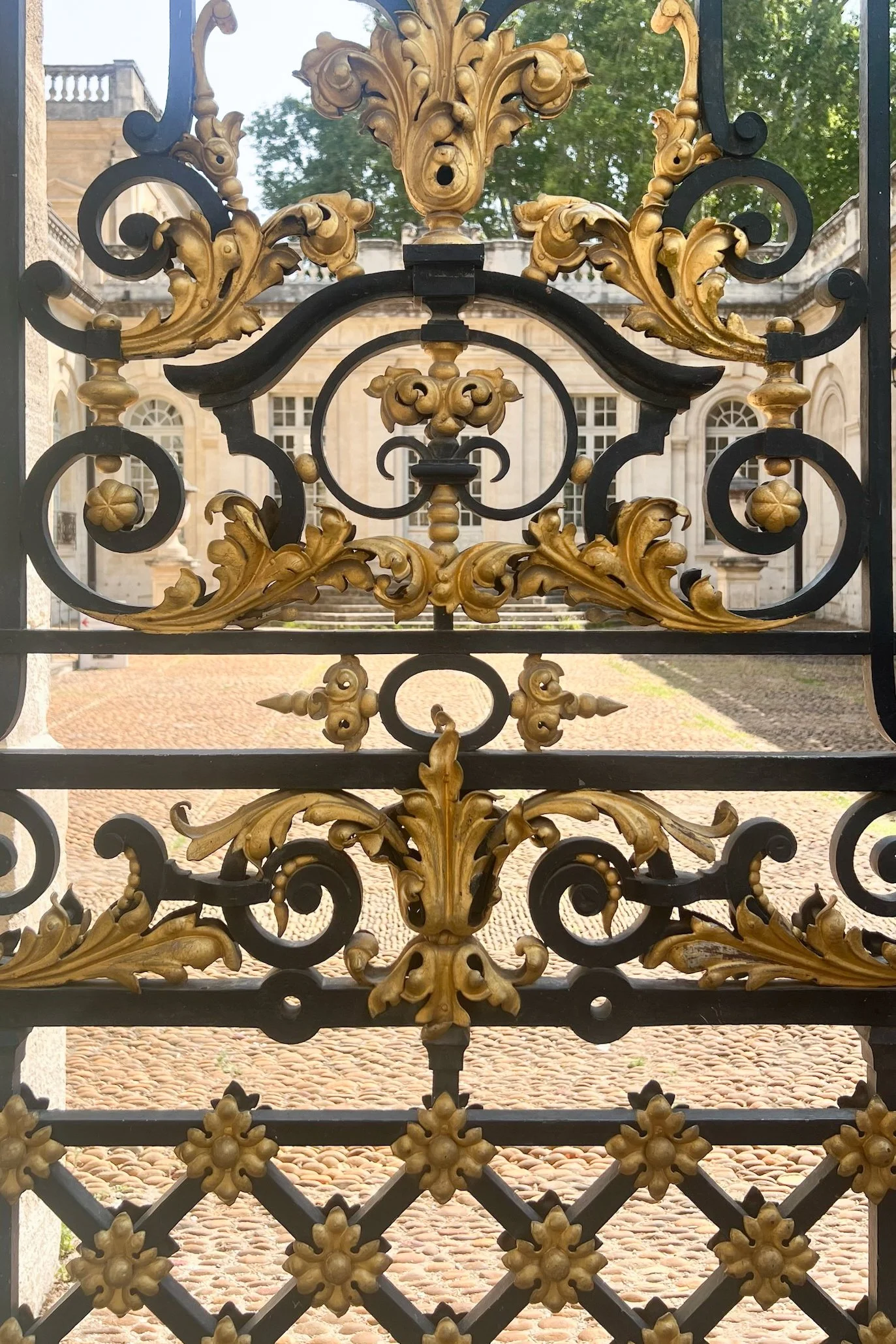
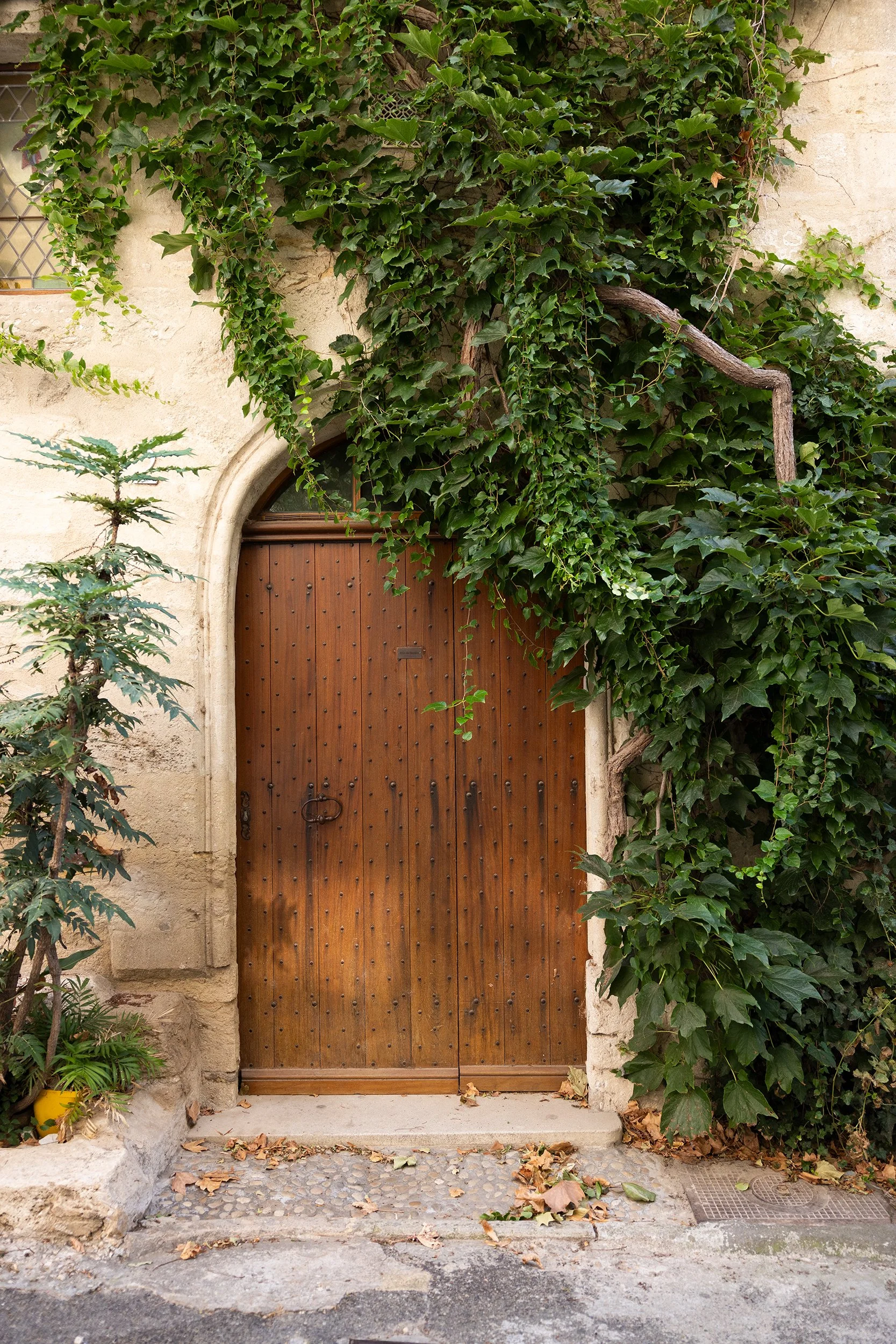
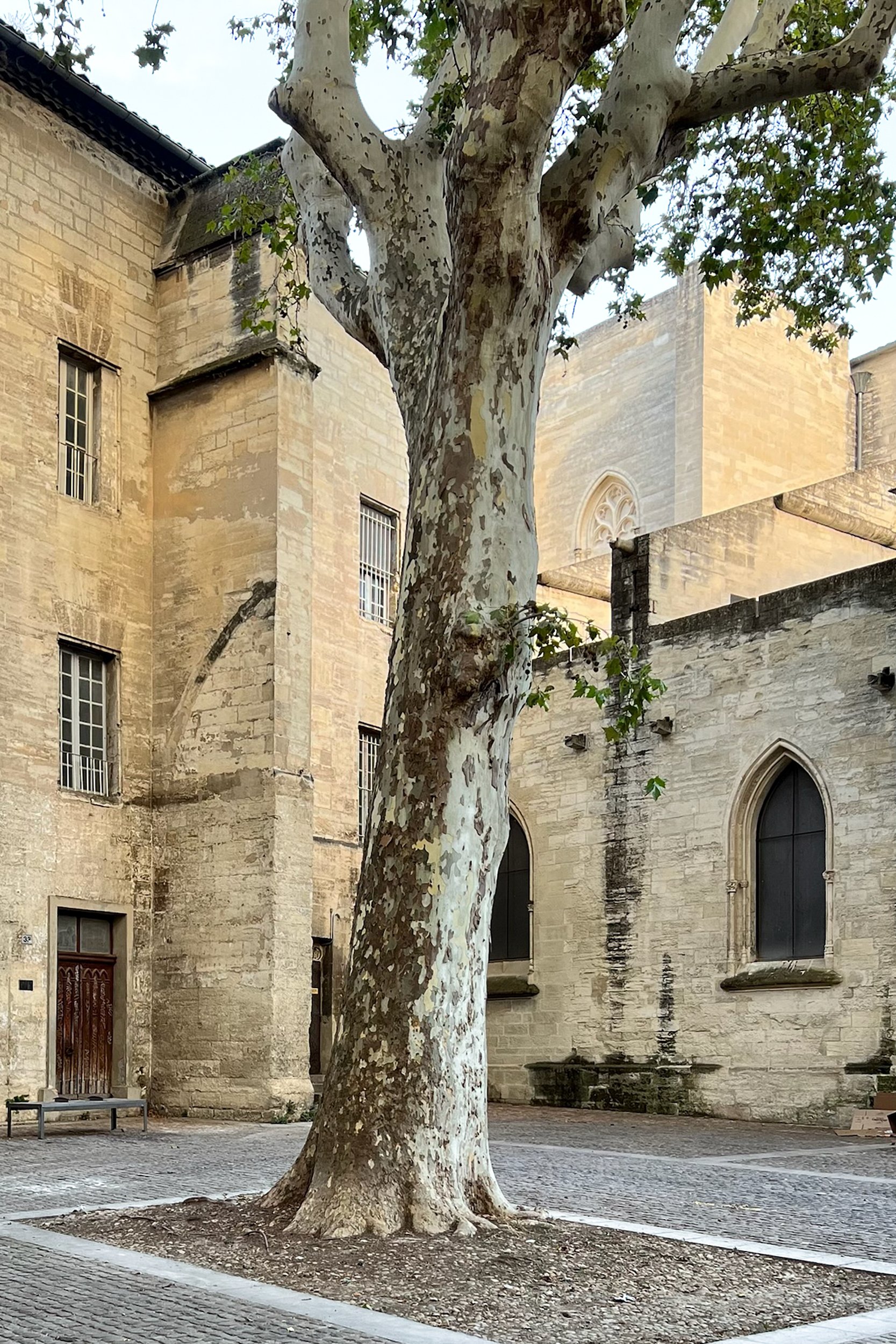
1. Hôtel Le Prieuré Baumanière in Villeneuve-lès-Avignon | 2. Gate at the Calvet Museum - photo by Laura Woodard | 3. Door on Rue Mont du Fort in Villeneuve-lès-Avignon | 4. Ceccano Library - photo by Laura Woodard
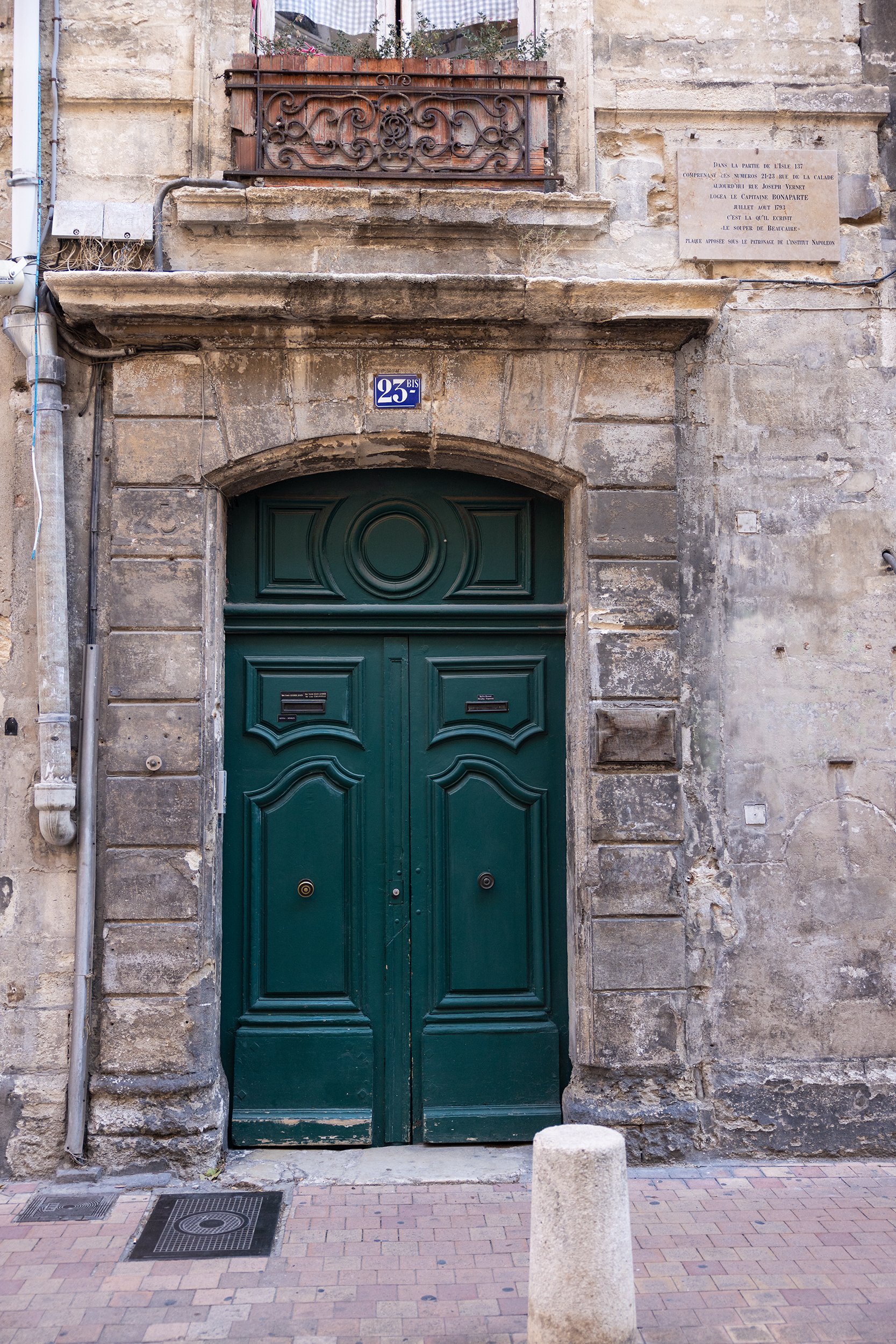
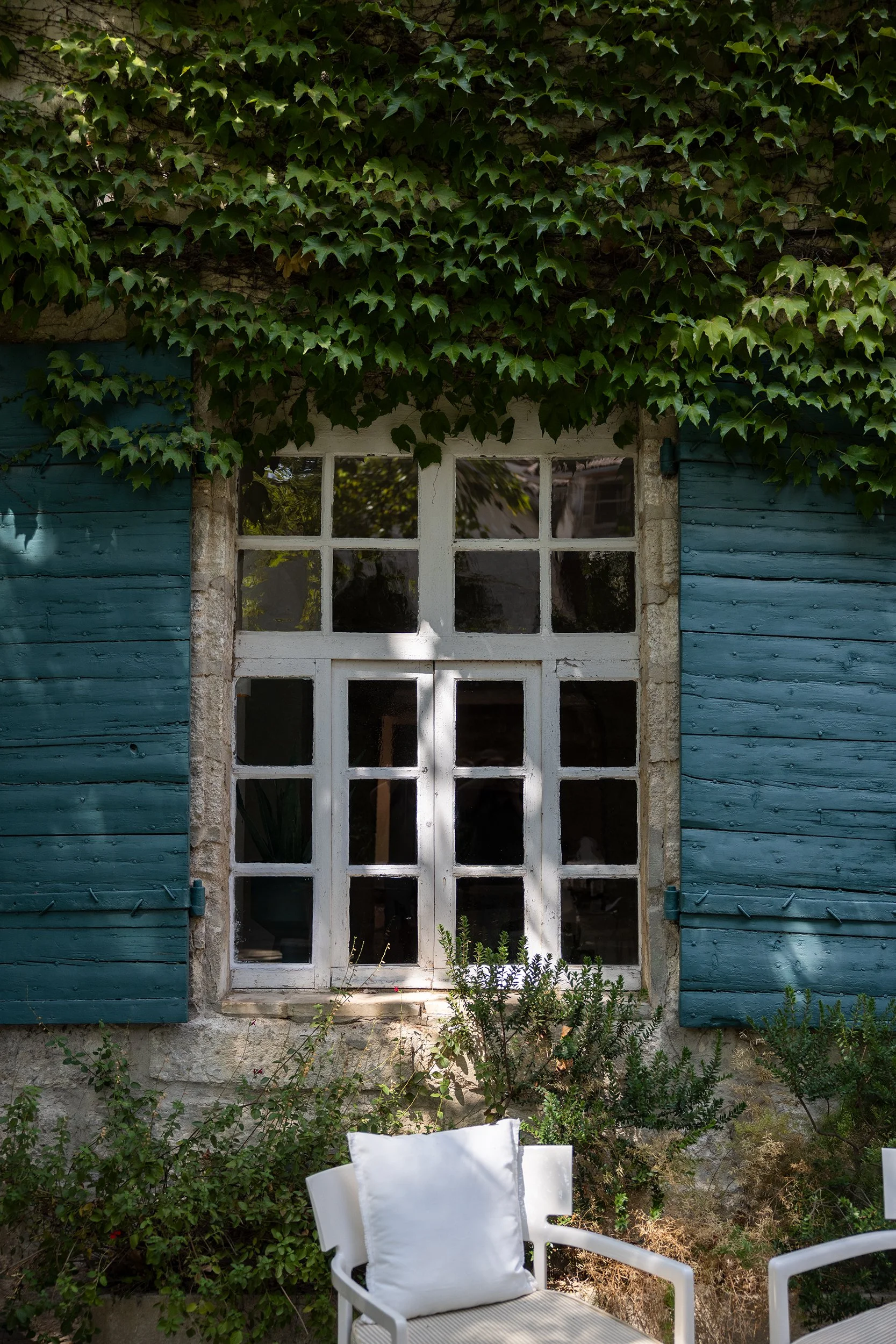
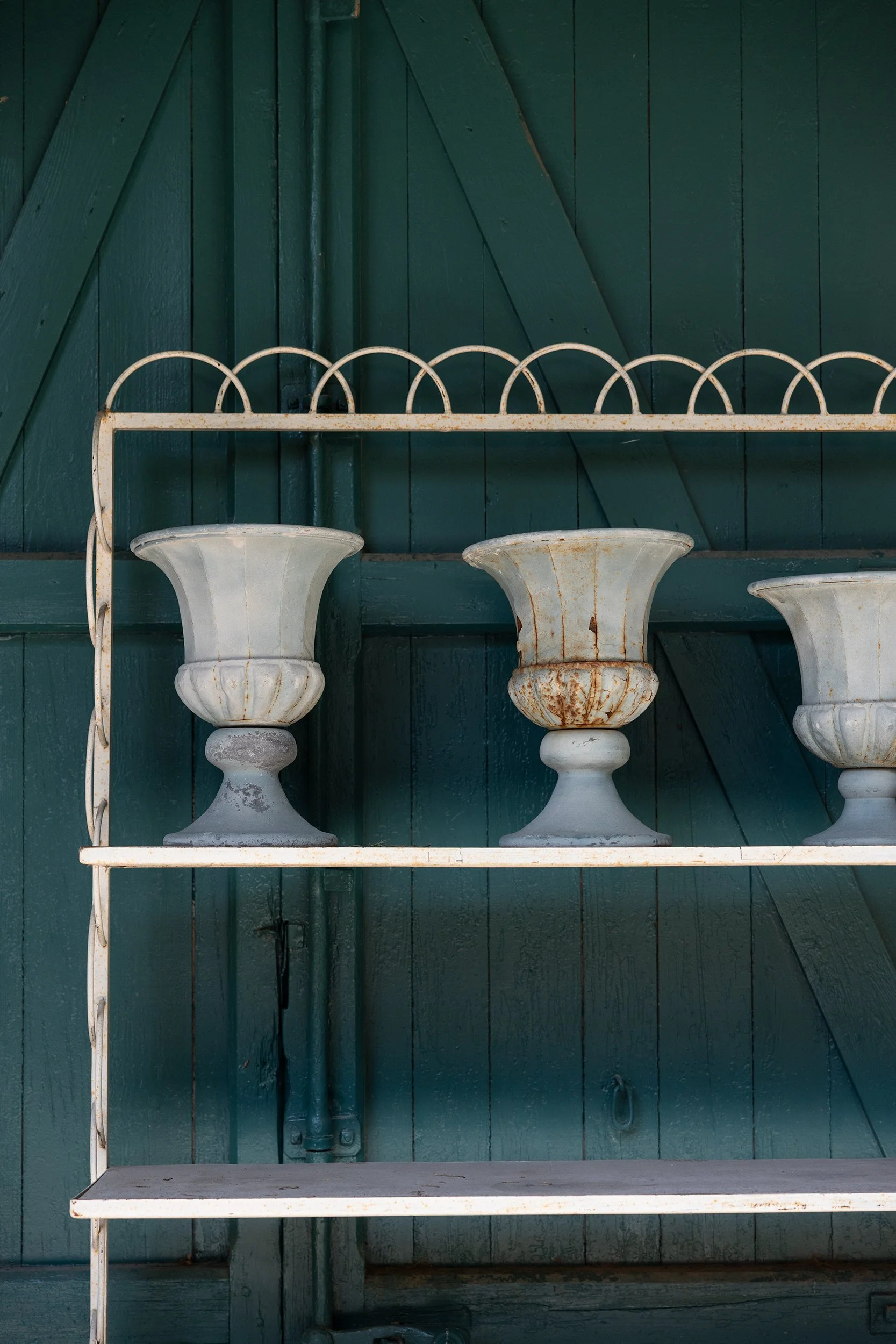
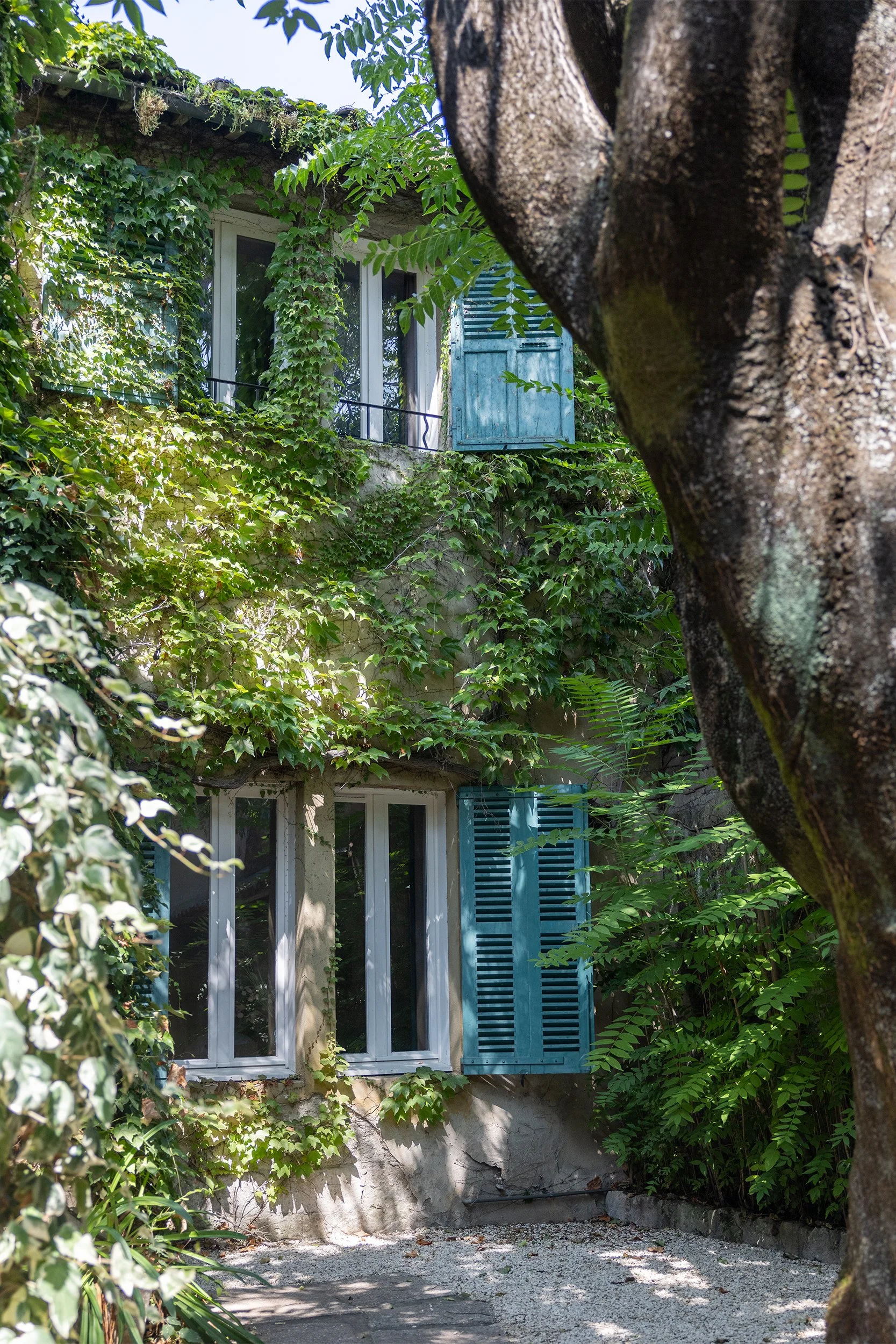
1. The historically significant 23 Rue Joseph Vernet, where Captain Napoleon Bonaparte stayed as a young officer in July and August 1793, before his rise to Emperor | 2., 3., 4. Details of the Hôtel Le Prieuré Baumanière in Villeneuve-lès-Avignon, a former convent
Avignon's accommodation options feel surprisingly limited. Most of what's available falls into the B&B category, with just a couple of standard hotels and a few high-end luxury properties - not much middle ground in between, and even less that captures that authentic Provençal charm you might be hoping for. So we opted for B&Bs and chose to split our time between two different properties based on availability.
Our first B&B turned out to be surprisingly sub-par. The rooms were tattered, and the garden area we were excited to use at night was not even accessible to guests. As a photographer who regularly shoots resorts, I'm well aware that clever angles and lighting can flatter a property, but this one really caught me off guard. And the specific room I had booked in advance was not the room we received. This was definitely a case of creative marketing. Thankfully, the host was a lovely person, the breakfast was a decent addition, and we would be moving on in a few days. Laura referred to our stay as the room at grandma’s house.
Our second B&B was quite the opposite. Lovely garden property with adorable, yet cozy, rooms and lots of character that offered the French charm I had hoped to find. The hosts were super helpful, and the poolside garden made for relaxing evenings. A comfortable, quiet common space for unwinding at the end of the day is so much better than being stuck in a cramped hotel room with only a bed or a desk chair to sit on. I would highly recommend Les Jardins de Baracane. I paid for my stay here and didn't receive any compensation or complimentary services. My praise, as always, is an honest reflection of my experience.
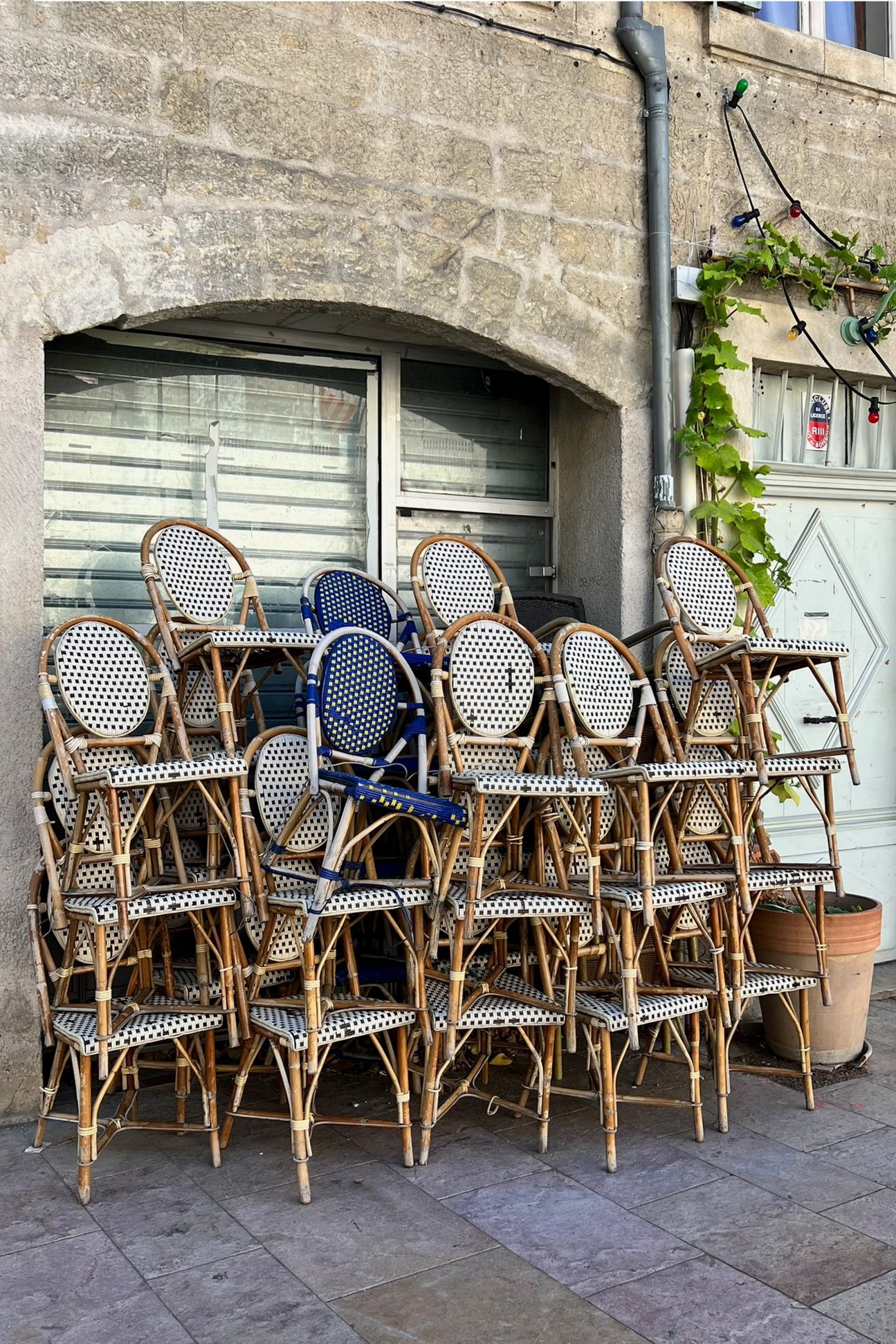
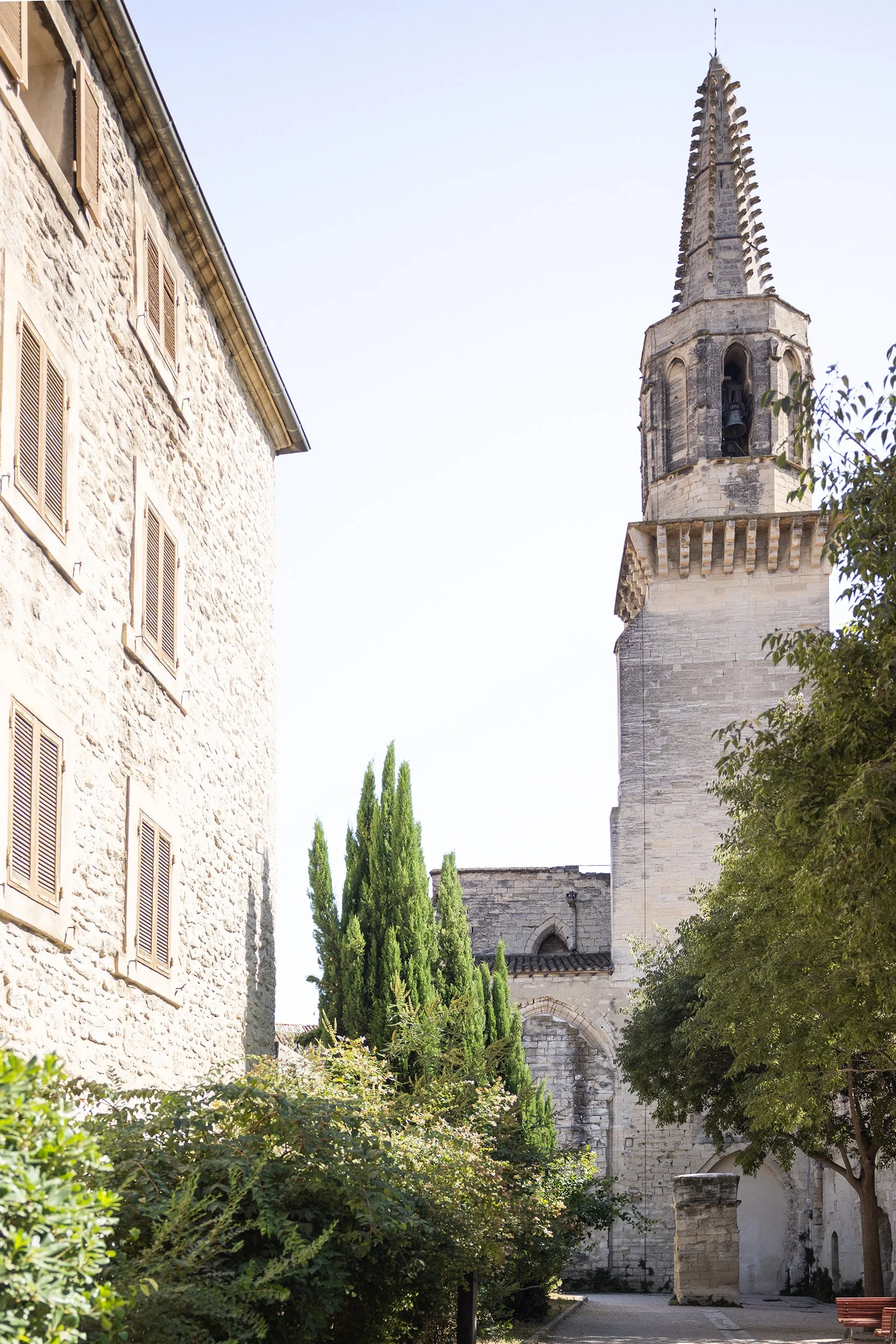
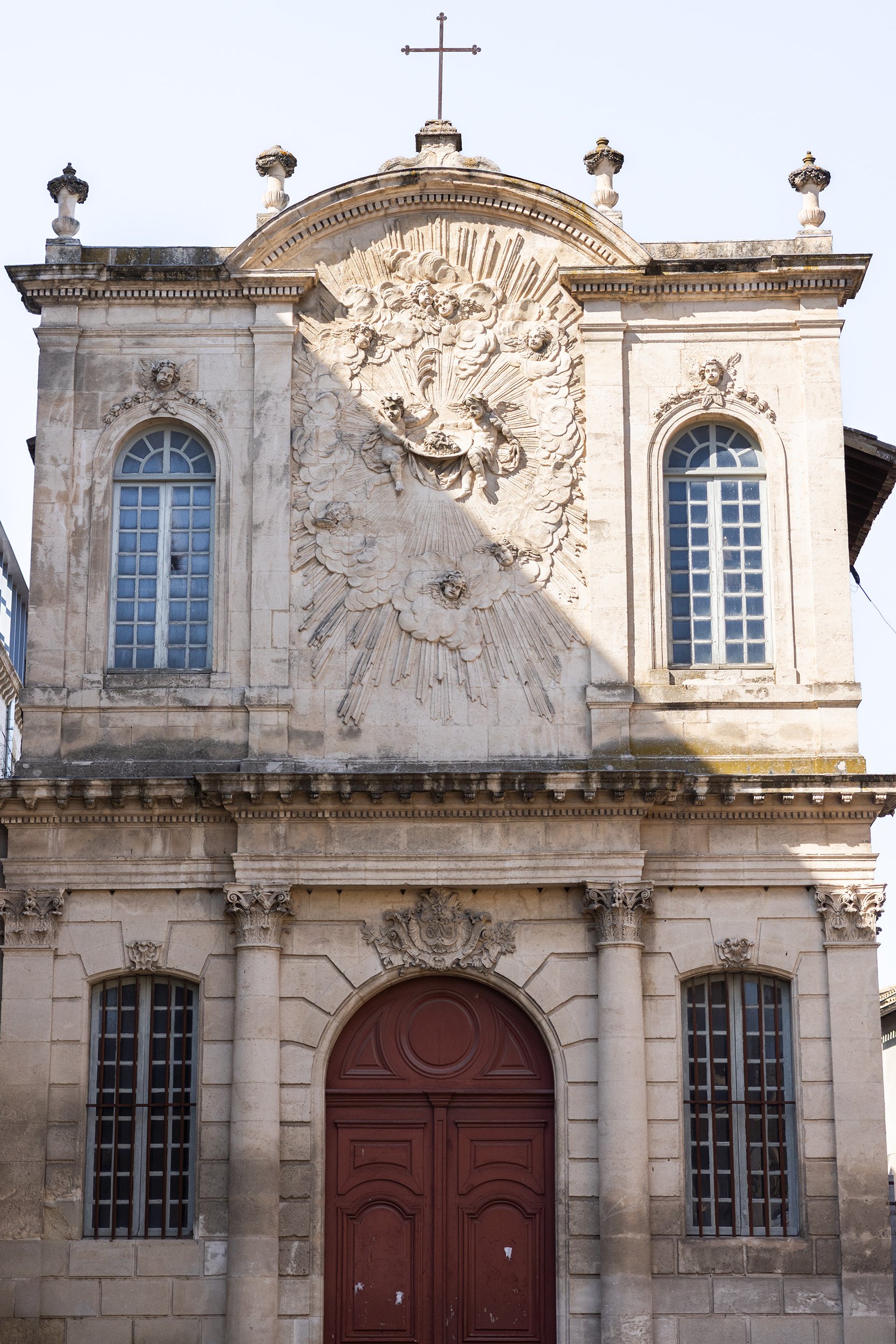
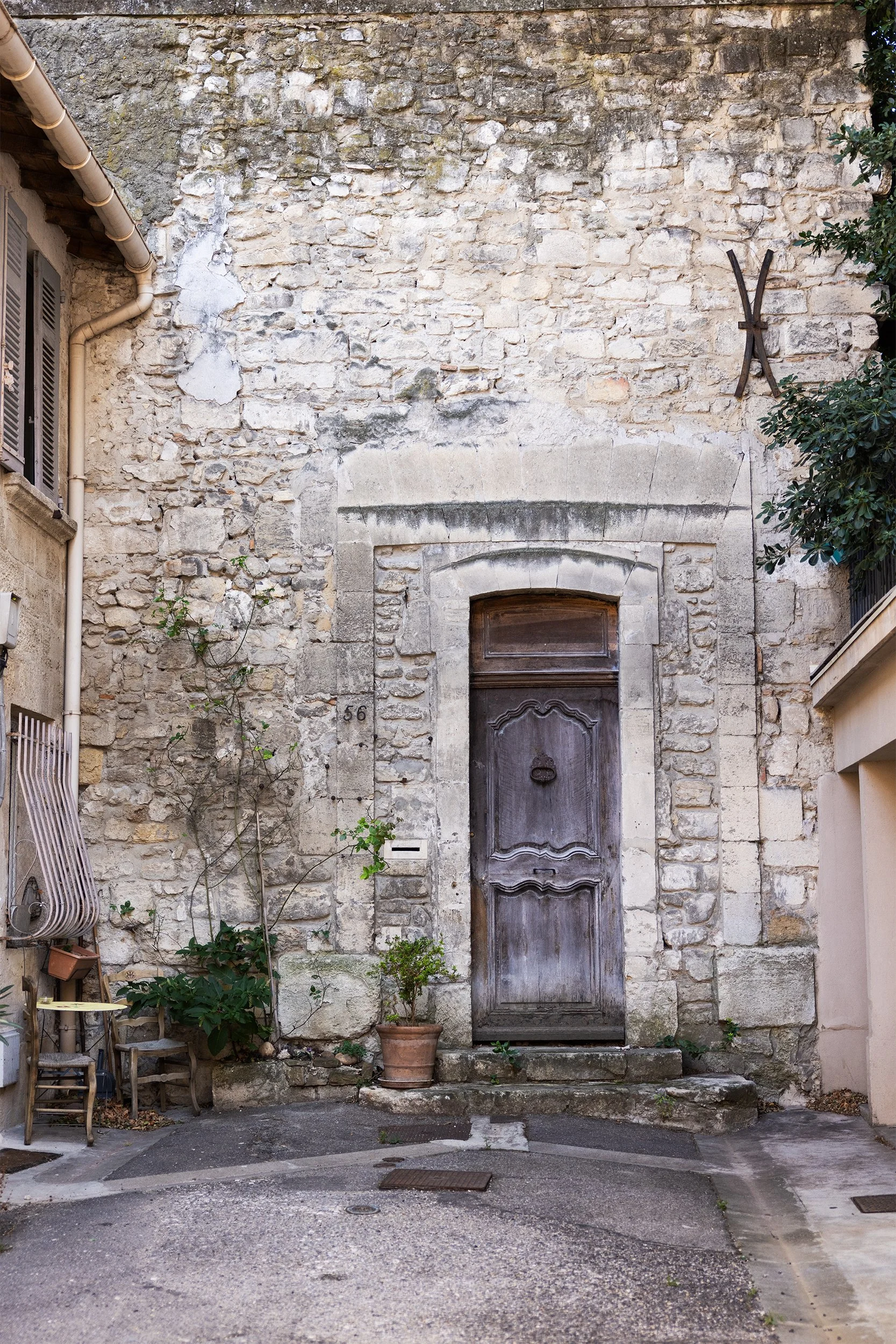
1. Bistro chairs awaiting the upcoming dinner setup - photo by Laura Woodard | 2. Église Saint Saint-Symphorien d'Avignon | 3. Chapelle des Pénitents-Noirs | 4. Courtyard found wandering the town of Avignon near the Chapelle des Pénitents-Noirs
I’ll admit, Avignon didn't quite live up to my expectations. While the Papal Palace is undeniably impressive and the history is rich, the city itself felt a bit worn, with a grittiness that made it hard to reconnect with the medieval charm I'd remembered from my prior visit. It wasn't without its moments - certain squares had character, and you could sense the layers of history - but overall, the city felt like it needed some care and attention. Not every destination resonates with every traveler, and Avignon simply wasn't as enchanting as I'd found it a few years back.
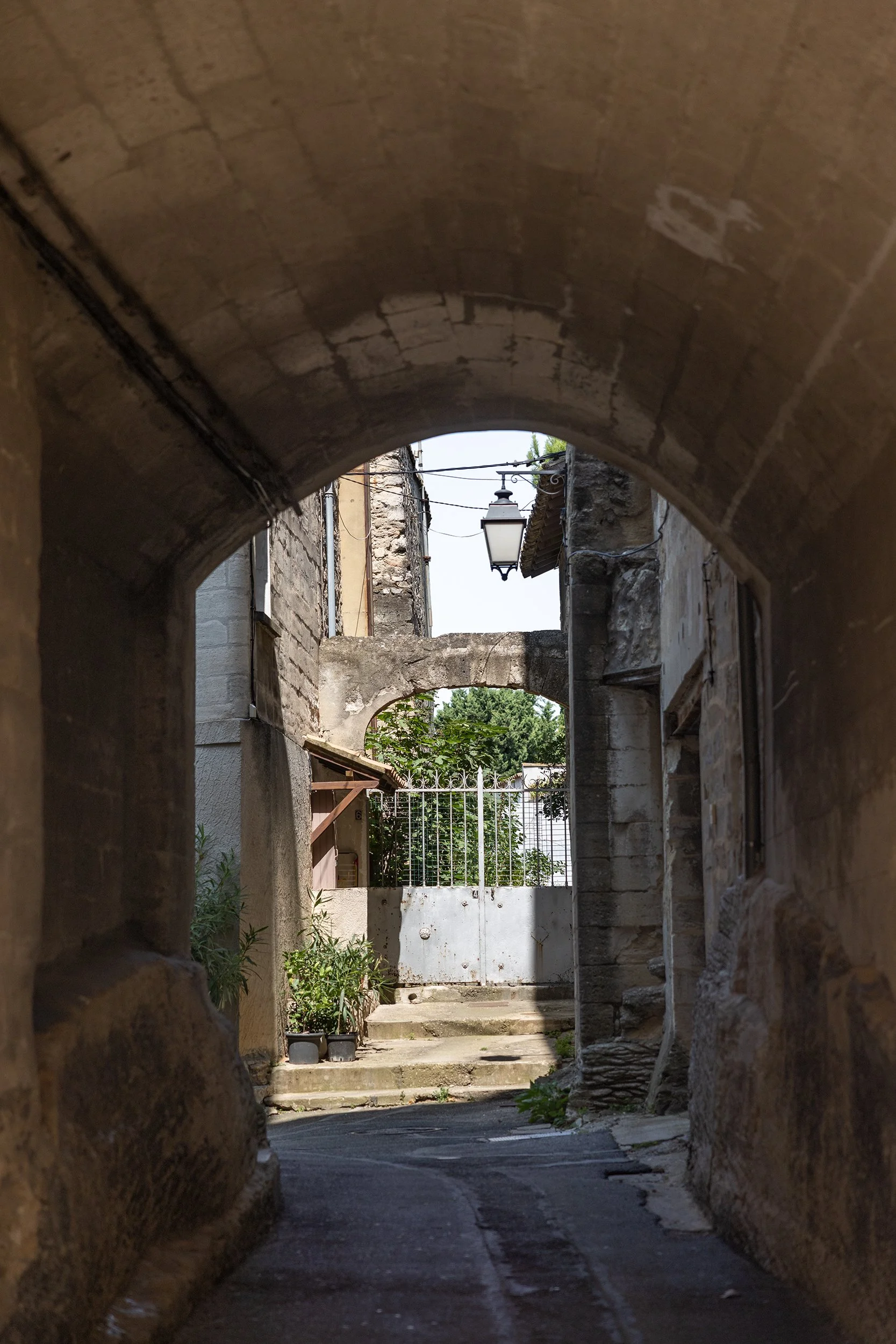
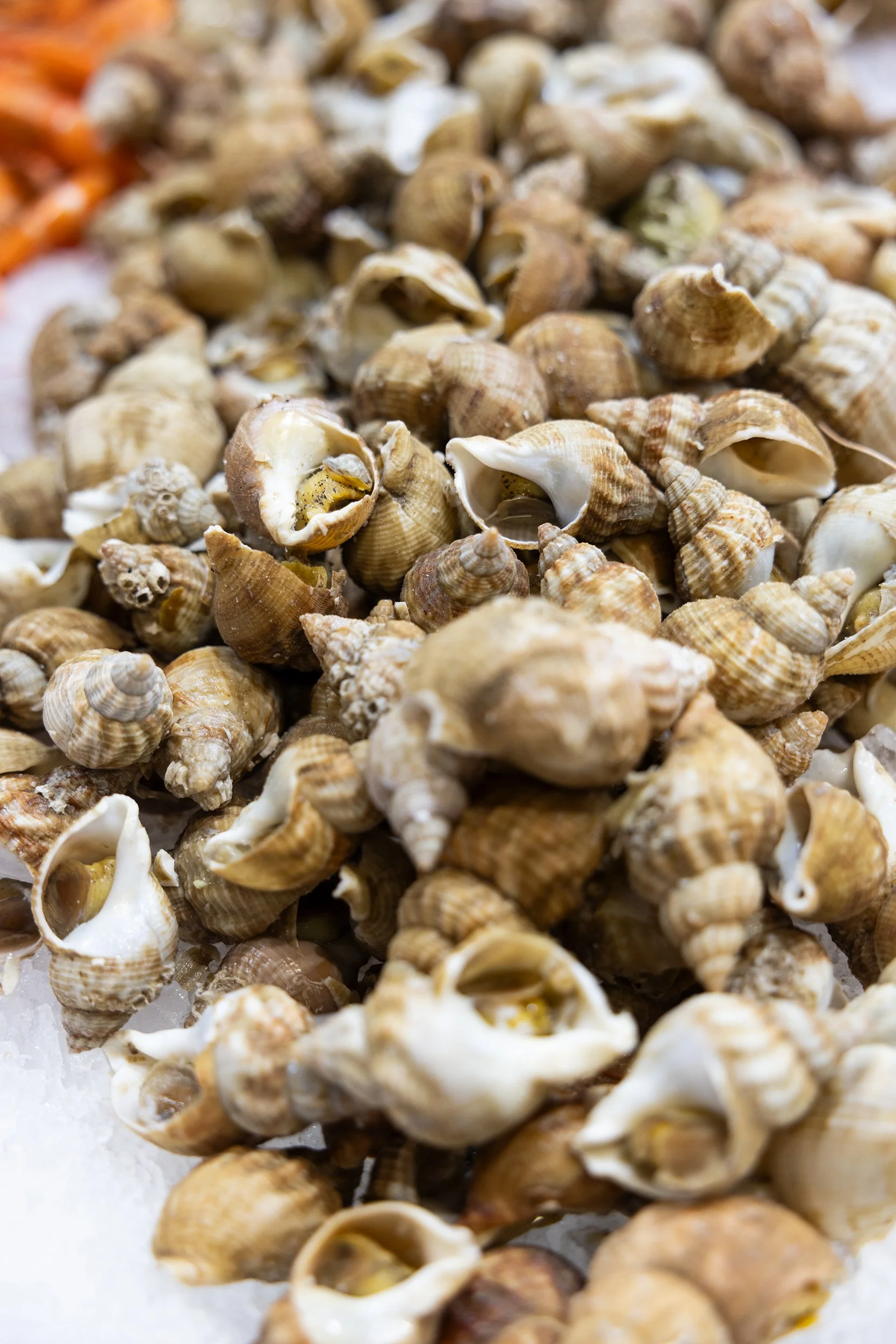
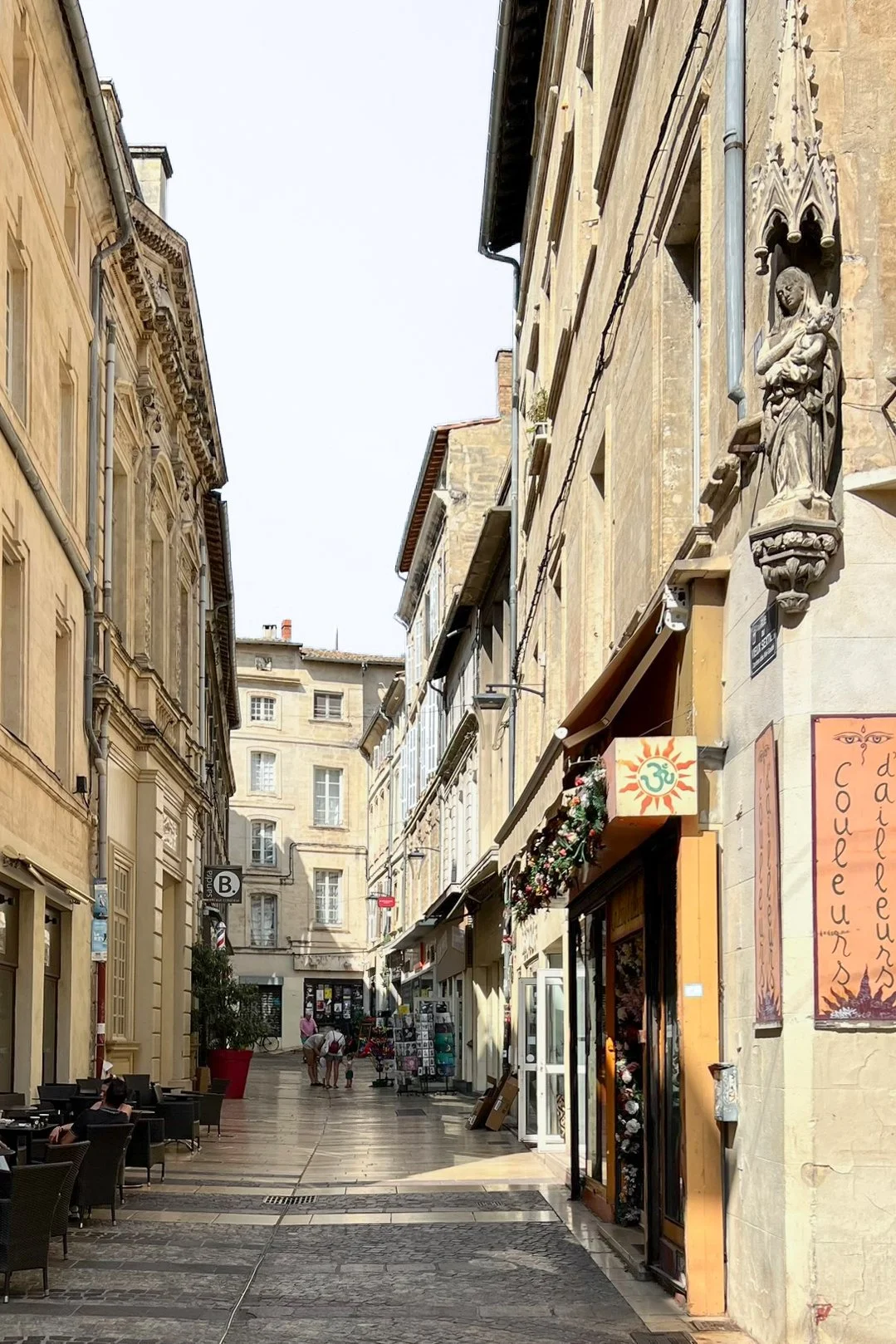
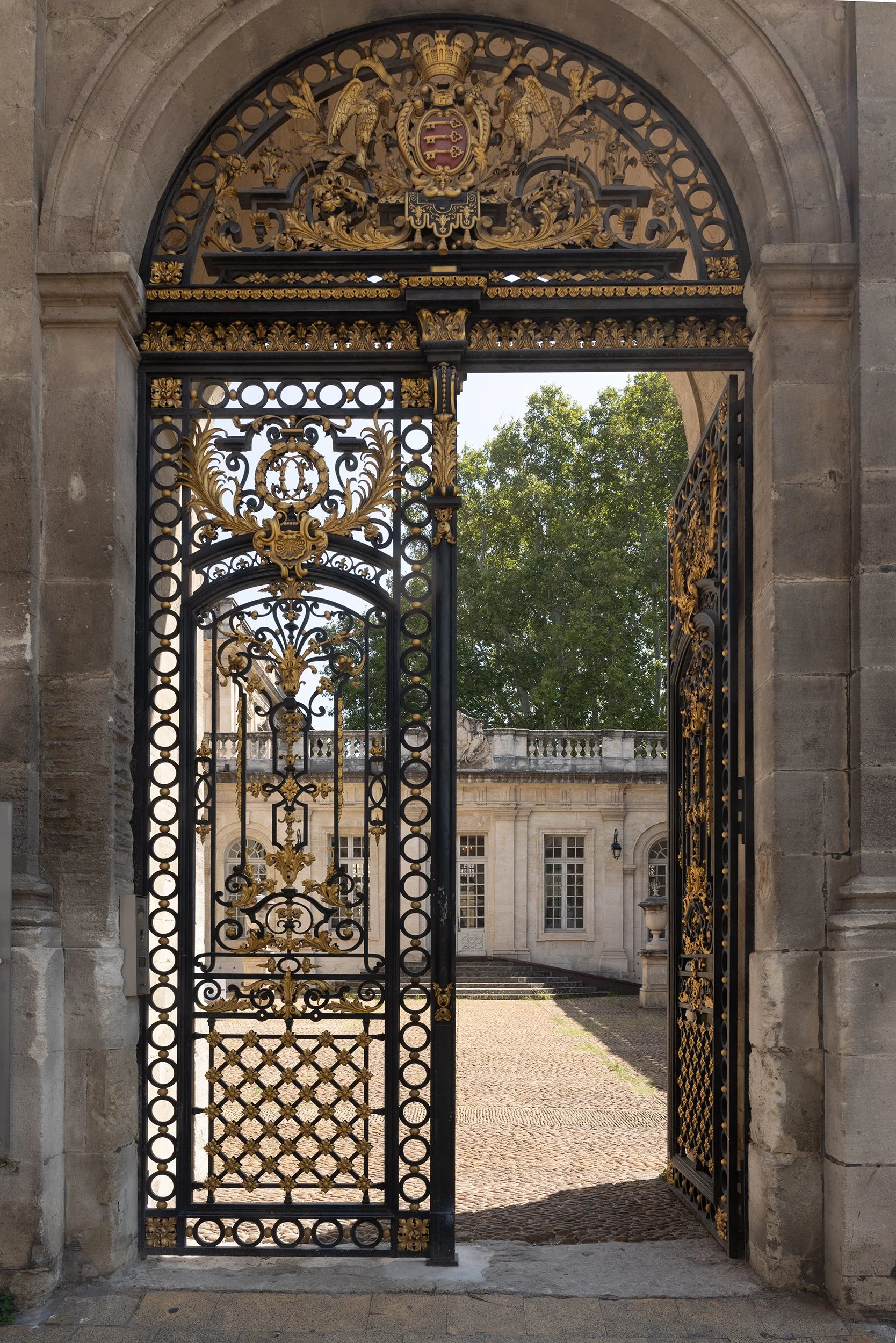
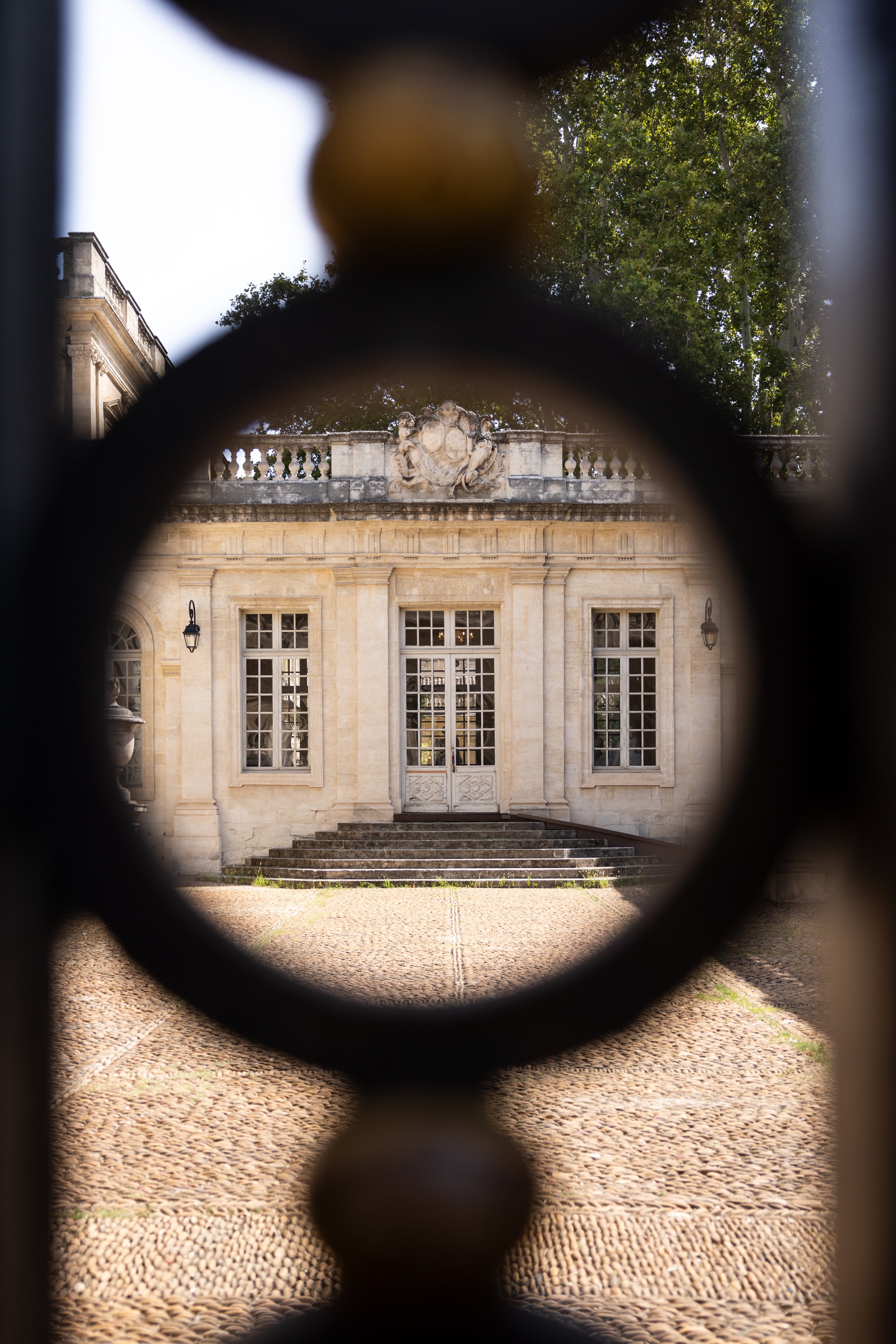
1. Impasse de la Livrée in Villeneuve-lès-Avignon | 2. Seafood display at Les Halles d'Avignon indoor market | 3. Rue du Vieux Sextier and one of the many Madonna statues in the town of Avignon - photo by Laura Woodard | 4. Calvet Museum

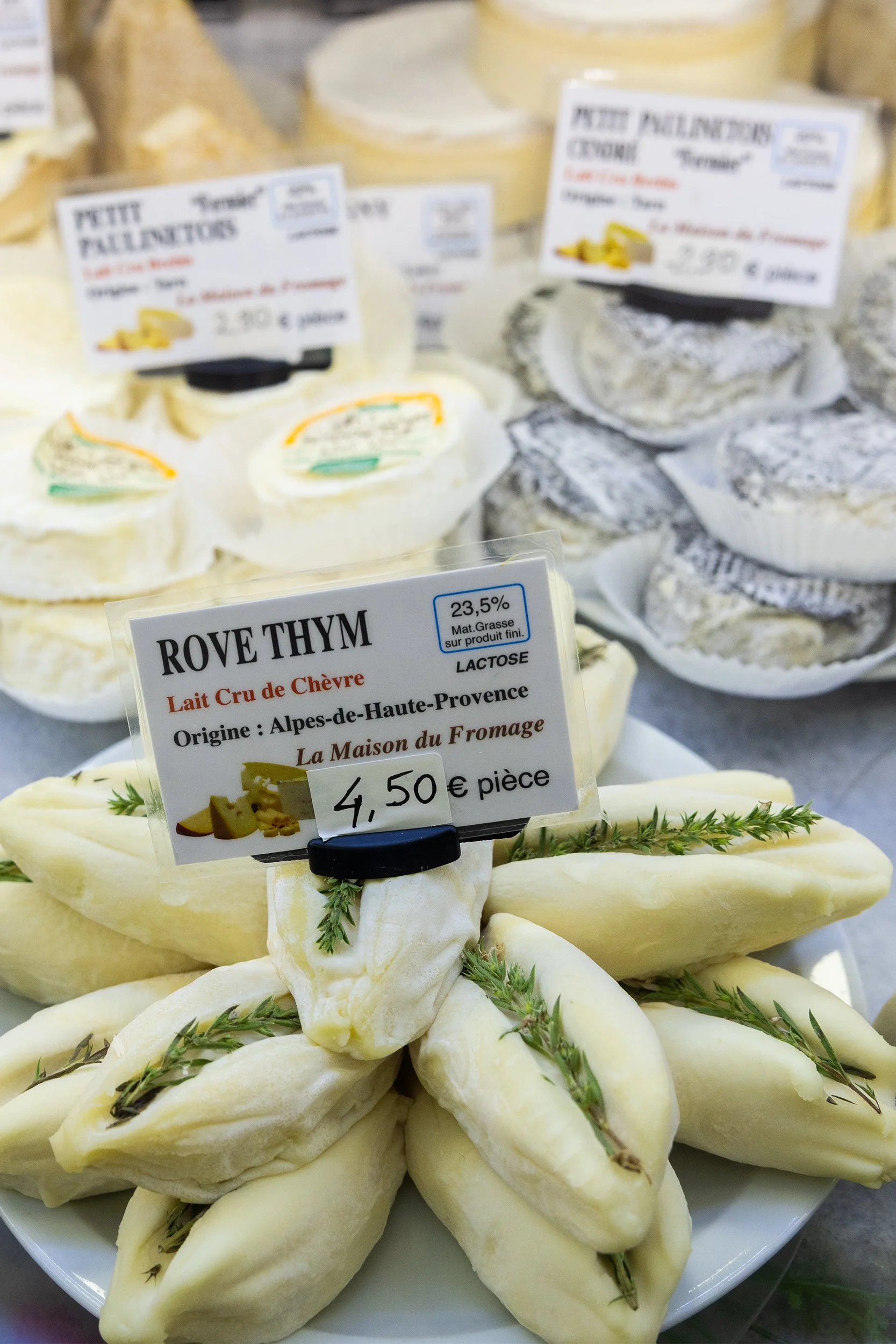
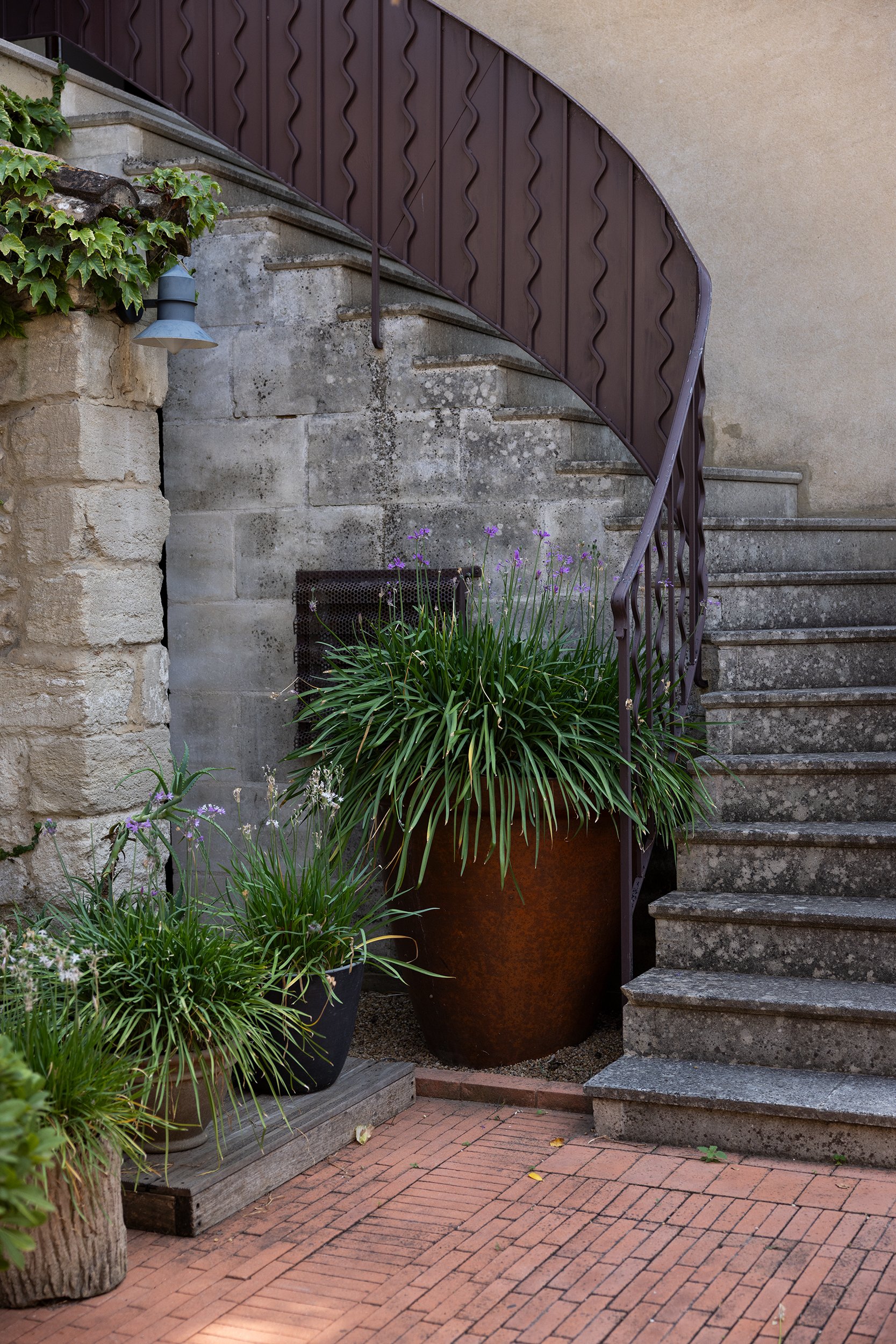
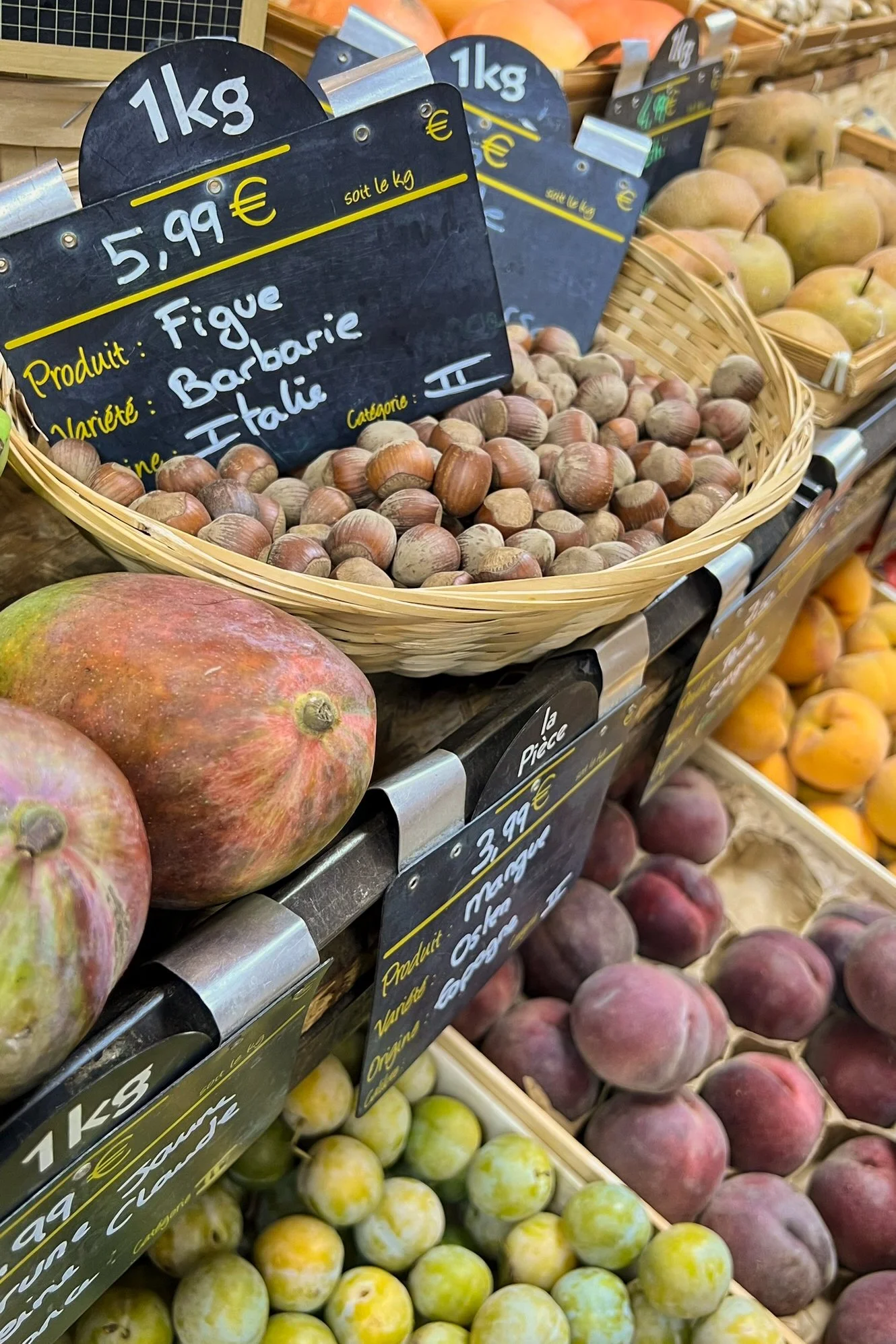
1. Jardin Verger Urbain V - photo by Laura Woodard | 2. Les Halles d'Avignon indoor market offers an incredible variety for stocking a country house or assembling a day's picnic - fresh produce, local cheeses, charcuterie, and everything needed to eat like a local | 3. Hôtel Le Prieuré Baumanière | 4. Les Halles d'Avignon - photo by Laura Woodard
Still, the city had at least one magical moment in store for us. One evening, Laura and I had dinner at Carré du Palais in the Place du Palais at the foot of the Papal Palace. As we finished dinner, we found ourselves puzzling over a giant glowing balloon that had risen and was floating above the square. It took me a moment to realize it was a moon box - one of those large lighting balloons used on major film productions. Before long, we were completely engulfed by a movie set for a French romcom movie called, fittingly enough, Avignon. We watched the cast and crew rehearse and block their scenes under the stars, the square bathed in the soft glow of hundreds of candlelit luminaries and illuminated by that hovering moon box overhead. The crew had done a fantastic job transforming the Place du Palais into a romantic setting, with the imposing Papal Palace looming dramatically in the background.
In hindsight, would I stay in Avignon again? Maybe, though not without some doubt. The location worked perfectly for our plan of relying on public transport, but I can't help wondering if splitting our time - a few nights in a smaller Provençal town - might have added something we missed. Then again, having a proper base with multiple restaurant options, grocery stores, and reliable infrastructure made the logistics considerably easier. There's a trade-off between atmosphere and practicality, and we landed on the practical side. No regrets, but maybe next time we'd tilt the balance slightly the other way.
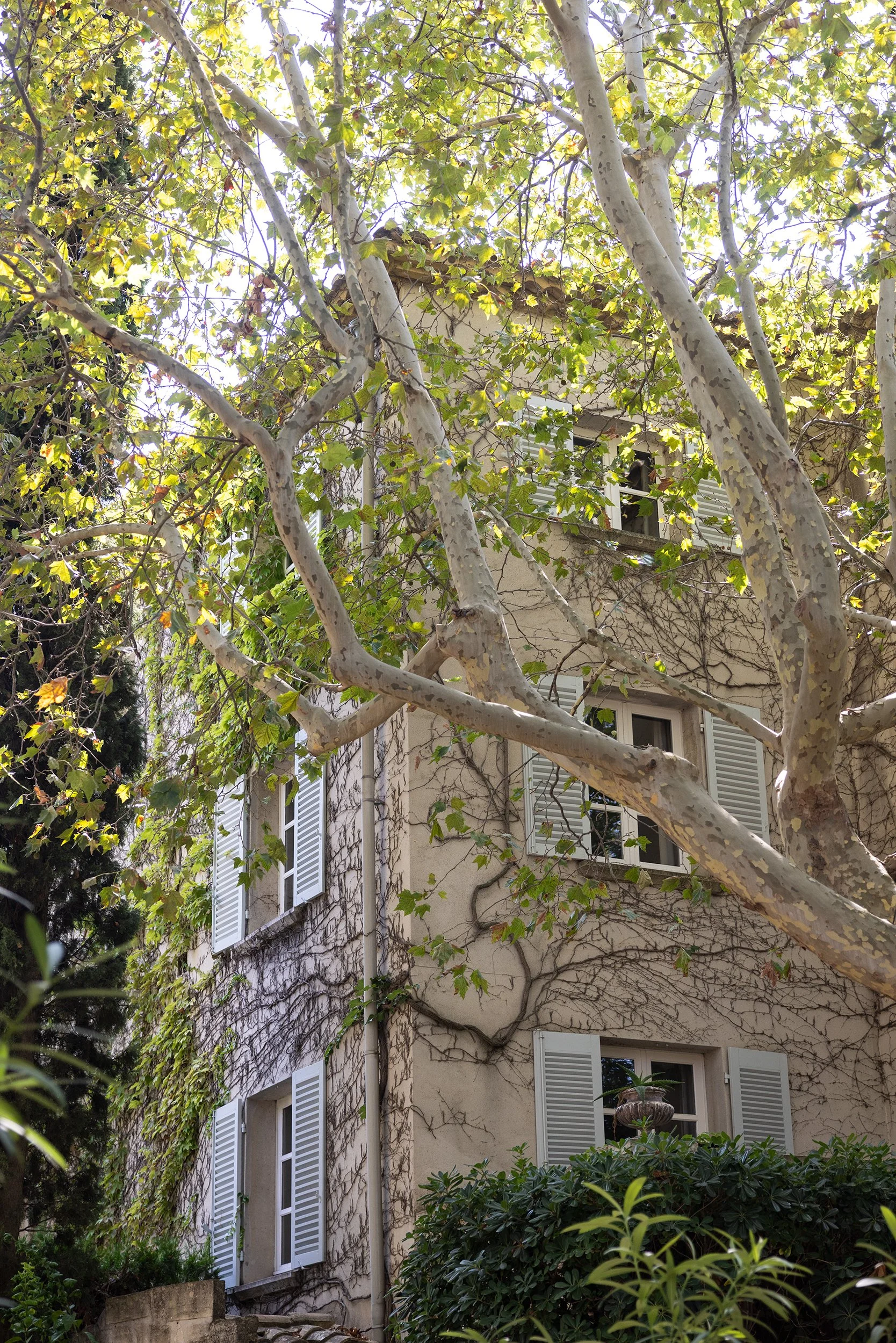
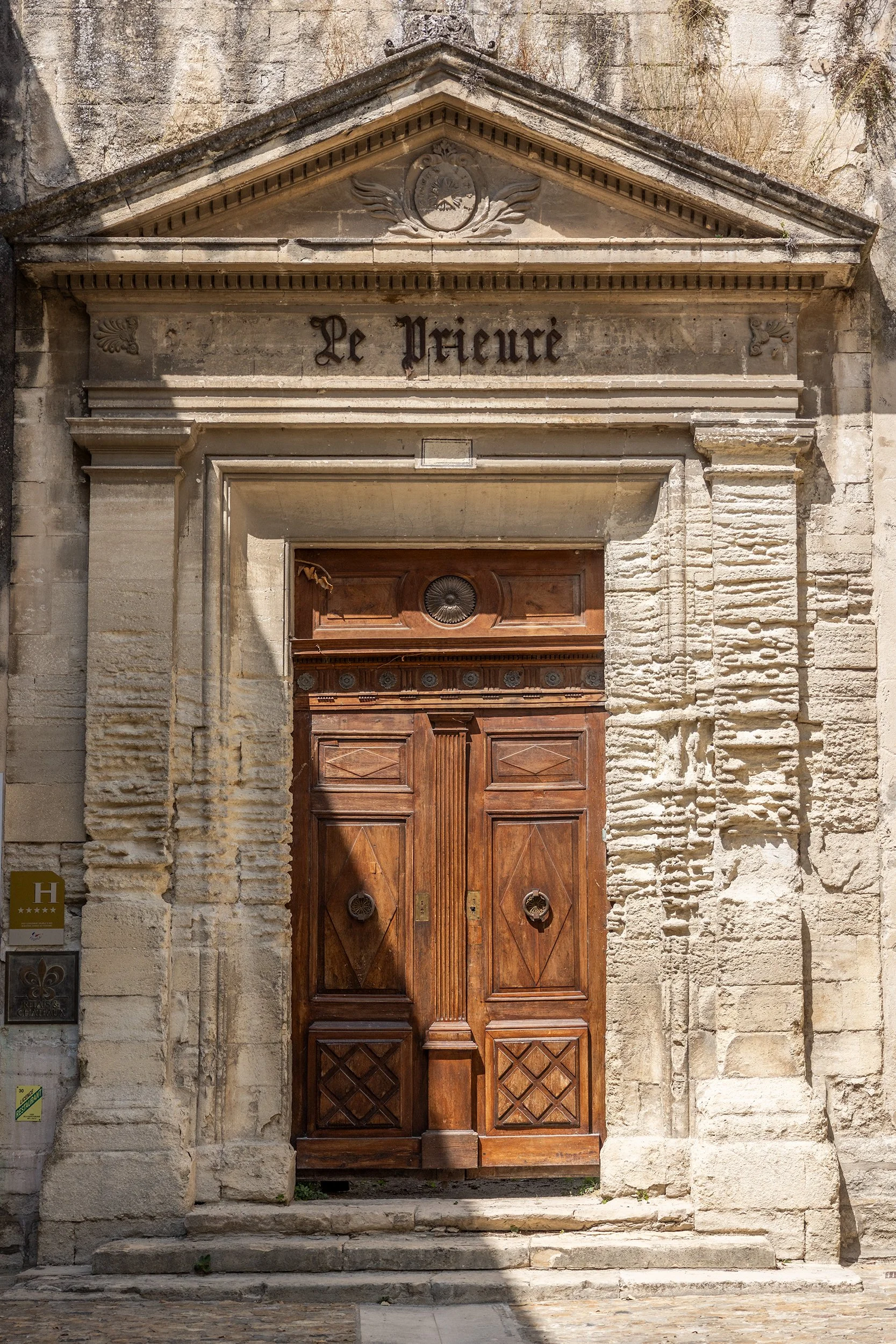
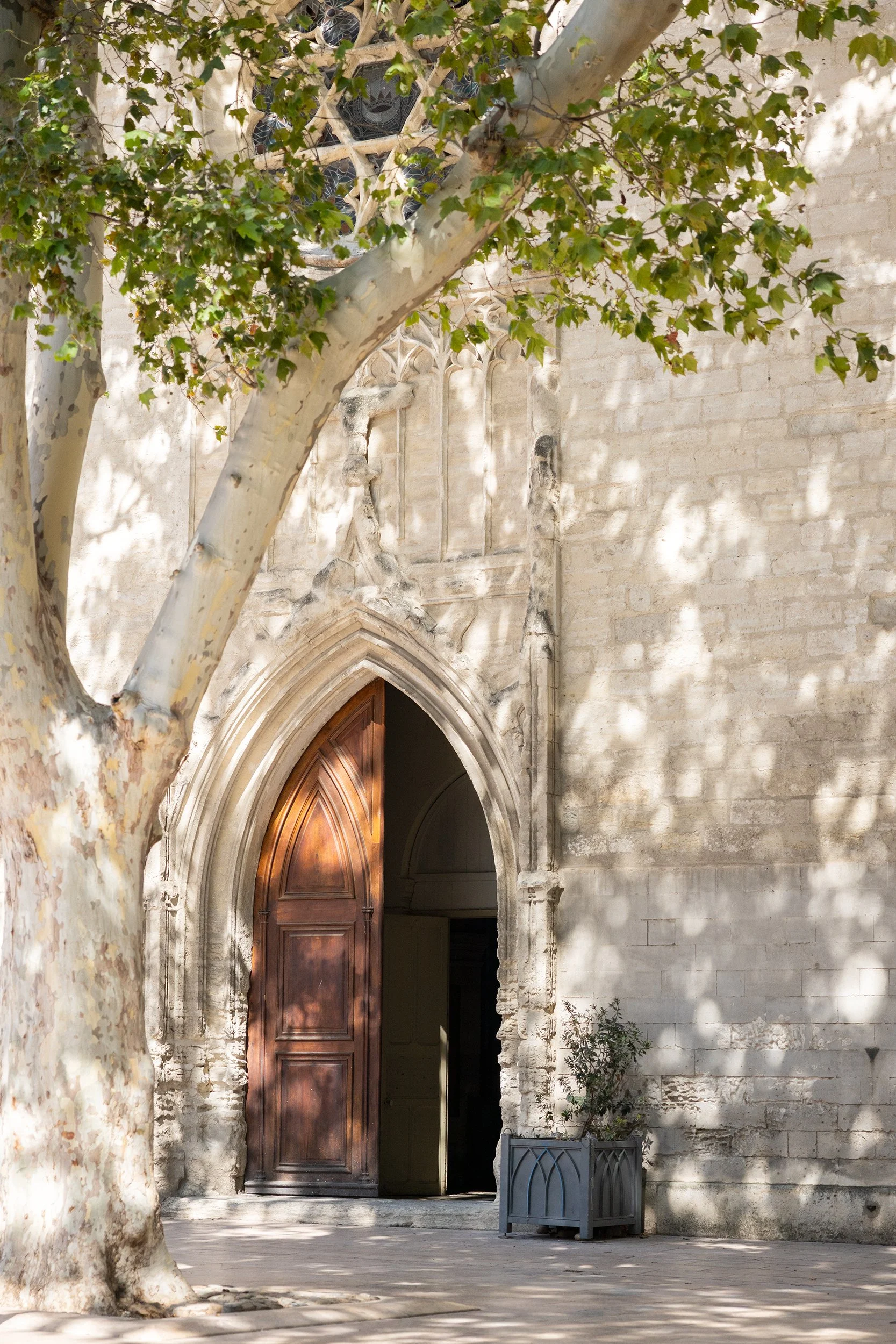
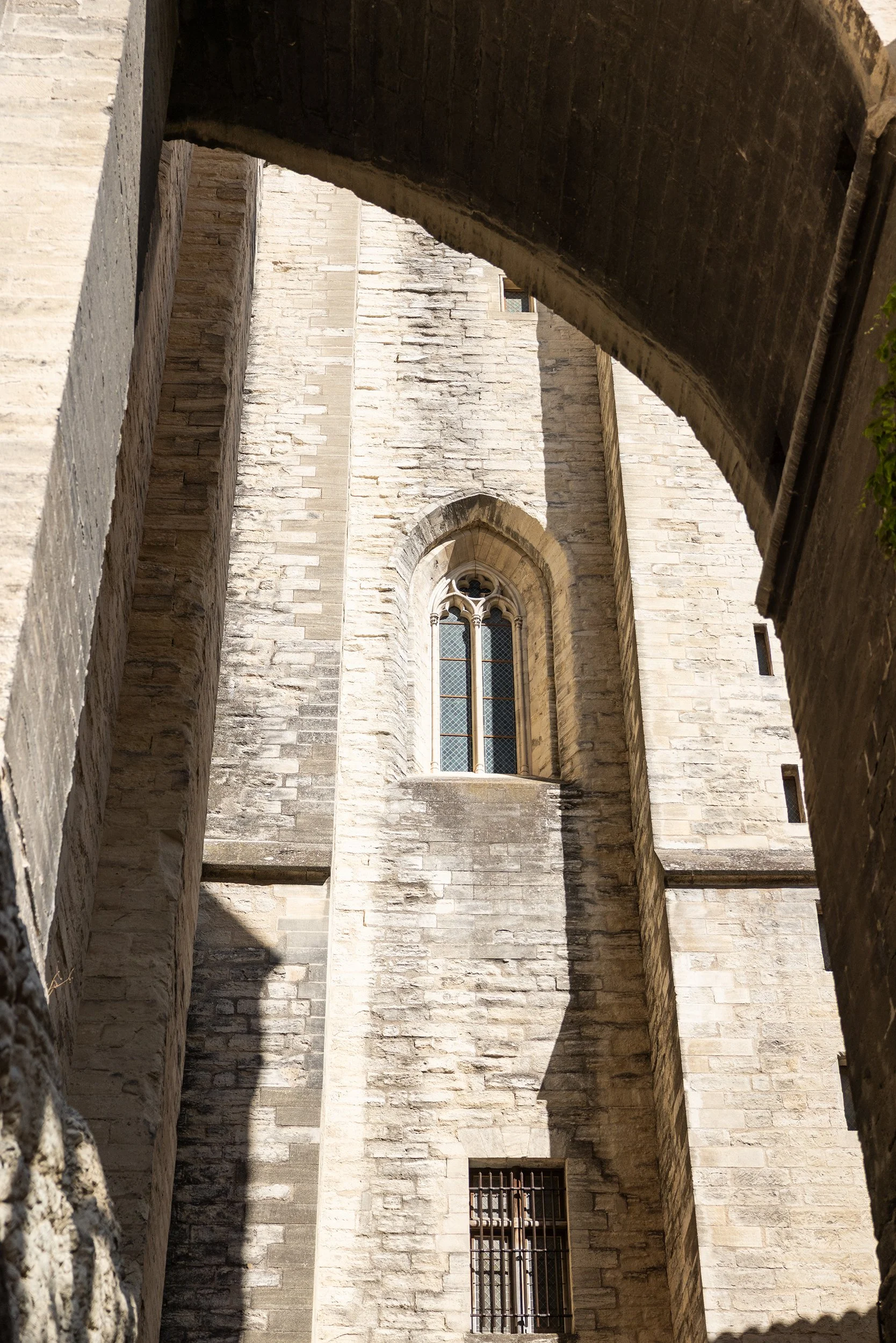
1. Le Prieuré Baumanière in Villeneuve-lès-Avignon | 2. Le Prieuré entry door | 3. Saint Symphorien les Carmes church | 4. Palais des Papes
PLANNING YOUR VISIT
DINING
While we'd read about Avignon's impressive dining scene, we never quite tapped into it. Laura tends toward the familiar when it comes to food, so we stayed safe with bistro basics and reliable choices rather than chasing the more adventurous restaurants the city is known for. We ate well enough, but I suspect we missed some of what makes Avignon special for food lovers.
Aubergine
Aubergine serves traditional Provençal and creative French cuisine in a cozy dining room or in a shady spot in the square.
Location: 15 Rue de la République, Villeneuve-lès-Avignon
Carré du Palais
Carré du Palais sits right on Place du Palais, with tables sprawled across the square facing the papal fortress.
Location: 1 Place du Palais, Avignon
Grand Café Barretta
Restaurant/brasserie in the heart of Avignon's Place Saint Didier with outdoor seating. Founded in 1773 as the Café Suisse, it later became the Café Barretta and is the city's oldest café.
Location: 14 Place Saint-Didier, Avignon
Restaurant L'Epicerie
L'Epicerie tucks itself into a quiet church courtyard in Avignon. The setting elevates the experience - bistro fare in a spot that feels genuinely special.
Location: 10 Place Saint-Pierre, Avignon
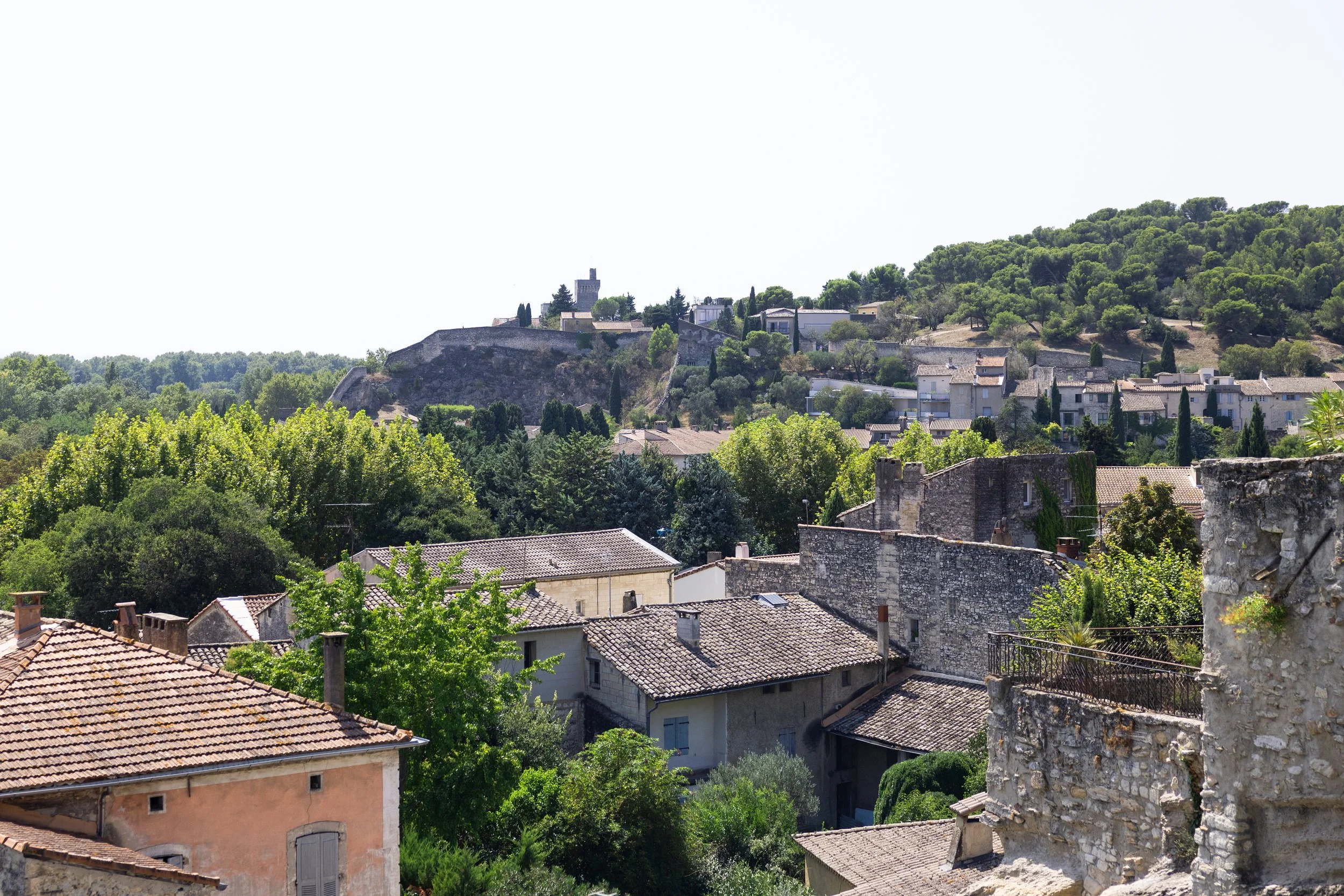
Villeneuve-lès-Avignon
ACCOMMODATIONS
Hôtel La Mirande
Tucked beside the Palais des Papes, La Mirande started life as a 14th-century cardinal's palace - now it's one of Avignon's most elegant hotels. Luxury accommodations.
Location: 4 Place de l'Amirande, Avignon
La Divine Comédie
La Divine Comédie sits in Avignon's largest private garden, offering quiet luxury in the middle of a city steeped in history. Luxury accommodations.
Location: 16 Imp. Jean Pierre Gras, Avignon
Le Prieuré Baumanière
A former convent in Villeneuve-lès-Avignon, Le Prieuré Baumanière offers wisteria-draped gardens, a pool, and rooms where contemporary design meets medieval architecture - a quiet refuge just across the river from Avignon. I’m a huge fan of Relais & Chateaux properties and toured this hotel. A quiet gem about 10 minutes by bus or taxi from Avignon. Be warned, though, that taxis are slow to arrive, and quite pricey for such a short ride.
Location: 7 Place du Chapitre, Villeneuve-lès-Avignon
Les Jardins de Baracane
A 17th-century guesthouse with charming French flair offers five rooms, a pool, and a large private garden - all tucked quietly into Avignon's city center. This is the B&B where we stayed, and we loved how secluded it felt, although not more than a 10-minute walk to the train station. A lovely garden for sitting at night and unwinding with a complimentary beer.
Location: 12 Rue Baracane, Avignon

Calvet Museum
GETTING HERE
By Train:
From Paris: TGV trains to Alcase leave from Paris Gare de Lyon. The high-speed train rates are similar to booking a flight: the closer the travel date, the more expensive the ticket will be. Book early; a last-minute booking can easily reach over $100, whereas planning in advance can be in the $35 range. The trip from Paris to Avignon is about two and a half hours with arrival into Avignon TGV. From here you'll take a connection to Avignon Centre Station. Bookable online.
GENERAL INFORMATION
Languages Spoken: French, although almost everyone speaks English. Be sure to ask, parlez-vous anglais? (do you speak Engligh?). A friendly bonjour (hello) goes a long way when entering shops.
Currency: Euro (€)
Restaurant Tipping: Tipping at restaurants is not expected but appreciated. Simply round up to the nearest euro and be prepared to tip in cash.
Taxi Tipping: For a typical ride, round up to the next euro on the fare.
TOURISM INFORMATION
Office de Tourisme D’avignon
You can find a collection of maps and brochures for download here.
Location: 41 cours Jean Jaurés
Vaucluse Provence Attractivité
Location: 12 Rue Collège de la Croix




Avenue de Camoëns viewpoint, Paris, France