
The Grand Place & Brussels' Old Town
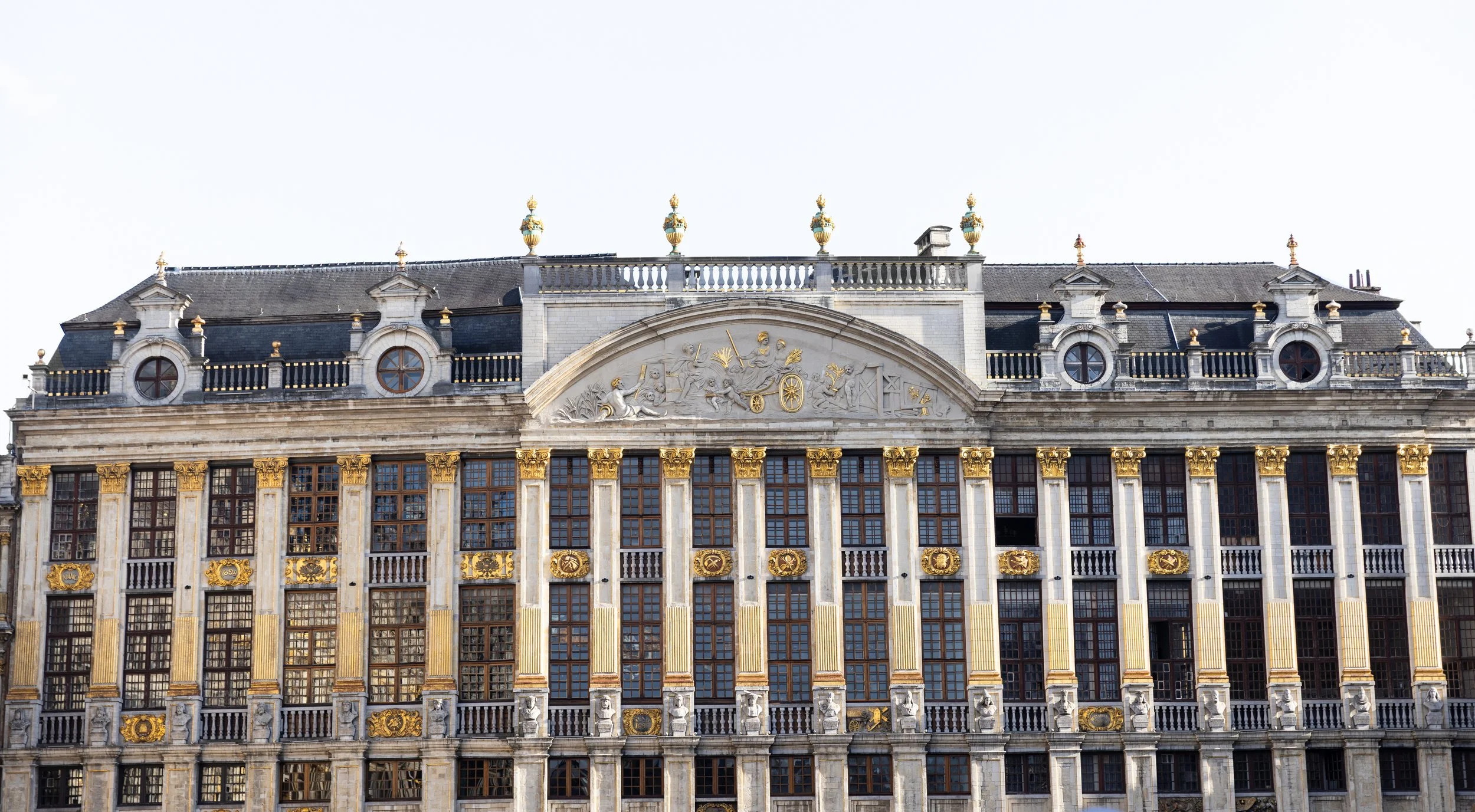
House of the Dukes of Brabant: seven guildhouses grouped behind the same facade at the Grote Markt (guildhalls No. 13-19), from left to right: La Bourse (The Purse, No. 19), private house; La Colline (The Hill, No. 18), House of the Corporation of Sculptors, Masons, Stone-Cutters and Slate-Cutters; Le Pot d'Étain (The Tin Pot, No. 17), House of the Corporation of Cartwrights; Le Moulin à Vent (The Windmill, No. 16), House of the Corporation of Millers; La Fortune (The Fortune, No. 15), House of the Corporation of Tanners; L'Ermitage (The Hermitage, No. 14), House of the Corporation of Carpet Makers; La Renommée (The Fame, No. 13), private house
Disclosure: This post may contain affiliate links. That means if you buy something following a link from this page, we’ll receive a small commission at no cost to you. We only promote products and services that we truly believe in.
We came to Belgium for Bruges, staying in Brussels at the end of our trip to explore the region. Traveling with my sister's family, we used the capital to launch day trips to nearby towns. Still, Brussels deserved its own exploration, so we started at the Grand Place - the centerpiece of the old town.
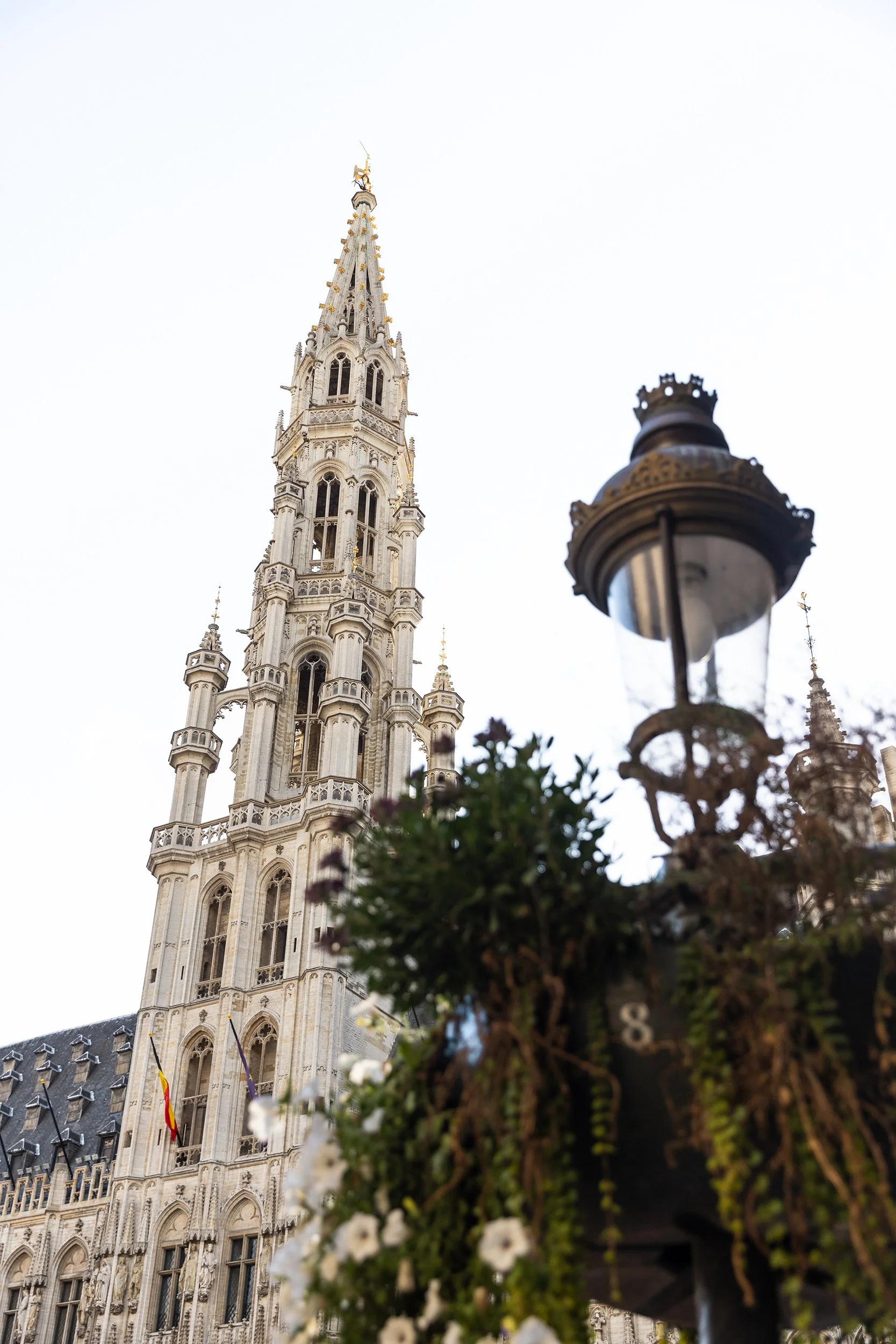
A Unesco World Heritage site, the Grand Place is a stunning square, surrounded by golden facades of guildhalls. We spent hours wandering the narrow cobblestone streets that spiral out from the Grand Place, and honestly, getting a bit lost was the best part. There was the Gothic Town Hall with its spire, neighborhood squares with cafe tables, carved stonework on random buildings - the kind of details you only notice when you're not rushing.
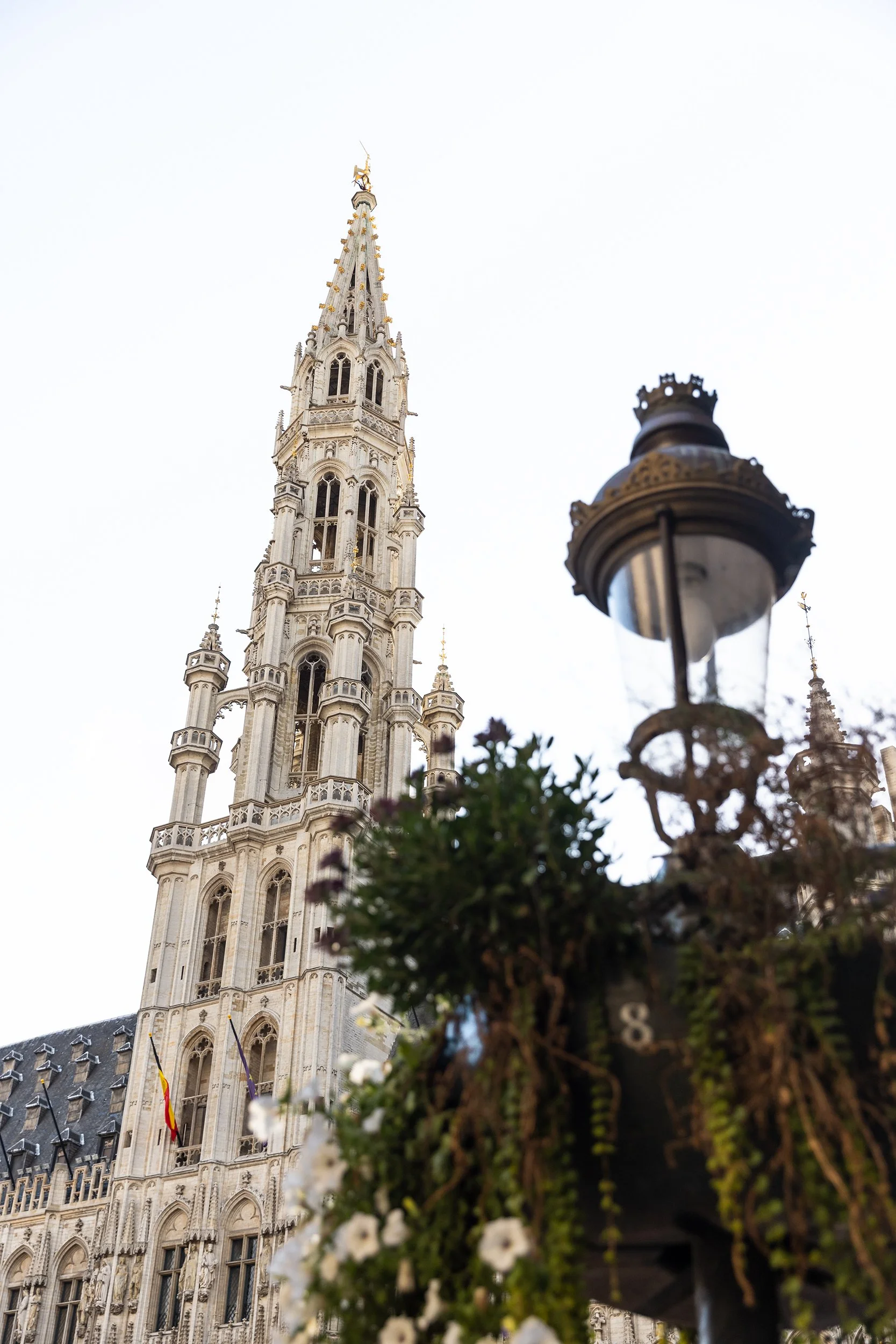
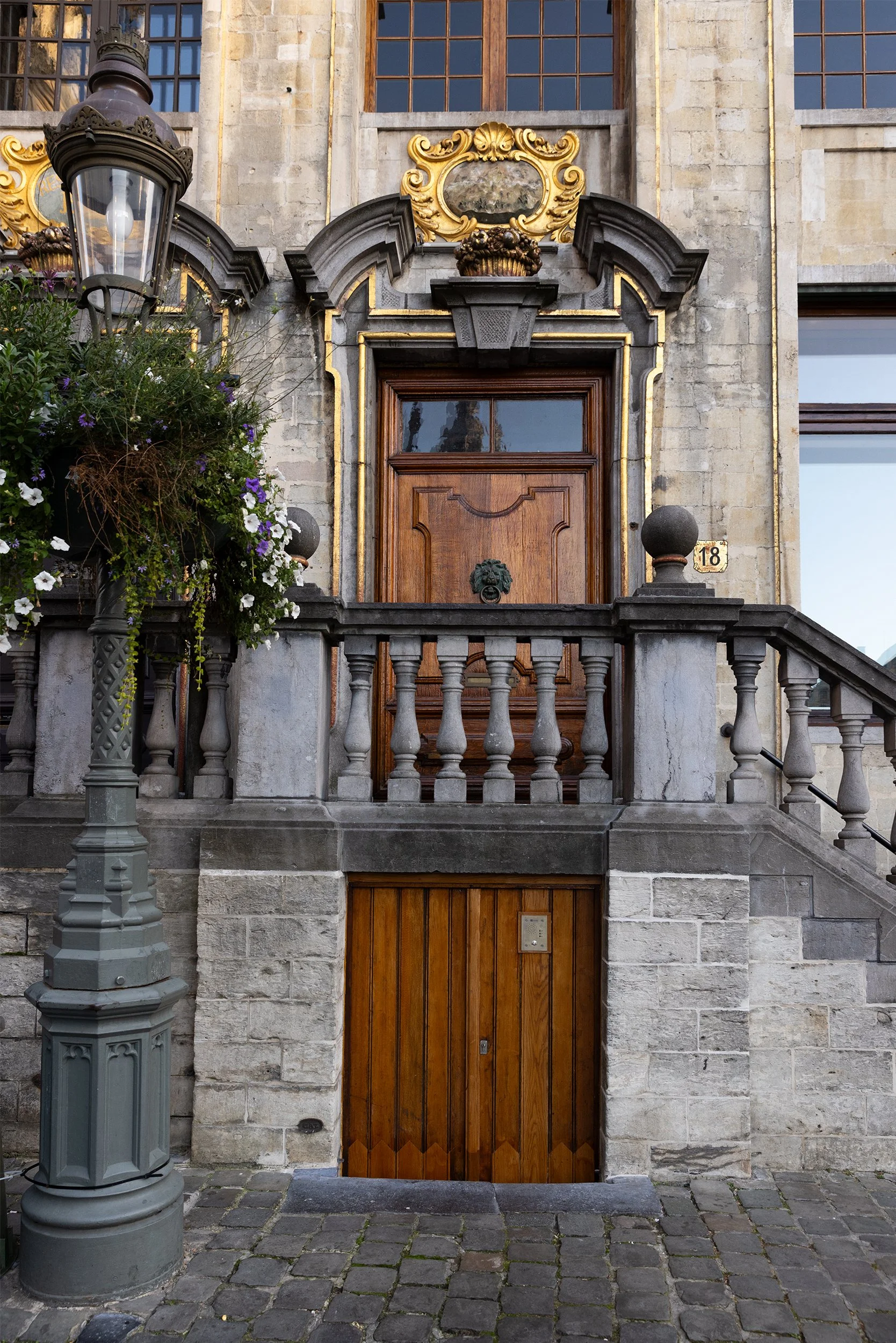
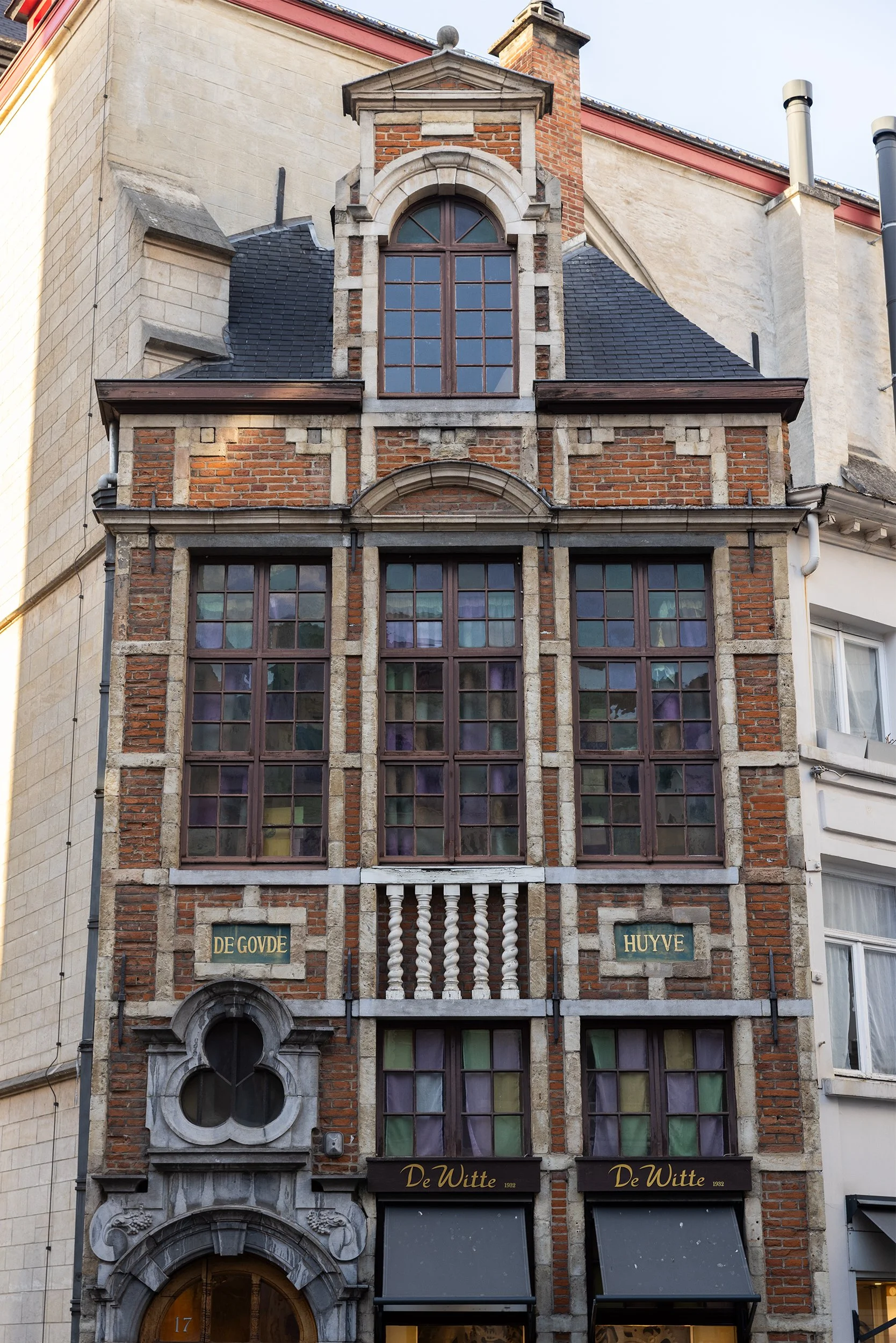
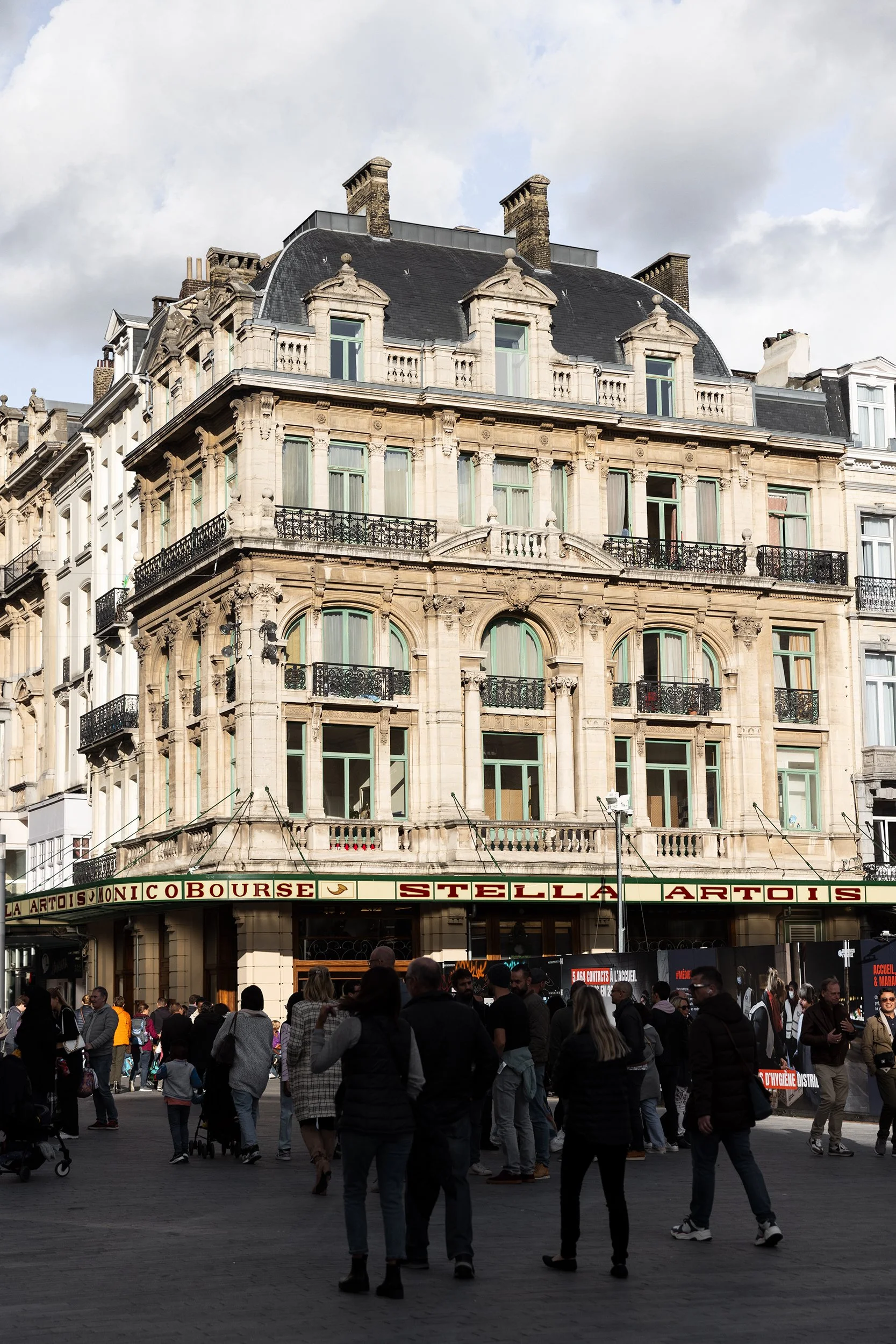
1. Brussels Town Hall (Hôtel de Ville or Stadhuis), on the south side of the Grand-Place (Grote Markt) | 2. Entrance to one of the guildhalls in the Grand Place (Grote Markt) - the House of the Dukes of Brabant (Guildhouse No. 13-19) | 3. Maison de Goude Huyve on Petite Rue au Beurre | 4. Le Grand Café, at the junction of Boulevard Anspach and Rue de la Bourse
Of course, we had to find the Manneken Pis we’d read so much about. The famous little fountain is smaller than you'd expect and usually surrounded by tourists, but something is charming about this cheeky bronze fountain that's been standing on its corner since the 17th century. The day we visited, he was dressed in a blue jacket with a medal hung around his neck. The little guy has an incredible wardrobe of over a thousand costumes, gifted by visiting dignitaries, organizations, and cities from around the world. He gets dressed up for special occasions, holidays, and events - everything from a Santa suit at Christmas to military uniforms honoring veterans. What many visitors don't realize is that the Manneken Pis has companions. Jeanneke Pis, the girl version, is tucked down a narrow alley near the Delirium Café, and Zinneke Pis, a bronze dog lifting his leg is on a street corner bollard at Rue des Chartreux 35. Hunting them down added a playful scavenger hunt element to our wandering.
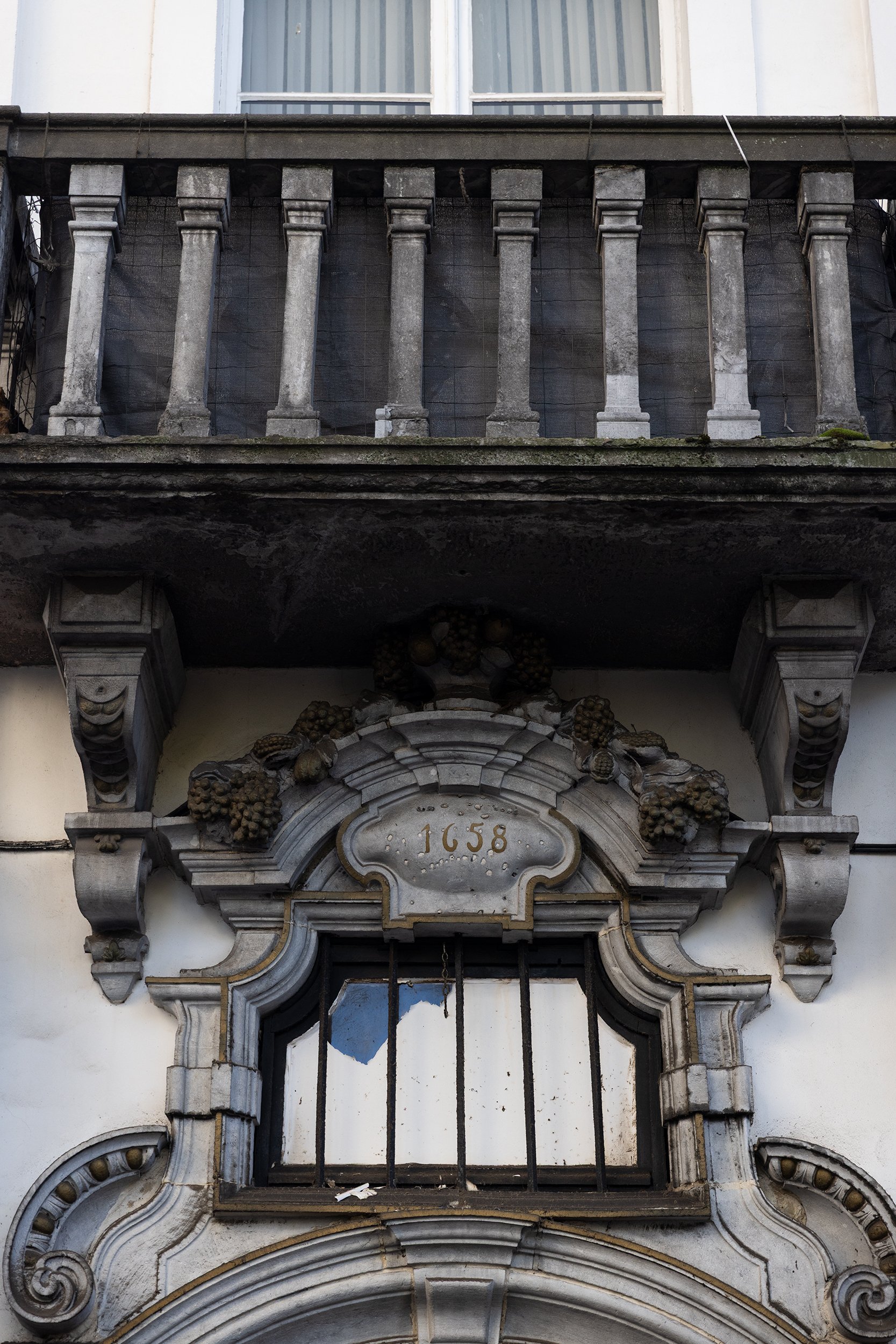
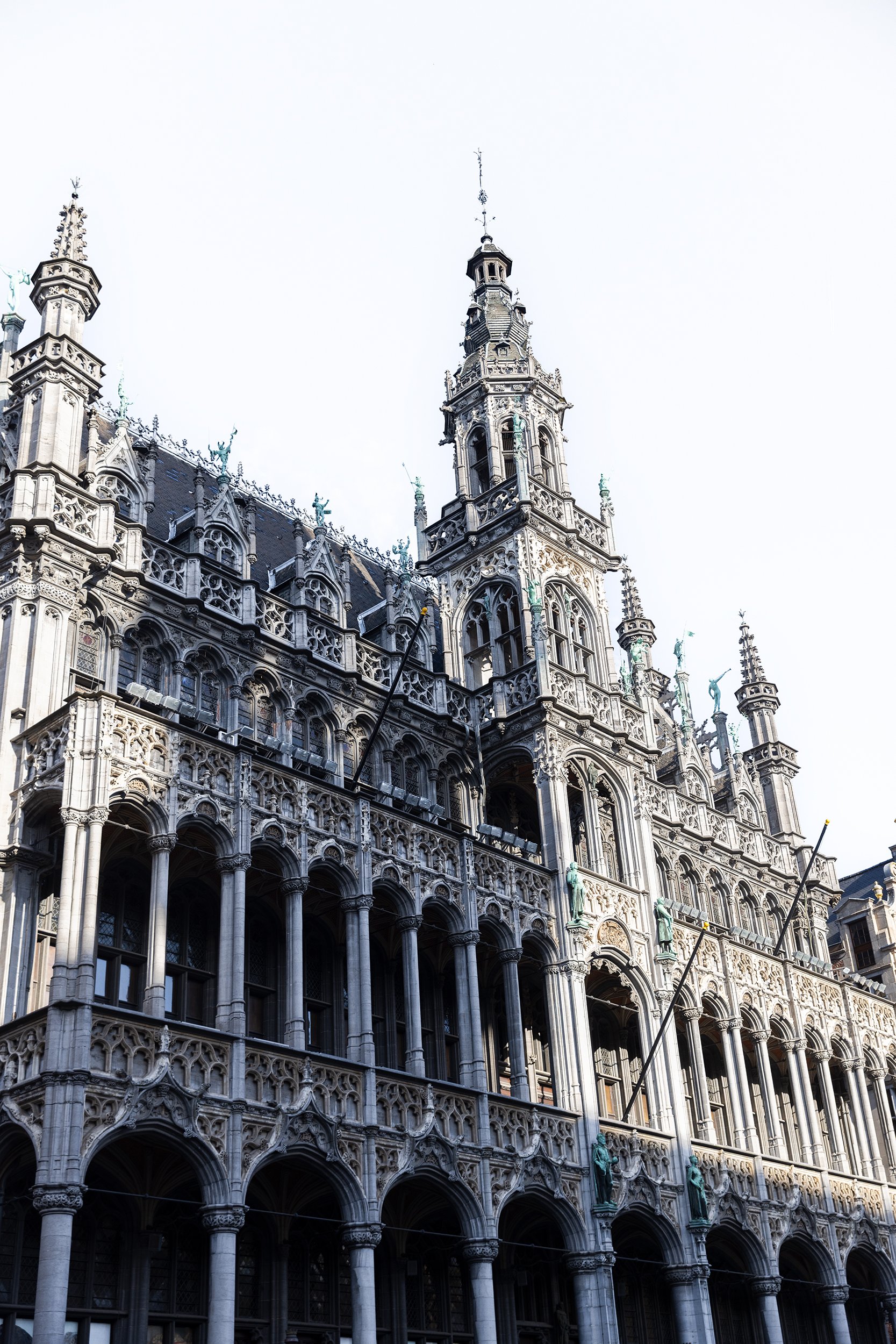
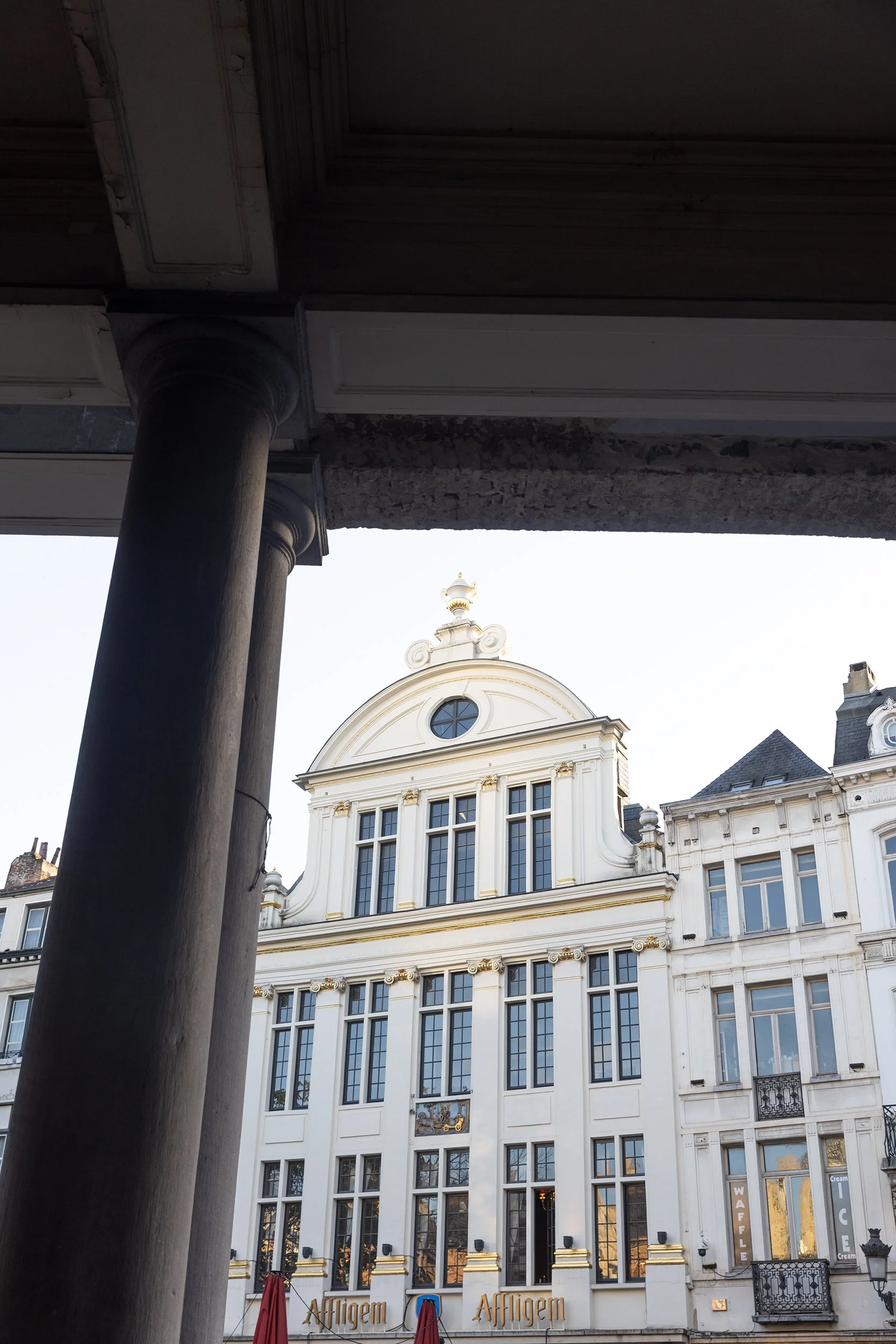
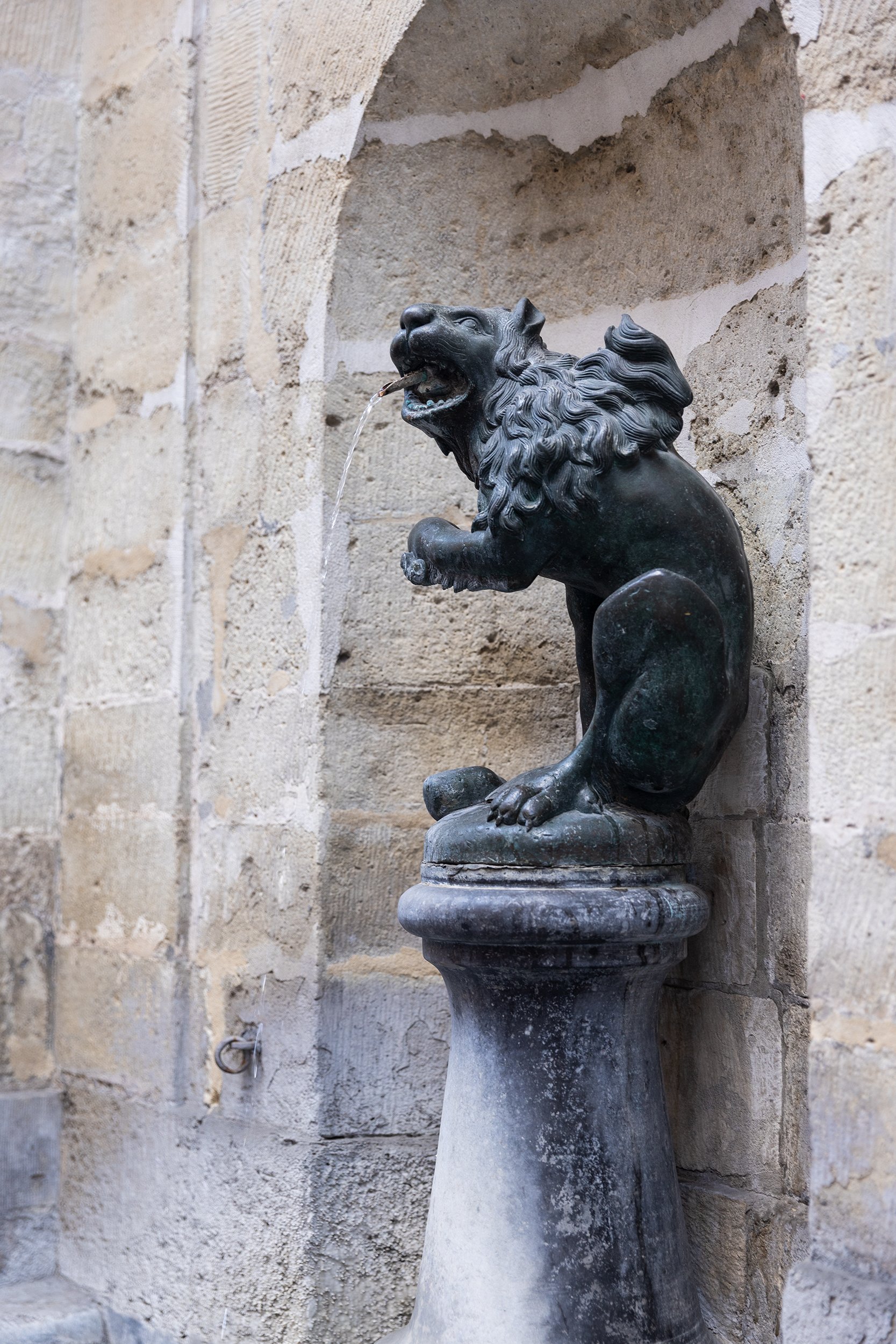
1. Baroque doorway, Grand Place | 2. Brussels City Museum, also known as the King's House (Maison du Roi) or Bread House (Broodhuis), located at Grand Place | 3. Le Char d'Or on Rue du Marché aux Herbes | 4. Lion fountain in the wall of Town Hall
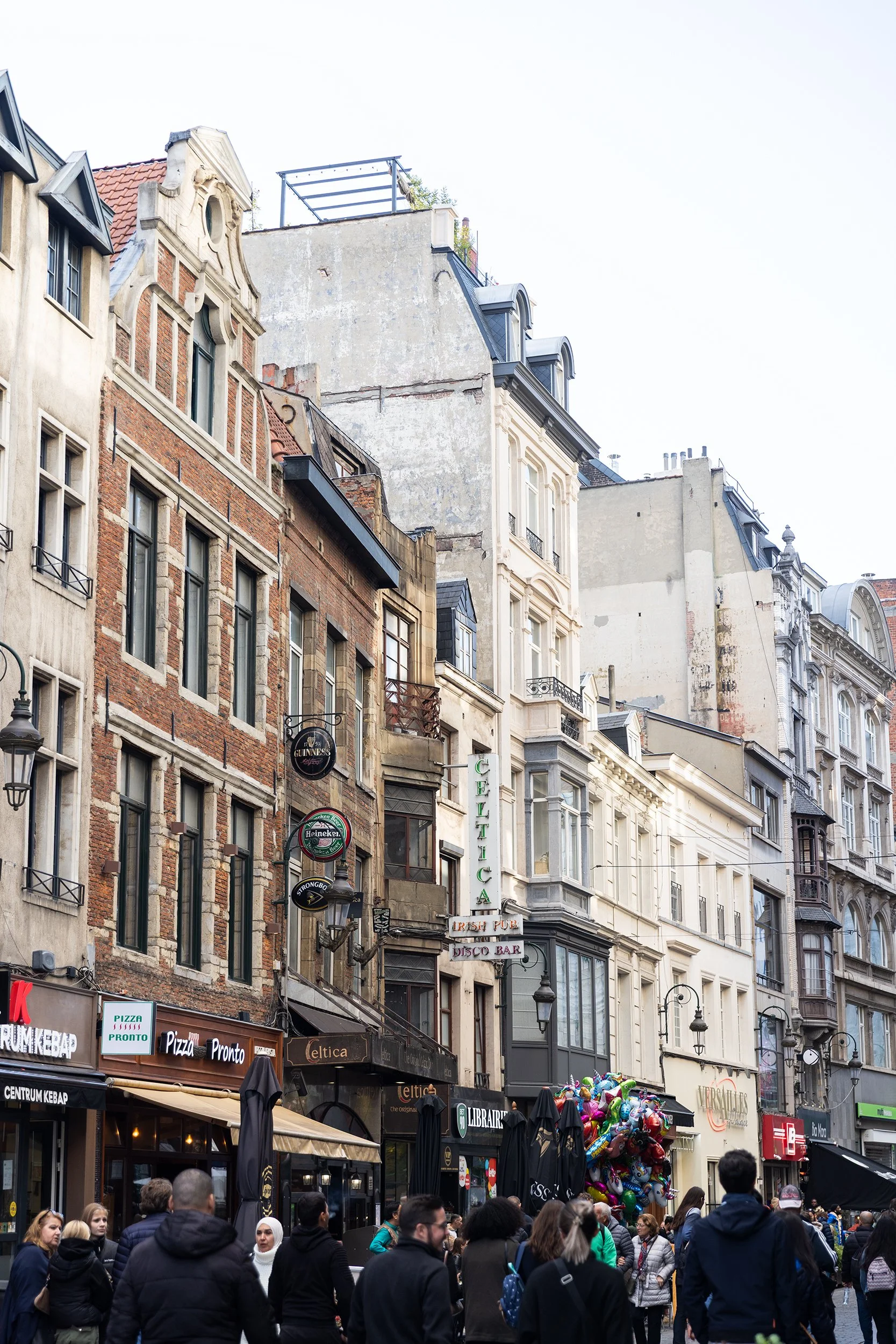
While our first impression of Brussels was how majestic the city truly is, the more you wander, you start to notice an international influence, particularly in the dining offerings. Just a few blocks from the Grand Place, we stumbled upon Vietnamese pho shops next to Turkish kebab stands, Congolese restaurants serving moambe chicken alongside Italian trattorias, and Moroccan tagine houses tucked between traditional Belgian brasseries. This culinary diversity reflects Brussels' role as the de facto capital of Europe and its colonial history. But let me be clear - these aren't polished, Instagram-ready spots. Many of the international eateries have a distinctly gritty, street food vibe, with flickering fluorescent lights, plastic chairs, and menus scrawled on whiteboards in multiple languages.
But walk two minutes, and you’ll find yourself back among the gold-leafed guildhalls of the Grand Place, with tourists snapping photos of architectural perfection. That's the thing about Brussels - it doesn't try to preserve some sanitized version of its historic center. The medieval grandeur exists side-by-side with working-class immigrant communities running their humble eateries in buildings that have stood for four hundred years. The city is a living, breathing neighborhood where gilded history and gritty reality occupy the same cobblestone streets.
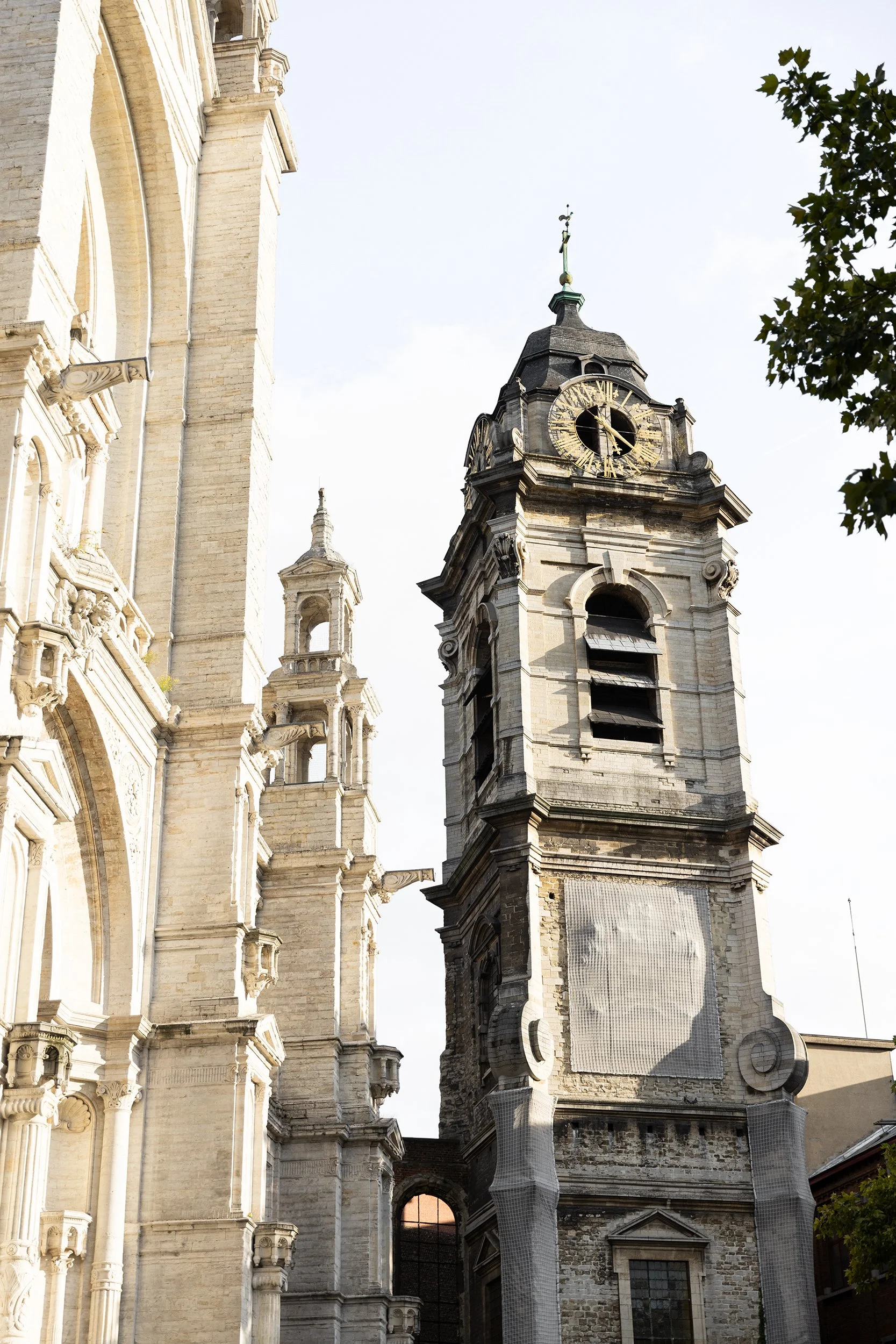
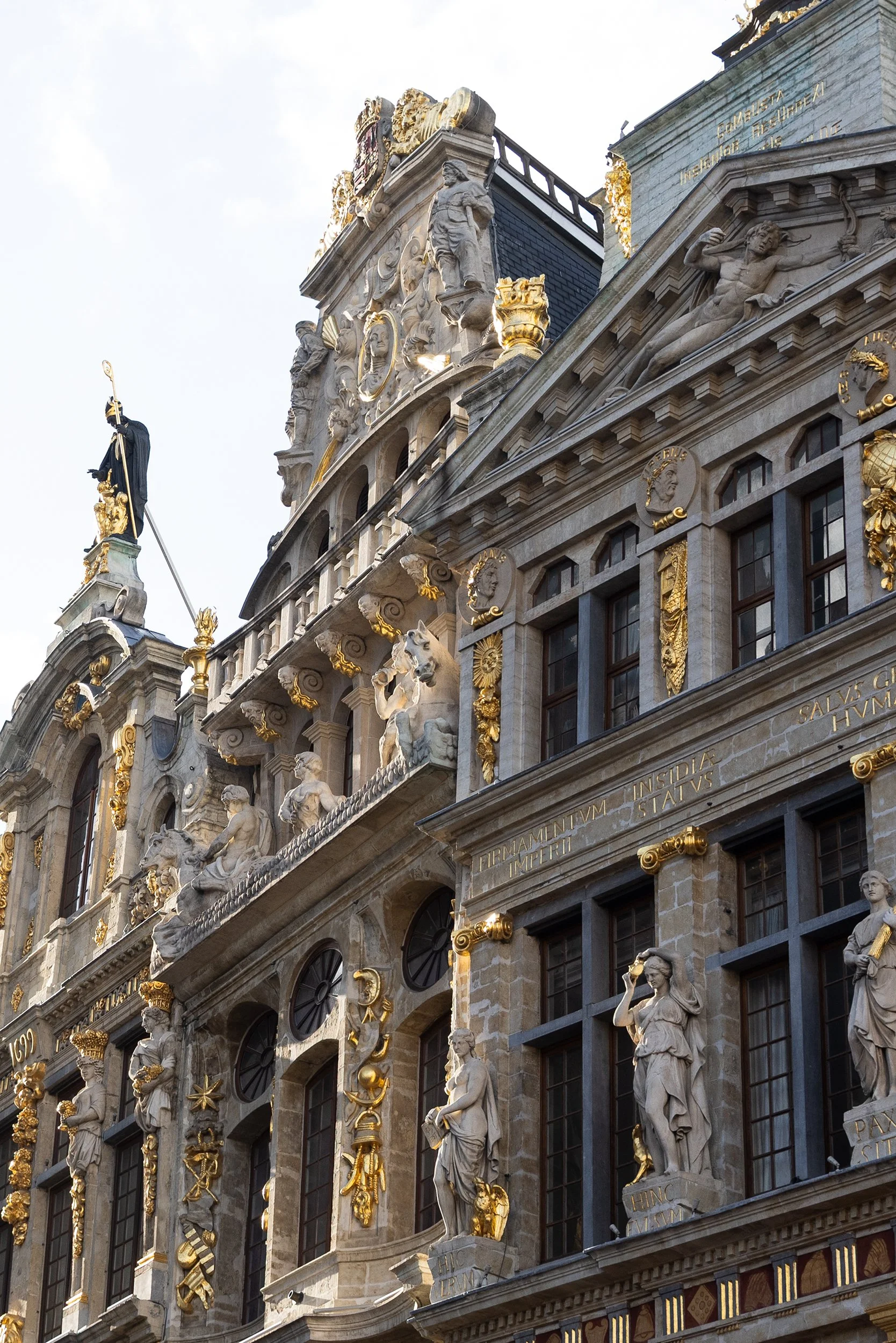
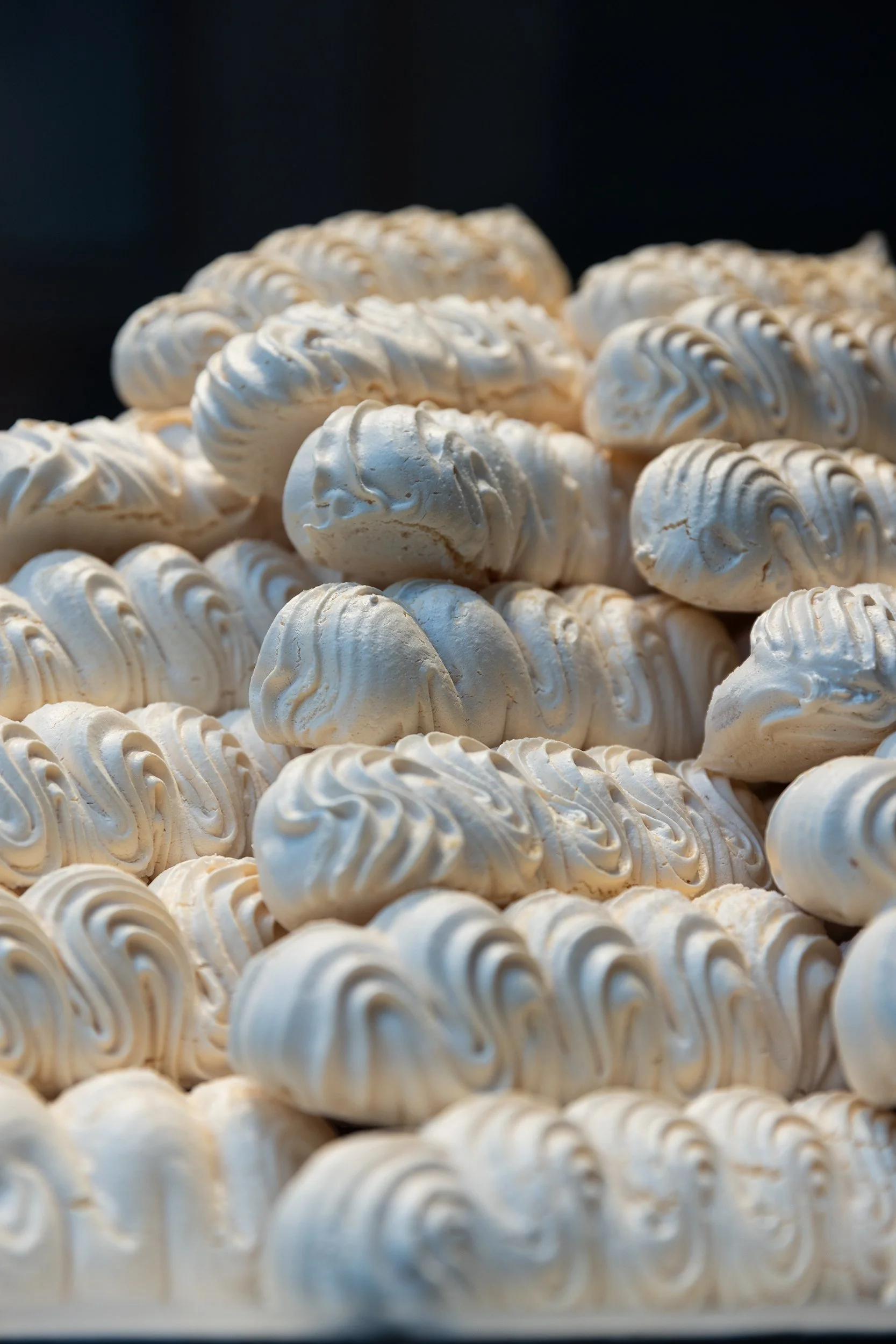
1. Sainte-Catherine Church (Church of St. Catherine) | 2. Grote Markt guildhalls between the Rue de la Tête d'or/Guldenhoofdstraat and the Rue au Beurre/Boterstraat (north-west), from left to right: Le Renard (The Fox, No. 7), House of the Corporation of Haberdashers; Le Cornet (The Cornet, No. 6), House of the Corporation of Boatmen; La Louve (The She-Wolf, No. 5), House of the Oath of Archers; Le Sac (The Bag, No. 4), House of the Corporation of Carpenters | 3. Meringues on display in the window at Aux Merveilleux De Fred on Rue du Marché aux Herbes | 4. Kiekenmarkt
We’d spent some time in Belgium but had yet to try Belgian fries (frieten in Dutch, frites in French). These are a cultural cornerstone in Belgium, characterized by being thick-cut, twice-fried (often in beef tallow), and served hot in paper cones with a variety of sauces, most commonly mayonnaise. So we made it our mission to find a proper friterie, and stumbled upon a tiny stand. Honestly? They were fine - crispy outside, fluffy inside, exactly as advertised - but after all the hype about Belgian fries being a revelation, they just tasted like really good fries to us.
Brussels is a city of contradictions - majestic and unpolished in equal measure. The Grand Place will take your breath away, but venture a few blocks away and you'll find cracked sidewalks, graffiti, and the unmistakable roughness of a working city that hasn't been sanitized for tourists. It's not a polished fairy-tale capital, but it is authentic. Come with realistic expectations, comfortable shoes for the cobblestones, and an appreciation for a city that's unapologetically itself - baroque splendor and urban grit all mixed together.
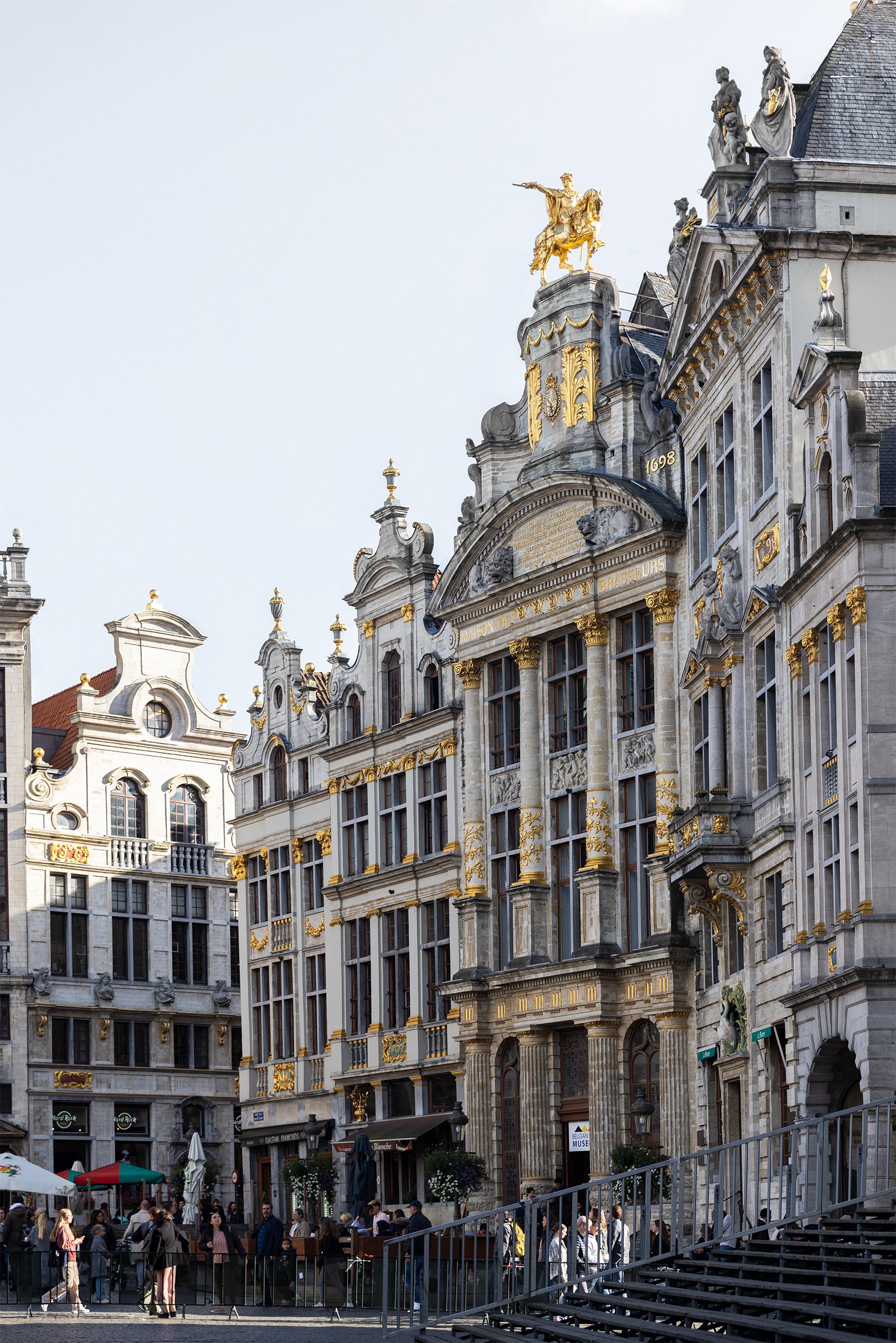
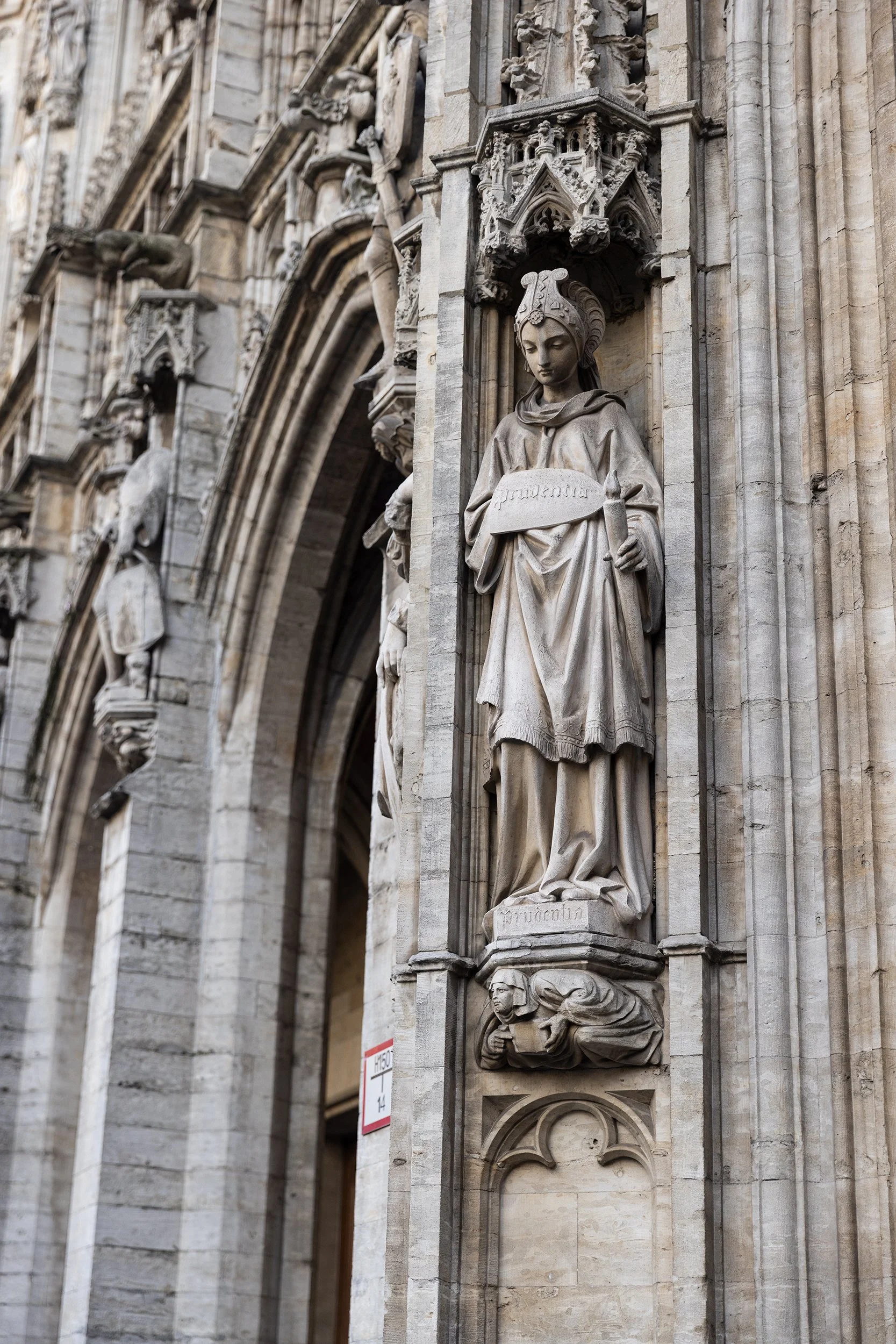
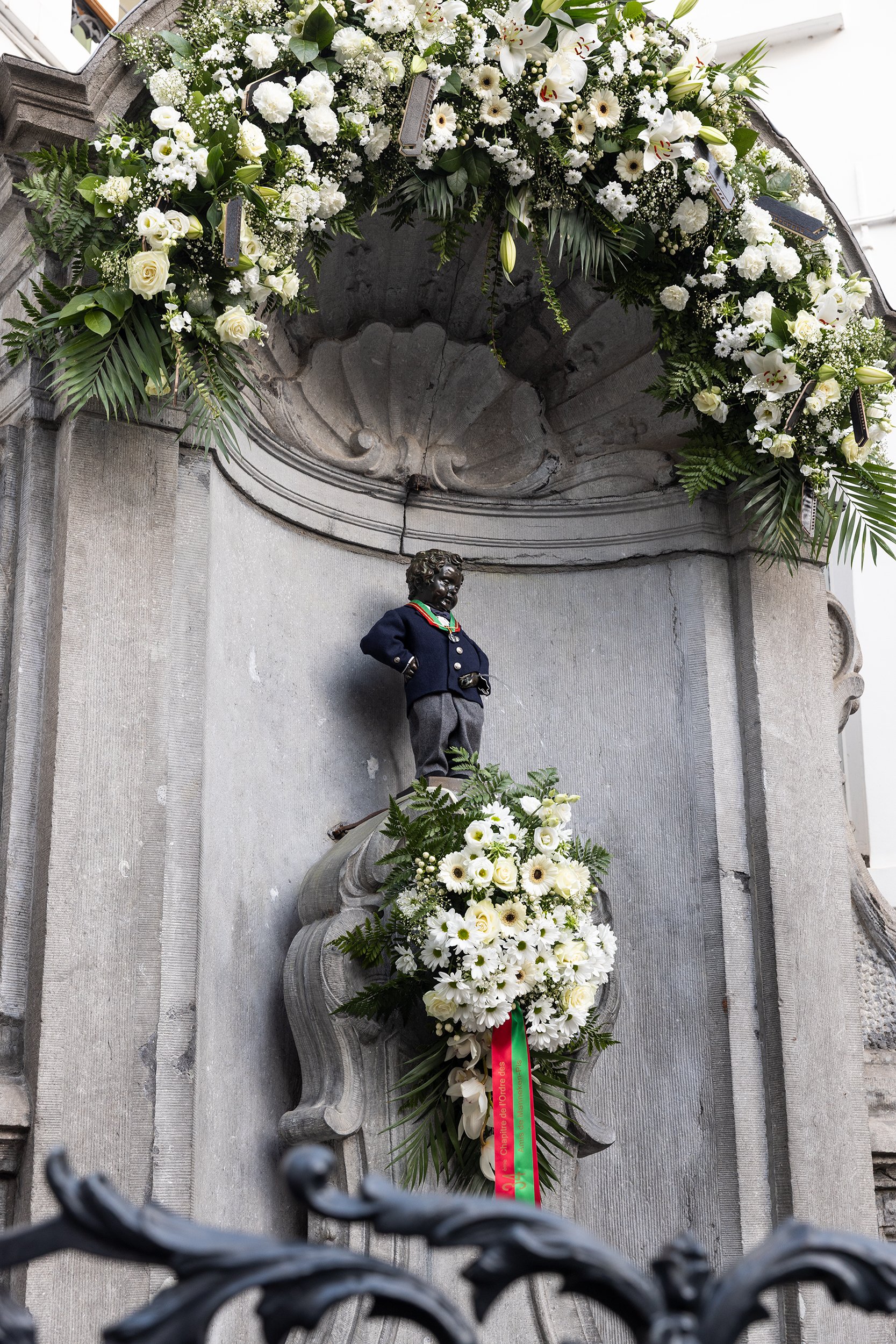
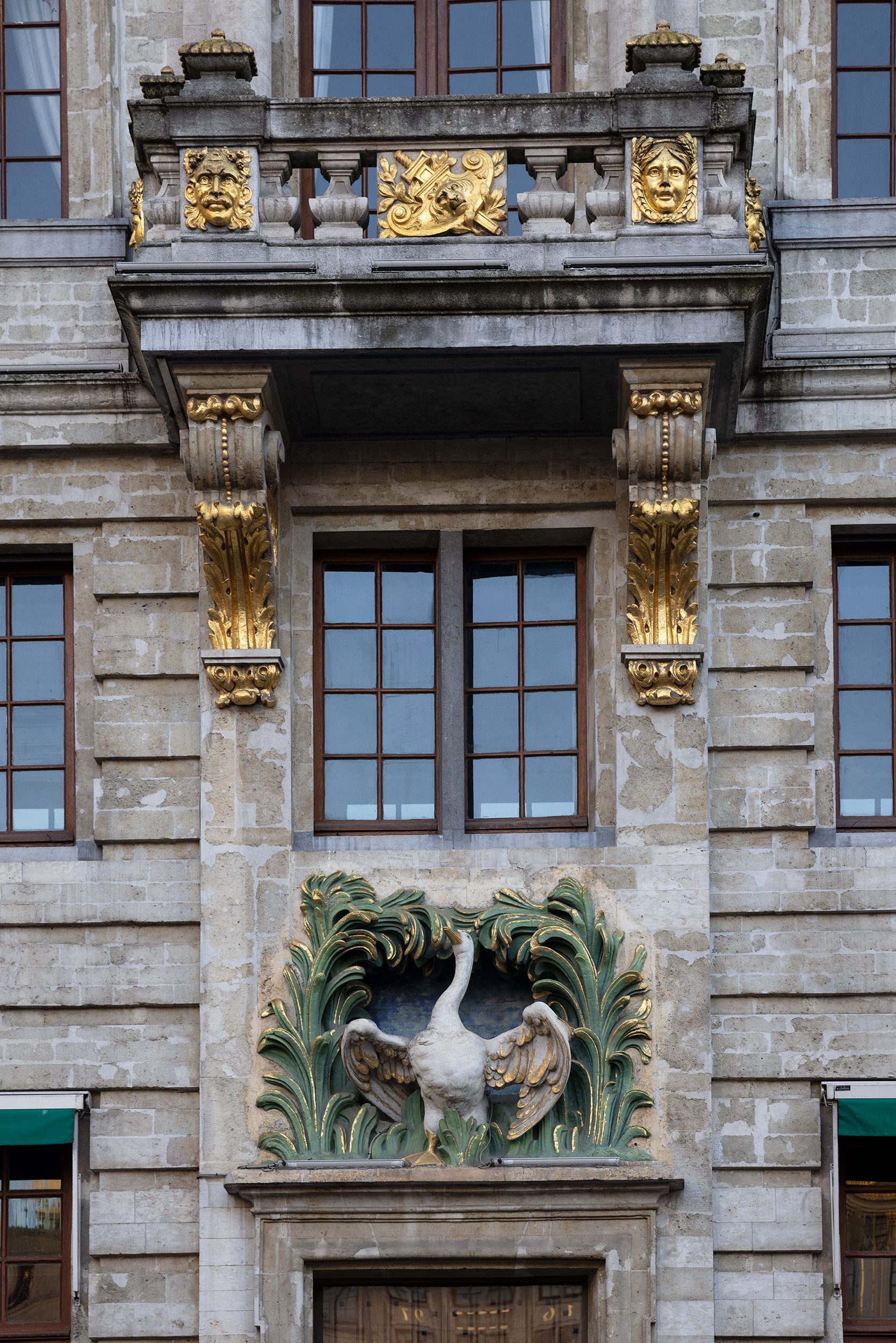
1. Grote Markt guildhouses from left to right: House of Alsemberg (No. 12a), private house; Le Mont Thabor (no. 12), private house; La Rose (The Rose, No. 11); L'Arbre d’Or (The Golden Tree, No. 10), House of the Corporation of Brewers; Le Cygne (The Swan, No. 9), House of the Corporation of Butchers; L’Étoile (The Star, No. 8), House of the Amman | 2. Statue of Prudentia (Prudence) on the facade of the Brussels Town Hall | 3. Manneken Pis, located at the intersection of Rue de l'Étuve (Stoofstraat) and Rue du Chêne (Eikstraat) | 4. Facade of the guildhouse Maison du Cygne (The Swan, No. 9), House of the Corporation of Butchers
PLANNING YOUR VISIT
GENERAL INFORMATION
Languages Spoken: Dutch (Flemish) and French.
Currency: Euro (€)
Restaurant Tipping: Tipping at restaurants is not expected but appreciated. Simply round up to the nearest euro and be prepared to tip in cash.
Taxi Tipping: For a typical ride, round up to the next euro on the fare, although tipping is not expected.
TOURISM INFORMATION
Visit Brussels
Location: Rue Royale 2-4 Koningsstraat
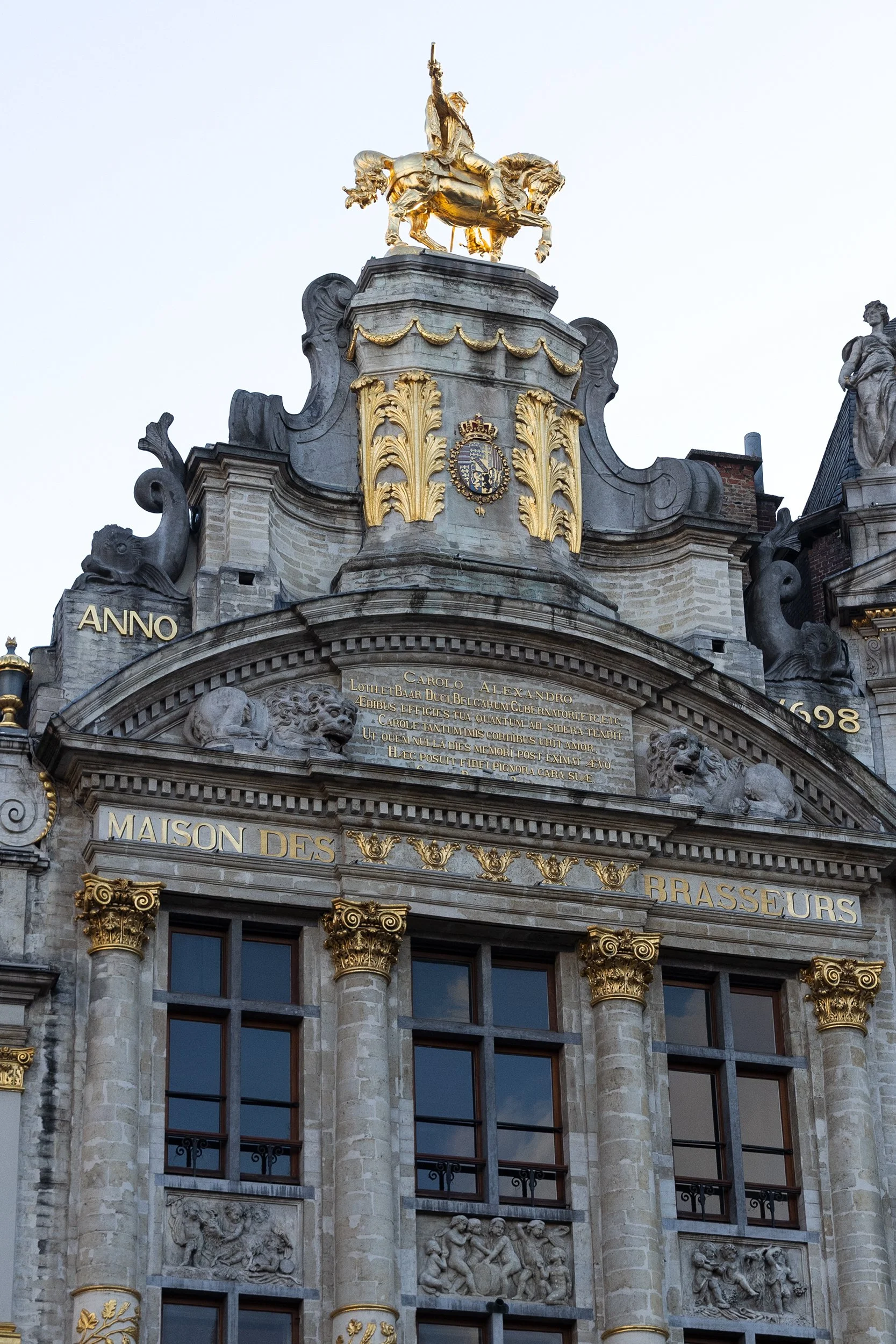
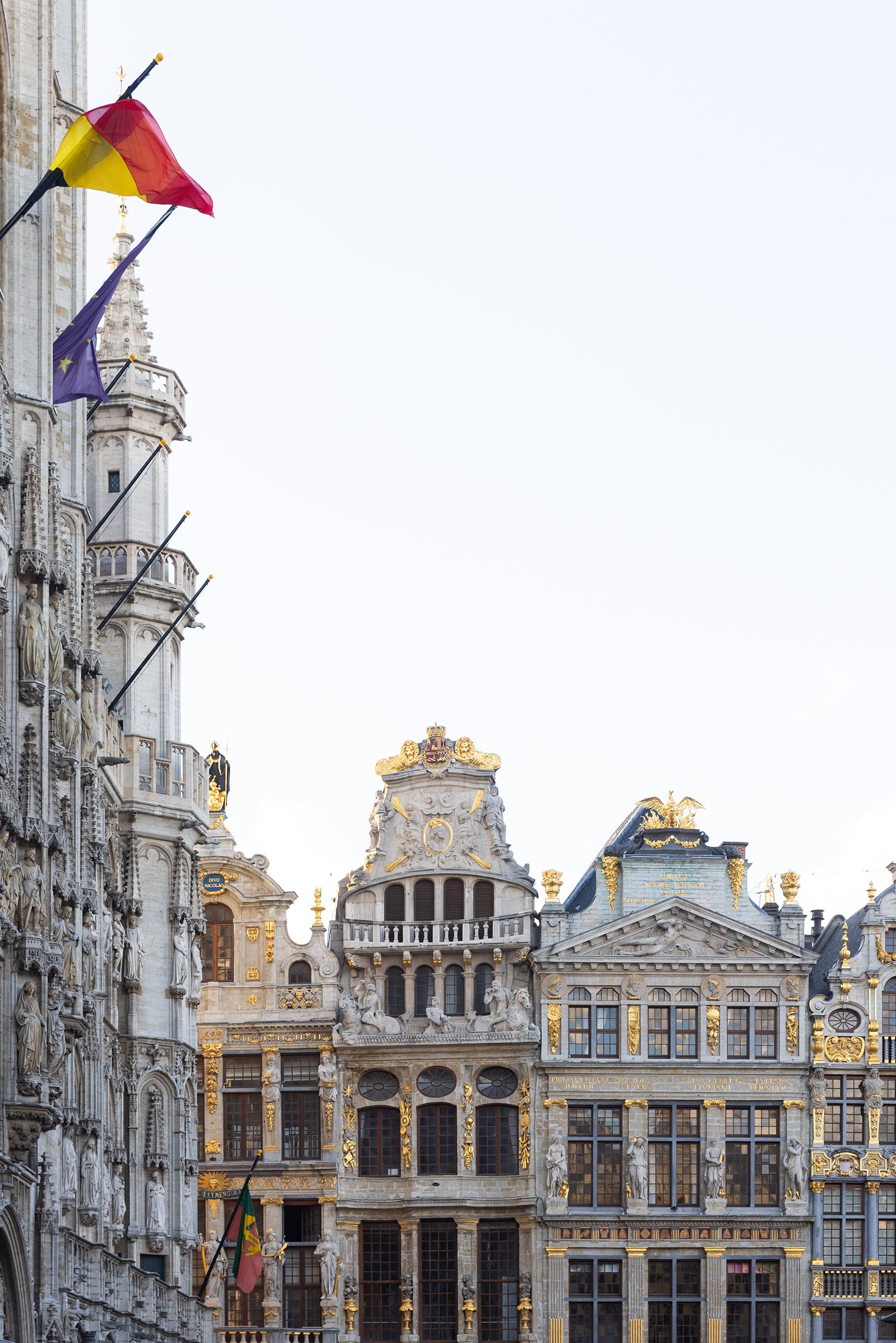
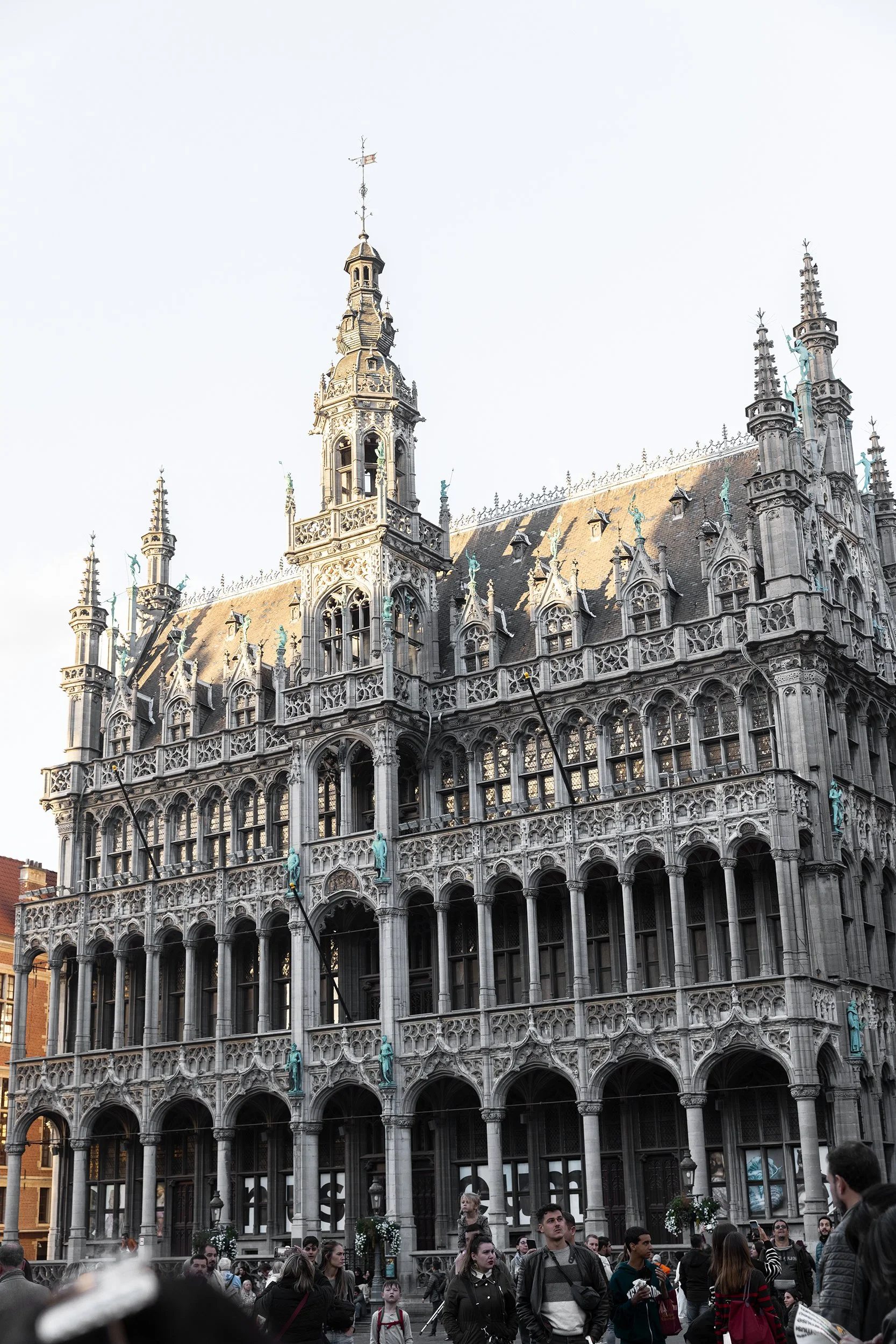
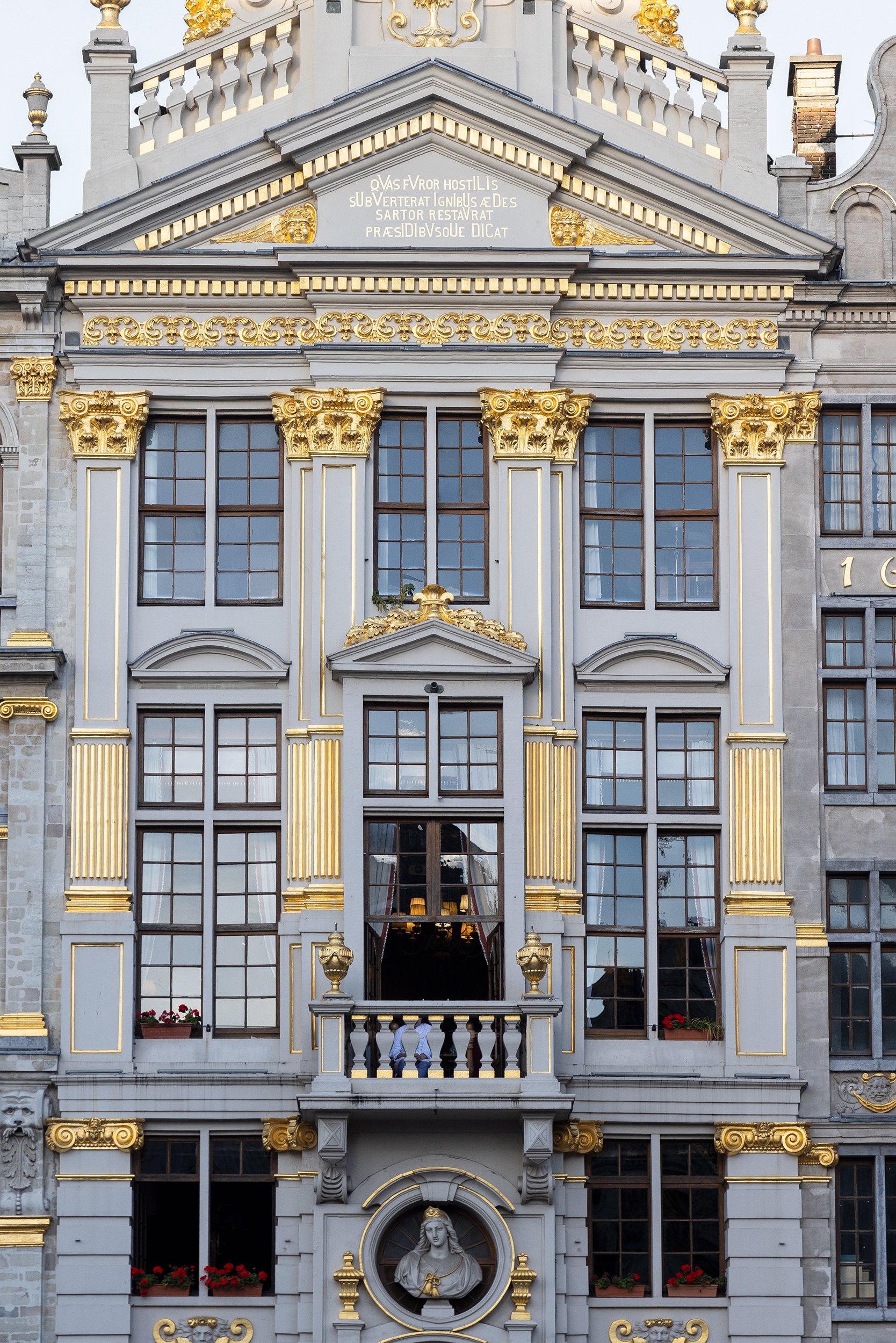
1. Guildhouse L'Arbre d’Or (The Golden Tree, No. 10), House of the Corporation of Brewers | 2. Grote Markt guildhalls Between the Rue Charles Buls/Karel Bulsstraat and the Rue des Chapeliers/Hoedenmakersstraat (south-east): Le Renard (The Fox, No. 7), House of the Corporation of Haberdashers; Le Cornet (The Cornet, No. 6), House of the Corporation of Boatmen; La Louve (The She-Wolf, No. 5), House of the Oath of Archers; Le Sac (The Bag, No. 4), House of the Corporation of Carpenters | 3. Maison du Roi (King's House) at Grand Place | 4. Facade of the guildhouse La Chaloupe d’Or (The Golden Boat, No. 24-25), House of the Corporation of Tailors
ACCOMMODATIONS
The Dominican, Brussels, a Member of Design Hotels
This property, a former Dominican abbey, lies just north of La Grand-Place.
Location: Rue Léopold 9
DINING
Aux Merveilleux De Fred
This renowned French pastry shop specializes in a signature, lightweight dessert made of delicate meringue, whipped cream, and chocolate shavings. With an open-kitchen and elegant chandeliers, you can expect to find long lines.
Location: Rue du Marché aux Herbes 7
Delirium Café
This beer bar holds the Guinness World Record for the most beers offered, with 2004 beers from around the world.
Location: Impasse de la Fidélité 4
Ricotta & Parmesan
Authentic Italian eatery with retro decor of old kitchen tools, worn picture frames, and faded photographs.
Location: Rue de l'Ecuyer 31
WHAT PHOTOGRAPHY GEAR DO I USE?
Most images in this post were shot with the Canon EOS R5 Mirrorless Camera, with the Canon RF 24-70mm f/2.8 L IS USM lens. I carry a Tom Bihn backpack with a Tenba BYOB 10 Camera Insert when traveling for vacation. On larger commercial projects, I also use a Think Tank Photo Airport Roller Derby for hauling additional lenses, batteries, filters, a backup Canon EOS 5D Mark IV DSLR Camera, a 15” MacBook Pro, and external hard drives. I also own a DJI Mavic Pro Drone.


View from the Belfry, Ghent, Belgium