
From Bruges to Brussels: Our Belgian Railway Journey
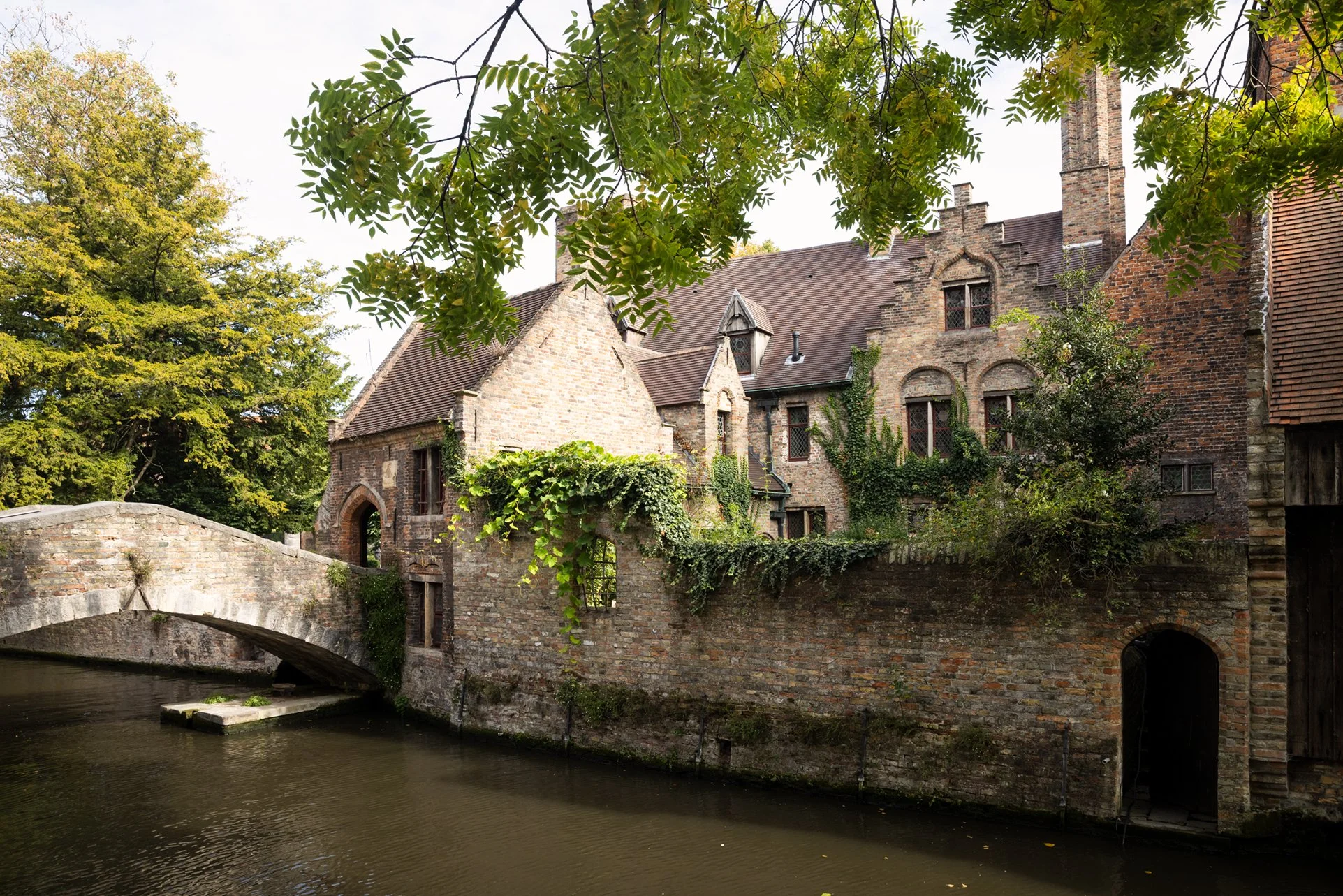
Boniface Bridge and the Guest House Nuit Blanche in Bruges.
Disclosure: This post may contain affiliate links. That means if you buy something following a link from this page, we’ll receive a small commission at no cost to you. We only promote products and services that we truly believe in.
When a Delta Airlines flash sale popped up with ridiculously cheap mileage flight redemptions, my sister Laura, her husband Jeff, their daughter Jordan, and I jumped on it. Bruges had been sitting on our collective bucket list for years, and this felt like the perfect excuse to finally make it happen. Our itinerary took shape after exhaustive research: day trips to Ghent and Mechelen, an overnight stay in Antwerp, ventures across borders to Delft, Holland and Lille, France, then a final few days based in Brussels before our flight home.
We decided to head straight from the airport to Bruges by train, given the low cost of the tickets and the freedom to purchase them after arrival, just in case of flight delays. And delays we did encounter. Our flight pushed off late from Atlanta, Jordan’s luggage didn’t arrive, and we found ourselves stuck in insanely long lines to report it. To make matters worse, the agent filling out our forms spoke no English and seemed utterly indifferent to helping, making an already frustrating situation even more maddening.
But finally, we were on our way to Bruges. The train departed directly from the airport and was an easy 1.5-hour trip. Unfortunately, Jordan and Jeff found themselves making that trip back to the airport a few days later when Jordan’s luggage finally turned up, rather than waiting two more days for it to be delivered. Delta's idea of customer service!
BRUGES
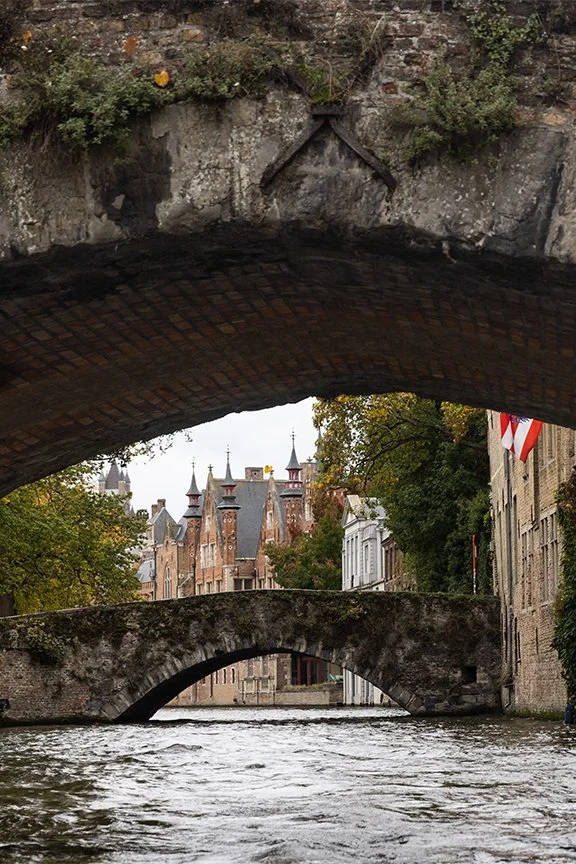
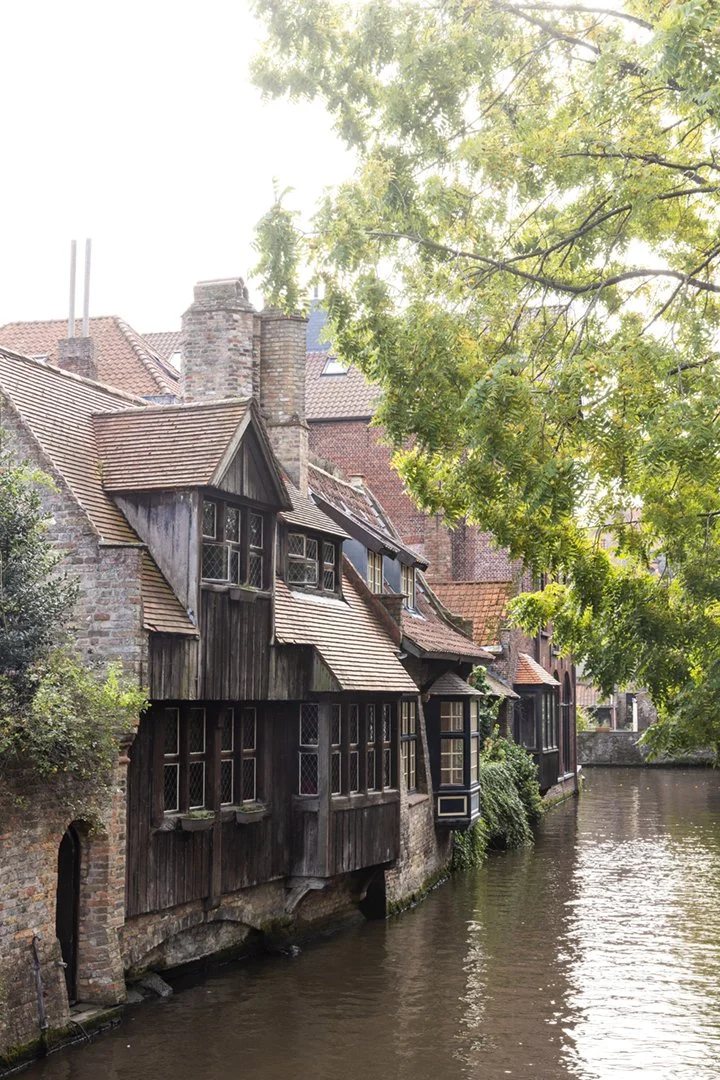
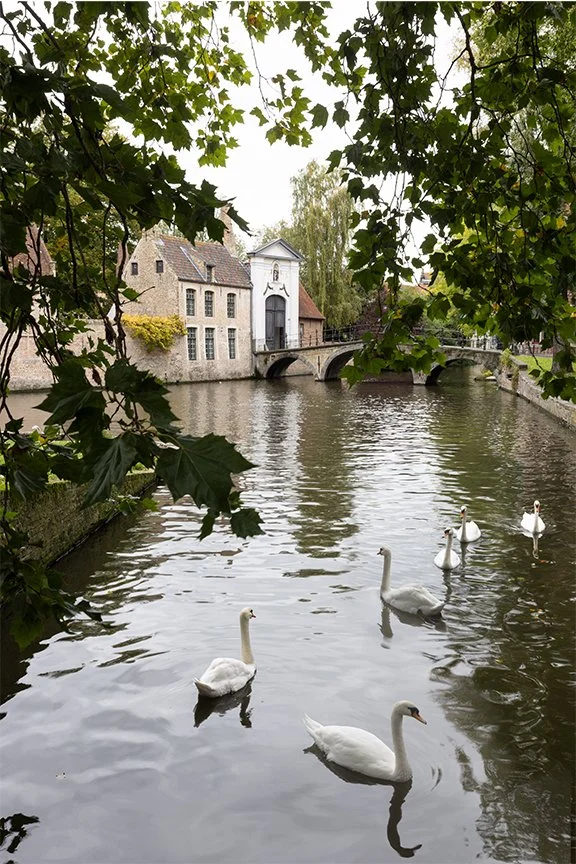
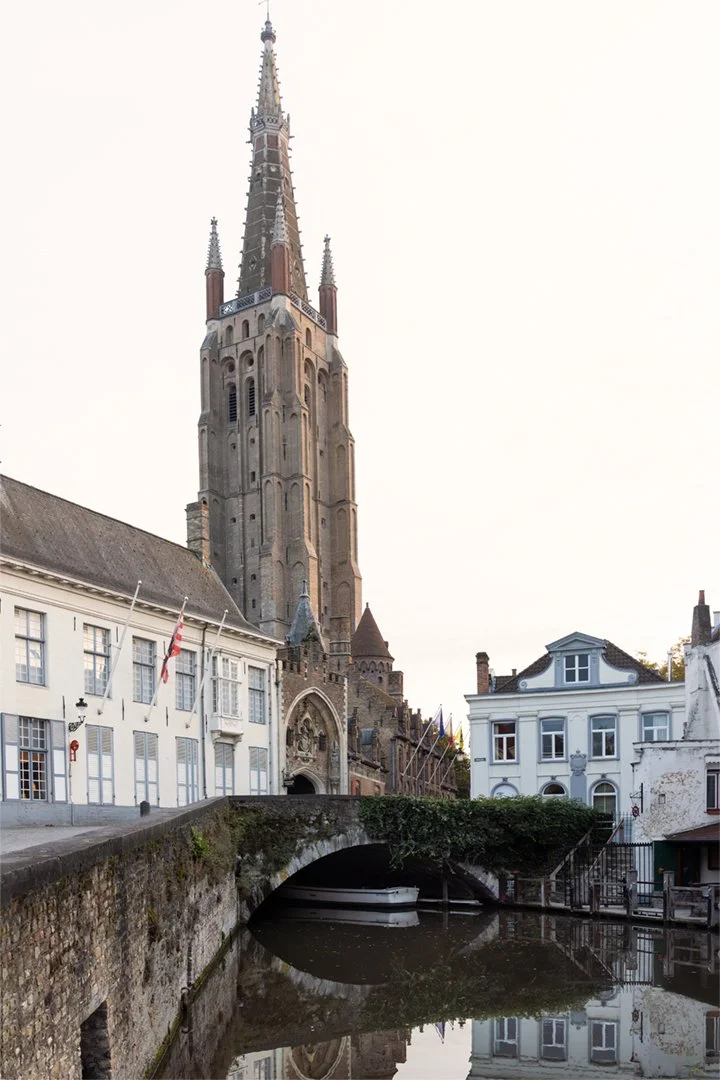
1. Meestraat Bridge | 2. Guesthouse Bonifacius on the Dijver Canal near the Boniface Bridge | 3. Swans on the Lake of Love at Minnewater Park | 4. Church of Our Lady
Bruges deserves more than a day trip. Sure, you can rush through the highlights in 24 hours, but you'd miss what makes this city special - the lazy afternoons wandering aimless routes, the quiet moments watching swans glide under stone bridges, the luxury of not consulting a map. We gave it several nights and still left wanting more time.
Let's be honest: Bruges is packed with tourists. But here's the thing - it never felt suffocating the way Brussels did. Step away from the main drags and you'll find breathing room, along with that storybook atmosphere everyone promises.
The Markt anchors the old town - a vast square where the medieval belfry looms over gabled facades and horse-drawn carriages clip-clop past cafe terraces. But the real Bruges reveals itself along the canals, where over 50 bridges connect the city's maze of cobblestone streets. Some are simple stone arches worn smooth by centuries of footsteps, others feature ornate iron railings and tree-lined approaches. The Bonifacius Bridge felt like stumbling into a Grimms' fairy tale - impossibly romantic and almost secluded, its stone arch and overhanging trees creating the kind of scene that doesn't seem real. The Meebrug and Peerdenbrug have become Instagram clichés for good reason - stand there at dusk when the crowds thin, and you'll understand why.
The bridges aren't just crossings; they're where Bruges' fairy-tale quality concentrates most intensely. Lean over any railing, and you'll see swans drifting below. Everywhere you look, there’s another impossibly photogenic facade. This is medieval Europe preserved almost too perfectly, yet somehow it works. Forget the guidebook and just wander from bridge to bridge.
If we were planning this trip again, we'd give Bruges more time. Staying in Bruges made all the difference. Our hotel sat right in the historic center, which meant we could step out each morning before the tour buses arrived and return each evening after the day-trippers left. For all the hype, Bruges really is as magical as everyone says it is.
TRAVEL
By Train Approximately 1.5 hours. From Brussels Airport-Zaventem take the SNCB IC train (National Railway Company of Belgium, Inter City train) towards Gand-Saint-Pierre with a connection and change of train at Bruxelles-Midi. Continue on, taking the IC towards Blankenberge to Brugge Station.
Upon arrival into Bruge, there is a bus terminal outside the station. De Lijn buses run every five minutes from the train station to the city center. Bus lines 1 and 2 are recommended for going to the center, buses headed for "Centrum" will take you to stops near the main sights, such as the "Brugge Markt" stop. The buses accept contactless terminal payments once onboard, or you can purchase tickets at the ticket machines prior to boarding.
Taxis are also available, or you can opt for a 20-minute walk to the main square, the Markt.
ACCOMMODATIONS
Hotel Heritage, A Relais & Chateaux Property
Beautifully elegant boutique property centrally located near the Markt. This is the property we stayed at, and we absolutely loved it.
Location: Niklaas Desparsstraat 11
MORE INFO
You can read our complete guide to visiting Bruges here.
GHENT
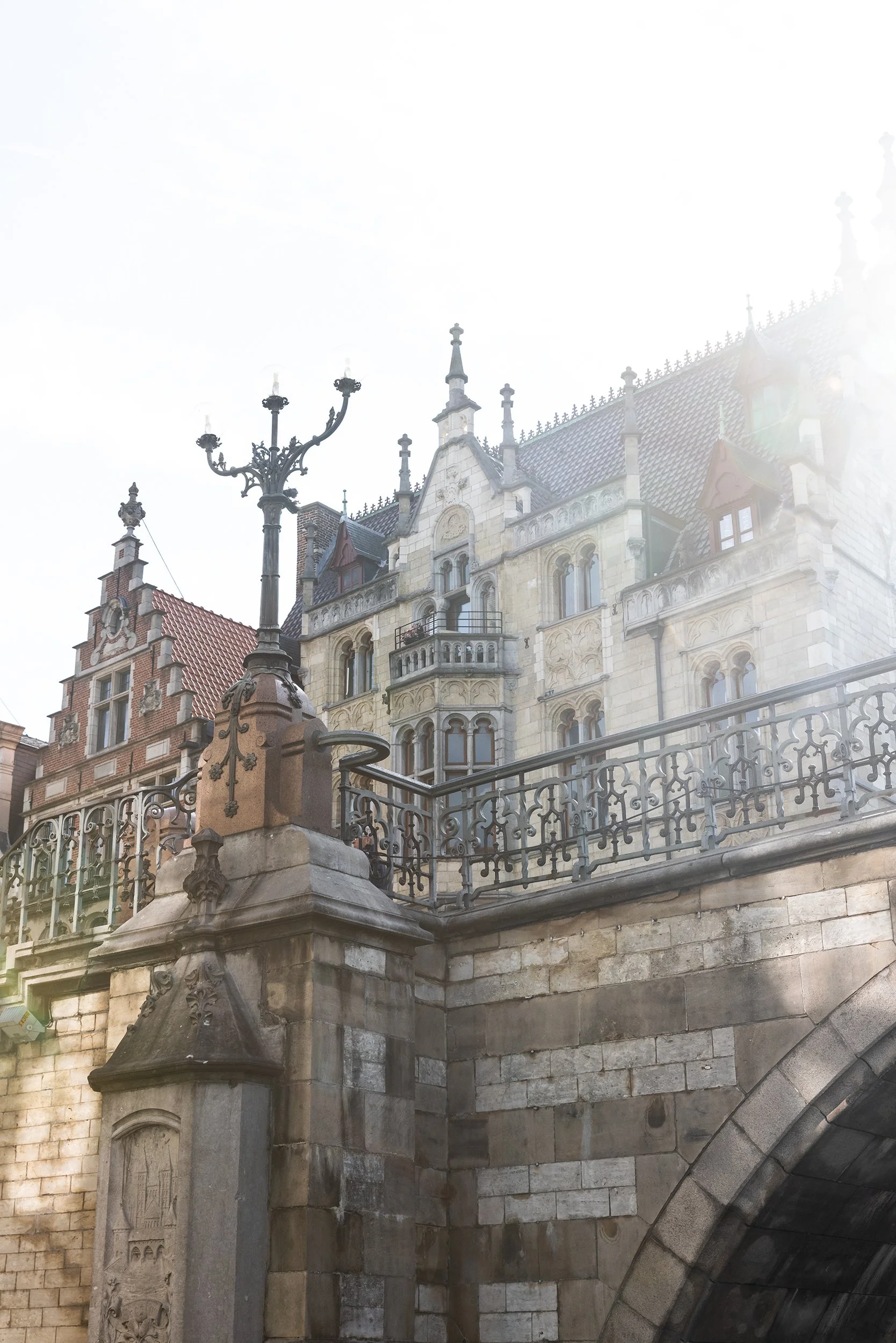
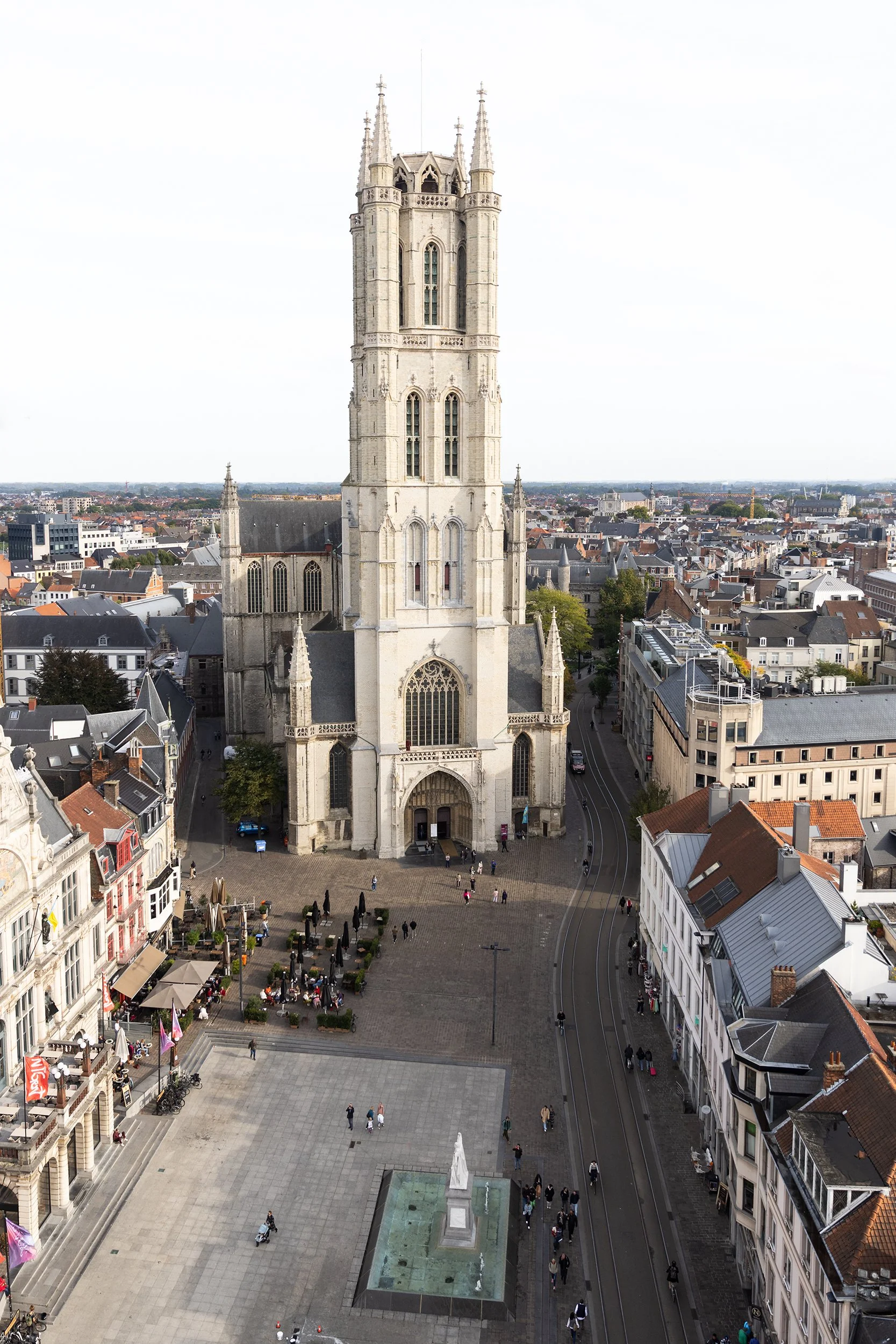
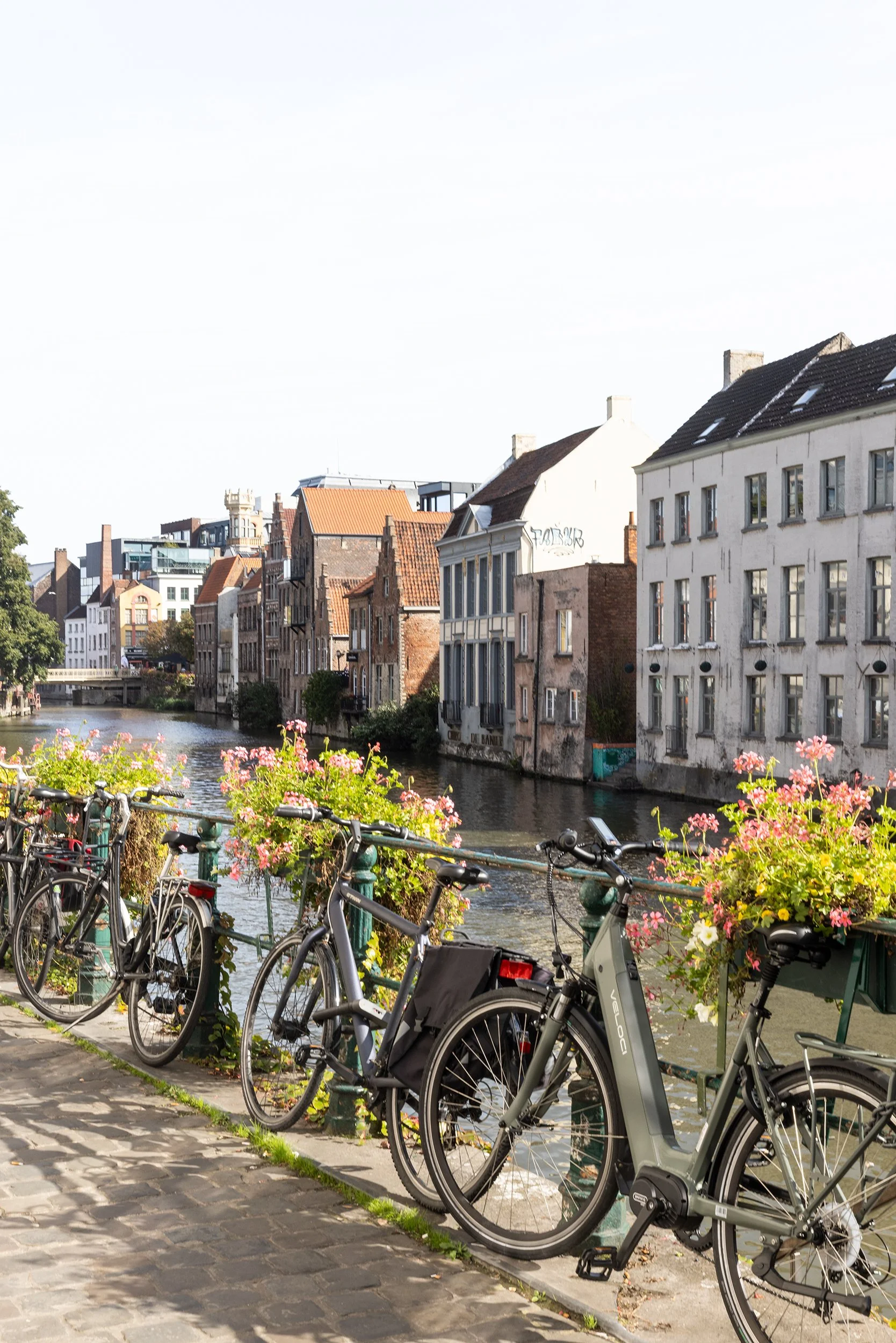
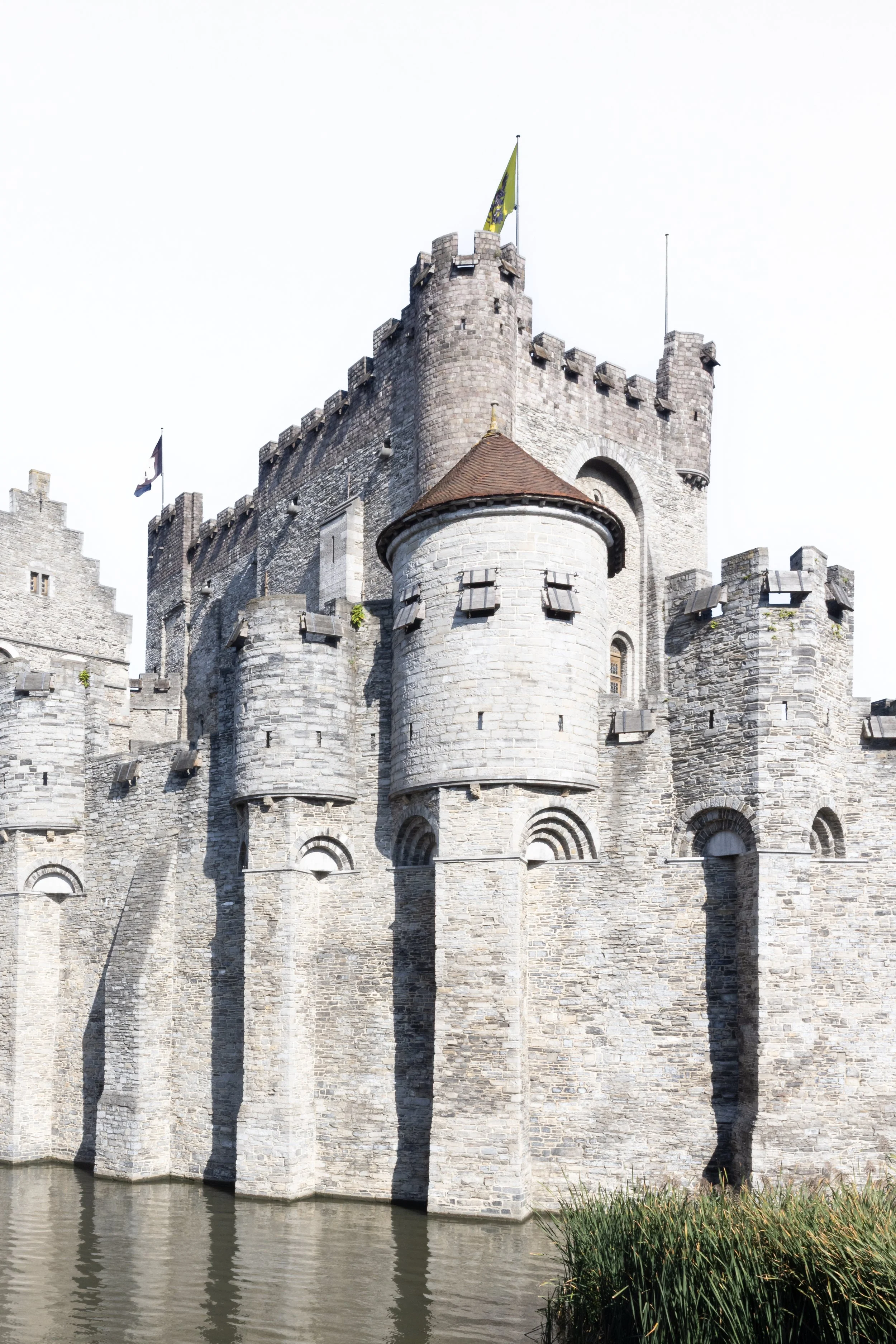
1. Sint Michielsbrug | 2. The view from the top of the Belfry of Ghent looking down at St. Bavo's Cathedral | 3. The embankment of the Leie River | 4. The medieval fortress Castillo de Gravensteen, or Castle of the Counts
An easy day trip by train from Bruges, we gave Ghent a full day to win us over - but by evening, we were ready to return to Bruges' quieter charms.
Ghent and Bruges are both medieval Flemish cities, but they couldn't feel more different. Where Bruges preserves its fairy-tale atmosphere almost reverently, Ghent throws university students and contemporary life right into the mix with its Gothic towers and medieval squares. It's a living, working city that happens to have an extraordinary historical center - not a historical center that happens to still have residents.
The three medieval towers define the skyline and anchor the historic core. Saint Bavo's Cathedral, built between the 13th and 16th centuries, showcases the full spectrum of Gothic architecture with its soaring vaulted ceilings, ornate baroque chapels, and extensive art collection. Saint Nicholas' Church, constructed in the 13th century from blue-gray Tournai limestone, exemplifies the Scheldt Gothic style - its central tower originally served as a civic watchtower before the Belfry took over that role. The interior is surprisingly austere, letting the medieval stone columns and vaulted ceilings speak for themselves. Then there's the Belfry itself, built between 1313 and 1380 as a symbol of Ghent's medieval independence. This UNESCO World Heritage Site rises 91 meters above the city center, topped with the gilded copper dragon that's become Ghent's signature symbol.
Gravensteen - the "Castle of the Counts" - commands the landscape with its thick stone walls, central keep, and defensive towers ringed by a moat. Built in 1180 by Count Philip of Alsace, it reflects the design of Crusader castles and served as both residence and symbol of authority over Ghent's increasingly powerful merchant class.
We explored it all, appreciated the architecture, admired the craftsmanship. But if we're being honest, Ghent didn't capture us the way Bruges had. We'd come to Belgium for medieval charm, and Ghent's contemporary layer - however vibrant - kept pulling us out of that headspace. It's not that Ghent lacks appeal; it just offers a different experience than what we were seeking. Looking back, we would have happily traded our Ghent day for more time wandering Bruges' quieter canals.
TRAVEL
By Train Approximately a half hour. From Brugge Station to Gand-Saint-Pierre, Ghent.
ANTWERP
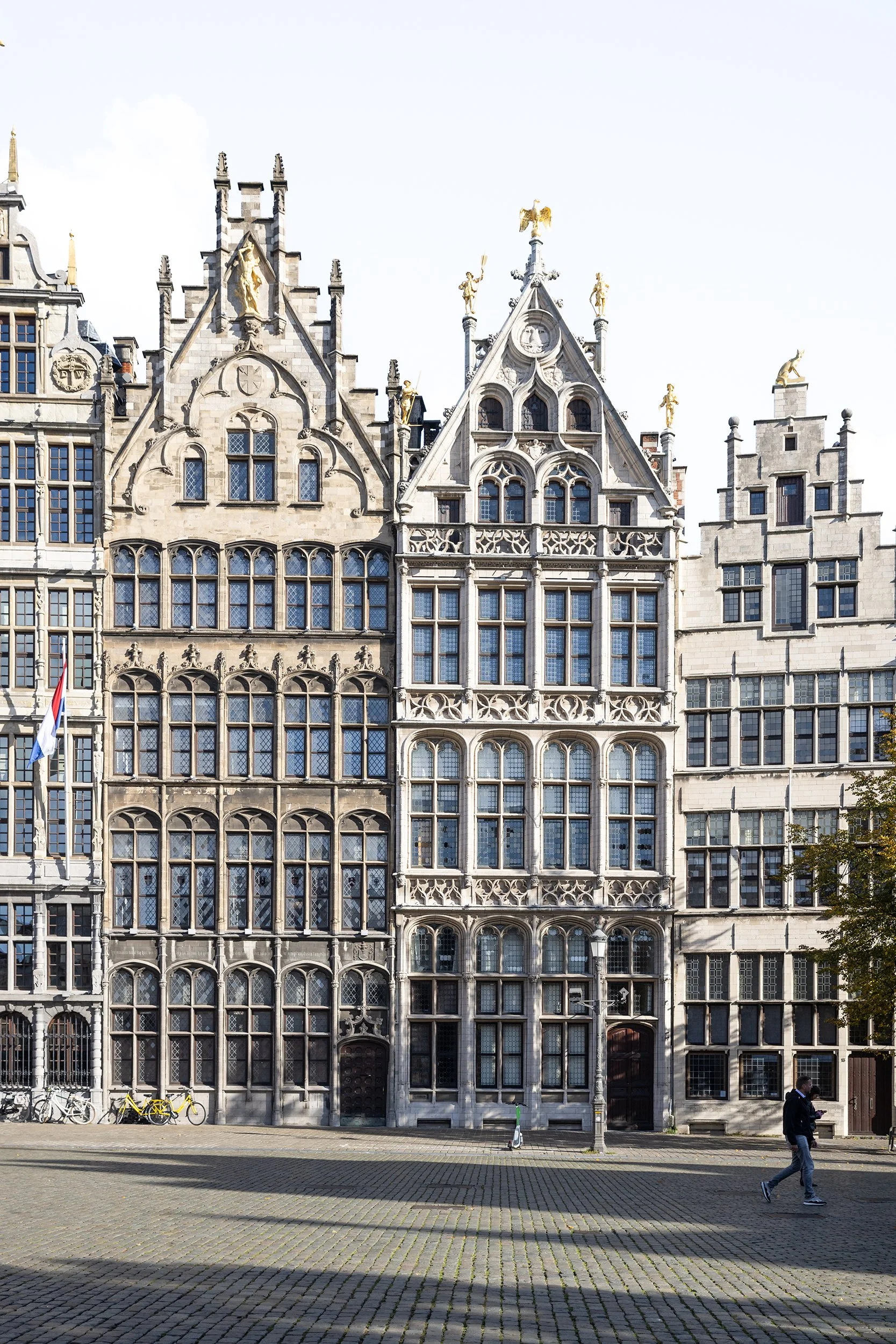
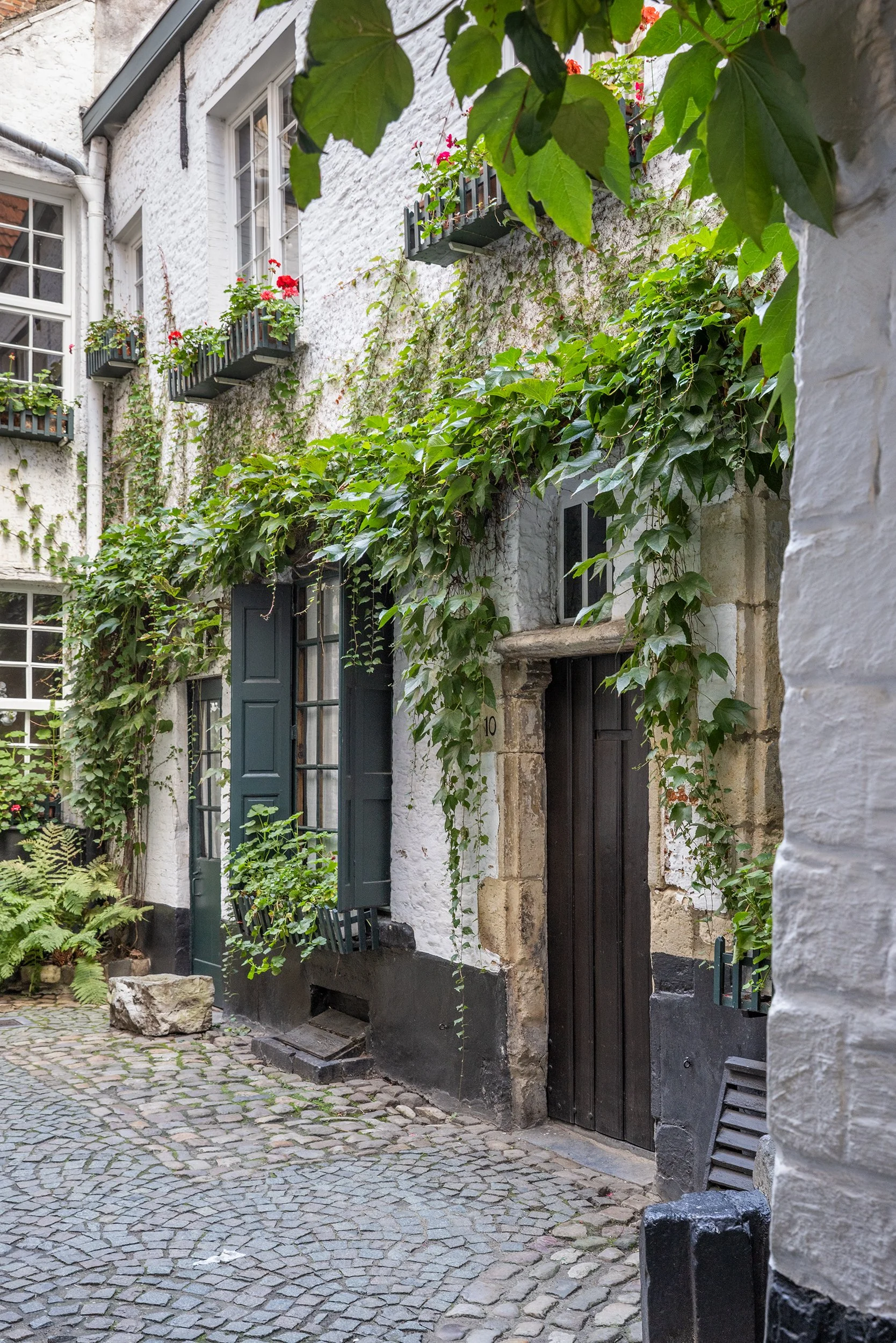
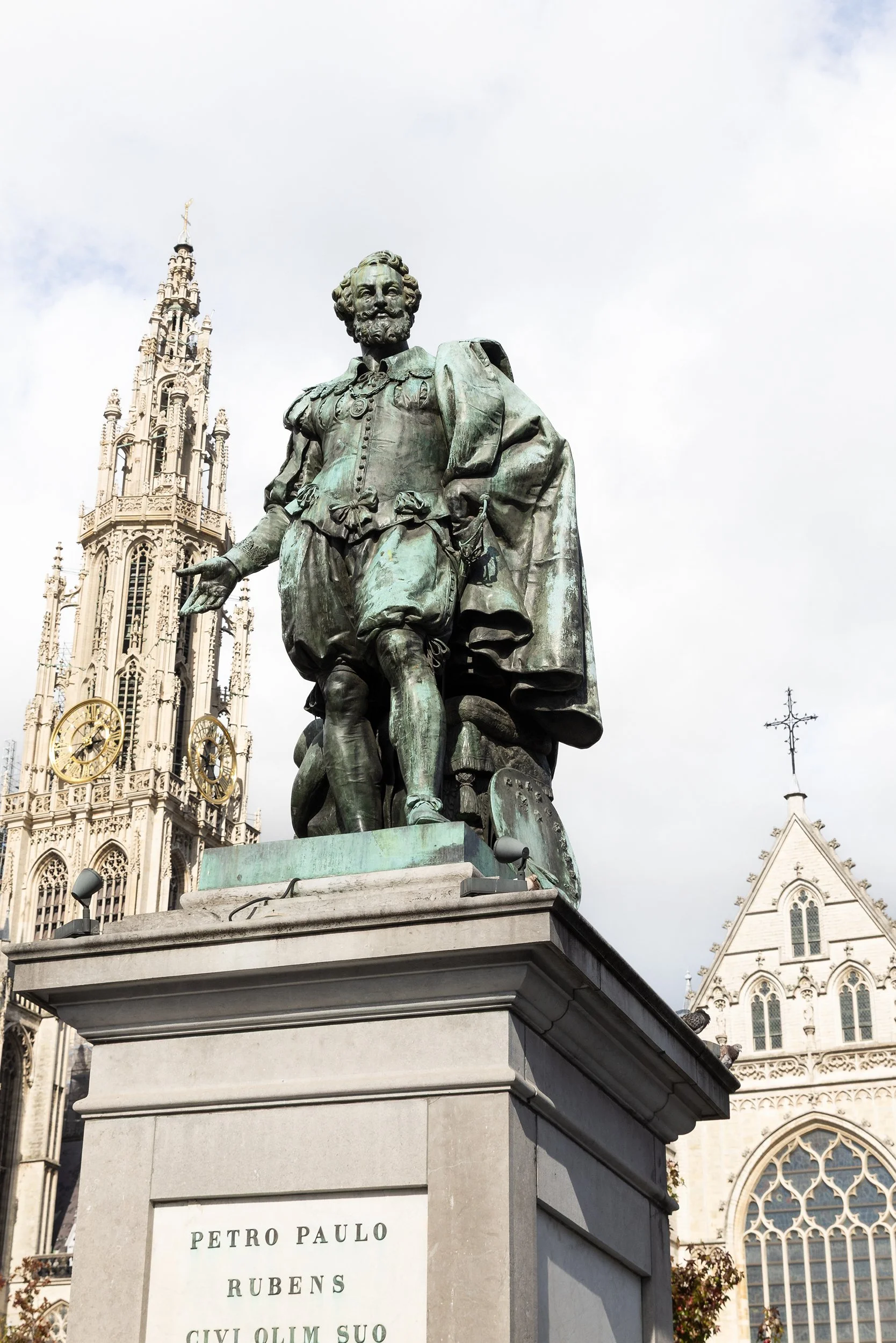
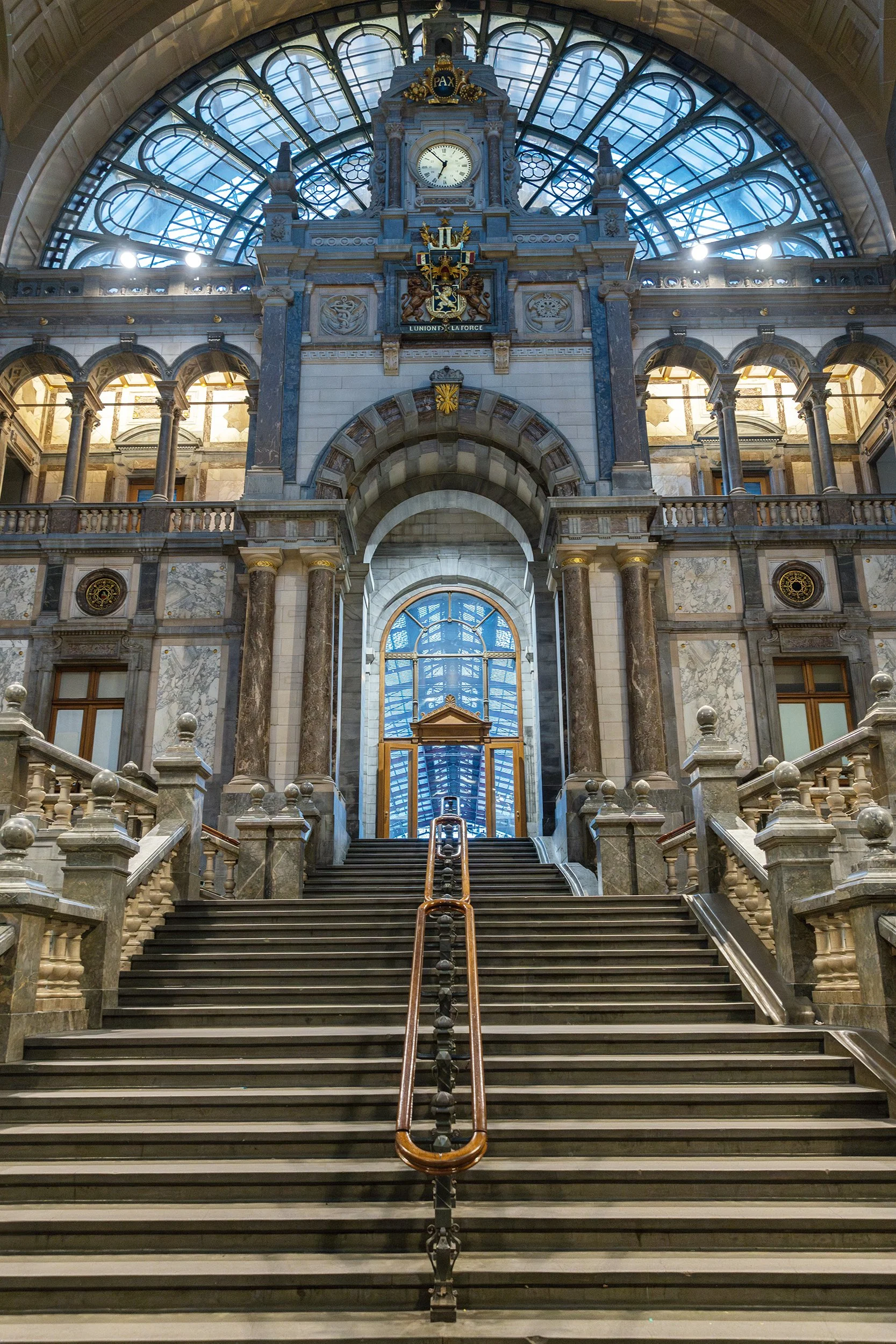
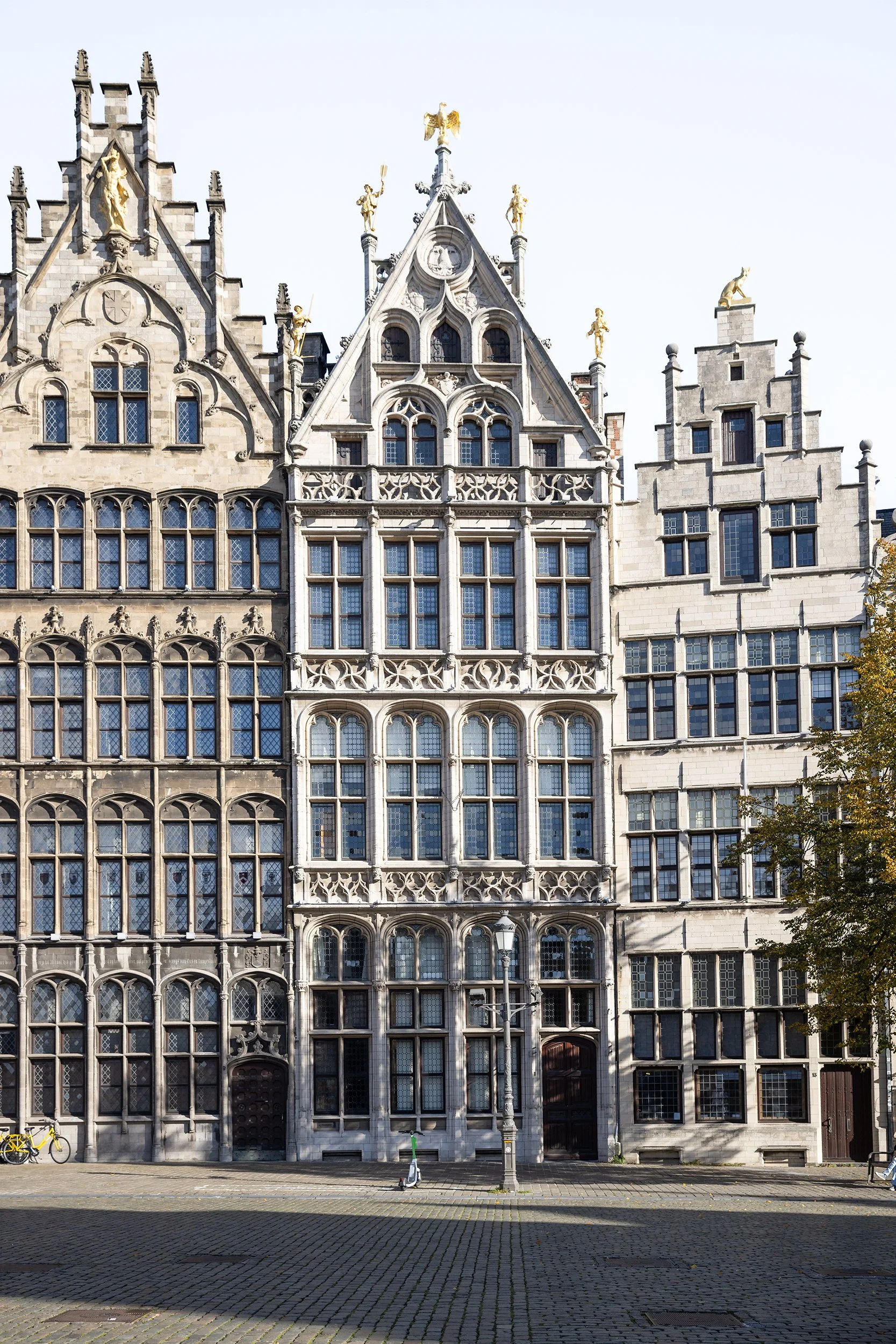
1. Grote Markt guildhalls left to right: Huis van de Schutters (Archer's House, No. 7); Huis De Spieghel (The Mirror, No. 9), house of an archers' guild; Huis van de Kruideniers (Grocers' House, No. 11); De Vos (The Fox, No. 13), house of the fencers | 2. The hidden Hofje Vlaeykensgang | 3. Bronze statue of Peter Paul Rubens at the Groenplaatz | 4. Antwerpen-Centraal Station
We were moving our base camp to Antwerp, and sadly had to bid farewell to Bruges and the most amazing hotel. But Antwerp made more sense for some day trips we wanted to do in Holland.
Antwerp's grandest first impression comes from Antwerpen-Centraal, whose soaring vaults and marble staircases make it one of Europe's most spectacular railway stations. But that architectural drama doesn't extend to the surrounding blocks - our hotel near the station sat in a thoroughly uninspiring area, where the magnificent terminal stood as a beautiful anomaly.
The real Antwerp emerges in the Oude Stad. The Grote Markt stopped us in our tracks with its ring of 16th and 17th-century guildhalls, their ornate gabled facades so heavily adorned with gold leaf that the entire square shimmers in sunlight. Each building once belonged to one of the city's powerful trade guilds - coopers, crossbowmen, haberdashers - and they competed to outdo each other in architectural splendor. The result is a stunning display of Renaissance craftsmanship, where every facade tells a story of merchant wealth and guild pride through elaborate stonework, stepped gables, and gilded details that catch the light at every angle.
At the square's center stands the Brabo Fountain, depicting the legendary Roman soldier Silvius Brabo hurling a giant's severed hand into the Scheldt River - a tale some say inspired the city's name. Beyond the Grote Markt, cobblestone lanes wind through the old city where the Cathedral of Our Lady's towering spire - Belgium's tallest - dominates the skyline, and Renaissance architecture meets contemporary boutiques.
We also discovered Antwerp's quieter side in its hidden hofjes - centuries-old courtyards tucked behind ordinary doors, where ivy-covered almshouses create peaceful enclaves away from the bustling streets. These former charitable residences offer a striking contrast to the guildhalls' opulent displays of power and wealth.
TRAVEL
By Train Approximately 1.25 hours. From Brugge Station to Anvers-Sud
Antwerp.
MORE INFO
You can read our complete guide to visiting Antwerp here.
BRUSSELS
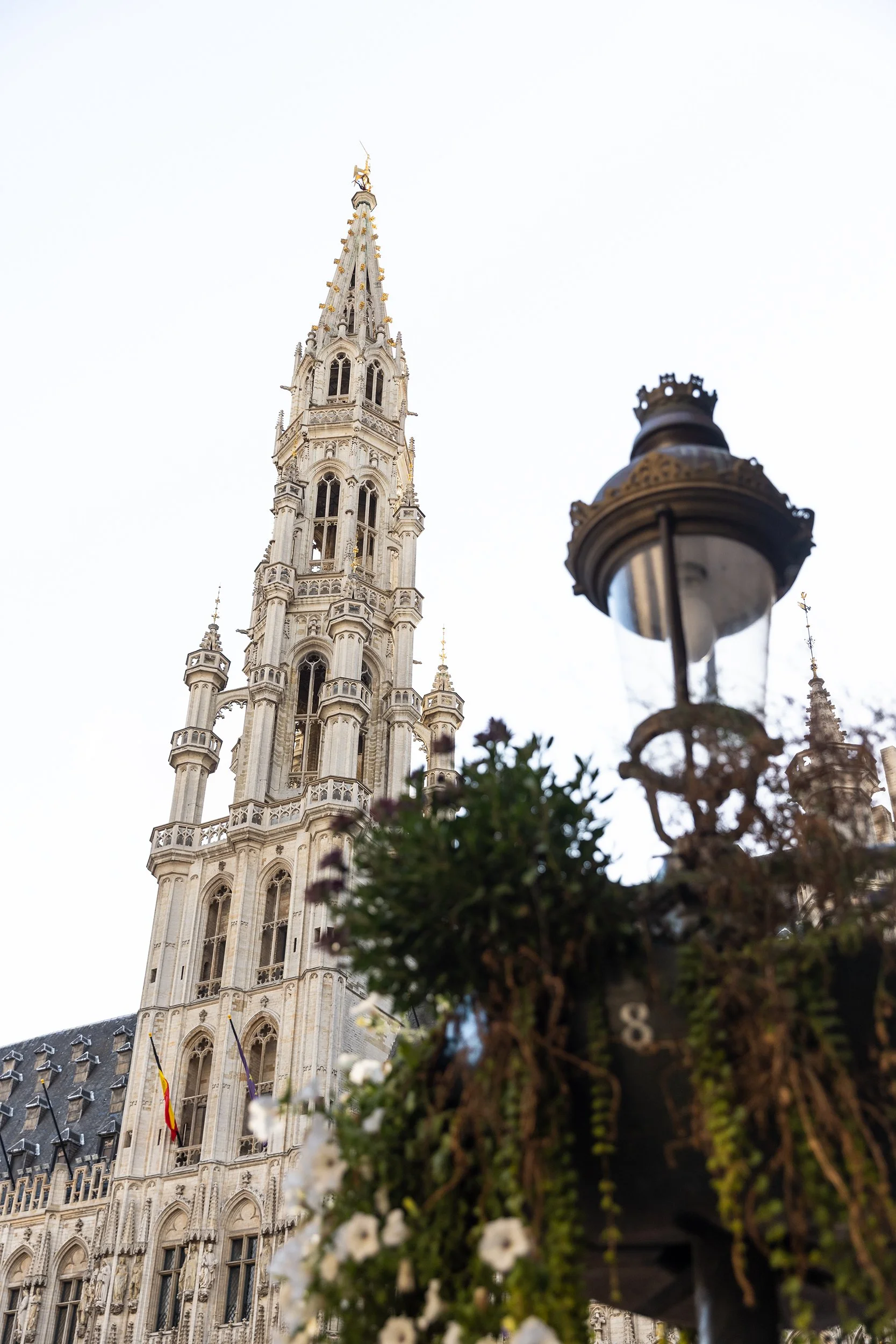

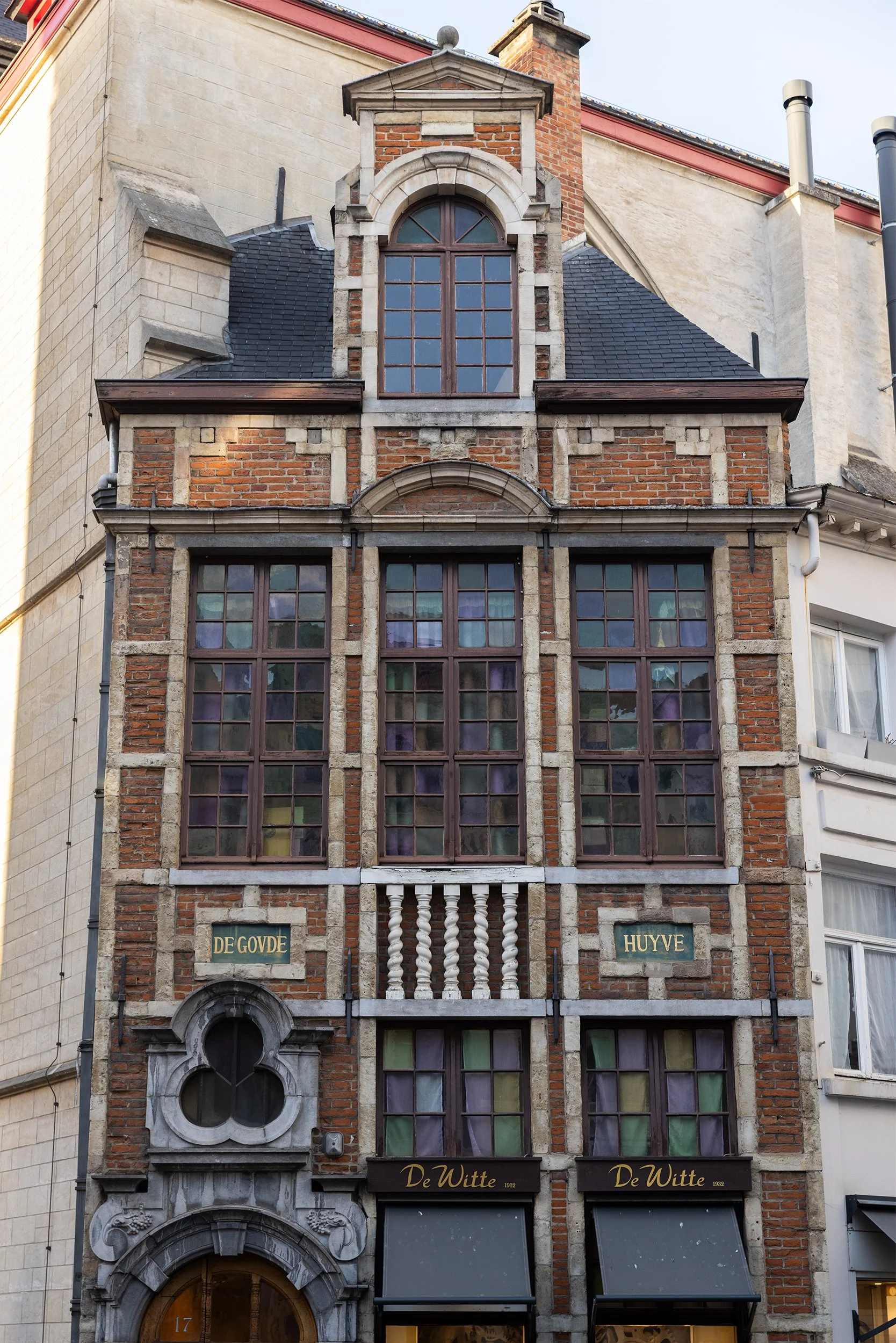

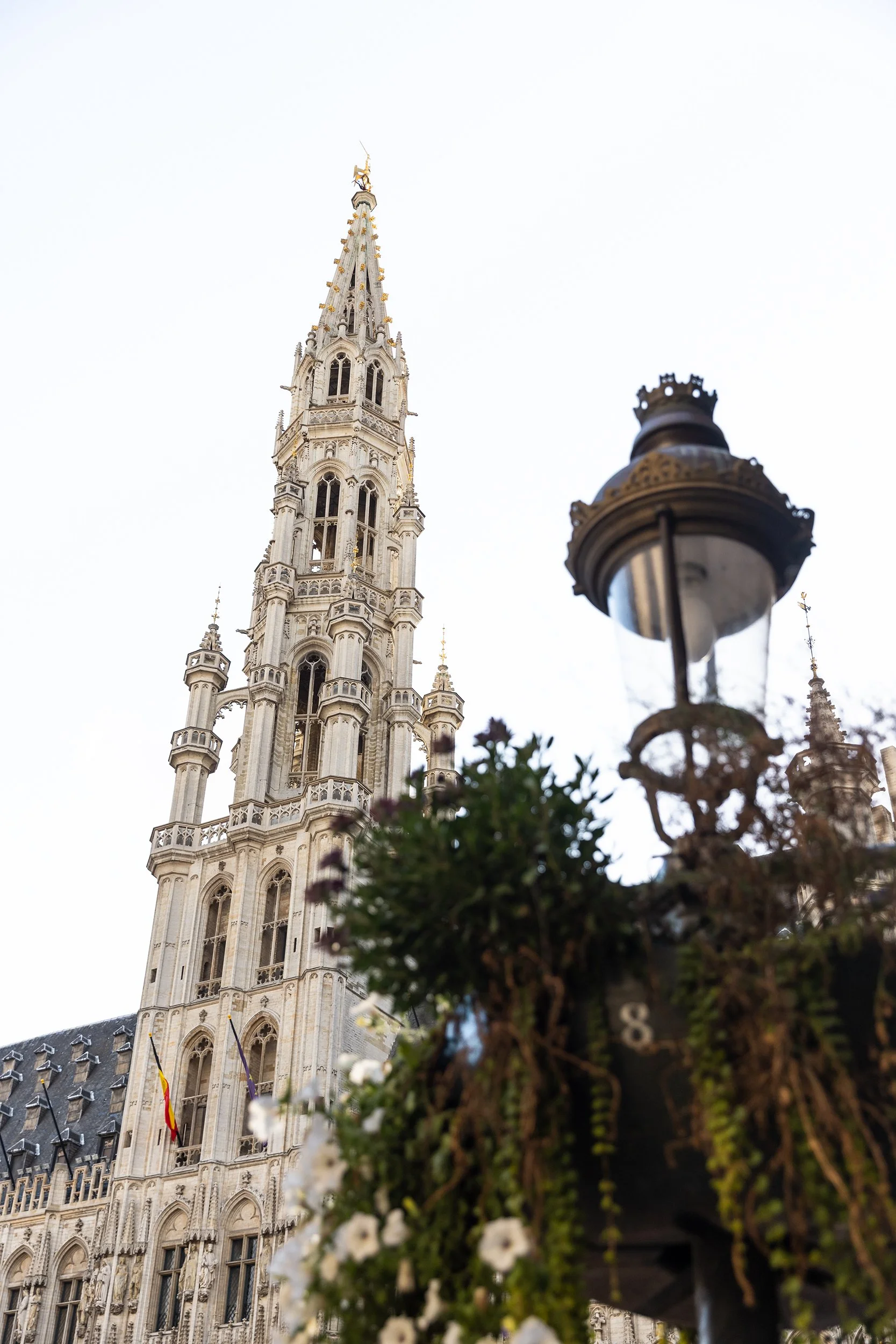
1. Brussels Town Hall (Hôtel de Ville or Stadhuis), on the south side of the Grand-Place (Grote Markt) | 2. Entrance to the House of the Dukes of Brabant, one of the guildhalls in the Grand Place (Grote Markt) | 3. Maison de Goude Huyve on Petite rue au Beurre | 4. Brussels City Museum, also known as the King's House (Maison du Roi) or Bread House (Broodhuis), located on the Grand Place
Brussels became our home base for the last few days - practical for the airport and our remaining excursions. We checked into our hotel and immediately set out for the Grand Place. This UNESCO square is the city's centerpiece, surrounded by the ornate Town Hall with its soaring Gothic spire, the Maison du Roi (which houses the Brussels City Museum), and a series of gilded guildhalls dating back to the late 1600s. The sheer concentration of architectural detail is remarkable - every facade seems to be competing for attention with carved stonework, gold leaf, and baroque flourishes that catch the light as the day shifts.
The Manneken Pis was exactly as ridiculous as advertised. A small bronze statue of a boy peeing into a fountain, mobbed by people with cameras, dressed up like a doll in whatever outfit the city chose that week. When we found him, he was wearing a jacket with a medal hung around his neck - one of over a thousand costumes in his rotating wardrobe. The statue itself dates back to the 17th century, though the original has been replaced and restored multiple times. It's small, absurd, and somehow endearing - the kind of quirky landmark that shouldn't be famous but absolutely is.
What we didn't expect was how lived-in Brussels feels. This isn't a preserved museum city. Walk a few minutes from the Grand Place and you're in neighborhoods where immigrant families run Vietnamese restaurants, Moroccan bakeries, and Turkish grills out of medieval buildings. It's not curated or trendy - just functional, a bit worn, and entirely real. The juxtaposition is strange: ornate 17th-century architecture housing a kebab shop with plastic chairs and fluorescent lights.
Brussels isn't trying to impress you. It has its showpiece square, its quirky statues, its chocolate shops. But it's also a working capital with cracked pavement, graffiti, and the everyday chaos of a multicultural city that hasn't sanitized itself for Instagram.
TRAVEL
By Train Approximately 45 minutes. From Anvers-Sud, Antwerp to Bruxelles-Central (Brussels Central Station).
MORE INFO
You can read our complete guide to visiting Brussels here.
MECHELEN
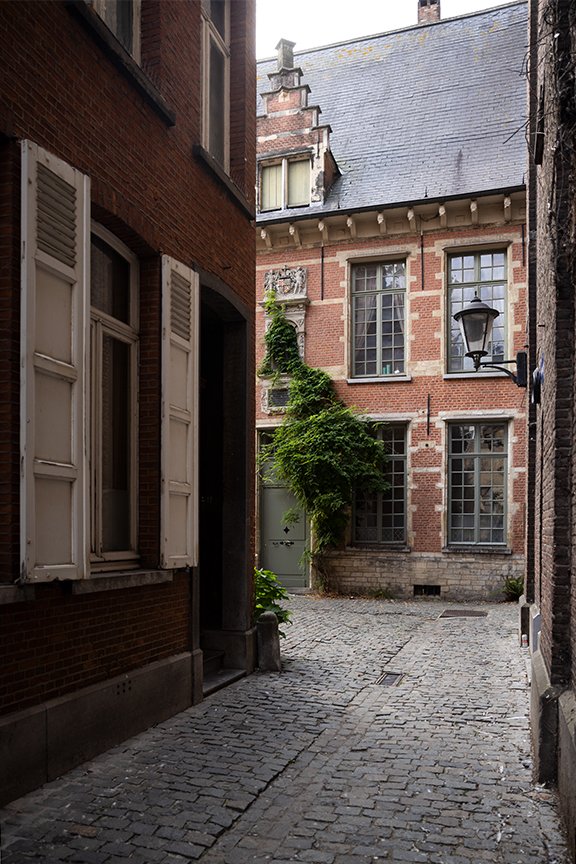
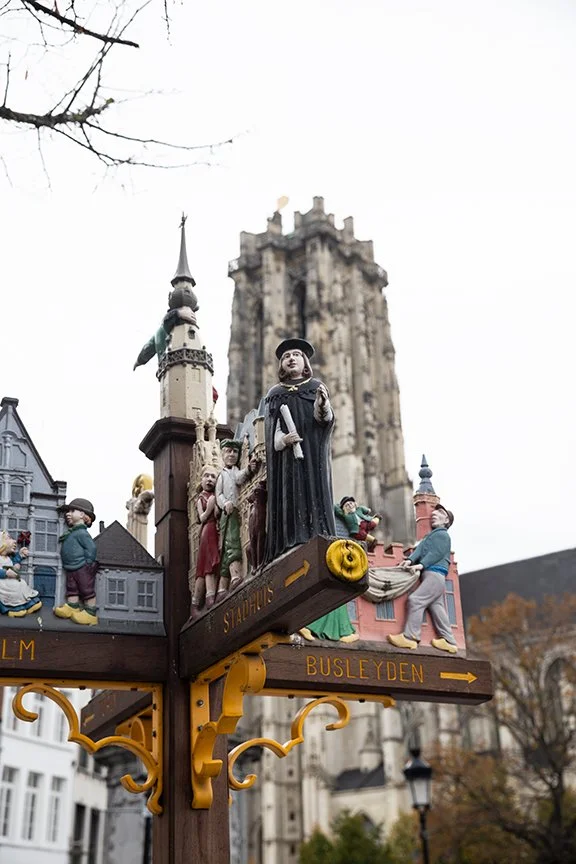
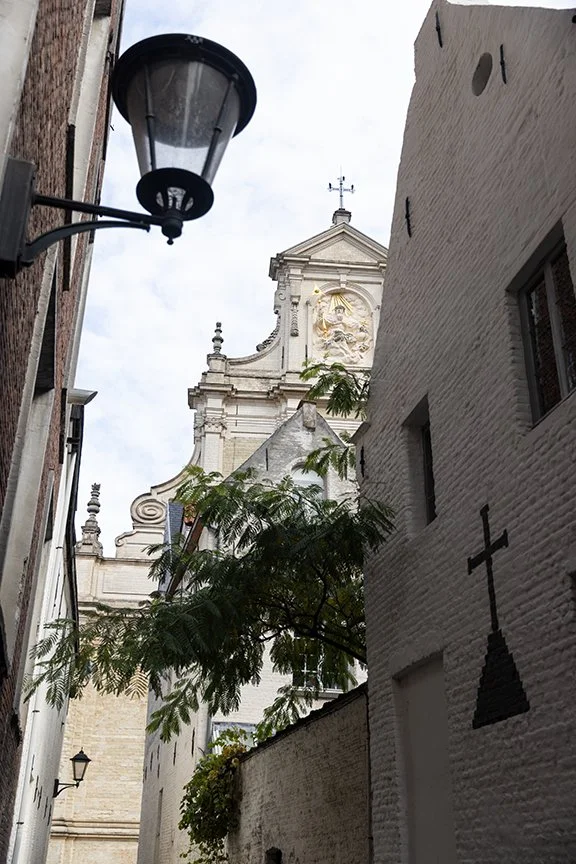
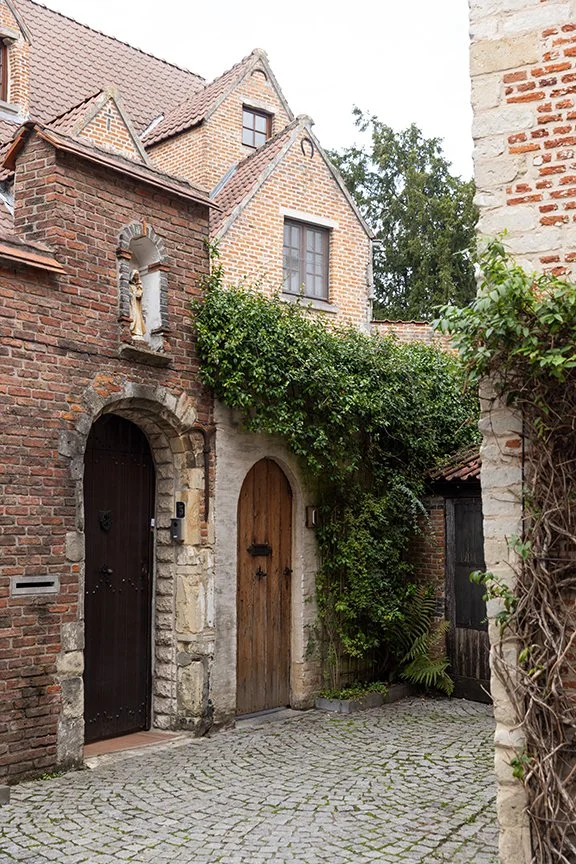
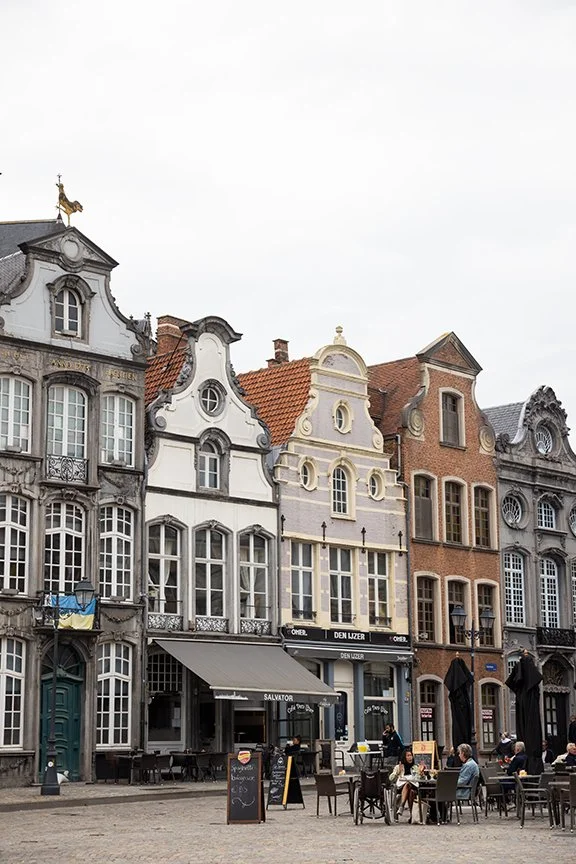
1. Hoviusstraat is where you’ll find the béguinage as well as Het Anker Brewery in the Groot Begijnhof | 2. Signpost showing landmarks, near Schepenhuis | 3. Begijnhofkerk as seen from Krankenstraat | 4. Jezuspoort (Jesus' Gate) 1 and 3, in the Groot Béguinage of Mechelen
Most travelers skip Mechelen entirely, racing between Brussels and Antwerp without realizing what lies in between. We almost made the same mistake. But this compact Flemish city, once the capital of the Burgundian Netherlands, proved to be an unexpected highlight - not for any single monument, but for the way its narrow lanes and quiet canals invited aimless wandering. Mechelen is barely 14 minutes from Brussels by train, yet it feels worlds away from the capital's crowds.
We'd come with a specific goal: exploring the béguinages, those remarkable 13th-century enclaves where beguines - women who lived communally like nuns but without formal vows - created their own self-sufficient communities. Mechelen is the only Belgian city with two béguinages, both UNESCO World Heritage Sites. These historic quarters, with their low brick houses arranged around peaceful courtyards, offer a window into a fascinating chapter of medieval women's history that most people have never heard of. The béguinages feel frozen in time, their cobblestoned lanes and whitewashed facades creating an atmosphere of tranquility that's survived centuries.
Beyond the béguinages, Mechelen revealed itself slowly. Small bridges arched over tree-lined canals. The Gothic tower of St. Rumbold's Cathedral rose above the rooftops, visible from seemingly every angle. We kept getting pleasantly lost in the residential streets behind the main square, where locals went about their daily routines. It's a working city, not a showpiece - and that ordinariness made it feel more genuine than the heavily touristed centers we'd visited elsewhere.
After zigzagging through Belgium, each city revealed its own character. Fairytale Bruges stole our hearts with its canals and medieval charm - it was everything we'd hoped for and more. Antwerp dazzled us with its magnificent square, ringed by ornate guildhalls dripping in gold leaf that caught the light and sparkled. The city also surprised us with its culinary scene. Ghent felt a bit too dominated by its student population for our taste, while Brussels showed us both baroque magnificence and urban roughness in equal measure. But one real surprise was Mechelen, a small-town gem that most travelers bypass entirely, where we explored hidden alleys and stumbled upon peaceful convents tucked away from the main squares. And while Delft is in the Netherlands, not Belgium, this little town was an unexpected highlight just a short train ride away. With its serene canals and famous blue-and-white pottery heritage, Delft felt like a discovery most travelers miss, and adding it to our itinerary was absolutely worth the detour.
If we had to pick a favorite? Bruges wins, hands down. Bruges has a romantic, timeless quality that the other cities couldn't quite match. Even with the crowds, there was something magical about getting lost in those narrow lanes.
TRAVEL
By Train Approximately 15 to 25 minutes. From Bruxelles-Central (Brussels Central Station) to Malines, Mechelen.
MORE INFO
You can read our complete guide to visiting Mechelen here.
PLANNING YOUR VISIT
GENERAL INFORMATION
Languages Spoken: Dutch (Flemish) and French.
Currency: Euro (€)
Restaurant Tipping: Tipping at restaurants is not expected but appreciated. Simply round up to the nearest euro and be prepared to tip in cash.
Taxi Tipping: For a typical ride, round up to the next euro on the fare, although tipping is not expected.
TOURISM INFORMATION
Visit Antwerpen
Locations: Visitor Centre at Het Steen at Steenplein 1, or Visitor Centre at Centraal Station, level 0 near the elevators
Visit Bruges
Location: Tourist office Markt (Historium) at Markt 1, with a second location, Tourist office Stationsplein (Railway Station) at Stationsplein 5
Visit Brussels
Location: Rue Royale 2-4 Koningsstraat
Visit Mechelen
Lots of helpful information, including a map of the city.
Location: Vleeshouwersstraat 6
HOW DID WE TRAVEL?
FLIGHT
Delta Airlines: Business class lie flat seats for 140,000 miles PP RT plus $134 in taxes from Orlando MCO to Brussels BRU with a layover in New York JFK
LOUNGES
Orlando MCO: The Club at MCO - used Priority Pass for free access
New York JFK: Virgin Atlantic Clubhouse - used Capital One Venture X card for free access (this was prior to Venture X removing guest access as a free benefit)
New York JFK: Delta Sky Club - used business class ticket for free access
Brussels BRU: The View - used business class ticket for free access
New York JFK: Delta Sky Club - used business class ticket for free access
ACCOMMODATIONS
Bruges: Hotel Heritage, A Relais & Chateaux Property - cash booking of $172 per night, for a total of $417 for three nights after using an American Express credit card offer for $100 off any Relais & Chateaux stay
Antwerp: Hotel Indigo Antwerp - City Centre by IHG - free using 26,000 IHG (Intercontinental Hotels Group) points redemption per night, for a total of 78,000 points for three nights.
Brussels: The Dominican, Brussels, a Member of Design Hotels - free using 27,000 Marriott points redemption per night, for a total of 81,000 points for three nights.
TRAINS, TRAMS & BUSSES
Cash - $225 for travel between Brussels - Bruges, Bruges - Ghent, Bruges - Antwerp, Antwerp - Delft Holland, Antwerp - Brussels, Brussels - Lille France, Brussels - Mechelen, which included all local transport within each city via trams and busses
WHAT PHOTOGRAPHY GEAR DO I USE?
Most images in this post were shot with the Canon EOS R5 Mirrorless Camera, with the Canon RF 24-70mm f/2.8 L IS USM lens. I carry a Tom Bihn backpack with a Tenba BYOB 10 Camera Insert when traveling for vacation. On larger commercial projects, I also use a Think Tank Photo Airport Roller Derby for hauling additional lenses, batteries, filters, a backup Canon EOS 5D Mark IV DSLR Camera, a 15” MacBook Pro, and external hard drives. I also own a DJI Mavic Pro Drone.
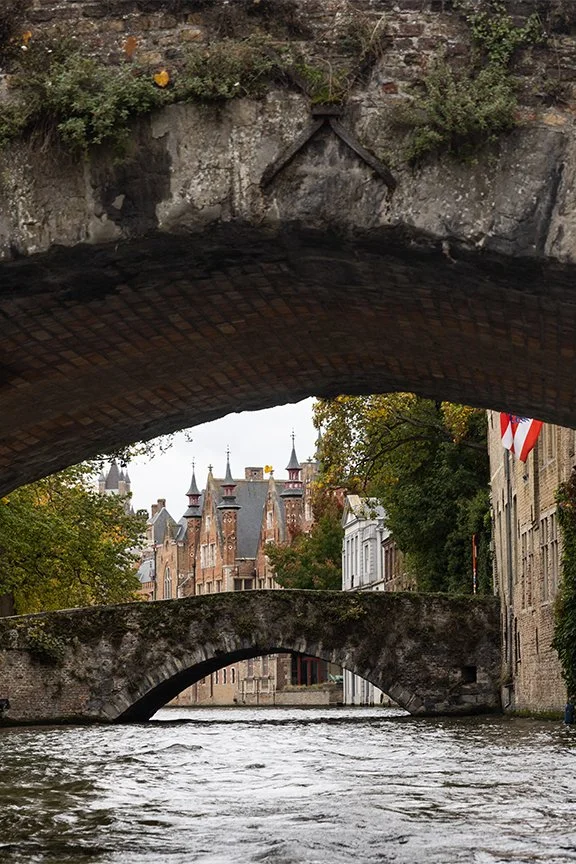

View from the Belfry, Ghent, Belgium