
Discovering Antwerp's Golden Grote Markt & Hidden Courtyards
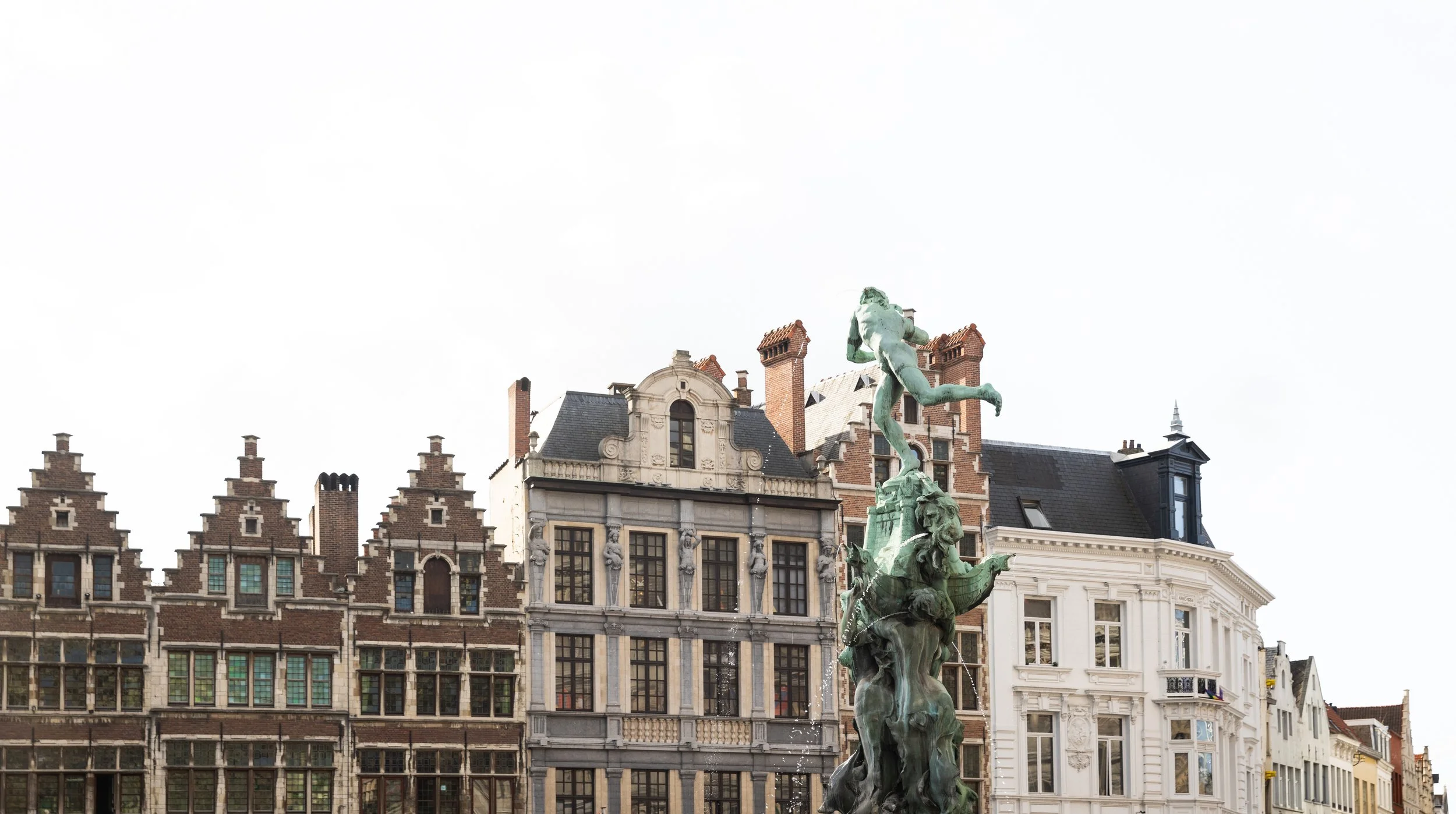
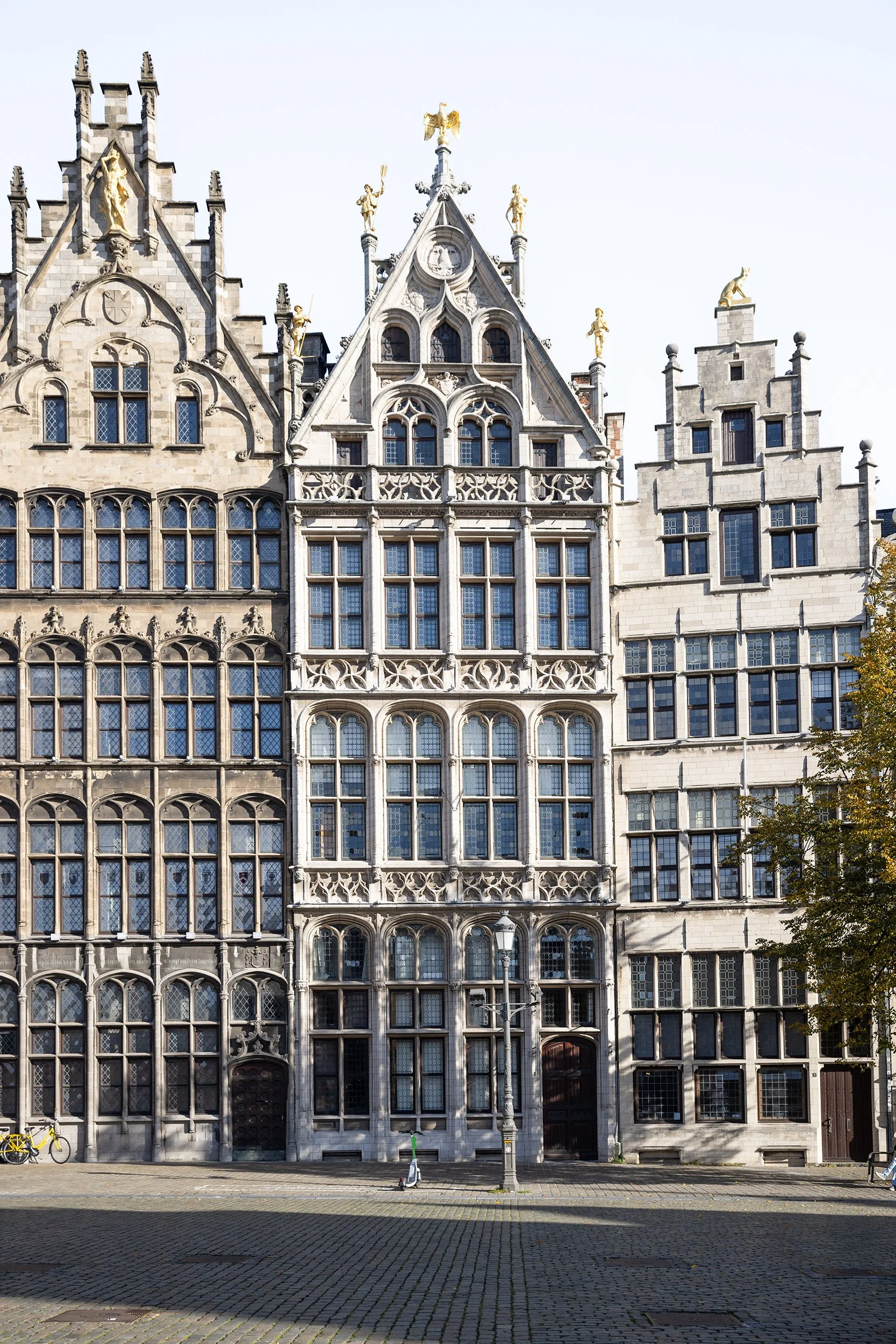
Guildhalls line Antwerp’s Grote Markt
Disclosure: This post may contain affiliate links. That means if you buy something following a link from this page, we’ll receive a small commission at no cost to you. We only promote products and services that we truly believe in.
After spending several nights in Bruges, we headed on to Antwerp as a second base for some sightseeing ventures into Holland. Traveling with my sister, her husband, and daughter, we took the train from Bruges, sadly saying goodbye to this fairy tale city.
Arriving in Antwerp by train means a very grand entrance into the world's diamond capital, with the magnificent station hall of Antwerpen-Centraal station serving as a breathtaking welcome - its soaring vaulted ceilings, ornate marble staircases, and eclectic blend of architectural styles making it one of the most beautiful railway stations in the world.
Often called the "Railway Cathedral," Antwerpen-Centraal is a masterpiece of railway architecture that was completed in 1905 after nearly two decades of construction. The station showcases an extraordinary fusion of architectural styles, from the neo-Baroque stone façade adorned with more than 20 different types of marble and stone to the massive iron and glass dome that floods the main hall with natural light. The waiting room resembles a palace more than a transit hub, with its gilded details, elaborate clock, and stunning frescoes.
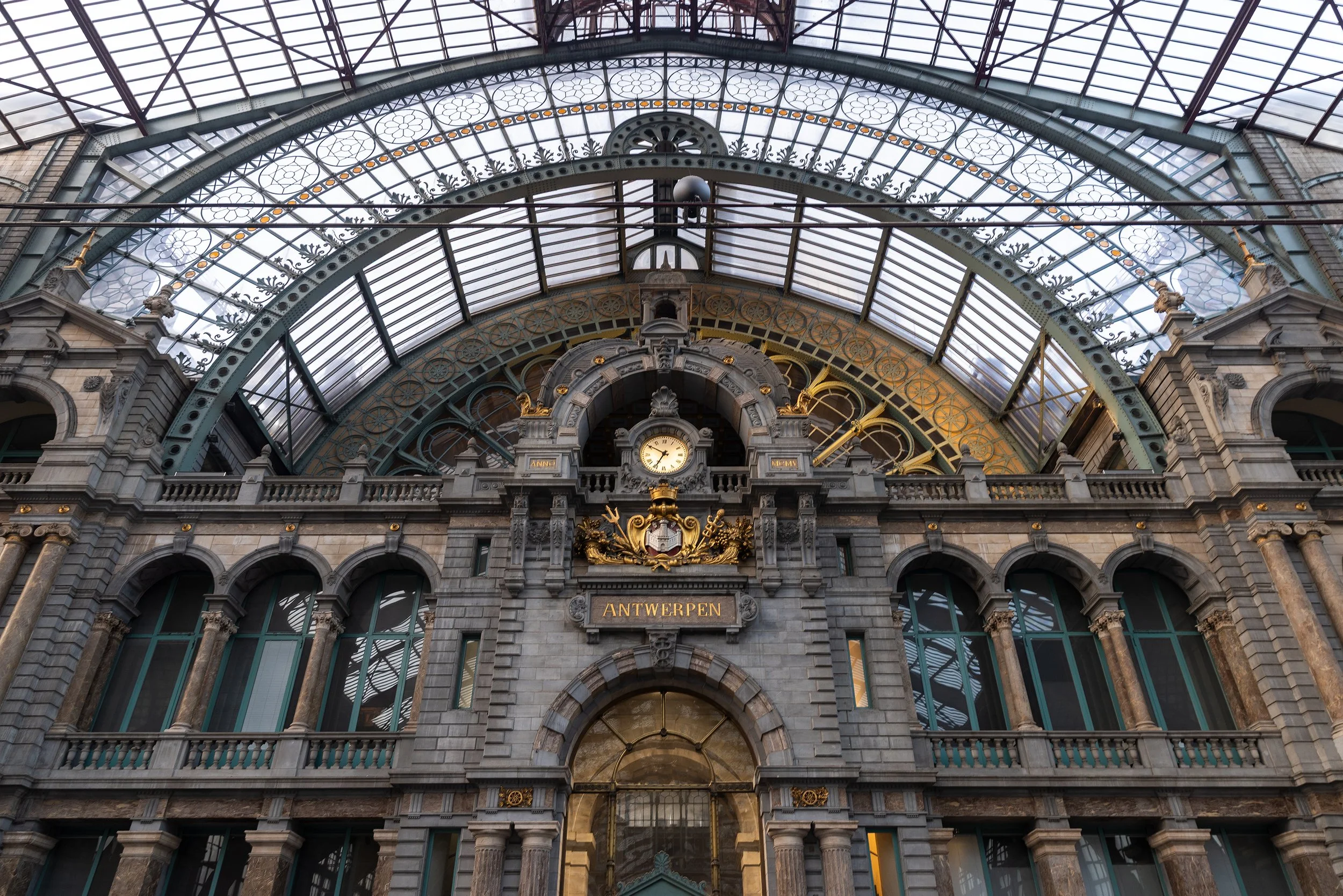
Antwerpen-Centraal railway station
But the station's grandeur isn't merely skin-deep. In the 1990s and early 2000s, it underwent a massive renovation that added multiple underground levels, transforming it into a modern multi-level transit hub while preserving its historic splendor. Descending from the ornate 19th-century main hall down escalators to the sleek contemporary platforms below creates a fascinating journey through time itself.
As you emerge from the station into the city, you're immediately in the heart of the Diamond Quarter, where an estimated 80% of the world's rough diamonds and 50% of cut diamonds pass through. The juxtaposition is striking - stepping from architectural opulence into streets lined with diamond dealers, cutters, and traders, many of whom belong to the Orthodox Jewish community that has been central to Antwerp's diamond trade for generations.
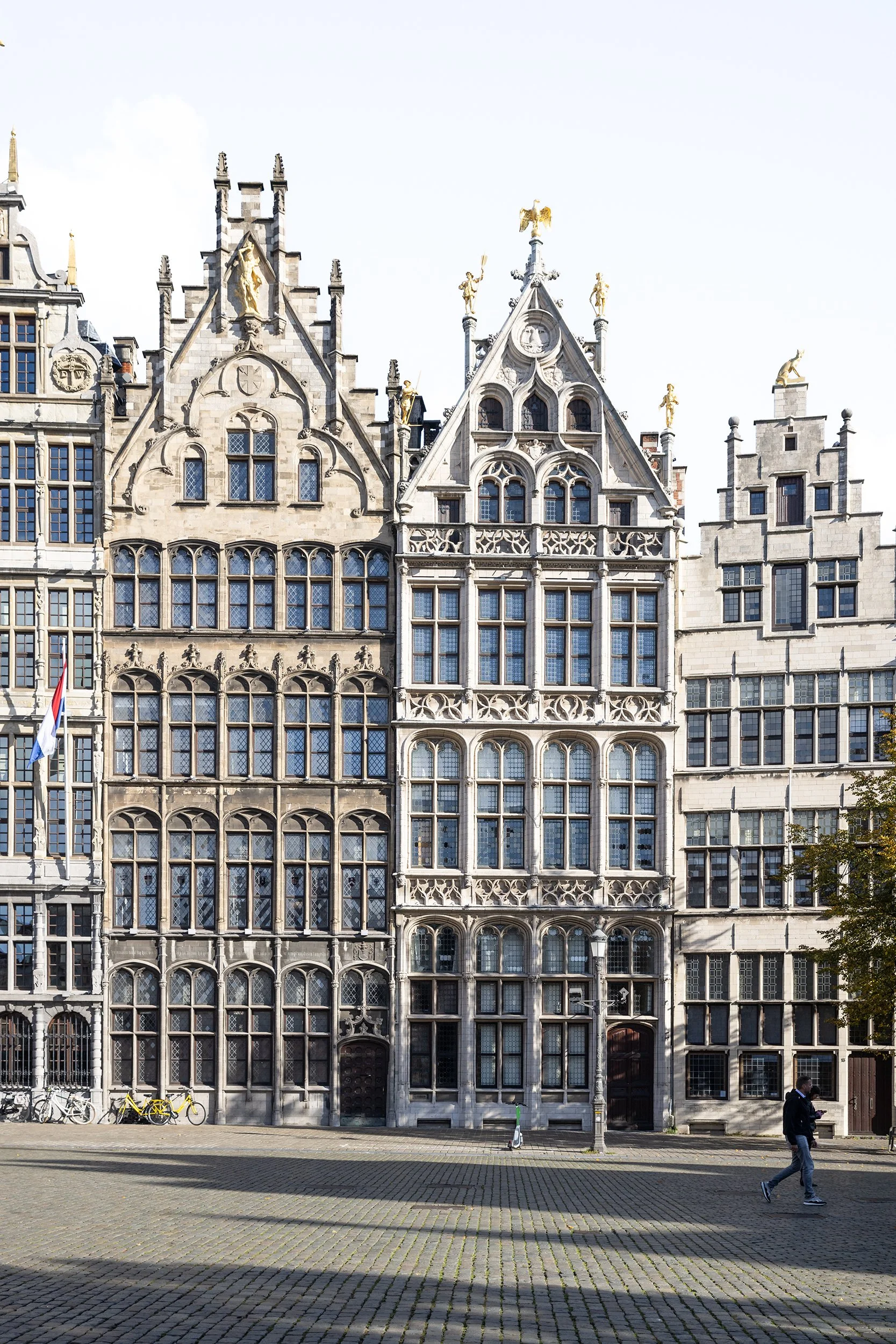
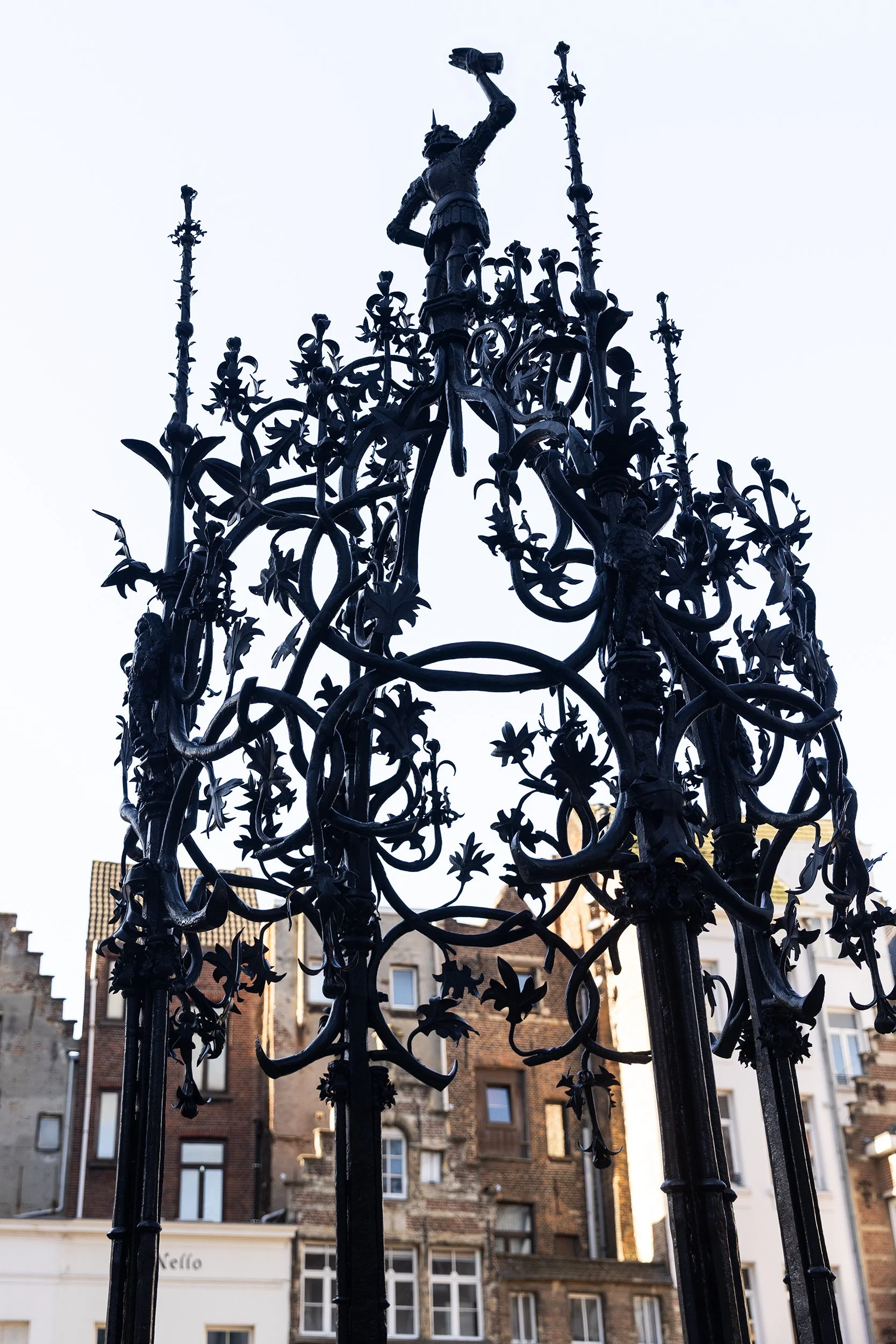
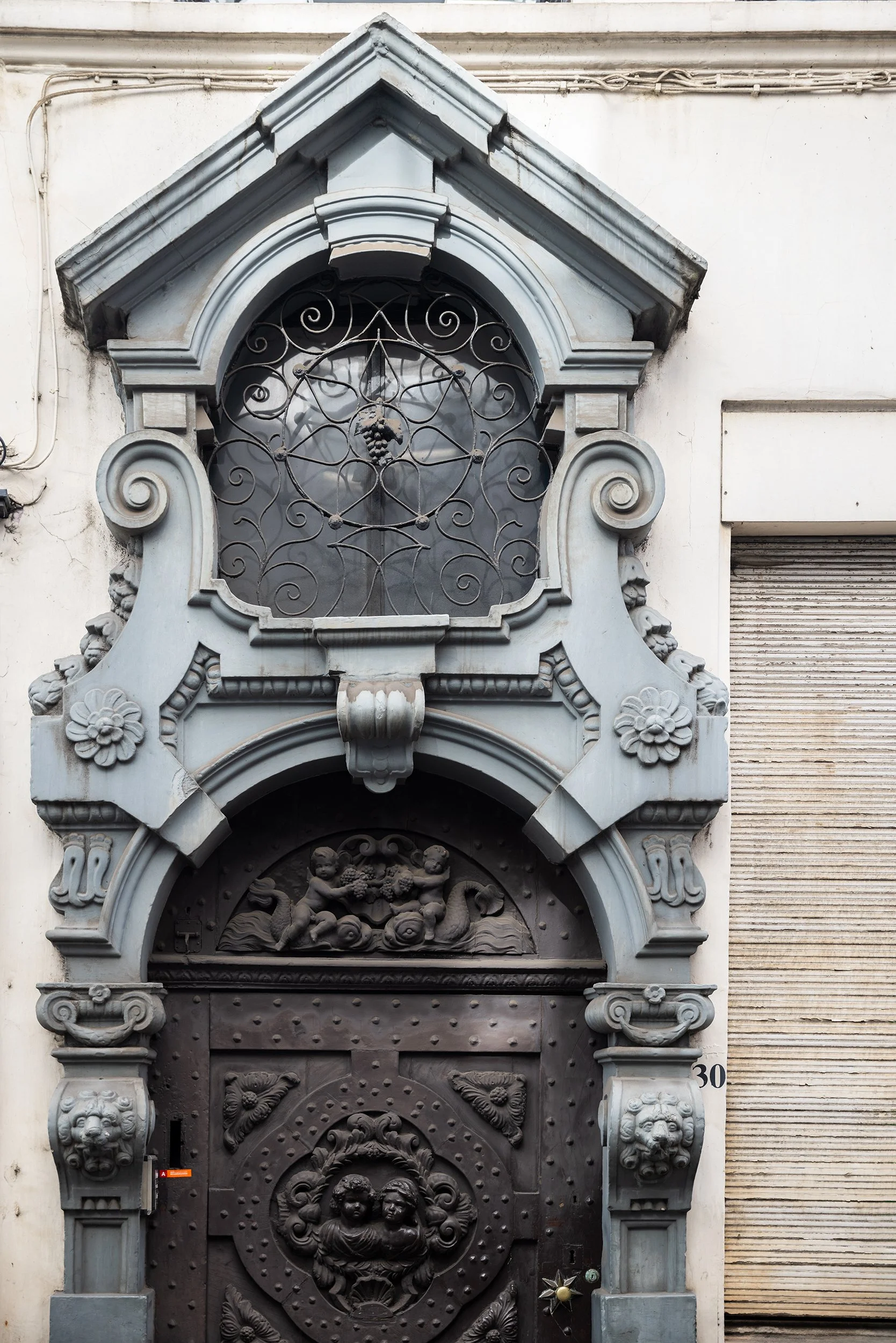
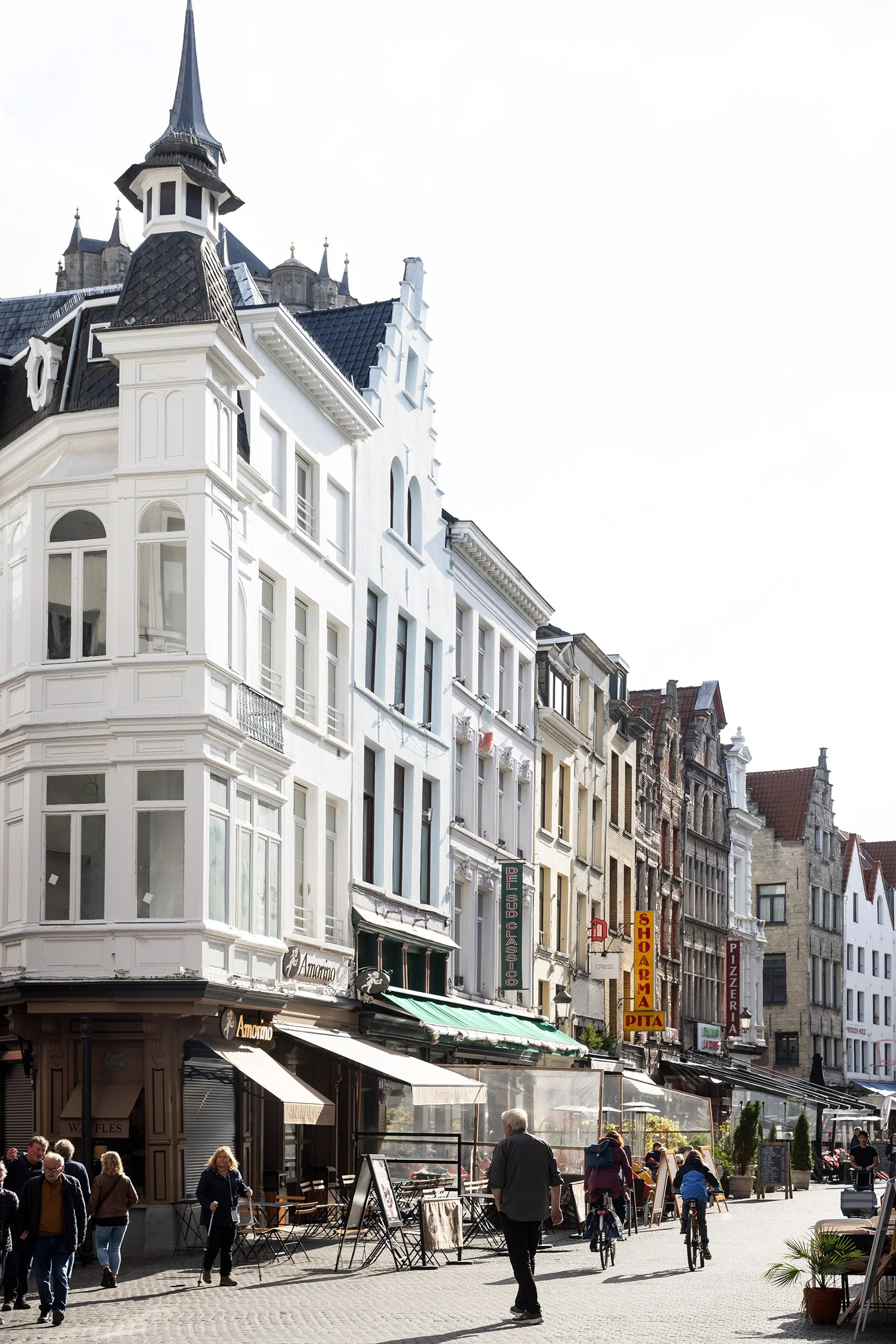
1. Grote Markt guildhalls left to right: Huis van de Schutters (Archer's House, No. 7); Huis De Spieghel (The Mirror, No. 9), house of an archers' guild; Huis van de Kruideniers (Grocers' House, No. 11); De Vos (The Fox, No. 13), house of the fencers | 2. Fountain of Quentin Massys (also called Het Pootje or The Little Paw) in the Grote Markt | 3. Het Scilt van Londen (The Shield of London) door at Wolstraat 30 | 4. Oude Koornmarkt
We had chosen to redeem hotel points for our Antwerp accommodations, and though the property's proximity to the train station proved invaluable for our Dutch excursions, the surrounding neighborhood offered little in the way of character or appeal - Antwerpen-Centraal itself being the sole exception to an otherwise uninspiring streetscape.
But venture further into the Oude Stad (Old City), and you'll find magnificent medieval guildhalls lining the Grote Markt, their ornate gabled facades adorned with gilded, while the towering spire of the Cathedral of Our Lady - Belgium's tallest - dominates the skyline. Cobblestone lanes wind through centuries-old neighborhoods where Renaissance architecture meets contemporary boutiques, and hidden courtyards reveal tranquil gardens tucked behind historic townhouses. It's here, in these historic streets far removed from the utilitarian station district, that Antwerp reveals why it's been a cultural and commercial powerhouse for over 500 years.
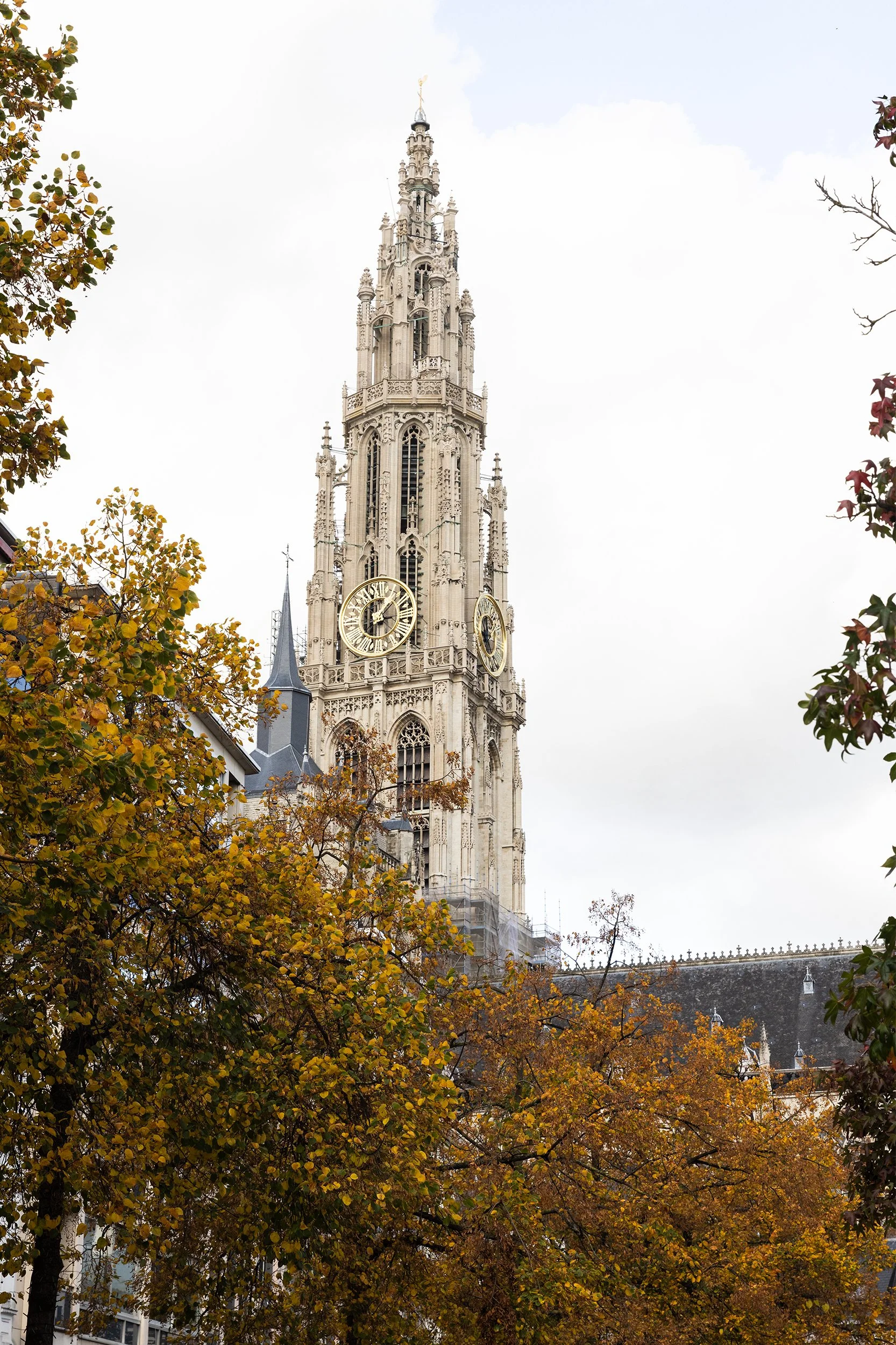
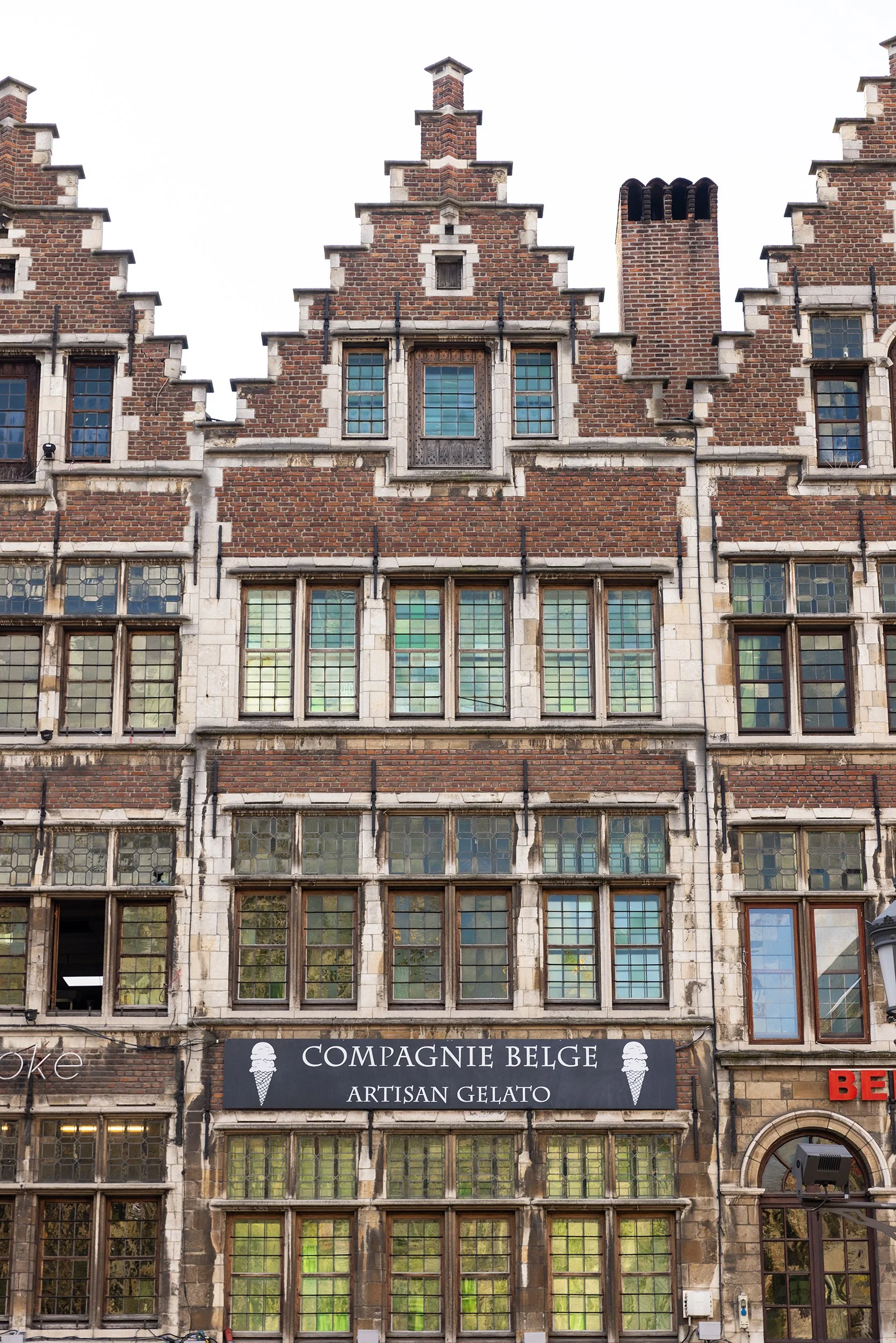
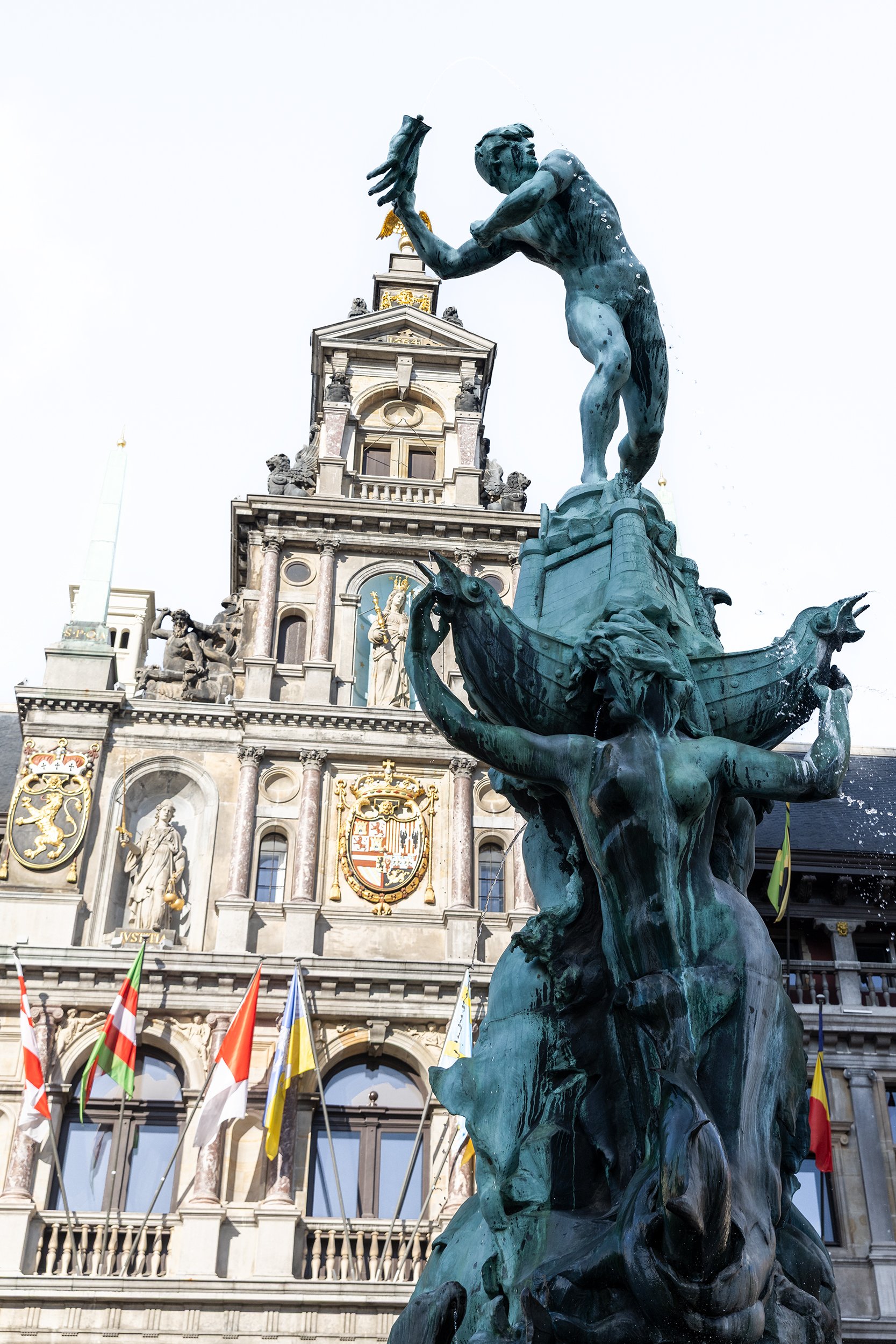
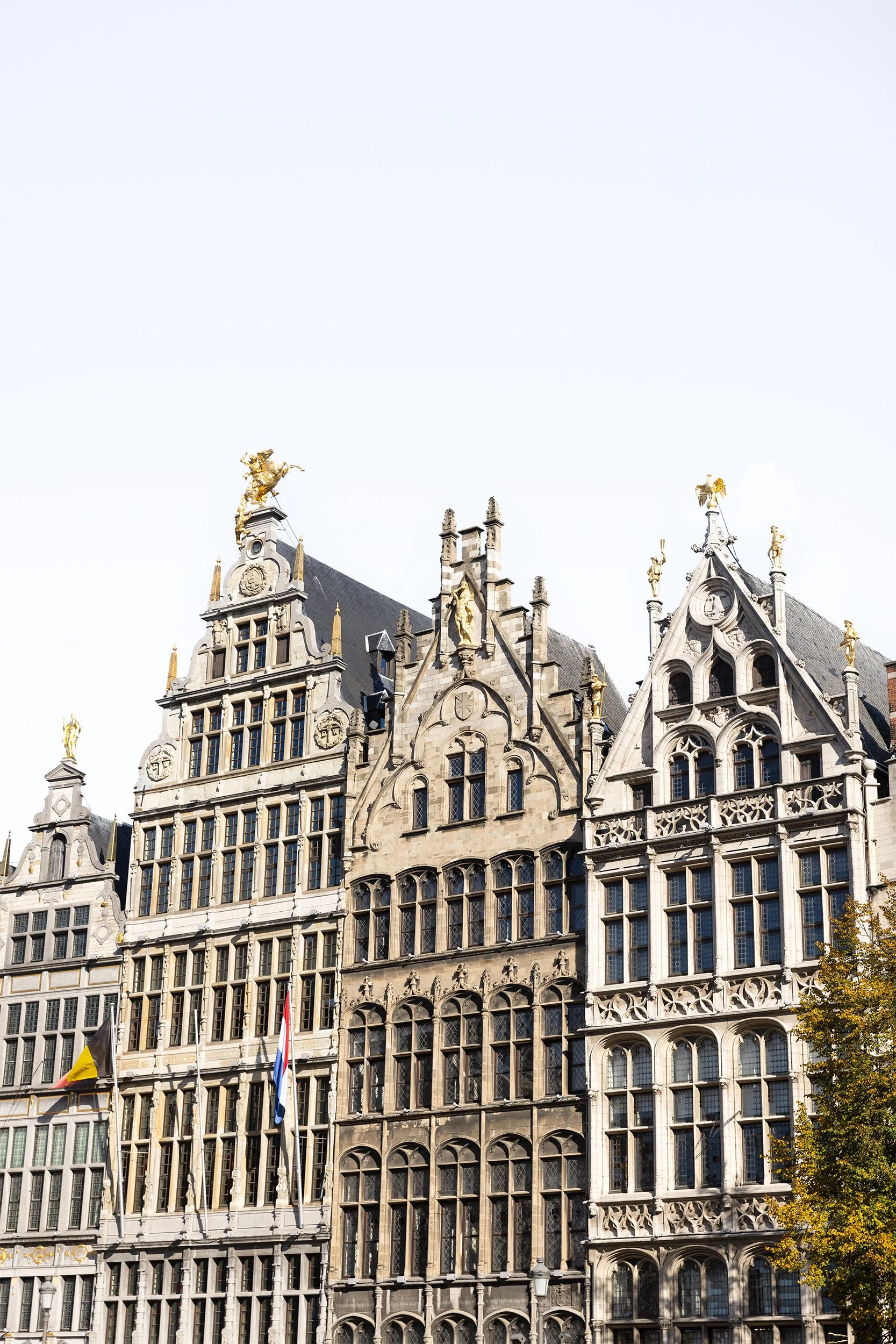
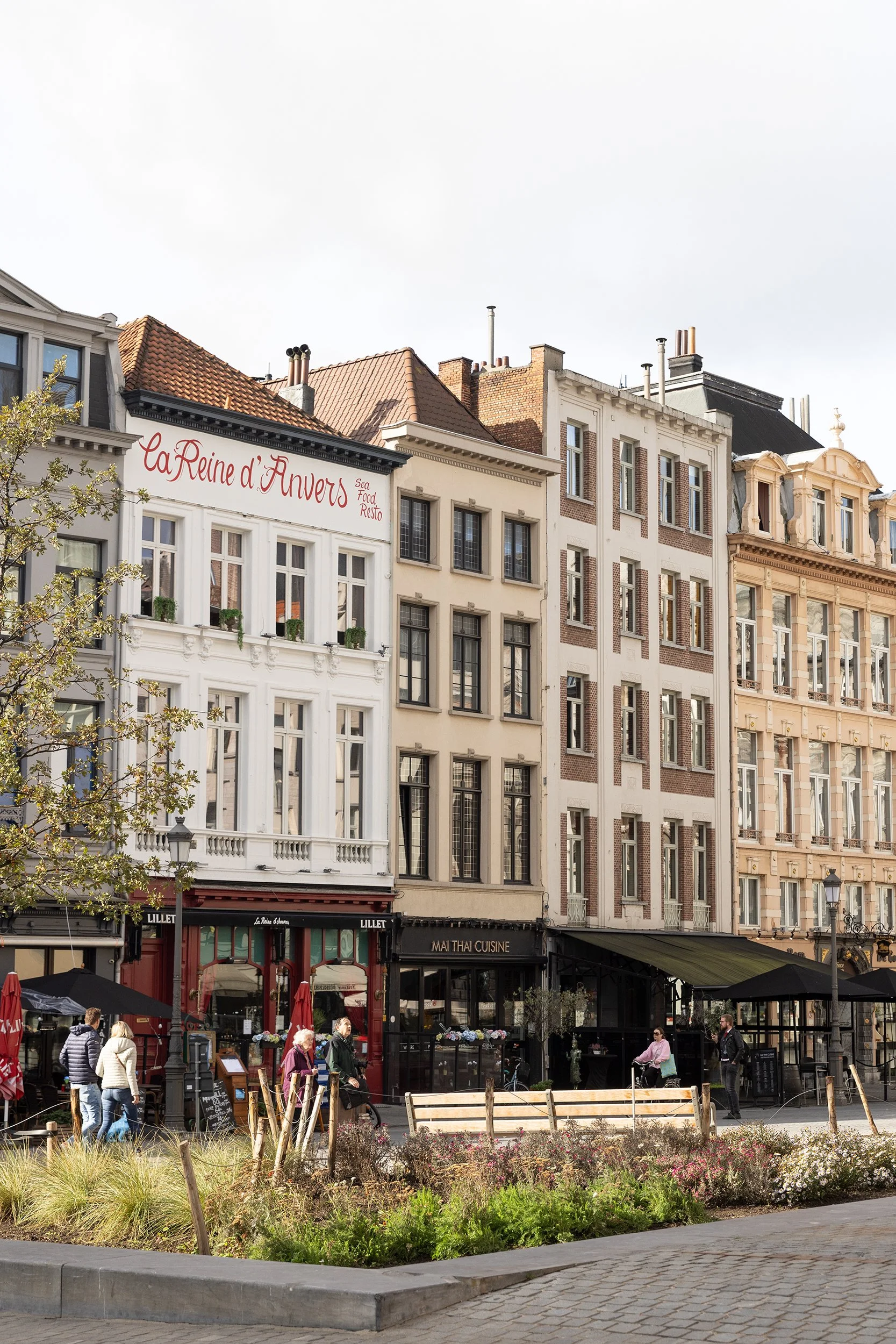
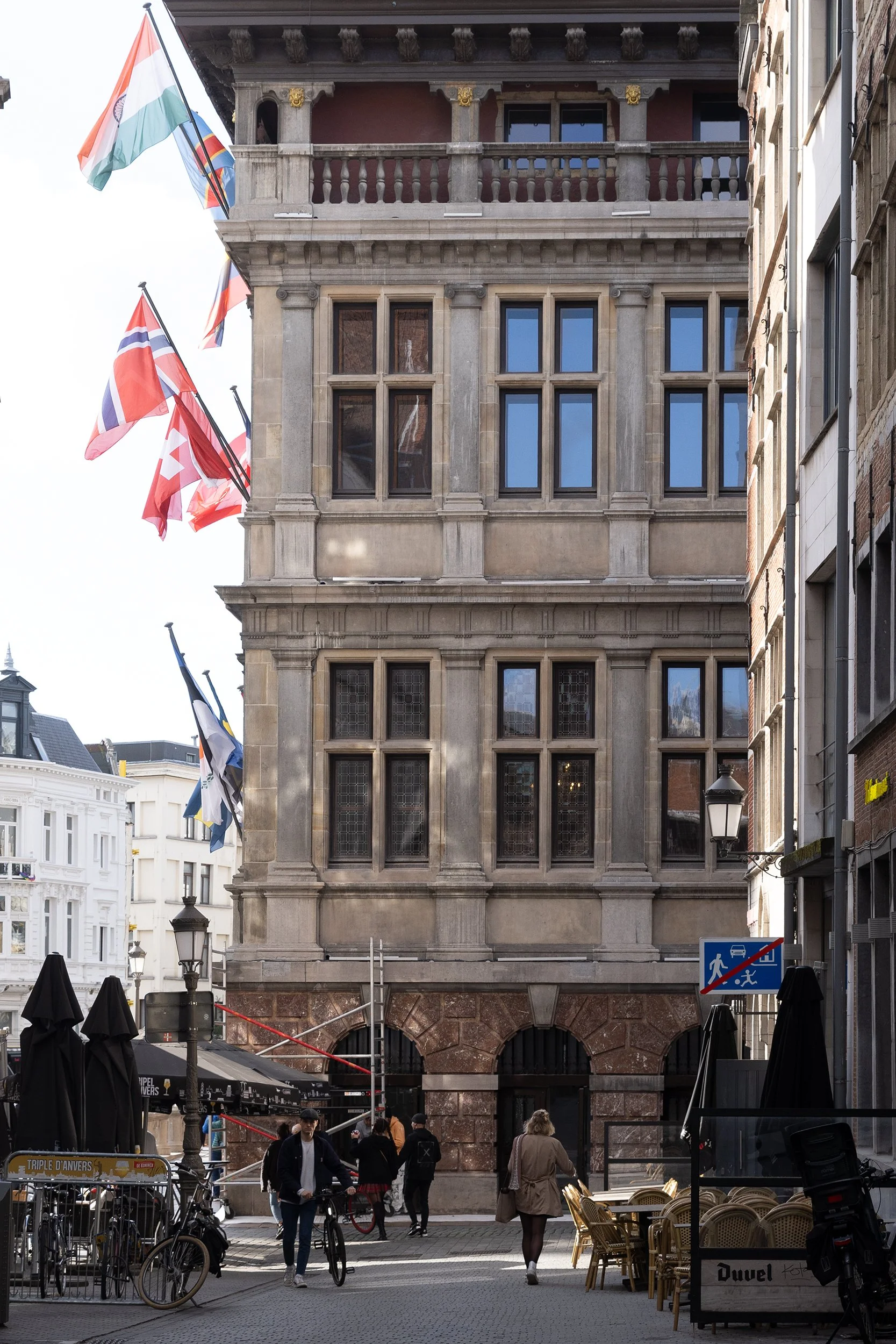
1. Lieve Vrouwe Toren (Cathedral of Our Lady) | 2. Grote Markt | 3. Brabo Fountain with Stadhuis (Antwerp City Hall) in the background | 4. Grote Markt with the guildhalls of Gildehuis der Kuipers (Coopers' House, No. 5); Huis van de Schutters (Archer's House, No. 7); Huis De Spieghel (The Mirror, No. 9), the house of an archers' guild; Huis van de Kruideniers (Grocers' House, No. 11)
The Grote Markt is Antwerp's central square and the heart of the old city. At its center stands the Brabo Fountain, depicting the legendary Roman soldier Silvius Brabo hurling the severed hand of a giant into the Scheldt River - a tale some say inspired the city's name. The square is ringed by 16th and 17th-century guildhalls with elaborately gabled facades covered in so much gold leaf that the entire Markt seems to shimmer in the sunlight. Each building once belonged to one of the city's powerful trade guilds - coopers, crossbowmen, haberdashers.
The western side is dominated by the Renaissance City Hall, completed in 1565, with its distinctive bands of white stone and red brick. The cobblestone square is lined with café terraces where you can sit with a Belgian beer and watch street performers entertain the crowds. In the evening, when the buildings are lit up, the Grote Markt reveals why Antwerp was once one of Europe's wealthiest cities.
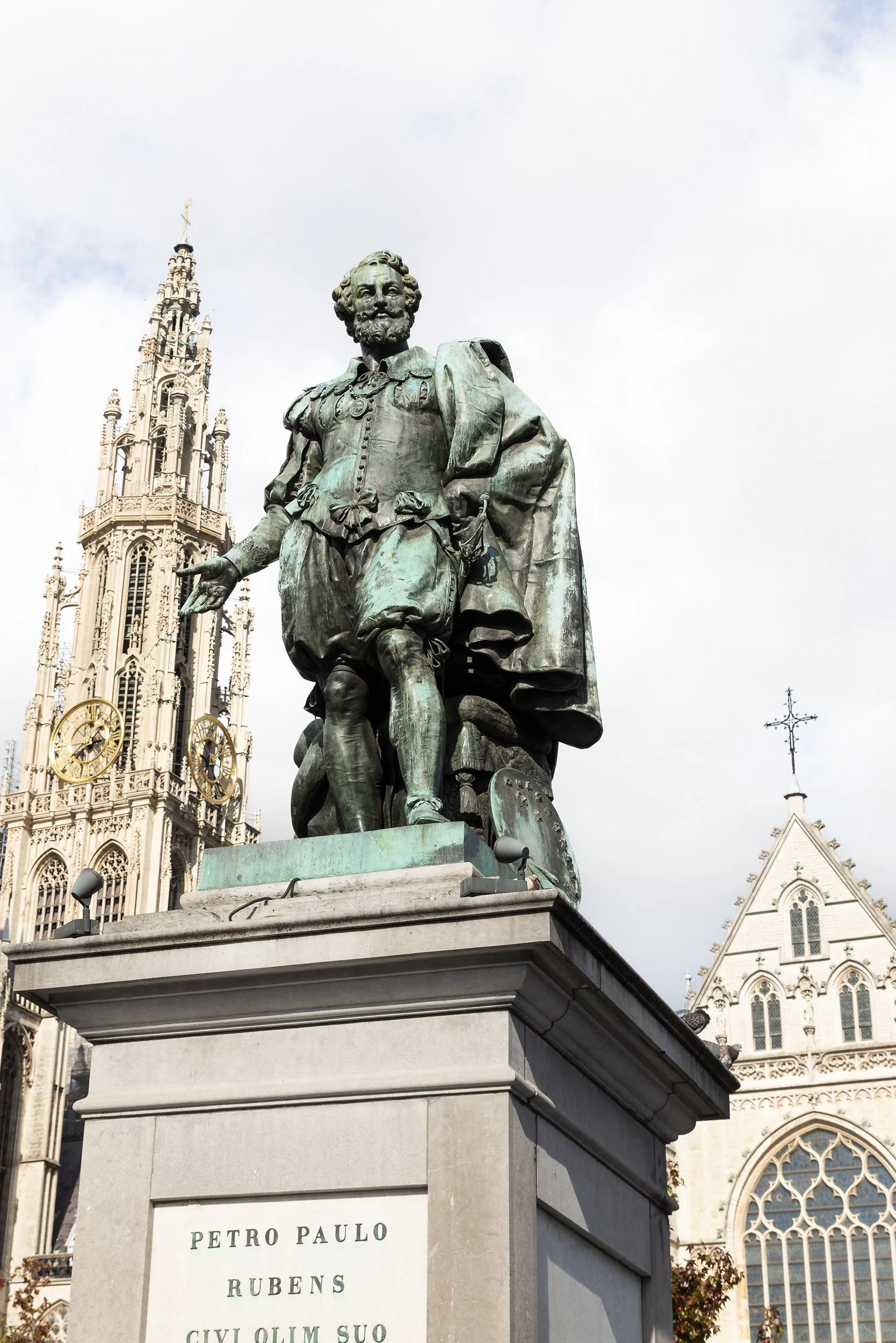
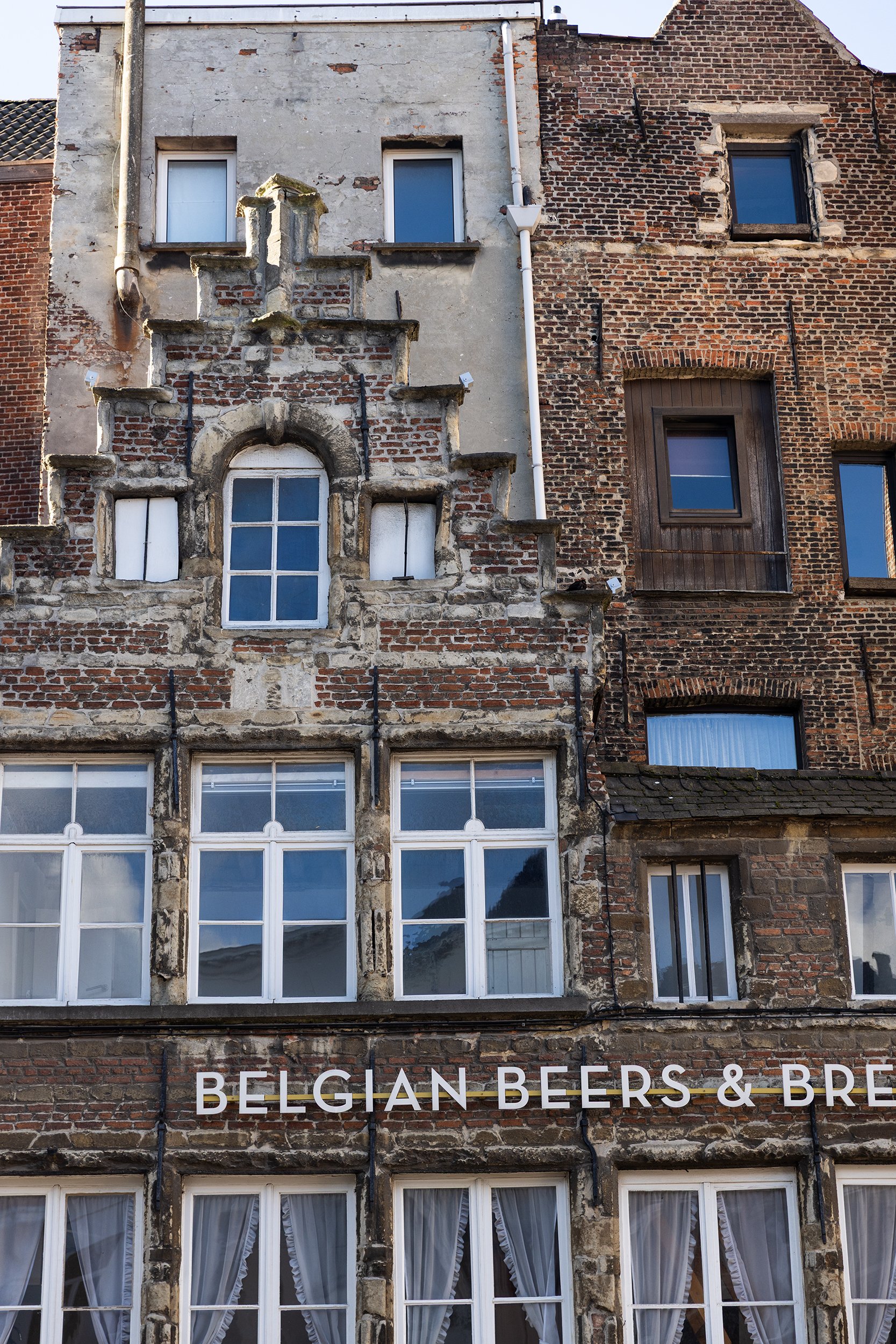
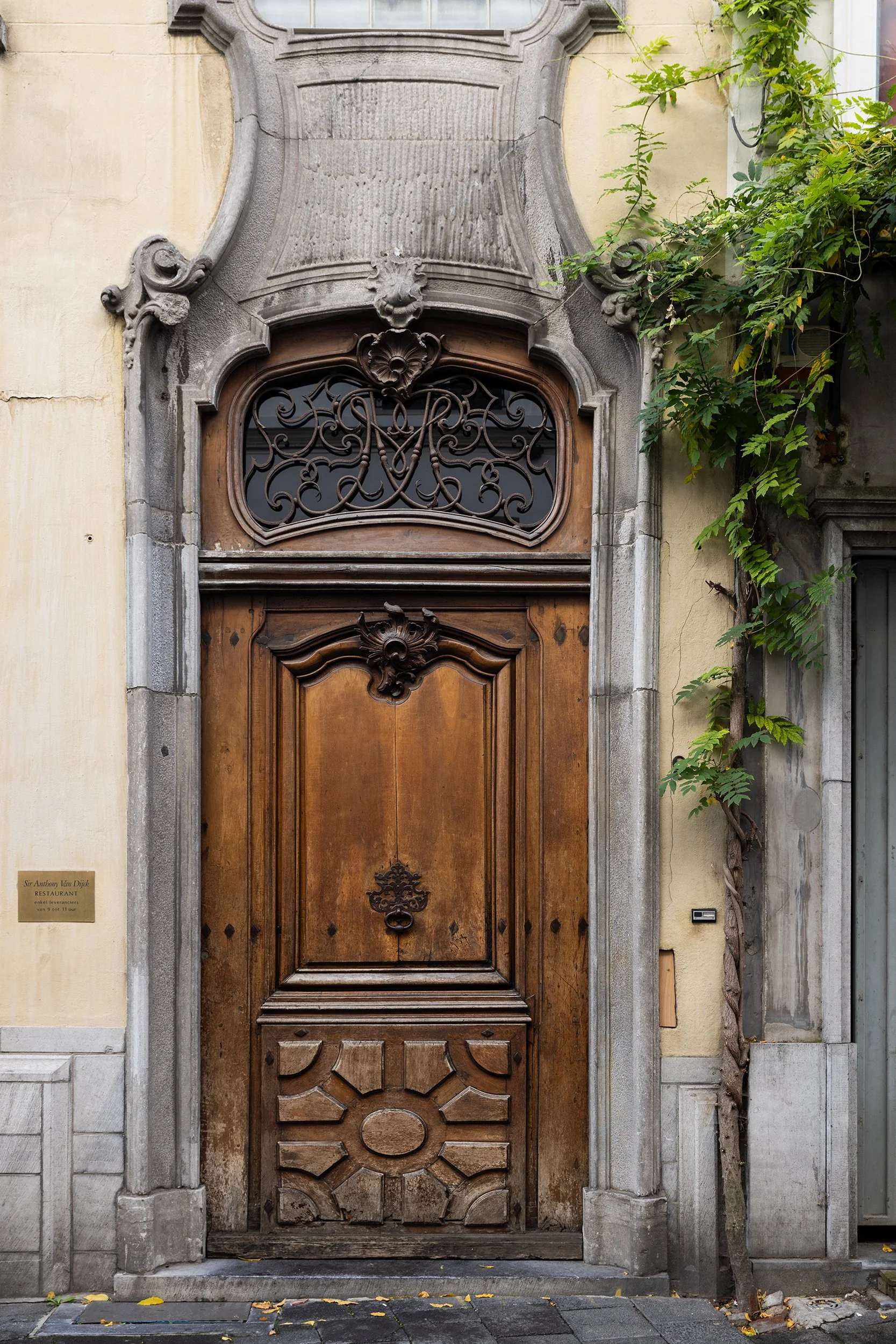
1. Standbeeld Pieter Paul Rubens at Groenplaats | 2. Abbey No 8 Belgian Beers & Brews at Handschoenmarkt 8 | 3. Suikerrui | 4. Service doorway of Sir Anthony Van Dijck restaurant on Hoogstraat
Antwerp rewards those who wander off the main thoroughfares and peer through unassuming doorways. Throughout the old city, narrow passageways open onto hidden courtyards - quiet, cobblestoned spaces surrounded by centuries-old buildings where ivy climbs brick walls, and potted plants soften the edges. These hofjes, originally built as almshouses for the poor or retired guild members, now serve as peaceful residential enclaves tucked away from the bustle of the shopping streets. Some are still semi-public, accessible through heavy wooden doors left ajar during the day, offering a glimpse into a more intimate side of the city that most visitors never see.
It's in these secluded corners that Antwerp feels less like a diamond trading hub and more like a collection of small villages stitched together over time. The contrast with the gilded opulence of the Grote Markt couldn't be more striking. Where the square announces wealth and power through its shimmering gilded grand facades, these courtyards whisper a different story - one of modest communal living and quiet charity.
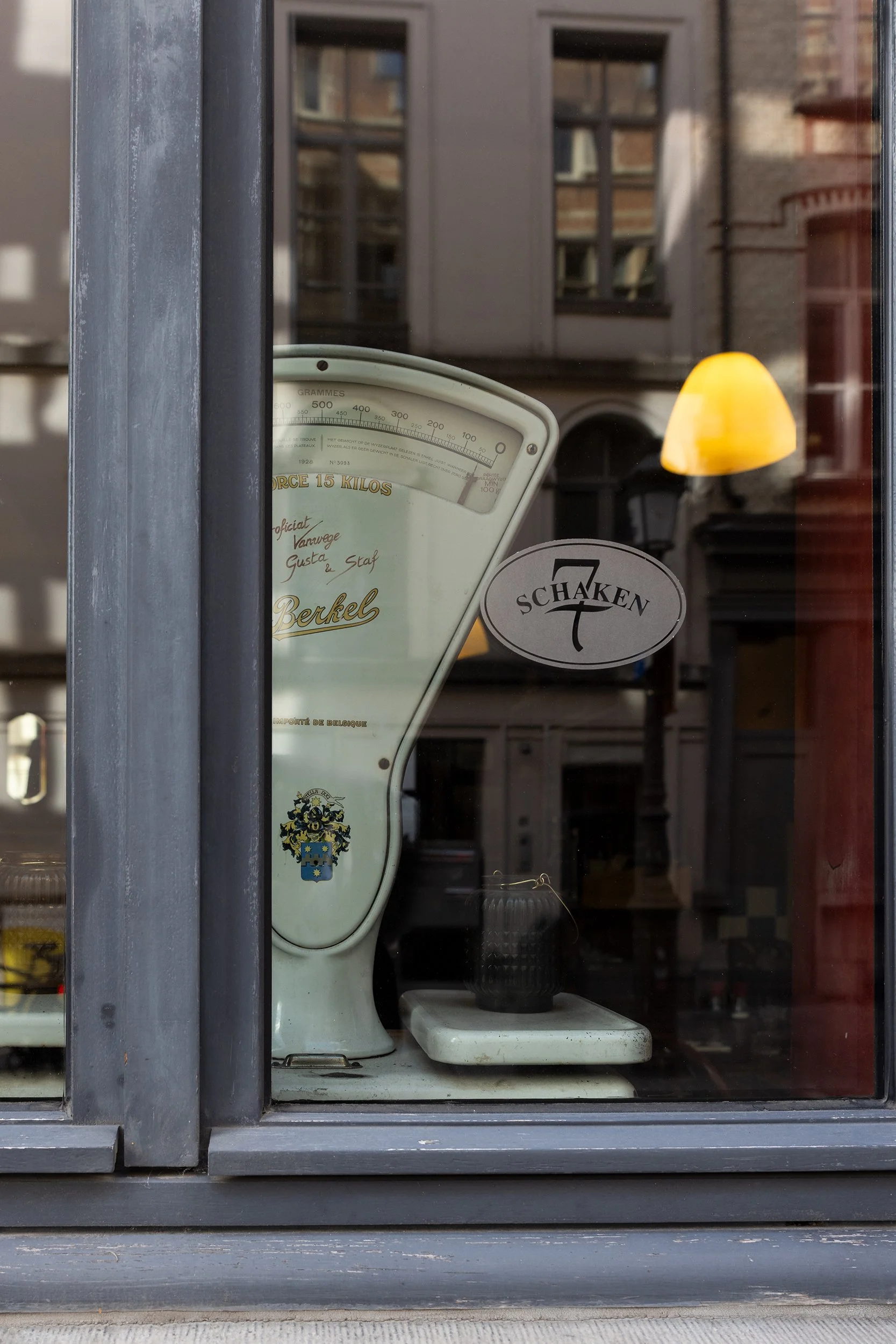
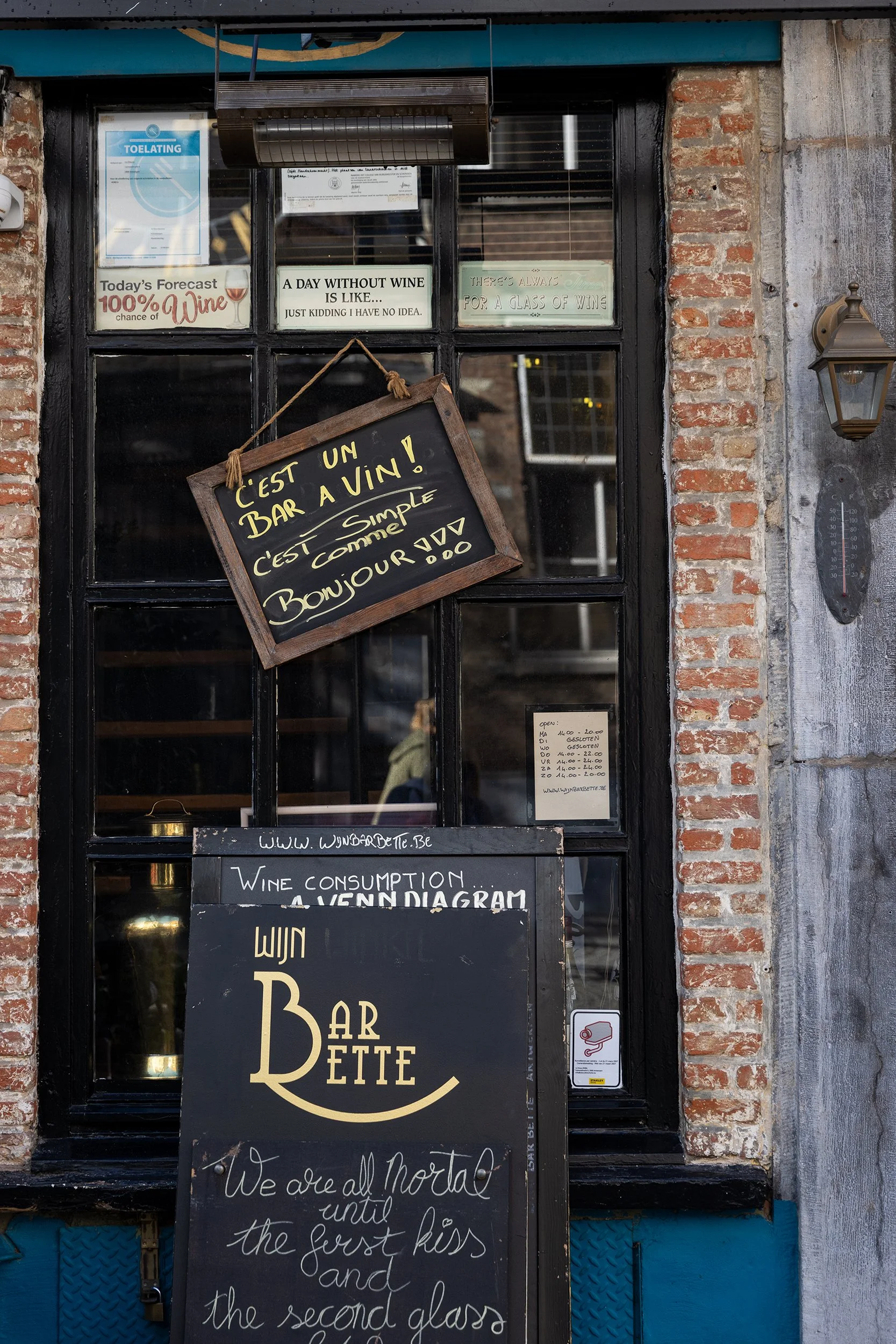
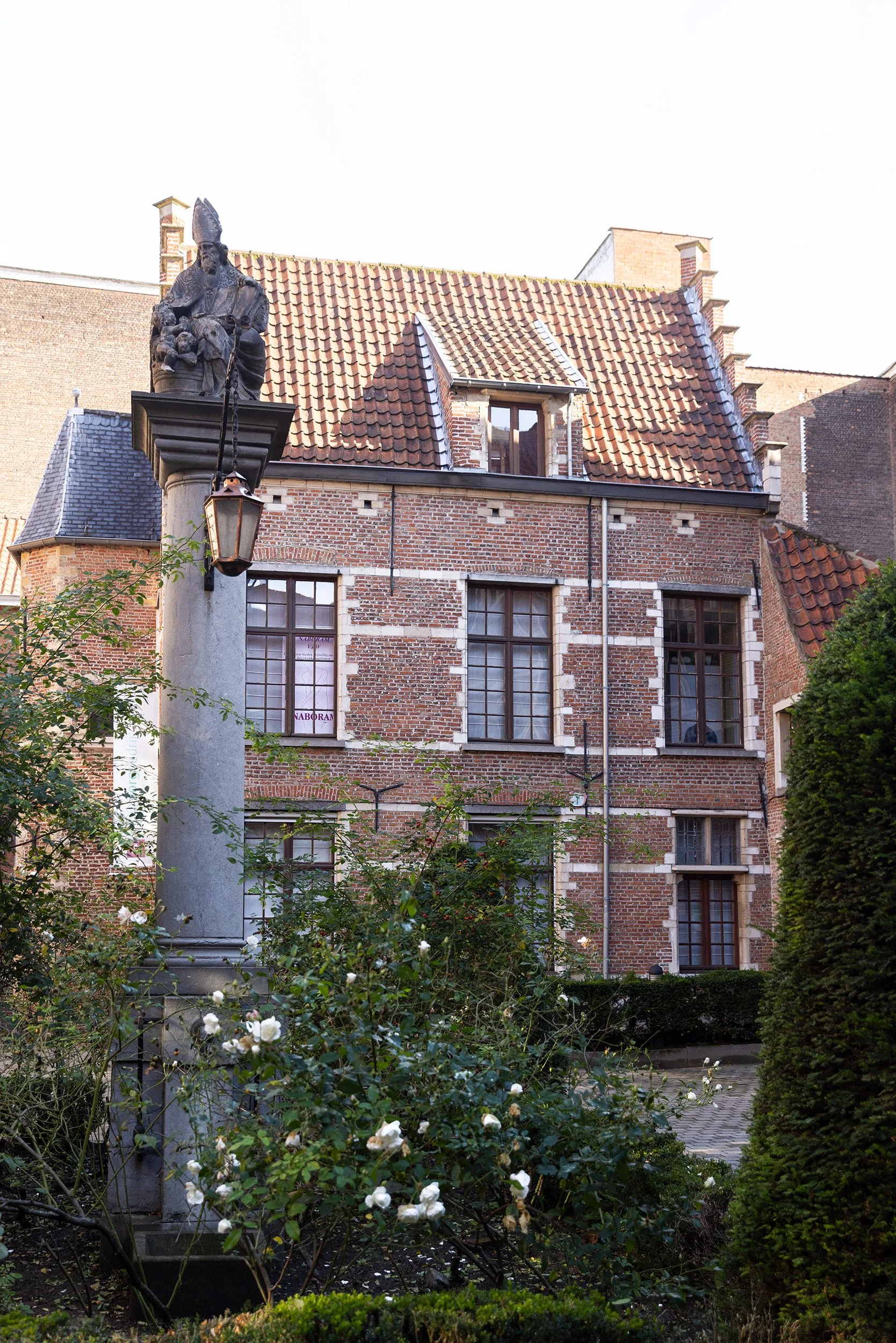
1. Braderijstraat, just off of the Grote Markt | 2. Window of Restaurant De 7 Schaken at Braderijstraat 24 | 3. Wijn Bar Bette at Lijnwaadmarkt 6 | 4. Sint-Niklaas Godshuis at Lange Nieuwstraat and Sint-Nicolaasplaats
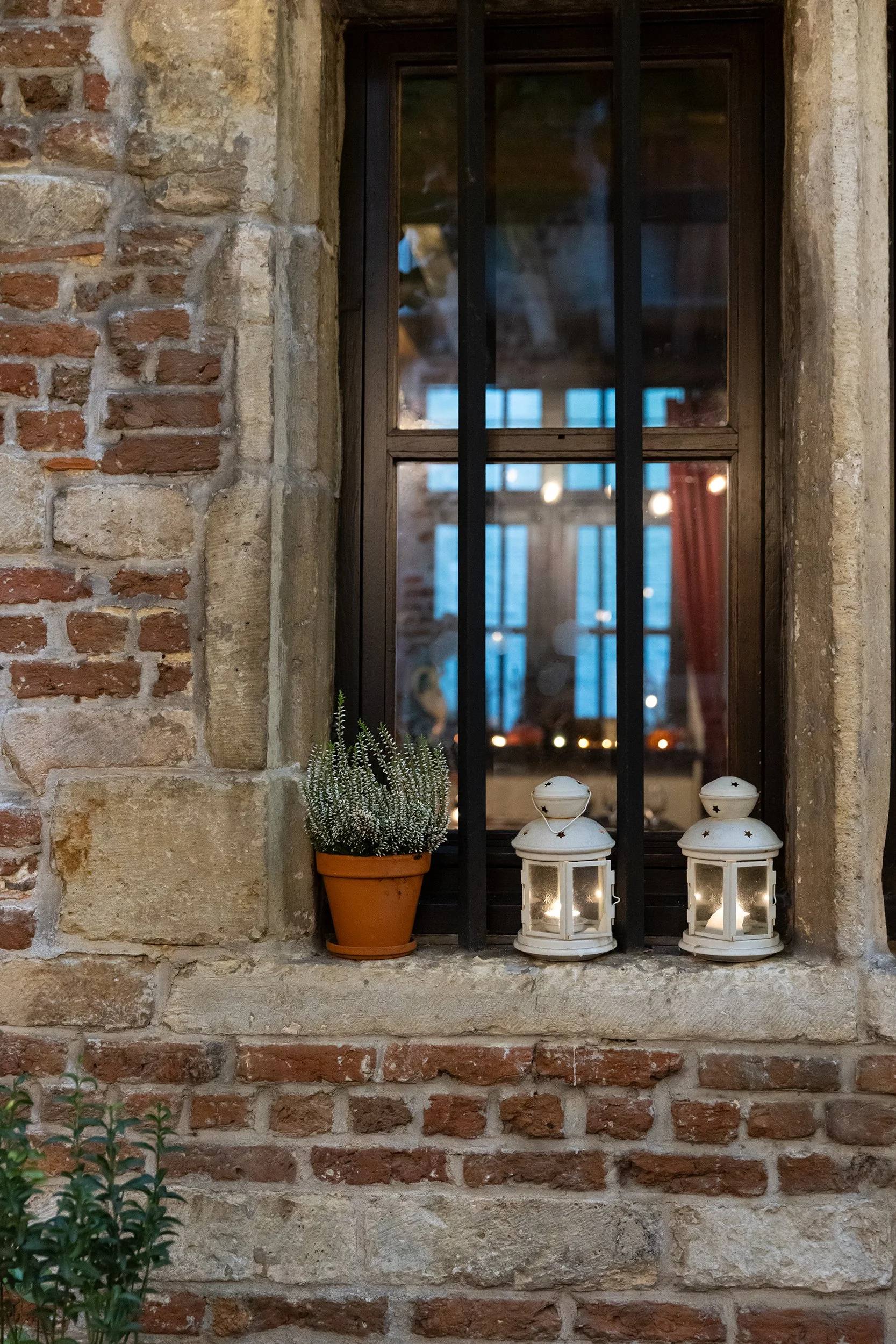
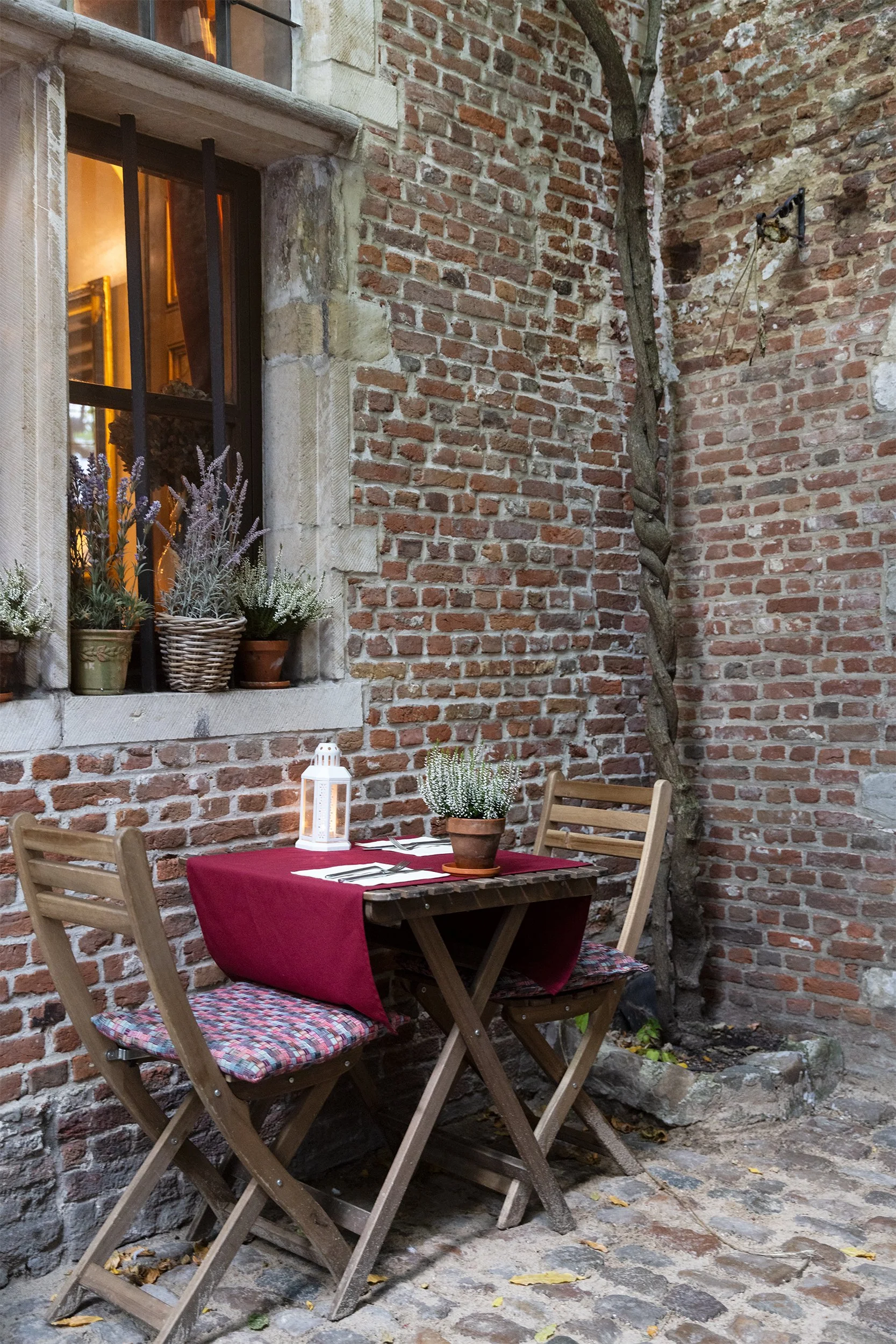

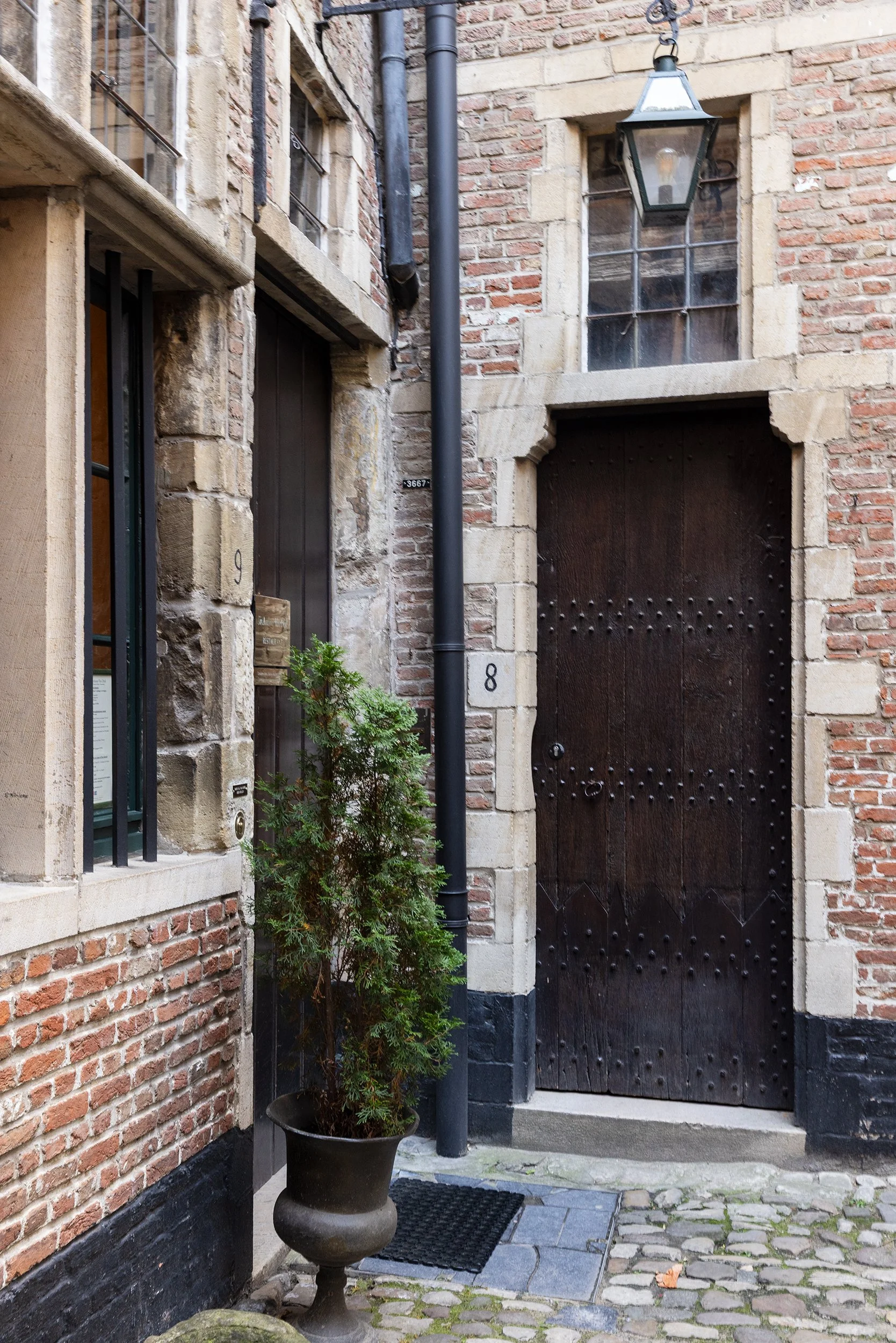
1. Window of Bistro ’t Hofke | 2. Courtyard dining at Bistro ’t Hofke | 3. Another courtyard at Bistro ’t Hofke | 4. Vlaeykensgang, one of Antwerp's hidden alleys
It was while exploring these small courtyards that we happened upon a cute bistro hidden down an old alley, right in the middle of the city but away from the crowds and noise, with its own charming outdoor courtyard where diners sat beneath trees draped with cafe lights. The kind of unpretentious spot where the menu focuses on well-executed Belgian classics rather than trying to impress tourists. Unable to secure a table without a reservation, we extended our time in Antwerp in order to return the following day for lunch. We spent several nights in Antwerp and found the food to be the best (and worst) we encountered on our Belgium trip. While our first evening was a dinner of convenience near our hotel at a horrible touristy pub, the dining scene near the Markt felt more adventurous and less touristy than Brussels or Bruges, with inventive cuisine, excellent North Sea seafood, and a surprising international diversity reflecting the city's port heritage. The quality was consistently impressive - perhaps because Antwerp, drawing fewer tourists, still caters primarily to discerning locals.
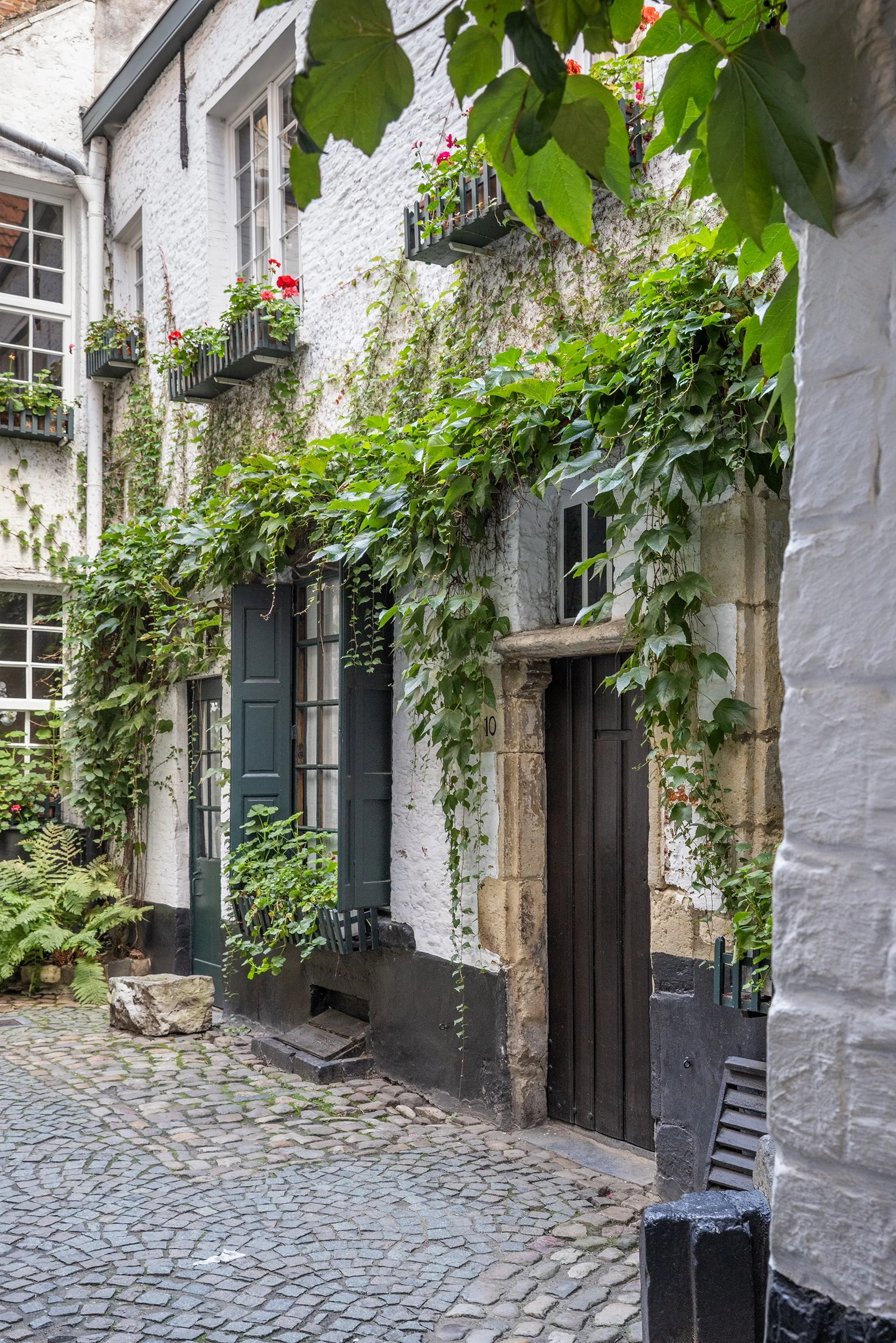
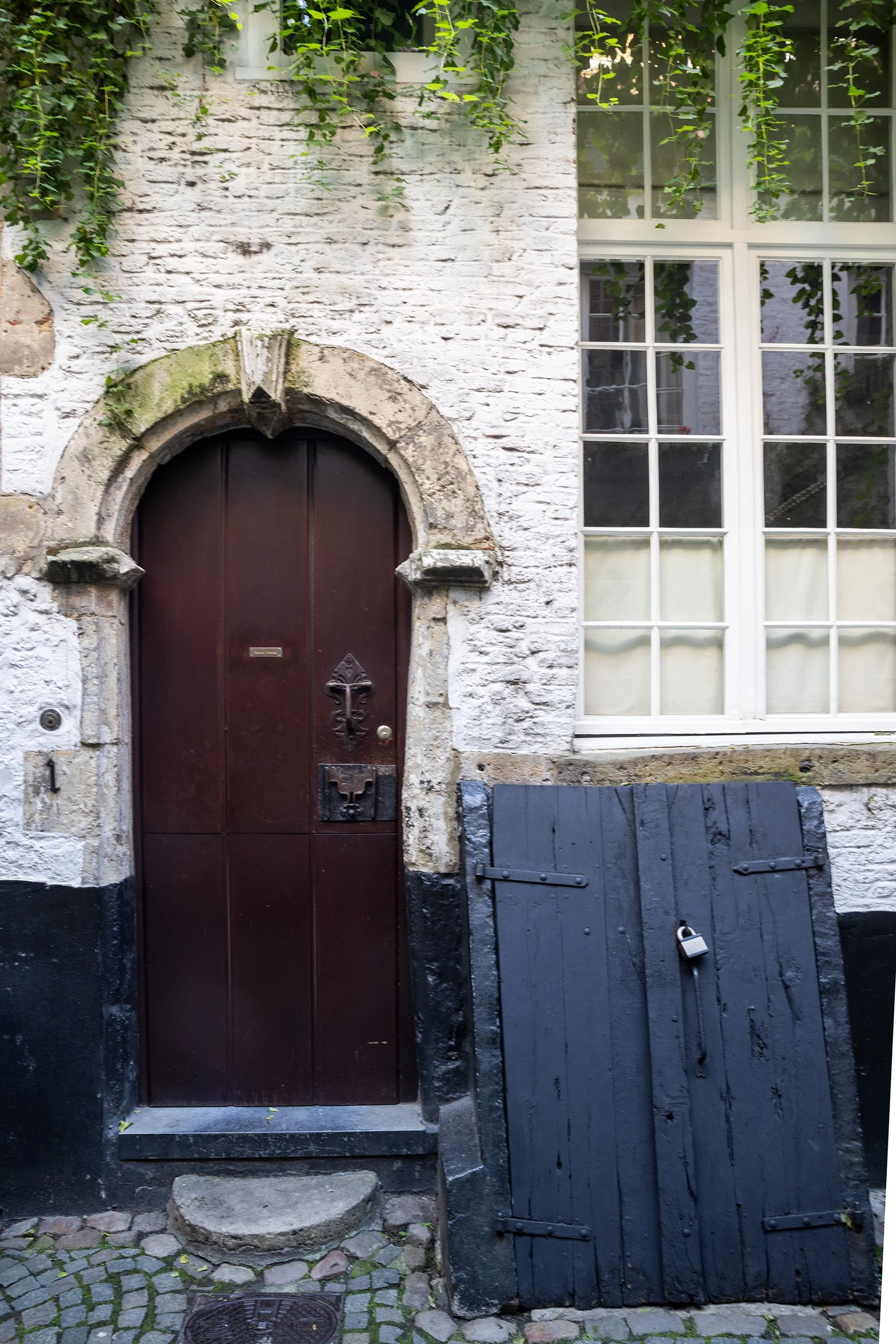
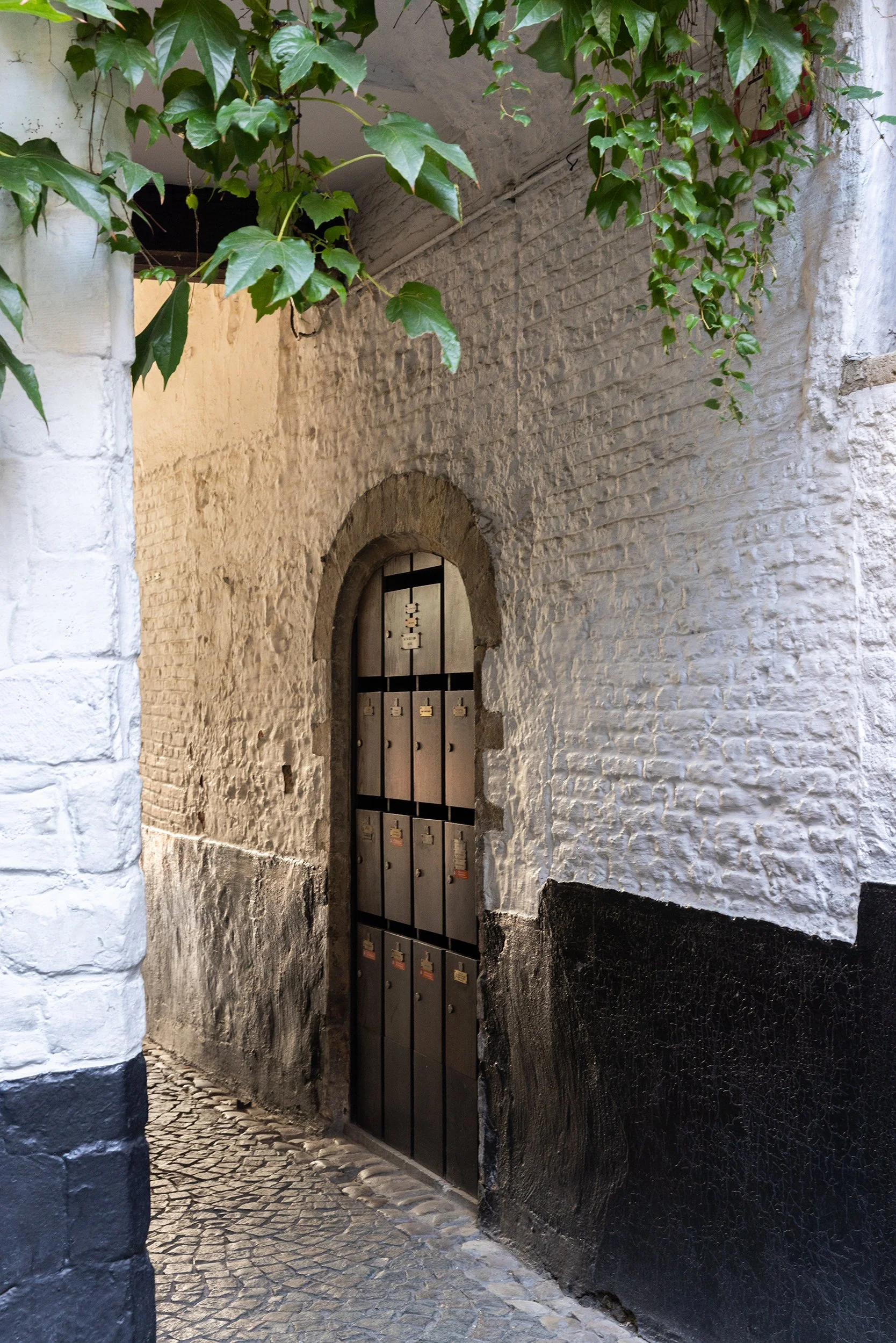
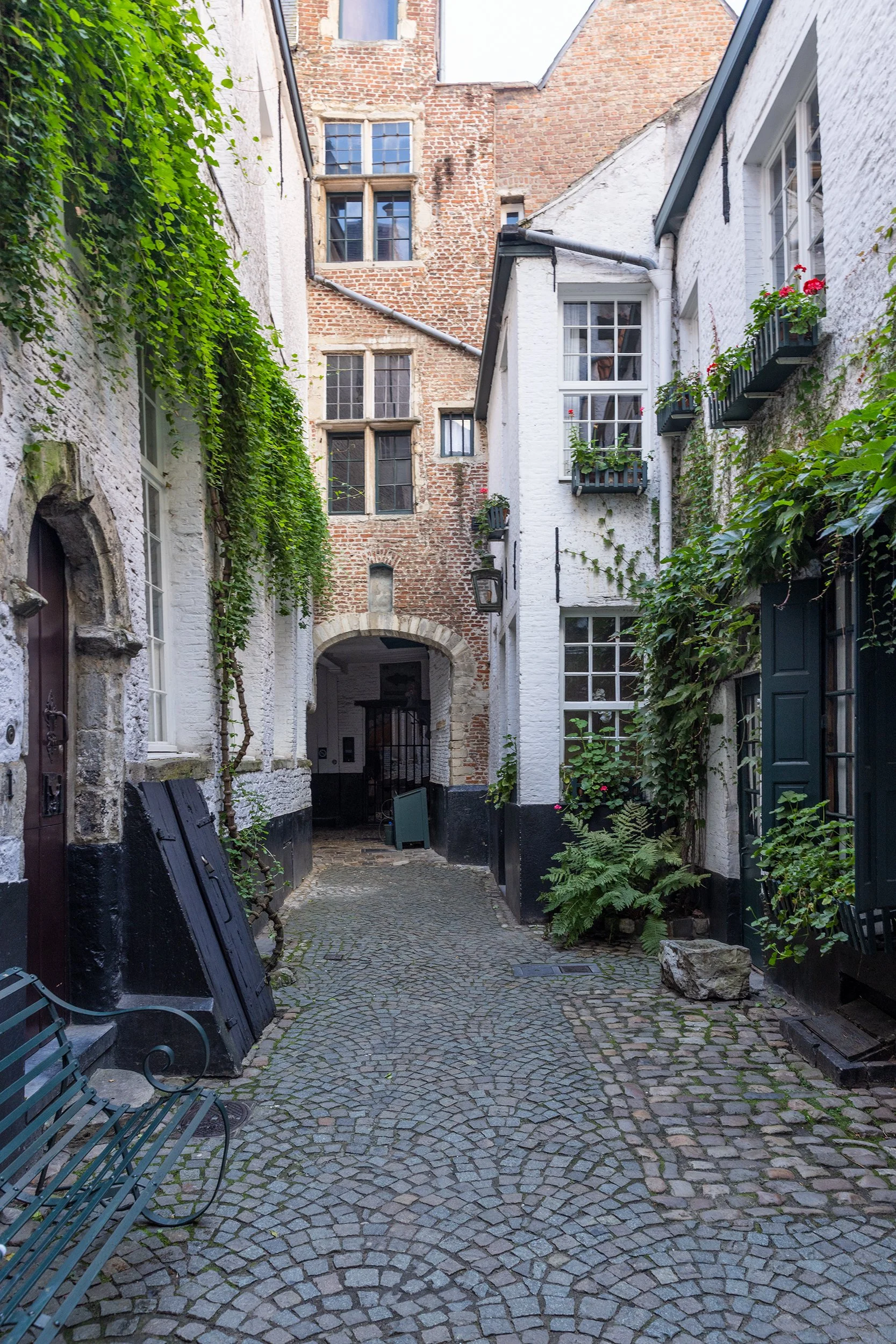
Vlaeykensgang is a hidden maze of narrow medieval passageways and courtyards tucked between buildings in central Antwerp, where visitors wind through charming alleyways lined with ivy-covered facades that feel worlds away from the bustling streets just steps outside
OLD ANTWERP SITES
BRABOFONTEIN (BRABO FOUNTAIN)
The Brabo Fountain depicts the legend behind Antwerp's name: a giant named Druon Antigoon once controlled the bridge, severing the hands of travelers who refused his toll and throwing them into the river. The hero Silvius Brabo defeated him, cut off the giant's hand, and hurled it into the water. In Dutch, 'hand werpen' (hand throw) supposedly became 'Antwerpen.'
Location: Grote Markt
GILDEHUIZEN (GUILD HOUSES)
The Guild Houses (or Guildhalls) lining the Grote Markt showcase Antwerp's mercantile past through their ornate Baroque facades. These buildings, most rebuilt or restored in the 1800s, once served as headquarters for the city's powerful trade guilds during its Golden Age. The Guildhalls exemplify Baroque architecture - grand in scale and rich in decorative detail. Look for intricate sculptures, gilding, and elaborate stonework - each facade tells a story of the craftsmen and merchants who commissioned them.
Location: Grote Markt
GROTE MARKT
Antwerp's Grote Markt is where the city shows off. Renaissance guildhalls line two sides of the square. The imposing City Hall anchors another edge, while the Brabo Fountain commands the center. Like most great European squares, it's both a tourist draw and a genuine gathering spot for locals.
Location: Grote Markt
ONZE-LIEVE-VROUWEKATHEDRAAL (CATHEDRAL OF OUR LADY)
Antwerp's Cathedral of Our Lady combines Gothic grandeur with world-class art. Two enormous Rubens triptychs dominate the collection, particularly The Elevation of the Cross. Smaller chapels branch off the main space, their stained glass creating dramatic plays of light on sunny afternoons. The cathedral takes a modern approach with De Plek, an on-site bistro-bar offering Belgian brews.
Location: Groenplaats 21
QUINTEN MATSIJS WELL (FOUNTAIN OF QUENTIN MASSYS)
Created by Flemish artist and blacksmith Quentin Massys, the fountain features intricate wrought-iron details. The statue crowning the top illustrates the legend of Silvius Brabo vanquishing the giant Druon Antigoon.
Location: Handschoenmarkt square
SINT-NIKLAAS GODSHUIS (SINT-NIKLAAS ALMSHOUSE)
The Sint-Niklaas Almshouse, also known as the Sint-Elisabeth Beguinage, is one of Flanders' oldest beguinages. Dating to the 13th century with 17th-century modifications, it features typical Antwerp architecture surrounding a tranquil courtyard. Now a protected monument, it serves as a residential complex for seniors managed by the Sisters of the Sacred Heart.
Location: Lange Nieuwstraat and Sint-Nicolaasplaats
VLAEYKENSGANG
One of Antwerp's oldest alleys, Vlaeykensgang, once housed shoemakers tasked with ringing the Cathedral's alarm bell alongside some of the city's poorest residents, but this tiny street has transformed into a tranquil enclave.
Location: Vlaeykensgang
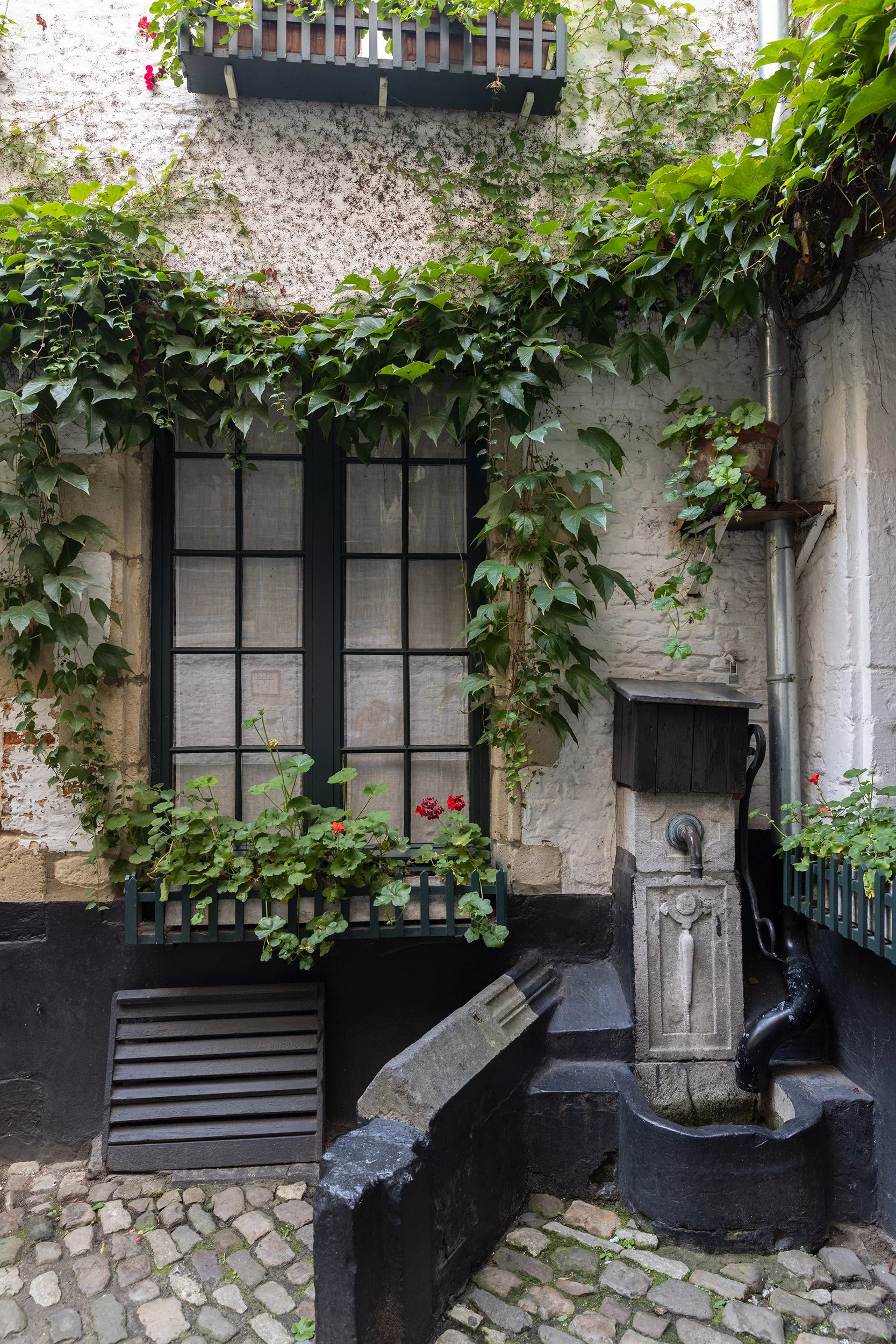
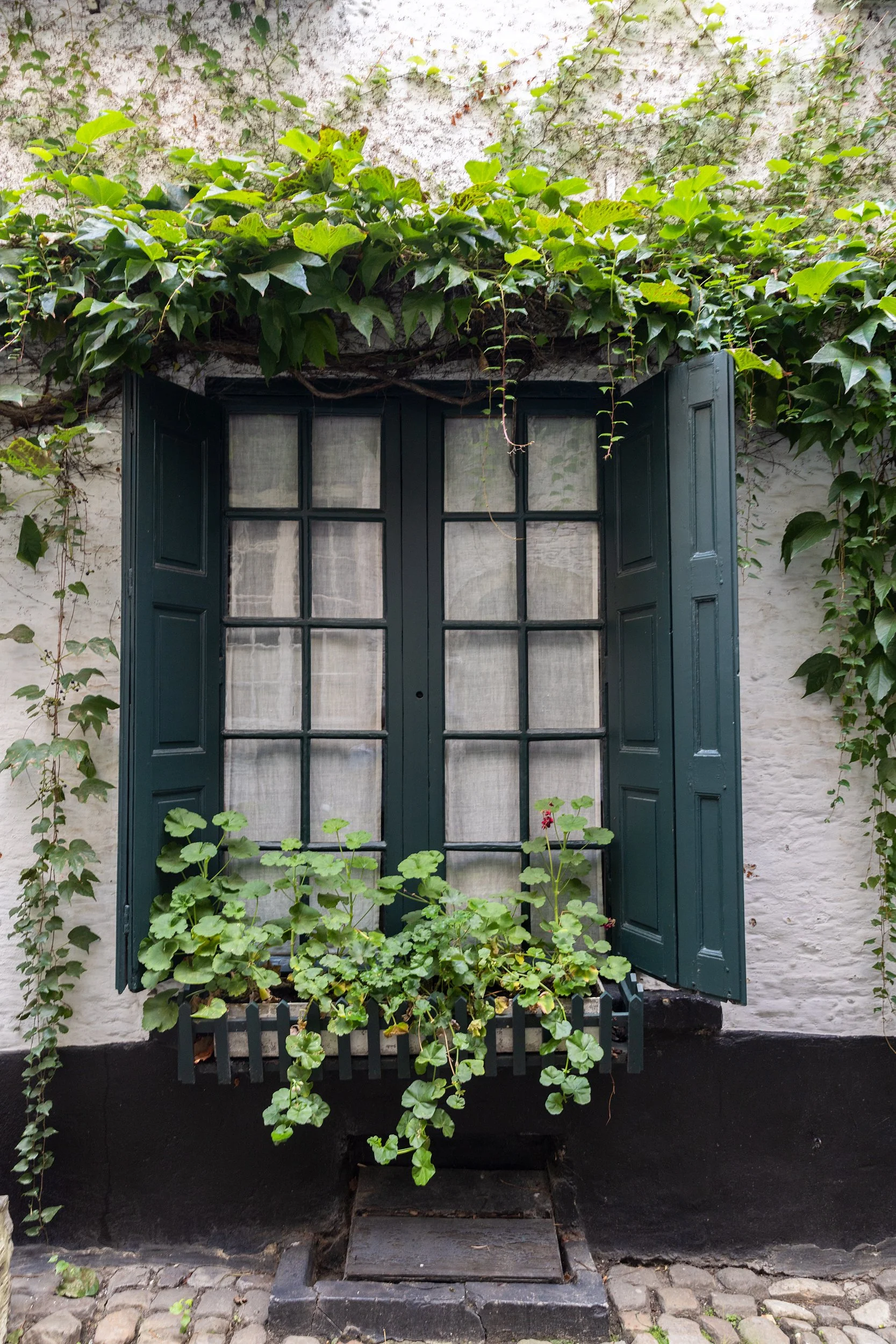
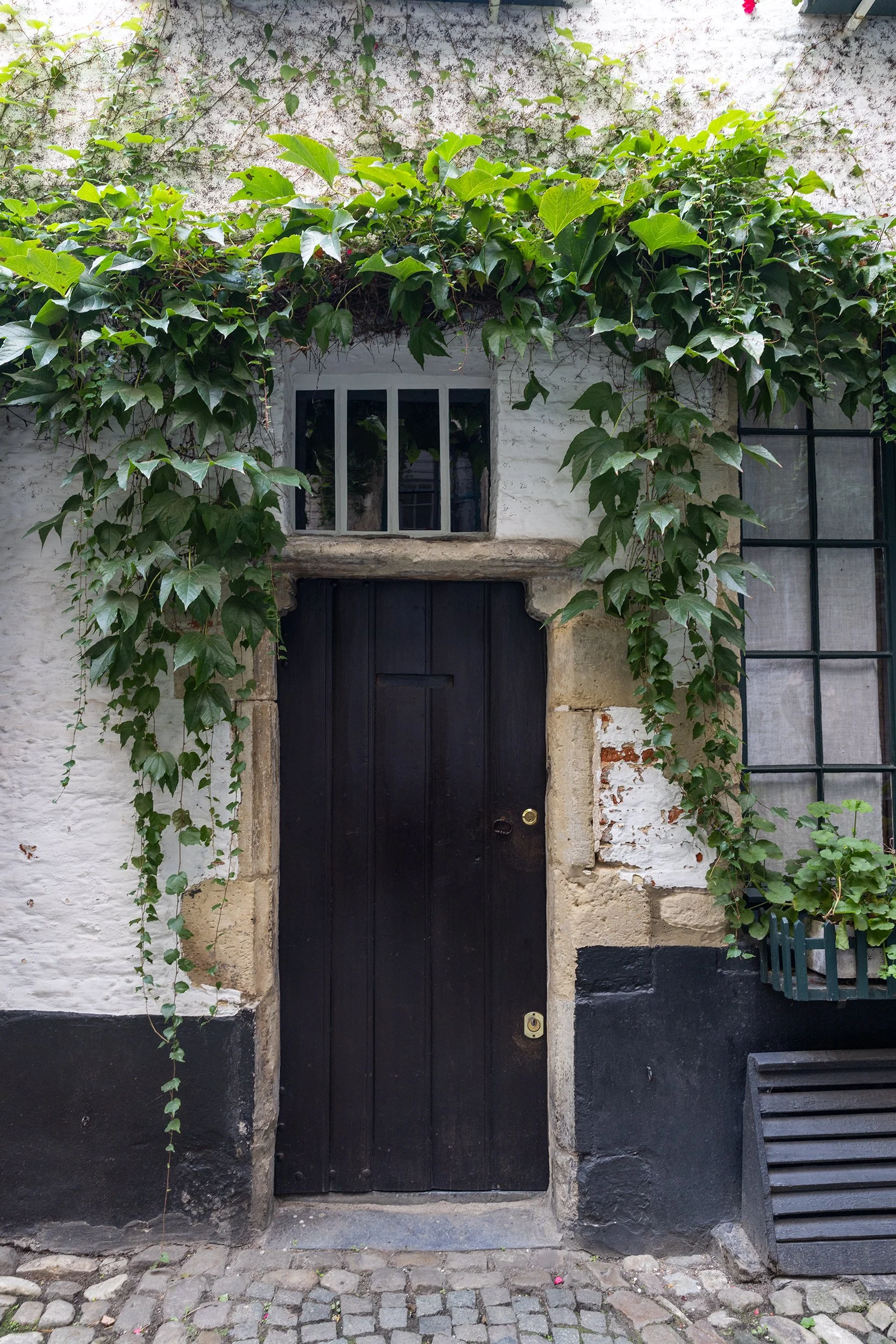
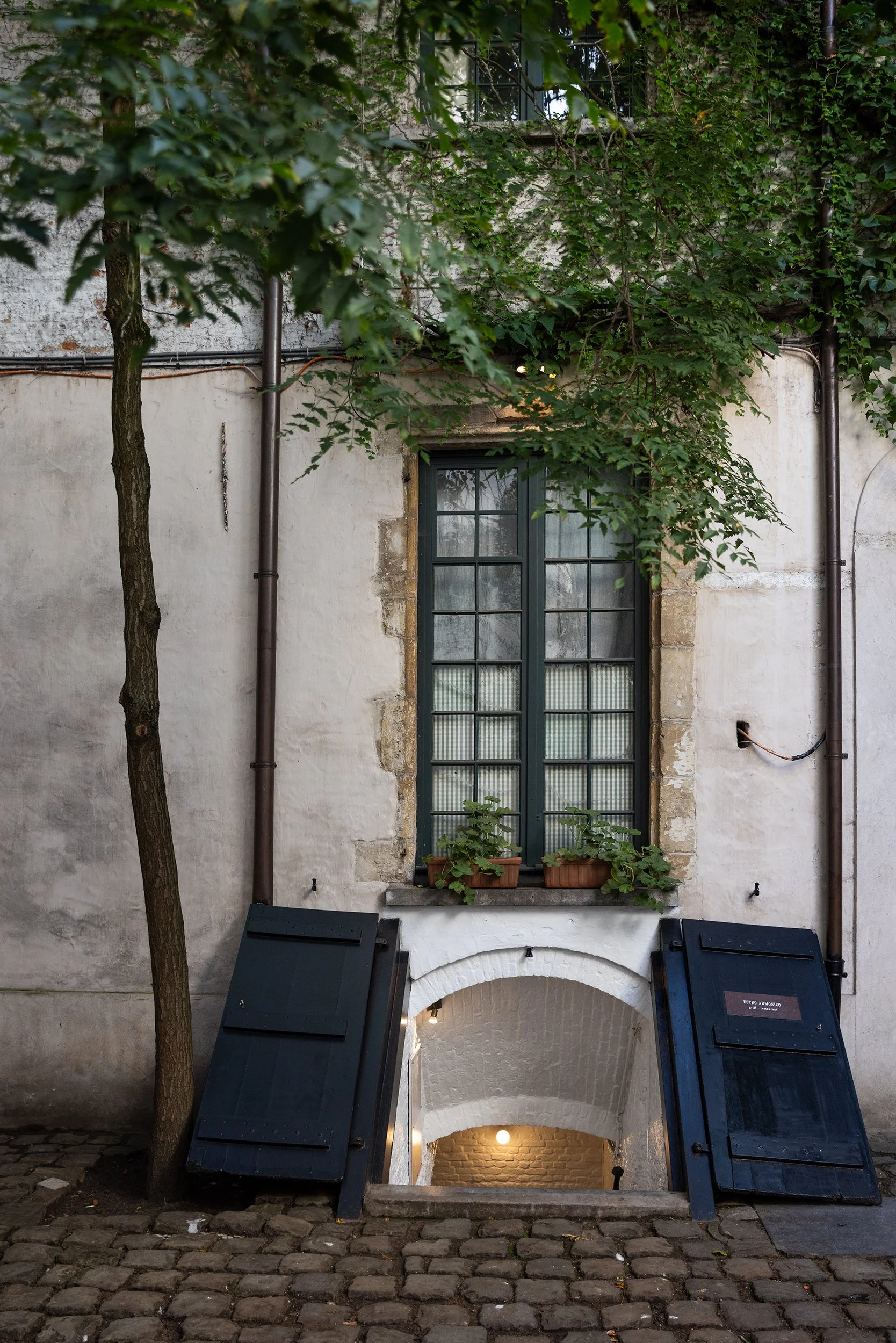
1., 2., 3. Vlaeykensgang was so charming, with lots of photos begging to be taken | 4. The entrance to Estro Armonico restaurant, located in a cellar at Vlaeykensgang
PLANNING YOUR VISIT
DINING
Bierhaus Kulminator
This under-the-radar bar offers hundreds of Belgian beers, but entry requires ringing the bell and speaking the password "I am here to taste beer" to the elderly proprietors, who guard access to the quiet, intimate space filled with board games and quirky décor - cuckoo clocks, piggy banks, and wreaths made from bottle caps and corks nestle among the many boxes covering the small space, creating a purist's haven for serious beer appreciation.
Location: Vleminckveld 32
Estro Armonico
French cuisine. Diners descend into a charming whitewashed cellar to experience flame-grilled meats like beef steaks and lamb cooked on an open fireplace.
Location: Oude Koornmarkt 16
Sir Anthony Van Dijck
Occupying a stunning building on the historic Vlaeykensgang, the restaurant has earned its reputation for authentic, seasonally-focused cuisine in a romantic setting.
Location: Oude Koornmarkt 16
’t Hofke
Located down Vlaeykensgang, Antwerp's oldest alley near the Cathedral, Bistro 't Hofke occupies a tranquil courtyard that feels worlds away from the crowds and noise of the surrounding city streets - a hideaway tucked right in the heart of the old town. With an open kitchen, you’ll be greeted by the owner, with dining inside a rustic and charming building, or choose to dine in their courtyard with twinkling café lights.
Location: Oude Koornmarkt 16
ACCOMMODATIONS
Hotel O Kathedral
A 33-room boutique hotel in Antwerp's historic center with modern design rooms inspired by Flemish painter Rubens Instagram, located directly across from the Cathedral of Our Lady on Handschoenmarkt Square.
Location:
Hotel Rubens - Grote Markt
4-star hotel situated less than a minute's walk from Antwerp's Market Square and Cathedral of Our Lady Moment By Hotel OHilton, featuring 36 individually decorated rooms.
Location:
Hotel 't Sandt
29-room boutique hotel housed in a restored 16th-century warehouse turned 17th-century Rococo mansion, located in Antwerp's historic center with an Italian-style courtyard
Location:
House of Franq
Luxurious boutique hotel housed in a former bank building in the heart of Antwerp, featuring the on-site Michelin-starred restaurant La Volta.
Location:

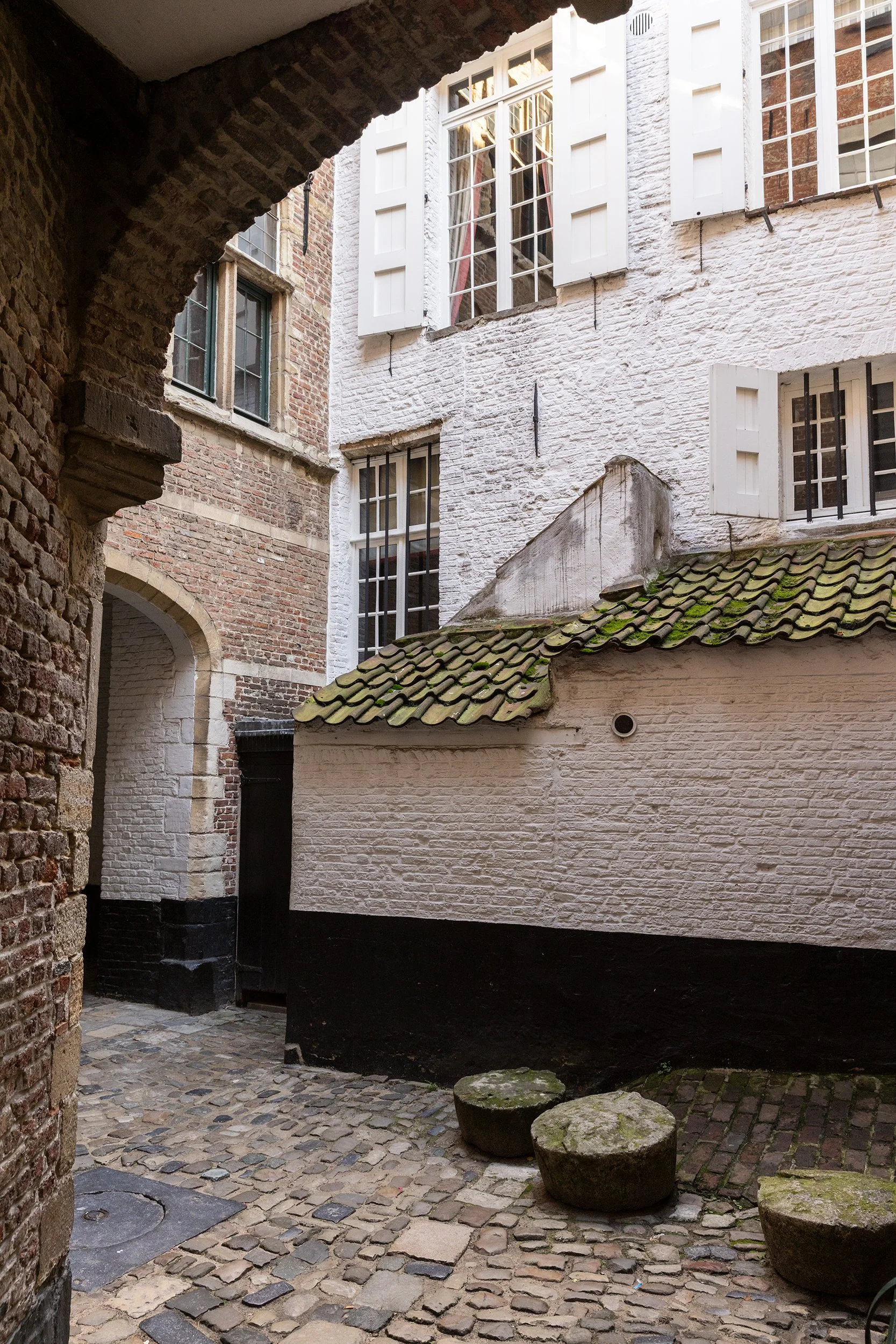
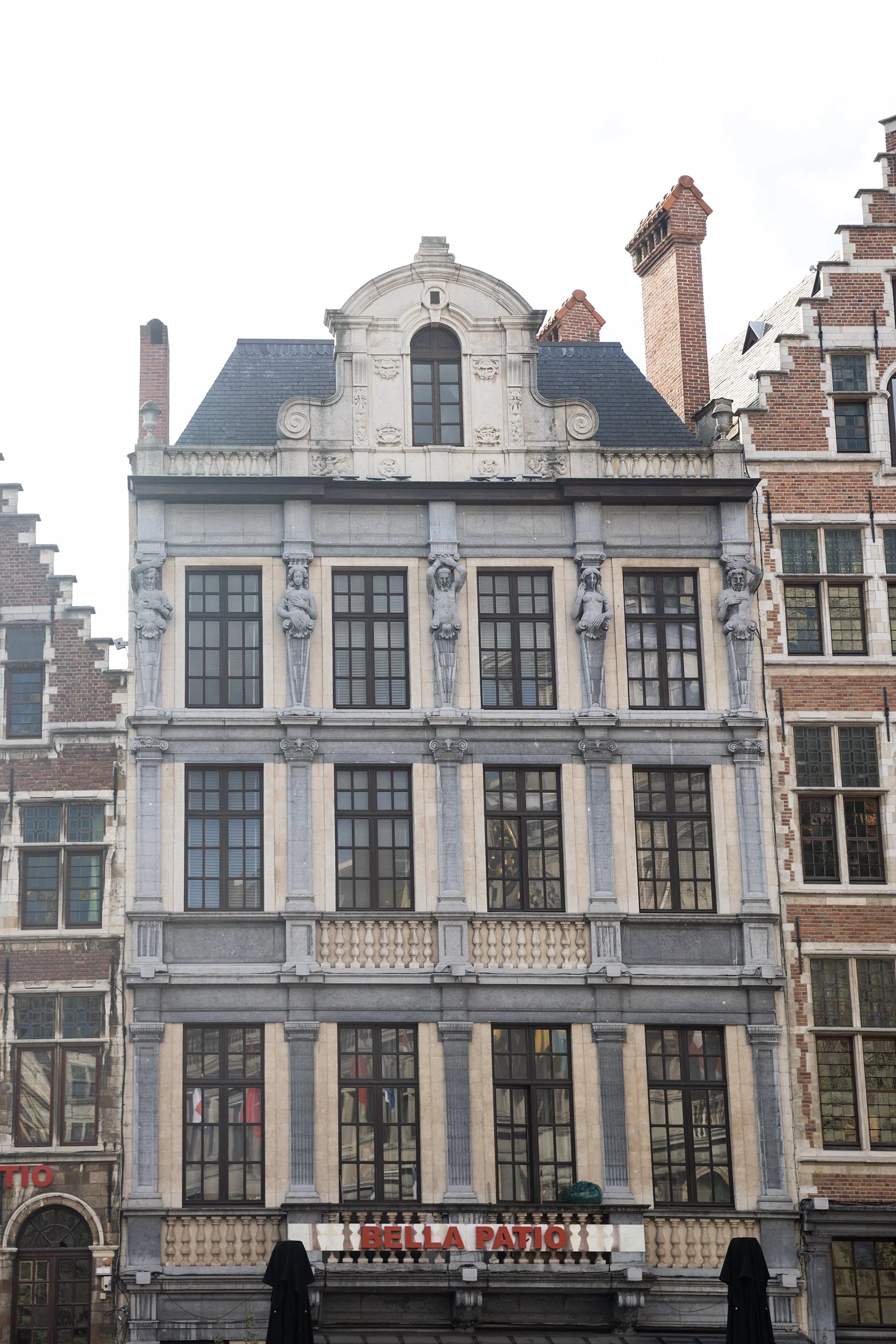
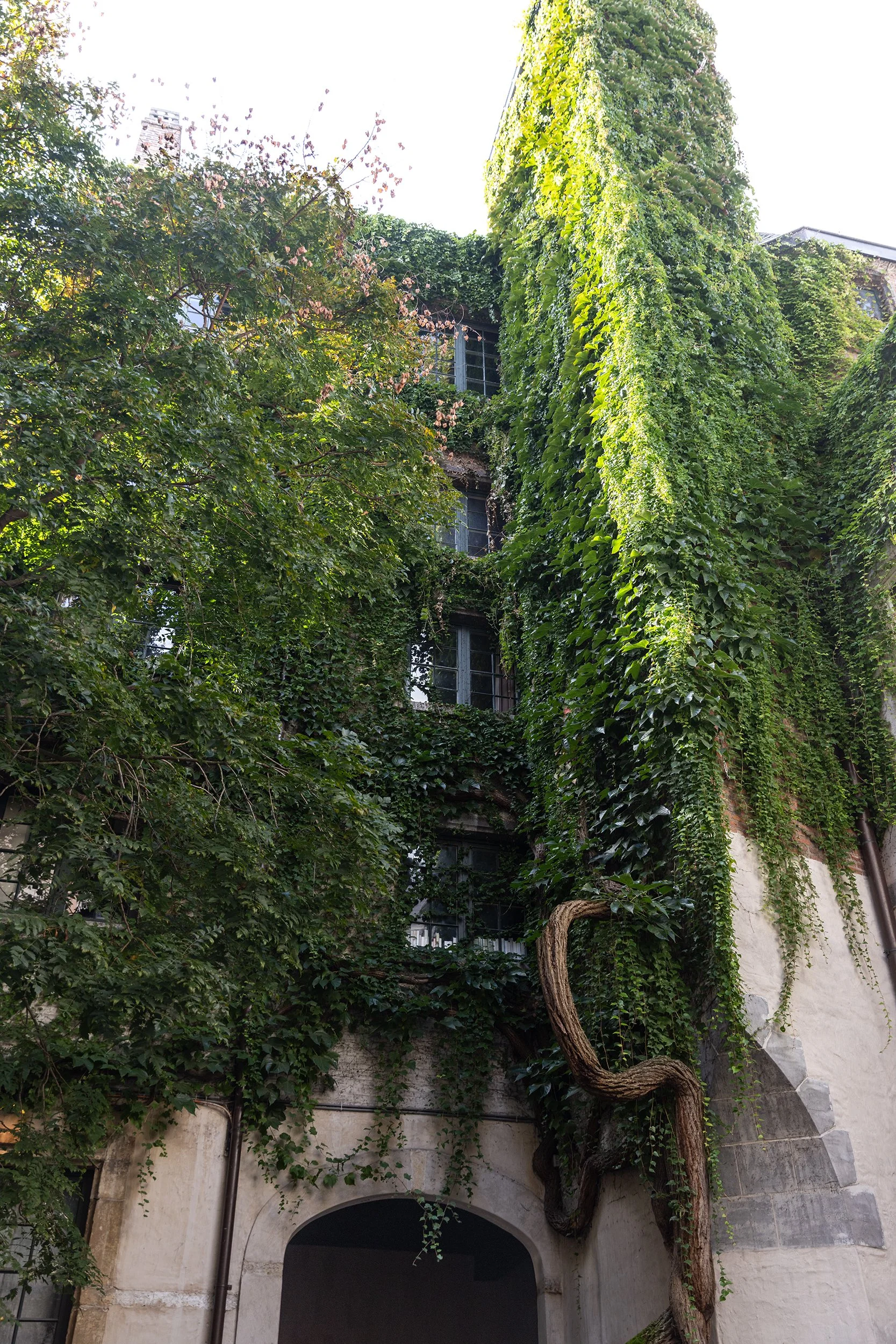
1., 2. Vlaeykensgang | 3. Known as Den Gulden Handschoen (The Golden Glove), this guildhall stands directly in front of Antwerp's historic town hall and the Brabo statue on the Grote Markt | 4. Ivy-covered Vlaeykensgang
TOURISM INFORMATION
Visit Antwerpen
Locations: Visitor Centre at Het Steen at Steenplein 1, or Visitor Centre at Centraal Station, level 0 near the elevators
HOW TO GET HERE
By Train: Approximately 30 minutes to an hour from Brussels or 1.5 hours from Bruges. Bookable online.
HOW TO GET TO THE GROTE MARKT FROM ANTWERP CENTRAL STATION
By Tram: De Lijn Line 9 or 15 from Diamant Metro to either Meir Metro or Groenplaats Metro (10 minutes) and then an 8-minute walk. Line 3 or 5 from Astrid Metro to either Meir Metro or Groenplaats Metro and then an 8-minute walk - look for the Astrid Metro stop near the Starbucks on Pelikaanstraat. A map of the tram routes can be found here, and a route planner here.
Alternatively, a taxi would be about 8 minutes, or walking would take about 20.


View from the Belfry, Ghent, Belgium